
View on Views: Roads and Rivers
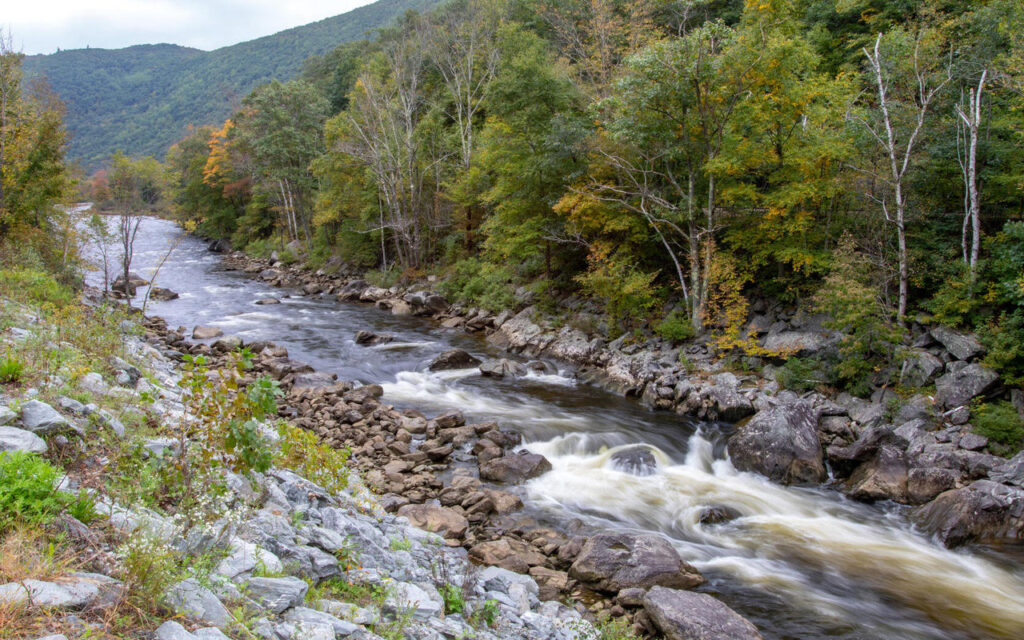
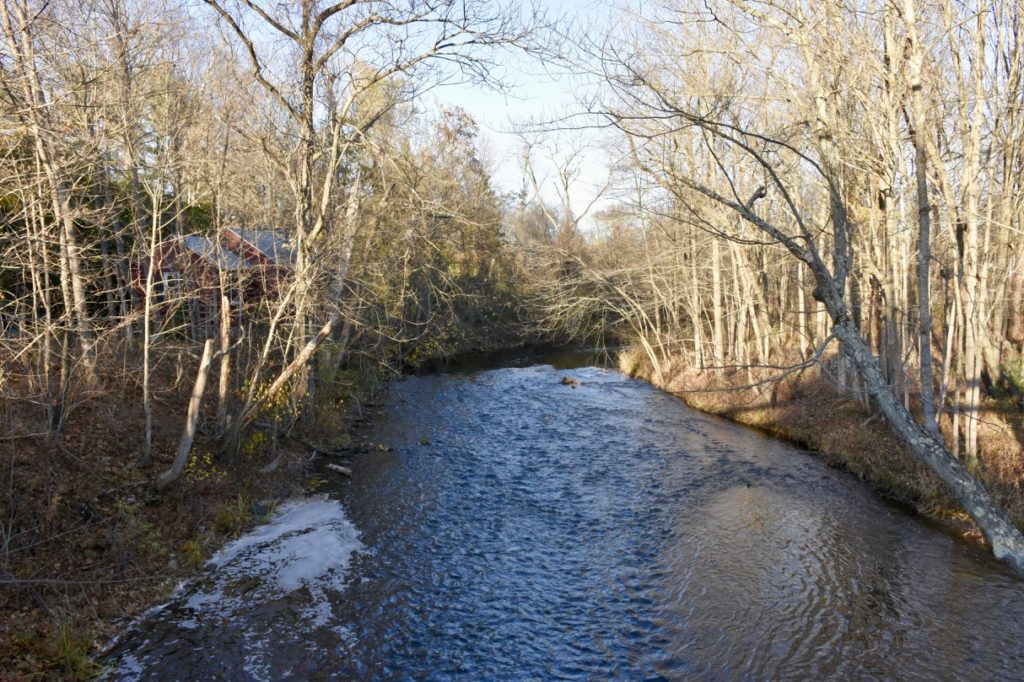
Deerfield River. Photo: mass.gov
By Hetty Startup
This is the sixth column in a series of ten. View previous columns here.
I’ve just crossed over the Deerfield River using the bridge by Deerfield’s Stillwater Road. It’s so pleasant to get views from my car window of the still waters below, noticing the sand banks on each side. There is actually a road nearby called Sandgully Road. I contemplate pulling over to smell the flowers like Ferdinand the Bull or to play Poohsticks like Winnie-the-Pooh, but there isn’t a safe place to stop! Still, it is a pretty spot. I’m travelling from Amherst to Greenfield via back roads rather than Route 5/10 and picking up an order at Mycottera Farm, where the local crop is gourmet mushrooms. Further up the road, going north towards the 4-H Fairgrounds in Greenfield, I see Clarkdale Fruit Farms and notice that some apple varieties are still clinging to the branches of the now leafless trees.
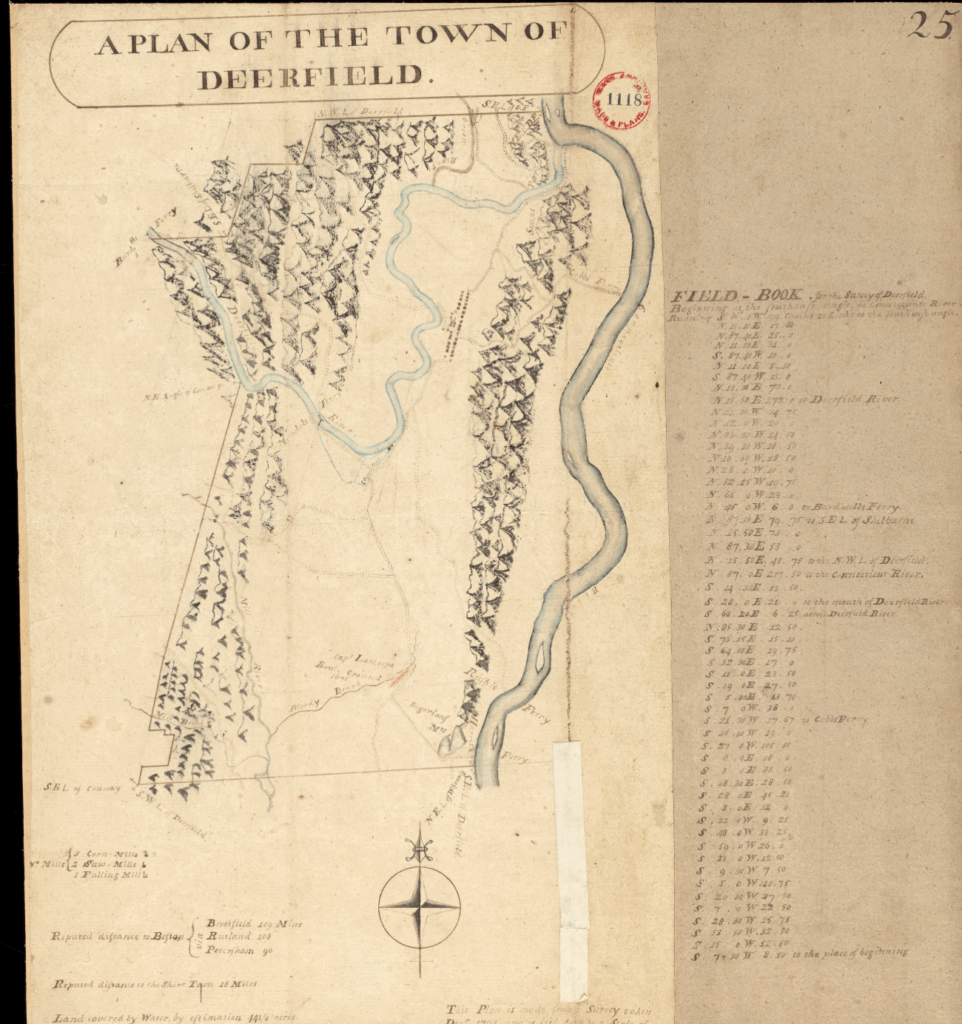
It is a given that our landscapes are enhanced through the varied natural topography of our surroundings, especially through the contours of our hills, the confluences of streams or rivers, and the shapes created by a high or low tree line beyond the paved roads and streets. Upper Road, in Deerfield, leads me to the Old Albany Road which is also accessible off The Street in Historic Deerfield. There seems to be a Yankee preference for the tried and true old farm roads. Roads here often follow the rivers, large or small, and both act to make more distinct these local habitations; in some cases, like the lines from Shakespeare’s Midsummer Night’s Dream, they name our surroundings quite directly. Perhaps it is because I grew up on a river (the Thames in London) that I find this landscape feature to be the greatest source of wonder and interest to me.
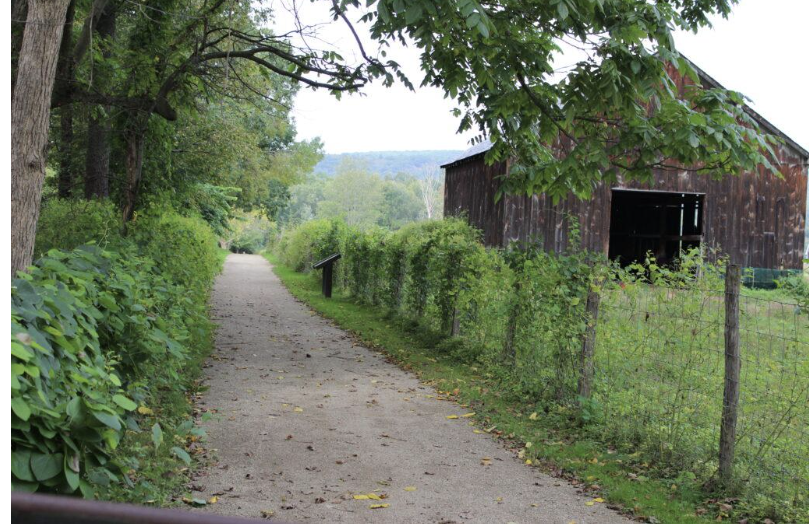
Like the Fort and Mill Rivers in Amherst, that are tributaries of the Connecticut River, the Deerfield River is also a main tributary of the Kwenitikw/Connecticut River in Franklin County. Its path through the landscape is ancient in origin while also being a present joy. If you have not already done so, I encourage you to take a guided walk behind The Street at Historic Deerfield, that is a contemporary path that runs through farmland down to the Deerfield River where it then allows you to wander along it.
Rivers are powerful agents in nature and also sources of nourishment, abundance, and beauty all at the same time, despite the prevalence–along this particular river–of invasive Japanese knotweed.
Our appreciation of rivers as a vital aspect of landscape is reinforced profoundly in indigenous belief systems where the word Kwenitekw offers us a visual for the character of the river being “long” and “flowing,” suggesting a dynamic play between the ‘spirit’ of the land here (for want of a better word) and our human realm of understanding. The etymology of Kwenitekw is both from Abenaki and Sokoki sources. These wordings designate the river as a force of nature that is sacred and life-giving. Such living languages suggest how the physical form of a river can be imbued with other meanings or dimensions.
The artist and author Maurice Sendak (1928-2012) once made an illustration related to what I am trying to convey. He made a drawing of a little boy by a source of water and called it “Being by a little stream.” And he is not the only creative type to be moved by the power of flowing waters. The poet Langston Hughes (1901-1967) in a poem he called “The Negro Speaks of Rivers” writes:
I’ve known rivers:
I’ve known rivers ancient as the world and older than the
flow of human blood in human veins.
My soul has grown deep like the rivers.
I bathed in the Euphrates when dawns were young.
I built my hut near the Congo and it lulled me to sleep.
I looked upon the Nile and raised the pyramids above it.
I heard the singing of the Mississippi when Abe Lincoln
went down to New Orleans, and I’ve seen its muddy
bosom turn all golden in the sunset.
I’ve known rivers:
Ancient, dusky rivers.
My soul has grown deep like the rivers.
Perhaps I’m mixing together here things that should not be mingled? It may feel artful or contrived. As we walk alongside a stream or a river (like the Emily Dickinson Trail by the Fort River in Amherst) we may not be aware of accessing these other kinds of references but over time, it is these other layers of meaning that work their own kind of magic. They begin to help us make sense in a more personal way of our surroundings, giving landscapes deeper meanings.
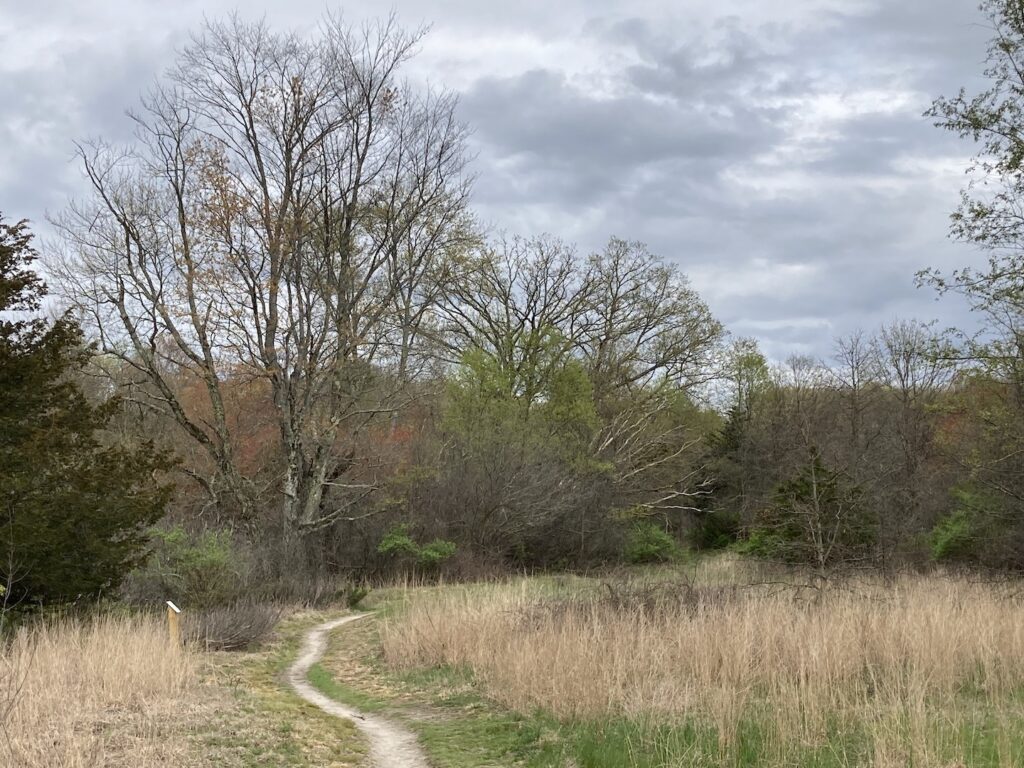
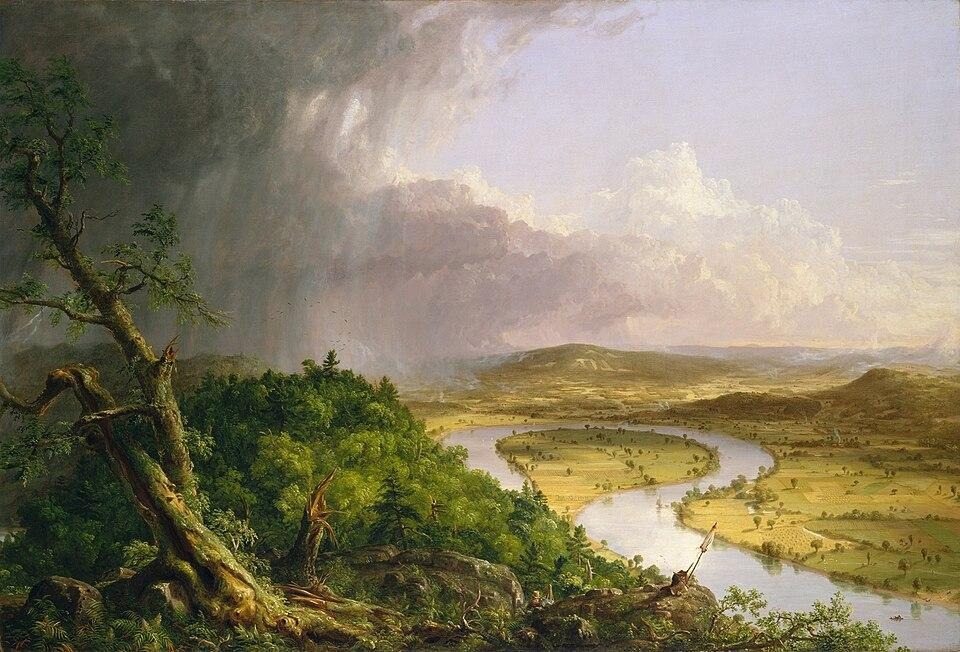
Perhaps the most famous local example of this kind of affective transformation is at the site of the oxbow on the Kenitekw amongst the Northampton Meadowlands. Maybe you know exactly, where I mean; there is a meander – a bow or curve – here, shaped by millennia of sediment deposition and erosion. It was painted by Thomas Cole in 1836. It is now called the Oxbow Lake, as the meander was broken through in a devastating flood in 1840; on some days, I try not to see the present-day Oxbow Marina, pretending instead that I am driving through Cole’s amazing painting, now in the Metropolitan Museum of Art.
On the same great river a little further north on the town line between South Deerfield and Sunderland are the First and Second islands on the river that can be seen either from the Sunderland Bridge (route 116) or from School Street, in Sunderland; and then, further north, through views through trees to the river from Falls Road, off Route 47. These small islands are host to all sorts of plants and birds, even an eagle’s nest, apparently, on First Island.
Do you have a favorite place to walk by a river or a special place to sit by a little stream? We are lucky in the Amherst area to have stretches of open space so close to our downtown, where it is possible to really see the lay of the land around us. ~