
Review: At a Time When African American History Is Under Attack, Netflix’s The Abandons Softens the Realities of Historical Oppression
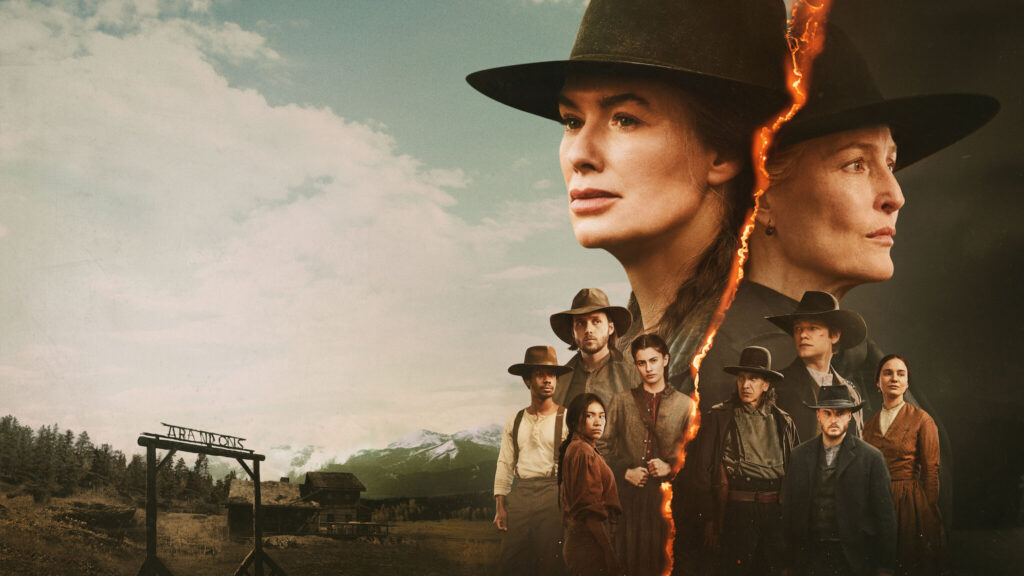
The Abandons. Photo: YouTube
Netflix has released a new television series called The Abandons, set in the time and place frequently described as the Wild West. It centers on a land dispute between two families led by strong, complex, white women. This premise is particularly “interesting” given the homo-social, White-man-majority social context of most colonial settlements of the same ilk, on the frontier of encroachment into indigenous territories further west.
Film can help us reckon with, remember, and heal from historic wounds. The Western film genre is particularly complex because in many ways it deepened and continues to deepen colonial wounds by adding representational insult to historic injury.
Until fairly recently most westerns glorified settler colonialism unequivocally or at least to some degree. Over the past couple of decades there have been a number of intelligent Westerns which seek to provide a clear-eyed account of a piece of American genocidal history. For instance, some of the success of films like Hostile, The Revenant, and Wind River lies in their deliberate subversion of the racist, eurocentric film tropes which paved the way for them to exist at all.
Both Hostile and The Revenant include levels of geo-political complexity between different Indigenous nations. In both those examples we also get to hear more than a touch of Native language from Native actors.
Back to The Abandons, the family headed by Lena Heady (Cercei Lannister, Game of Thrones) contains various people from different places with perhaps as few as two relatives connected through blood. One member of the family is a Black man and another is a Native woman. The show soon started losing me in how things went between the Black man and white people who were not in the family. In my opinion the show’s depictions of race relations were ahistorically regular, and loudly so–contemporary even.
In one scene the white (eldest) brother gets in a bar fight with the son of the opposing (white) family. One by one his multiracial relatives come to his aid. First his Black brother throws a punch at a White man and then his Native sister stabs a white man with a fork–both in defense of their white elder brother. We then cut to them home safe, basically smirking at each other while getting harangued by their faithful, paternalistic white Savior mother, Cercei Lannister.
In my understanding of this period of our gruesome and shameful US history, they would not have made it home healthy and happy, if alive at all. The whole thing occurs a little after the civil war, which most Union soldiers fought and won as staunch racists. At this point in time it was still exceptionally rare for white people to show Black or Native people real courtesy or respect. In my opinion the idea of two Black and Native people attacking white men in a crowded, otherwise all-white saloon without anticipating serious and disproportionate violent reprisal is a historical fantasy at best.
I imagine the writers intended to subvert racist tropes of Hollywood by creating Black and Indigenous characters with “agency.” However, by eliminating the visible presence of violent European social control, the superficial agency given to these fictional Black and Indigenous characters works to erase the real agency which Black and Indigenous people had to exercise in order to survive a real racial caste system.
I understand why some Black people do not wish to keep seeing films about slavery or keep showing them to their kids. I also strongly support of popular media productions that help us to recognize the subtle, complex agency required for people descending from Africa and Turtle Island to survive through the story of America.
In my opinion The Abandons’ tepid effort at including Black and Native life on screen is no better or worse than if they had transparently told it as the white story which it clearly is at its core. Without real interest, curiosity, or historical commitment to the reality of Black and Indigenous life, it is merely white washing. For a modern Western to truly subvert the misogyny and racism baked into the genre, Black and Native stories cannot be ornamental or narrative afterthoughts. They must be at the center of the story.
If it’s a question of numerical representation on screen, how about casting actors of color in roles which depict White people? For an example of how this can go, we have seen Denzel Washington in Much Ado About Nothing as well as The Tragedy of Macbeth.
At a time when African American history is under attack, it is a problem when a popular film or television series softens our senses regarding the systems of oppression and violence on which this country was built..
Yes, of course it’s cool to depict agency, resistance, and survival. However, doing so in a manner which is insincere, un-researched, or superficial contributes to one of the primary historical misconceptions at the root of our racial turmoil today: that following Emancipation, Black people gained immediate entry into the American Dream.
It doesn’t matter how many three-syllable words he or she is given to say in the film script. Episode one of The Abandons does not advance the evolution of the Western genre; it merely represents a token black man and a token native woman in the same old way.
Brooklyn Demme is a thankful new resident of Montague, having migrated to the Valley from his hometown of Nyack, NY. In 2020 he co-founded Truth 2 Power Media in order to bring people together at the intersection of community, education, and film. The team’s first fictional film, Mountain Lion , produced in association with the Sand Hill Band of Lenape & Cherokee Indians of Scheyichbi, was screened at the Massachusetts Independent Film Festival in April 2025.