
Opinion: The Common Share Food Co-op: Reflections on a Failure to Launch
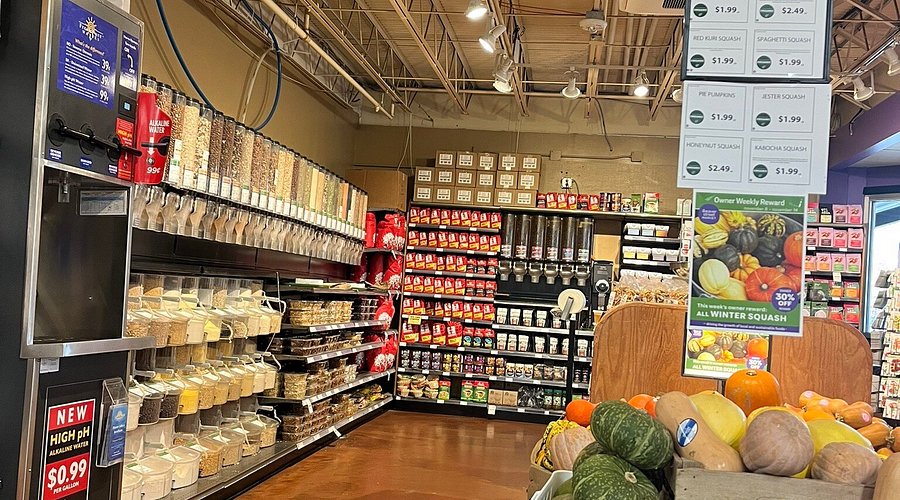
Weaver Street Market, a worker owned food coop with four stores in North Carolina. Photo: Instagram / Weaver Street Market

The Common Share Food Co-op project is over. (The co-op has had several names over the years: Amherst Community Co-op, Amherst Food Co-op, and finally Common Share Food Co-op. For the sake of convenience, in this column I refer only to Common Share Food Co-op.) The long-cherished dream of walking through the doors of a food cooperative in the town I have called home for the past 25 years will not be realized. My feelings of sadness and disappointment are mixed with frustration and bitterness. I would like to share some of my thoughts about why the food co-op project has come to an end.
On November 11, 2025, 52 member-owners of the Common Share Food Co-op met at the Unitarian Universalist Society of Amherst. After short presentations by board members about the status of the co-op, it became clear that it would be impossible to fill all, or even most, board seats. The assembled member-owners then voted to dissolve (unincorporate) the food co-op. This vote marked the end of an initiative that began in 2012 with the formation of a steering committee by Laura Mason, Nora Murphy, Katherine Bhaduri, and Lily Brown, all of whom had recently graduated from UMass. The committee’s goal was to build a worker- and community-owned food co-op for Amherst that would supply the community with wholesome food and other products. These products would be sourced either locally or sustainably from more distant places. The underlying principles of the project were health, sustainability, community, and cooperation.
Common Share Food Co-op was incorporated in 2014, and the co-op began selling member-owner shares. Over the intervening years, board members came and went. I served as board president for several years. Board members and other member-owners volunteered at co-op membership-building events, at recruiting tables at the summer and winter farmers markets, at countless festivals, and at other community events. At one point, my wife and fellow board member Felicia Sevene represented the co-op, looking perfectly ridiculous costumed as a carrot and a banana respectively, at a parade around the South Amherst Common.
Over the years, the number of member-owners grew until it reached 960. That’s a lot of households, and in earlier times, such a level of member-ownership would have signaled that the co-op was ready to launch a capital campaign to lease or build a grocery store.
Times have changed, however, and it is much harder for a co-op to build a viable brick-and-mortar grocery store. Profit margins in the retail food business are notoriously thin even for the most well-established businesses. It is more difficult to run a store that supports environmentally sustainable food systems, that pays workers fair wages while giving them a voice in running the store, and that is firmly rooted in the values of the community it serves.
What Went Wrong?
The following is not intended to be an exhaustive analysis of the reasons why Common Share Food Co-op did not launch. Ultimately, these are my own opinions and do not necessarily reflect the views of the many other dedicated people who participated in the co-op project. Although I have put some distance between myself and the project over the past several years, I was involved in the co-op since its inception as a steering committee all those years ago. Over the years, I had countless conversations with people as I promoted the co-op and invited people to join up.
Problems with the Leadership Team
Common Share Food Co-op was designed to be a community and worker-owned cooperative, a “hybrid ownership” model. The co-op’s bylaws called for a nine-member board of directors. Five of those seats were for “community member-owners” (i.e., consumers) and four seats were reserved for co-op workers. Most other co-ops in the United States, like River Valley Market, Franklin Community Co-op, and the Brattleboro Food Co-op, are community owned. Other co-ops, like the solar panel installation company PV Squared in Greenfield, are owned by the company’s workers. Common Share Food Co-op hoped to blend these two ownership models in a single cooperative business. One of the largest co-ops in the southeast, Weaver Street Market in North Carolina, is a rare example of a co-op with a hybrid ownership model. As a startup business, Common Share Food Co-op at first had no paid workers, so all board seats were to be filled by enthusiastic member-owners who wanted to build a co-op. Somewhat later, the co-op hired its first paid employee, a hard-working community outreach manager Andrew Grant. Later, Emily Chiara took over from Andrew in that position and showed equal enthusiasm for the work. Both individuals sat on the board of directors.
Unfortunately, there was not a single significant period when the co-op achieved a full nine-member board. It was hard to persuade people to put the time into serving on the board, and even harder to find people who had the necessary experience. The co-op desperately needed people who knew how to start and manage a business, people with legal or real estate experience, and people with strong connections to the Amherst area’s business community. The co-op needed people who understood how to obtain and work with money.
Most of the people who did join the leadership team were enthusiastic and generous in giving time to the co-op. But my sense is that there was a lack of a consistent narrative about just what kind of co-op we were trying to build. Our “elevator pitch,” the story about the project that can be told in the time it takes to travel a few floors in an elevator, was muddled and inconsistent.
A Project at Cross Purposes with Itself
Over the years of the co-op’s existence, there was an ever-shifting notion about the kind of enterprise we were trying to build. My initial motivation for joining the steering committee was to help build a full-service grocery store that would be convenient to my home in downtown Amherst. In the 25 years I’ve lived in Amherst, there has never been a real grocery store within walking distance. (I’ll get to the “All Things Local” store a little later.) In that sense, since the Victory Supermarket decamped from the current location of CVS on North Pleasant St. (relocating to University Drive and ultimately to oblivion soon after), downtown Amherst has been a “food desert”.
People joined Common Share Food Co-op thinking they were signing on to get a grocery store. From start to finish, the idea was indeed to build a supermarket. But as the project trundled along, it became clear that the co-op had another role to fill. Felicia Sevene brought a new way of looking at the challenges facing any group intending to bring a food co-op to Amherst. From her own life experience, Felicia understood better than many others that Amherst is not a single, homogenous community. It is, in fact, several communities which are divided by economic power or the lack thereof. One of Amherst’s former economic development officers made a similar point: He said that, economically speaking, Amherst has a dumbbell-like shape, with many affluent households at one end and an equally large, if not larger, set of economically disadvantaged households at the other. And there is not a whole lot in between.
With this understanding, the co-op leadership realized that Common Share Food Co-op had to be developed as a justice co-op. The store would have to have a full range of affordable food options. Member-owner shares should be subsidized for economically disadvantaged people. The co-op would have to include a redistributive approach to ensuring that the abundant food choices available to affluent Amherst residents would be shared with the less affluent.
Moreover, the co-op should serve as a community focal point, a gathering-place for people with space for parties, picnics, concerts, political organizing, and so on. Some of co-op’s organizers, I included, felt that the co-op should have a political significance and offer a counter-narrative to the neoliberal scarcity model that characterizes late-stage capitalism, a system that seems tailor-made to create haves and have nots.
A friend of mine quipped: “Alex: you guys aren’t building a supermarket; you’re building a political action committee that happens to sell carrots.”
But the co-op leadership team was unsuccessful in sending out a clear and coherent message to the community about the kind of co-op we were attempting to build. Perhaps the board members were not in agreement among themselves.
The board received extensive coaching from co-op mentors, including the Neighboring Food Co-op Association and the Food Co-op Initiative, among others. We also maintained ties to our sister co-op, River Valley Market and members of its board of directors. The message seemed clear: In a highly competitive grocery environment, with large supermarkets such as Big-Y, Stop & Shop, Whole Foods, Aldi’s, Walmart, and Target in the market area, a startup co-op in Amherst had to behave like a real business, and with a thorough business plan and ultimately a range of products that would generate enough profit for the store to hold its own.
At the same time, it seemed to me that it would have been impossible for the relatively small Common Share Food Co-op to compete simply as another supermarket. The market had to offer a different “value proposition.” That proposition would be defined by participation and equitable distribution.
The co-op project needed to find a clear answer to this question: Were we simply building an oligarch-free version of Whole Foods, or were we creating something far more radical? Could we create a sustainable business that would knit together the disparate and competing constituencies of the Amherst area that would transcend socioeconomic boundaries?
Competition and Confusion
In November 2013, a small group of volunteers opened All Things Local, an indoor, year-round farmers market and craft shop, in a storefront on Amherst’s North Pleasant St. which was made available when the Food for Thought bookstore reduced its footprint by one-half in an ultimately vain effort to trim costs and survive. At last, a food store in downtown Amherst! The store styled itself a co-op, and invited people to buy memberships for $50. In fact, however, All Things Local was not a co-op; it was more of a club. The premise was that the store would stock and sell only produce and crafts that could be sourced from within a 100-mile radius of the store. This rule posed challenges from the outset: Could the store sell locally made baked goods using sugar or fruit that was sourced from beyond 100 miles? The rule imposed severe limits on what the store could sell. People do like to eat bananas, but there are no banana plantations anywhere near Western Massachusetts. With a limited selection, the store was hamstrung and could not offer “one stop shopping.” Since everything that could not be bought at All Things Local had to be bought somewhere else, consumers had to drive to those places, thus increasing rather than decreasing their “carbon footprint” and effectively defeating the goal of the 100-mile rule. Also, since the store was staffed primarily by volunteers, each of whom had to work with a cumbersome point of sale system intended to credit sales to each producer, shopping at the store took time and required patience.
After a year, what remained of the Food for Thought bookstore next to All Things Local closed after a 38-year run as Amherst’s most left-leaning bookstore. Food for Thought was much beloved by college and university faculty members who ordered class textbooks through the store. It was a place where readers could browse unabashedly left-wing books, where people could gather for readings and performances, and where the community could gather in solidarity. Like most of the other bookstores in Amherst, however, Food for Thought became a victim of online booksellers like Amazon as well as the general shift away from paper books to digital media. Textbook orders dried up, fewer book buyers wandered in, and no amount of cost-cutting could keep the business from sinking.
Despite its own shaky business model, including a failure to do any meaningful market research before opening, All Things Local decided to take over the space vacated by the bookstore, effectively doubling its floor area. But the store struggled to fill the additional space with more goods to sell. To me, the store had an empty feeling, with some of the space given over to displays of local crafts like earrings and ceramics. Prices for everything at the store were high, sometimes astoundingly so: it was at All Things Local that I saw the most expensive frozen chicken I had ever seen up to that point. I’m sure it was a delicious chicken that had a wonderful life until the end, but few people would pay over $20 for a small frozen chicken. (In the intervening 20+ years, prices have risen across the board and now, at least for more affluent shoppers, a $20 chicken is hardly anything to cluck about.)
Almost exactly two years after it opened, All Things Local abruptly closed its doors. The business had completely run through its operating funds and had no more money to keep going. The store closed without warning: it was still selling $50 memberships in the days immediately before the closing. I’m sure the store’s closure was deeply disappointing to the very passionate group that started and ran the business. I think that, like many such “passion projects,” All Things Local was a victim of its organizers’ belief that enough people share their passion for “all things local,” and that that would be enough to sustain the business. In every project, it’s vital for people to remind themselves, “Not everyone thinks the way you do.”
Both the store’s rapid opening and its precipitous demise had enormous consequences for the Common Share Food Co-op. I was constantly meeting people who confused All Things Local with Common Share Food Co-op, or people who thought that a true food co-op had opened and soon went out of business, proving that there was no real market for a food co-op in Amherst. “We already had a co-op in Amherst. It didn’t work,” they thought. I think many people came to associate “food co-op” with doctrinaire limits on products, with inefficiency at every level of store operations, and sky-high prices. Common Share Food Co-op organizers labored mightily for years to undo the reputational damage that All Things Local had caused to the idea of a food co-op. As the memory of All Things Local faded from the public’s consciousness, so too did the sour aftertaste left by the failure of the business.
At the same time, there were changes happening in the big chain supermarkets serving Amherst, most clearly at Big Y on University Drive. That store began carrying more local produce as well as meats without antibiotics, whole-grain breads, other products labeled “organic” along with increased bulk food offerings. I have no idea how organic and natural these products are, but it seems clear that these big box grocery stores are trying to compete with stores like Whole Foods, River Valley Market, and any co-op grocery stores that might appear. Going back to its previous incarnation as Bread & Circus, the Whole Foods store in Hadley has always tried to tap into the co-op vibe, complete with the kinds of wooden boxes that farmers use to deliver their produce from the fields, boxes that at Whole Foods are no more than props to make shoppers think “farm fresh” and “local.” I think that for many people, it became more difficult to see any rationale for a food cooperative.
A Community Not Ready for a Food Co-op
Ultimately, Amherst was not ready for a food co-op. The project to build a food co-op originated in the UMass Stockbridge School’s co-op studies program; it did not grow directly from the Amherst community. Throughout the history of the cooperative movement, from its early days in the 17th century’s Fenwick Weavers’ Society in Scotland (to sell discounted oatmeal to workers) and the 19th century’s Rochdale Society of Equitable Pioneers, to the latter-day co-ops of the 1960s and 1970s (including Amherst’s own Yellow Sun Co-op, which lived from the mid-1960s to the 1980s), successful cooperatives have all responded to a perceived need in the communities they served.
The co-op movement of some 50 to 60 years ago, so dear to the memory of many of the area’s older residents, responded to some very specific needs. At a time when supermarkets had limited offerings of fresh produce (remember when spinach was something sold in a can or in the form of an unappetizing frozen brick?), did not sell whole grains in bulk, and focused on highly processed foods, the co-ops of the hippie generation moved in to fill the breach. I could not count the number of times gray-haired Yellow Sun cooperators told me, with a gleam of nostalgia in their eyes, of their days as a youthful co-op volunteer: “I cut the cheese at Yellow Sun!”
What needs would Common Share Food Co-op have served? Those who insisted on fresh local produce could get a farm share from any of at least a dozen CSAs (community-supported agriculture) in the area. Whole Foods, Trader Joe’s and even Big Y and Stop & Shop all carry lines of “organic” foods. Those who could not afford to shop at these stores could get their needs met at the Amherst Survival Center, where a wide range of produce, breads, dry goods, and canned goods are available for free.
Would Common Share Food Co-op have served as a necessary community gathering place? I’m not convinced it would have. After all, people already have their affinity groups, many of which are taking a stand against all that is wrong and unjust in the world. Amherst has no shortage of places where like-minded people can gather to promote a good cause. Perhaps they did not really want a political action committee masquerading as a food store.
I will never forget running into a couple I know, deeply progressive lawyers with a long track record of promoting their clients’ civil rights. They were having lunch at the café area at Whole Foods in Hadley. I started talking up the Common Share Food Co-op project and asked them to join. They looked at me blankly. The woman looked to her left and right, smiled serenely and said:
“I like it here!”
I think that was the moment when I realized that the co-op would never get off the ground.
Failure to Launch, But Not a Failure
After over a decade of hard work, the Common Share Food Co-op did not open for business. Nearly a thousand households signed up as member-owners, dozens of volunteers contributed uncountable hours of labor, articles were written, meetings and parties were held. There is no store. I and many other true believers are deeply disappointed. But the failure to launch a store should not be counted as a failure.
Sure, I wish more people hadn’t simply asked “Hey, when’s the co-op going to open? Where’s it going to be?” Dozens of people meant to be helpful by telling members of the leadership team “I know the perfect spot for the co-op: the old Maplewood restaurant on Belchertown Road!” It would have been far more helpful if more people had asked “What can I do personally to move the project forward?” Or “I’ve started a business or two. I could help start this one!”
I regret that so many people put money into the project: over $165,000 in member-owner shares, along with cash donations and grants. Everyone knew, or should have known, that this was “risk money” with no guarantee of success. (What little remains in the co-op’s account will be distributed to worthy nonprofits in the area.)
All of us who participated in the co-op project learned a great deal about our community, about organizing, about group process, and about the cooperative movement, where it came from, where it is now, and where it may be headed. We all cooperated with each other. We were a co-op. The project greatly enriched my life and connected me more deeply to Amherst.
As the Common Share Food Co-op’s final meeting wound down on November 11, people talked about how the project might be reconstituted in different form and with different goals. A buying club? A community space without an actual store? A young woman who is completing her undergraduate degree at UMass rose to speak. She spoke passionately about her belief that the community needs a co-op and that young people need something to believe in. She suggested that the older generation needs to allow the younger generation to express its passion, to voice its demand for a better way than the way things have been run in favor of people with wealth and power. I and others, most of whom were one or two generations older than this woman, applauded her.
American society has a class of people who enjoy the benefits of wealth and the power that comes with it, a class of people who are comfortable. America also has a vast and growing segment of its population, an overwhelming majority, that has little wealth or power. This vast segment of the American public knows little about comfort. In retrospect, I had hoped that the Common Share Food Co-op could somehow bridge the enormous gap between the comfortable and those who are not comfortable. If the co-op project has in any way made the people of Amherst more aware of this divide in our own community, I would count the Common Share Food Co-op a success.
Alex Kent is a resident of Amherst
Thank you for writing this, Alex. It was hard to vote to disband for all the reasons and context you provide here — and yet as you described, no other option. As you say, it’s so incredibly difficult to find multiple folks with business experience to serve as volunteer board members for an extended period when the reality is passion and enthusiasm is just not enough — the money has to work. Which is something All Things Local also couldn’t manage for the reasons you describe. Oh, someone else remembers that chicken price — I bought one once! Thank you and Felicia for all you did to make our community better.
Thanks for reading my (long) essay, Alisa. As you say, “the money has to work.” The world would be better place all around if there were some way to persuade the overprivileged to share more with the underprivileged, but apparently that is not the way our society works, especially in these atrociously inequitable times.
Thank you for writing this, Alex, and thank you for having worked so hard and for so long to make the Common Share Food Coop a reality. It was very disappointing to hear of the vote to dissolve it. I would have loved to have a food coop store in or walking distance from the center of town, but rents in downtown Amherst are astronomical now, harder than ever for any independent startup to be able to afford.
Over the decades I have been a member of both pre-order coops and coop stores across New England, as well as an employee of NEFCO, then our region’s food coop federation, now superseded by NFCA, the Neighboring Food Co-op Association. But in recent years I have found the coop stores I have joined or visited (the Hanover Conusmer Co-op in New Hampshire and the River Valley Co-op), to be wildly expensive, with their products and the general feel of the place geared to a high-end market. (Don’t get mad, River Valley Co-op lovers! Just my impression after a handful of visits to the Northampton Store.)
This week my husband and I joined the Franklin Community Coop and did our first big shop at the Green Fields Market in Greenfield. We bought the everyday coop basic items and the sale items, as well as availing ourselves of the quarterly 10% off our total bill. Next year we hope to buy some items by the case for further savings and reduce our bill still further–10 or 15%– by volunteering for just 2 or 4 hours per month in one of the many non-profits that the coop has linked with.
The coop store is in downtown Greenfield, right on Main Street. It is small and well-stocked, with lots of bulk goods available. Although many of its prices are quite high, it doesn’t scream high-end. As important as the prices is the atmosphere, friendly and has a strong feeling of community, even for someone like me who doesn’t live in the town. Although I have only a handful of friends in Greenfield, every time I go to the co-op I seem to run into one of them, or a friend from the area who happens to be shopping there too. And it has a little cafe.
If we want our downtown to have a food coop store or small supermarket in it, then we have to advocate for a vision and a plan for our downtown plan that makes it possible. As things stand, I don’t see how a food co-op store could possibly break even in Amherst Center.
We need to criticize whatever form of competition we can. Reading George Orwell’s essay “The sporting Spirit” was a real eye opener for me. As far as our competitive educational system goes, and many other forms of competition, I recommend Alfie Kohn’s “No Contest, The Case Against Competition” . As for proponents of cooperation, I recommend Terry Orlick’s “Winning Through Cooperation”. I’m focused on how competitive sports are a model of war, and if that rings any bells I’d love to hear what you think. As Orwell said “Sport is war minus the shooting”.