
Letter: A Long List of Questions About Proposed North Amherst Apartment Complex
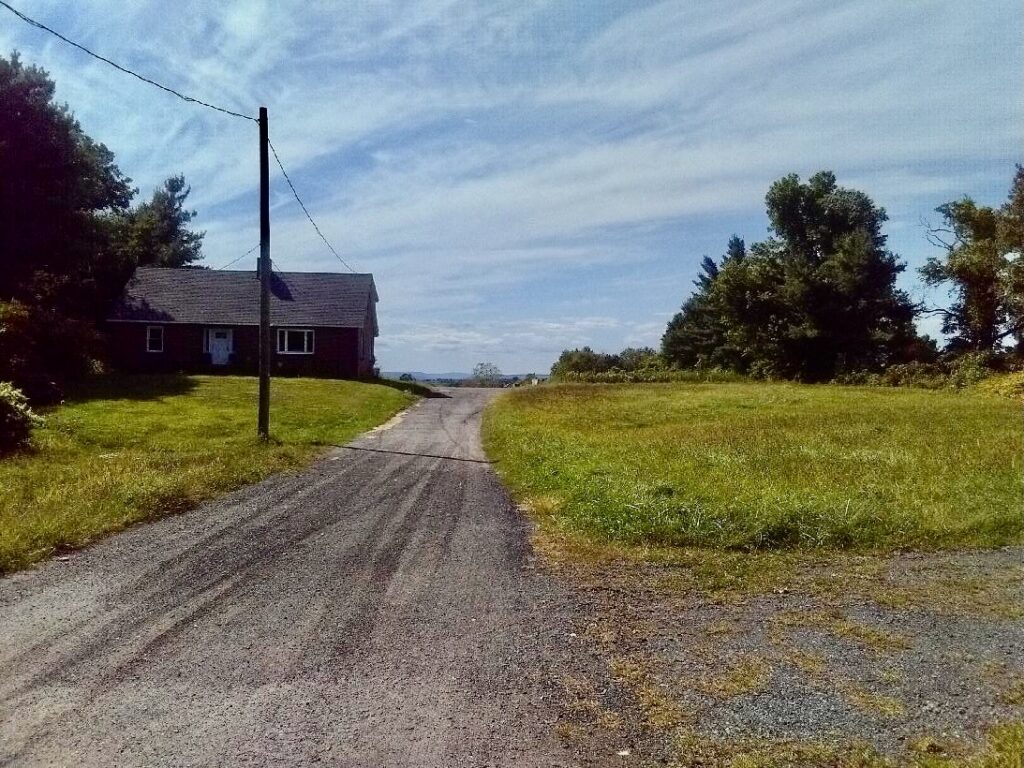
The Mitchell Family Farm in North Amherst. Photo: Rob Kusner
The following letter was sent to Darcy Jameson, Vice President of Development for Beacon Communities LLC on January 7, 2026.
Thank you for meeting with me and several others last month and sharing the current proposed plans for the development of the Mitchell Property into an apartment complex. I have put together a set of questions I and other North Amherst residents have for Beacon as you continue to consider this property for development.
I recognize that some of these are questions that official planning boards, conservation commission, and the DPW would be asked or answering if you decide to move forward beyond this early stage inquiry – but we believe they need to be raised and answered early in this process and publicly so that our community can have full transparency and visibility into this process, as well as time to weigh in on areas of concern.
The below was written so that it could also be shared directly as an article in its entirety in our local news source – The Amherst Indy – and for the Daily Hampshire Gazette to quote from directly as a follow up to their article describing the proposed development.
Thank you again for your open willingness to engage our community in dialogue as you consider your options.
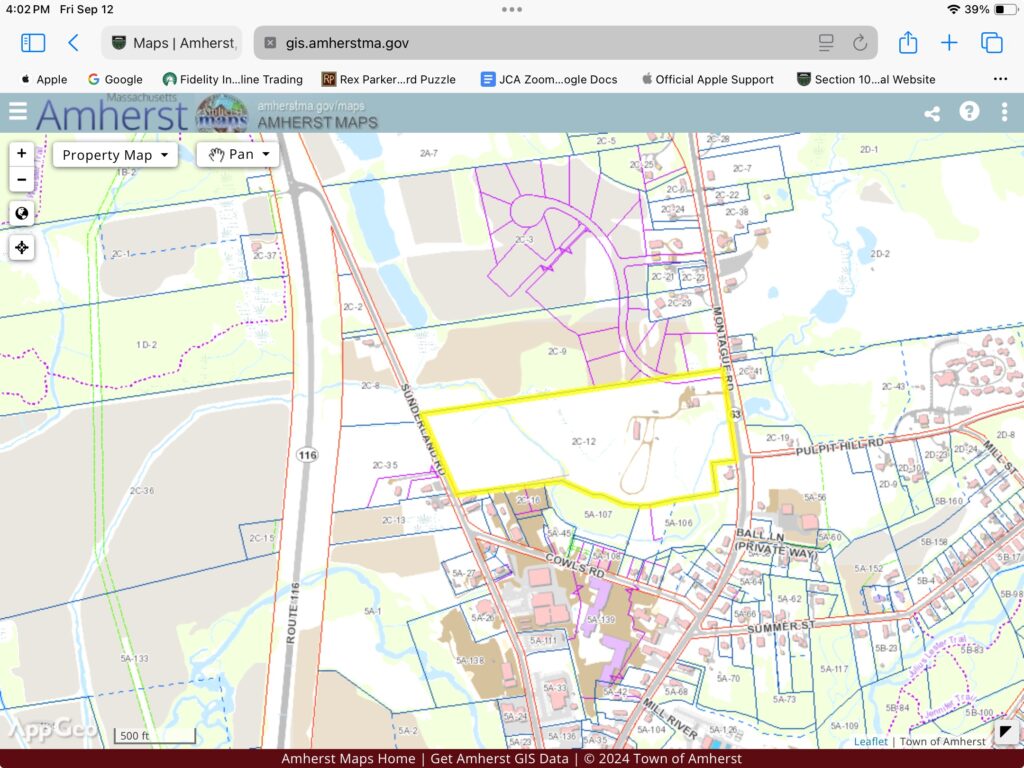
Proposed Beacon Communities Development
Several abutters to the proposed development at the Mitchell Farm property were recently provided a preliminary overview of the project by Darcy Jameson, Vice President of Development at Beacon Communities. Following that discussion, and after reviewing the information presented as well as additional reporting and community input, a number of neighbors have developed the questions outlined below.
These questions are being submitted to Beacon in the spirit of due diligence and constructive engagement. They reflect shared concerns about zoning, environmental constraints, infrastructure, fiscal impacts, and quality-of-life issues for the surrounding neighborhood and the town as a whole.
To ensure clarity and accountability, all communications between abutters and the developer will be shared publicly through the Amherst Indy. We believe transparency is essential in any project of this scale, particularly one that has the potential to affect residents, public resources, and environmental assets across the community.
Key Questions and Community Concerns
Affordability is a shared value in Amherst. But affordability does not override zoning law, wetlands protection, infrastructure limits, or the lived impacts on abutters and the immediate neighborhood.
The consensus among abutters and neighbors is that the development as currently described is unacceptable. We respectfully ask that the developer not pursue the project at this scale and configuration, and instead consider alternatives more consistent with the site’s constraints and the surrounding community.
The questions below ask whether this site can responsibly support a project of this size without imposing long-term environmental, fiscal, and quality-of-life costs on North Amherst residents.
Site and Proposal Overview
- Location: Mitchell Farm, 246 Montague Road (Route 63), North Amherst
- Total property: Approximately 25 acres
- Zoning: RO – Outlying Residence
- Current concept (per Dec. 17 Conservation Commission presentation):
- One four-story building
- Approximately 134,000 square feet
- 140–150 apartments
- Approximately 210 parking spaces
- 100 percent “affordable housing,” serving families and seniors
- Development area: Limited to the eastern portion of the property near Montague Road due to extensive wetlands
- Infrastructure: New sewer line extended north along Route 63, sidewalk connections to Mill District, Library, Mill River Park.
This represents a reduction from an earlier concept discussed by Town staff that referenced up to 200 units in two buildings, but it remains a very large, single-building development for an RO-zoned parcel.
1. Zoning and Legal Authority
RO (Outlying Residence) is intended for low-density residential use and rural transition areas, not large-scale apartment buildings.
Key Questions:
- What specific section of the Amherst Zoning Bylaw allows a four-story, 140–150 unit apartment building in the RO district without rezoning or creation of a new overlay district?
- If the project is not allowed by right, what zoning relief is being sought:
- Rezoning
- Overlay district
- Special permit
- Chapter 40B comprehensive permit
Critical Clarification:
- If Chapter 40B is being considered, the town and the public should be explicitly informed, including how Amherst’s current Subsidized Housing Inventory status affects that pathway.
2. Wetlands, Buffers, and Hydrology
The Mitchell property has a long, documented history of extensive wetlands, including a prior peer-reviewed delineation conducted during the abandoned Eruptor proposal (see also here and here).
While Beacon’s consultants have stated they will avoid direct alteration of bordered vegetated wetlands, avoiding direct fill does not eliminate hydrologic impact.
Key Questions:
- Provide a stamped wetland delineation covering the full 25 acres and clearly identifying the developable envelope.
- Submit pre- and post-development stormwater modeling, including:
- Runoff volume
- Flow velocity
- Pollutant load
- Given that the proposed building pad sits upslope from wetlands, how will increased runoff be prevented from degrading downstream wetlands?
- Who is legally and financially responsible for stormwater system maintenance and failure 20–50 years into the future?
3. Flood Risk and Climate Resilience
Wetland adjacency combined with climate-driven increases in precipitation raises long-term flood risk concerns.
Key Questions:
- Does any part of the development footprint, access roads, parking areas, or sewer alignment intersect FEMA flood zones?
- What rainfall assumptions (10-year, 25-year, 50-year storms) are being used in design?
- How does the proposal align with Amherst’s stated climate resilience and environmental commitments?
4. Sewer Extension on Route 63
Apartments require sewer service; this area of North Amherst is currently unsewered.
Key Questions:
- Who pays for the design, construction, ownership, and long-term maintenance of the sewer extension?
- Will the sewer extension create pressure for future hookups and additional development along Route 63?
- Will abutters currently on septic be required, encouraged, or financially pressured to connect now or in the future?
- Are state infrastructure grants being pursued, and if so, which ones and with what contingencies?
- What is the current capacity of the sewage processing plant?
5. Traffic and Road Safety
The intersection of Pine Street, Meadow Street, North Pleasant Street, and Sunderland Road (Route 63) is already heavily congested and widely viewed as unsafe.
Key Questions:
- Provide a traffic impact study that includes:
- Existing conditions
- Ball Lane buildout
- This proposed development
- Analyze peak-hour congestion, school traffic, emergency access, and pedestrian safety.
- Identify all mitigation measures, costs, and funding sources.
- Is any aspect of the project contingent on a MassWorks or state-funded intersection redesign?
6. Impacts on Abutters: Views, Light, Noise, Property Values
A four-story, 134,000-square-foot building represents a dramatic and quite frankly, unacceptable change for abutting properties.
Key Questions:
- Provide building cross-sections from abutter viewpoints (including winter leaf-off conditions).
- Provide a full photometric lighting plan showing light spill at property boundaries.
- Identify noise sources (HVAC, trash collection, deliveries, snow removal, outdoor common areas) and proposed mitigation.
- Provide a detailed landscaping and screening plan with year-round effectiveness.
- Address potential impacts on abutting property values, which neighbors view as a major concern.
7. Public Services and Long-Term Town Costs
Public Schools
- How many 2- and 3-bedroom units are proposed?
- What student generation rate is being used?
- What is the projected number of school-age children?
- How will increased school costs be addressed, given that per-pupil costs now approach $30,000 per student annually?
Police and Fire
- Expected call volume based on comparable Beacon properties.
- Fire access, ladder truck access, hydrant spacing, and any required upgrades.
- Who pays for ongoing service impacts?
Parks and Recreation
Mill River Recreation Area is nearby and already heavily used, with:
- A public pool
- Tennis and basketball courts
- Baseball fields
- Hiking trails
- Picnic areas
Town Water Supply:
- What is the current capacity of our town water supply and how will this impact this?
Key Question:
- What contribution will Beacon make toward increased park maintenance, staffing, and capital needs resulting from higher use?
8. Tax Incentives, PILOTs, and Fiscal Transparency
Neighbors understand that Beacon may seek tax relief similar to North Square, potentially through a long-term tax increment structure transitioning from zero to full taxation over many years.
Key Questions:
- Are you requesting a tax agreement, PILOT, or tax increment financing?
- Provide a draft and compare it explicitly to the North Square agreement, including:
- Duration
- Escalation schedule
- Total taxes foregone
- Provide a fiscal impact summary showing:
- Expected assessed value
- Taxes without incentives
- Taxes under the proposed agreement
- Estimated annual municipal service costs
Even at full taxation, neighbors are concerned that residential service costs, especially schools, will exceed tax revenue due to affordability deed restrictions.
9. Alternatives Raised by Neighbors
Several neighbors note that local nonprofit developers such as Valley CDC and Way Finders, and private groups have successfully delivered 20–35 unit developments, spread across smaller buildings, at sites like:
- Olympia Oaks
- Watson Farm
- Butternut Farm (controversial but illustrative)
- Ball Lane Development
- Co-Housing
Please note: Many neighbors would prefer this property remain in farmland.
Key Questions:
- Why is a single 140–150 unit building being pursued instead of multiple smaller buildings?
- Why not senior housing only, which would reduce school and traffic impacts?
- Could height be limited to two stories to maintain respect for historical rural village vernacular and neighbors?
- Can affordability goals be met at a scale more consistent with the site’s constraints?
Closing Statement
This site has already demonstrated its limits. Four years ago, the Eruptor project was abandoned in part because wetlands significantly constrained buildable land. Those constraints have not disappeared.
The community is asking for development that is:
- Smaller in scale
- Lower in height
- Less environmentally risky
- Less costly to the town over time
- More consistent with RO zoning and rural North Amherst
Affordable housing is a shared goal. The Mitchell property, at this scale, is the wrong site.
Robin Jaffin on behalf of concerned North Amherst residents.
Robin Jaffin is a long-time resident of North Amherst and co-founder and managing partner of the digital media partnership Shift Works Partners, LLC.
In the unfortunate event of a fire , would the town have the infrastructure to respond ?
Town official should ask themselves this at every meeting .
Our infrastructure is inadequate to handle this project ,and those that are currently being built .
We are putting the cart ahead of the horse as usual, in our desperate pursuit of tax revenue .
As somebody that drives the area daily, cannot wait to see the traffic impact once the building are up. And yes there are extensive wetlands and streams in that area.
I have asked Beacon to please respond in writing before the below noted presentation this coming Thursday. If I receive that I will submit it here in the hopes we can have that in hand prior to.
There will be an opportunity for additional questions or follow up to the above at this zoom presentation hosted by the Amherst Municipal Affordable Housing Trust
Thursday, January 22, 2026 7 pm
Virtual Meeting Information: https://amherstma.zoom.us/j/89940081287
Click above to join the Virtual Meeting. To join the meeting via telephone: Call (312) 626-6799 or (646) 876-9923 and enter Webinar ID when prompted: Webinar ID 899 4008 1287
Trust Webpage: https://www.amherstma.gov/2199/Amherst-Affordable-Housing-Trust-Fund
UPDATE 1.20.26
This was the email we received from Darcy Jameson, Vice President, Development from Beacon this morning after requesting if we could please receive their written response to the questions submitted to them on 1.7 prior to the presentation scheduled for Thursday 1.22 :
Robin, Good morning and I hope you enjoyed the holiday weekend.
Thank you for your email and the neighborhood’s thoughtful questions. The Beacon team is currently continuing its due diligence process on the site, talking with the town planning team and exploring the options. While it’s too early to schedule a larger meeting, we appreciate your questions and request for a larger community meeting. As part of the planning and approvals process, we look forward to meeting with the larger neighborhood group and addressing your questions. Thank you for your input and we look forward to continuing our conversations with you.
Best, Darcy
And this is our response:
Hi Darcy,
Thank you for your note, and yes, the long snowy weekend was a welcome respite here as well.
We appreciate Beacon’s acknowledgment of the questions submitted and understand that your team is still in the due diligence phase and in conversation with the Town and the property owners. At the same time, as neighbors, abutters, and Amherst taxpayers, we were hoping Beacon might be able to share, in writing, at least some preliminary responses or clarifications to the questions we posed.
We recognize that not all details may be finalized at this stage. However, we believe the questions raise fundamental issues about zoning, environmental constraints, infrastructure, fiscal impacts, and long-term management that are central to understanding what is being contemplated for this site. We also intend to ask the Town to be transparent about its own thinking as this process moves forward.
Several of us plan to attend the Zoom presentation on Thursday. Our hope was that, rather than revisiting information already available publicly, the conversation could be more substantive and informed by responses to the questions we submitted in advance.
If Beacon is able to respond to even a subset of the questions prior to Thursday’s presentation, we would welcome that. More broadly, we hope to continue in a process characterized by timely, transparent communication as this exploration proceeds.
Thank you again for your engagement, and we look forward to continuing the conversation.
Best regards,
Robin