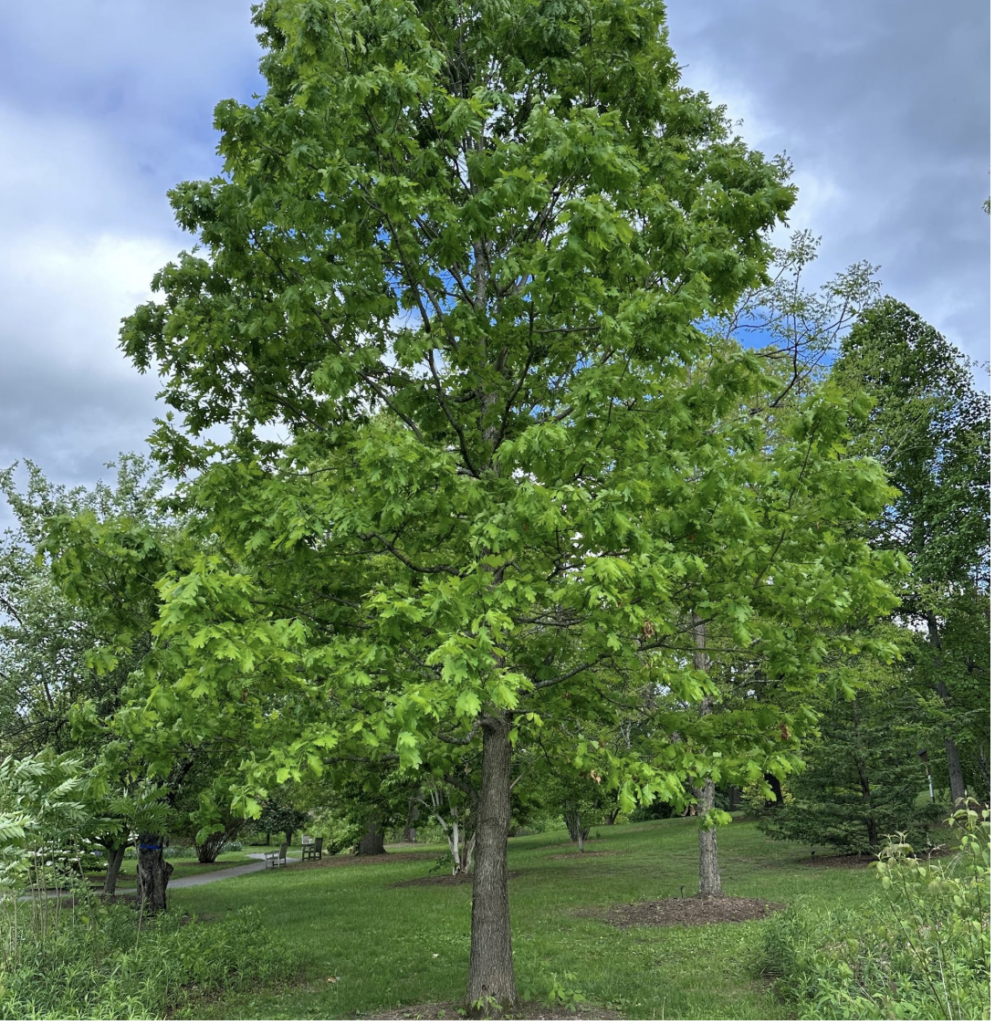
Amherst Arbor Spotlight: White Oak
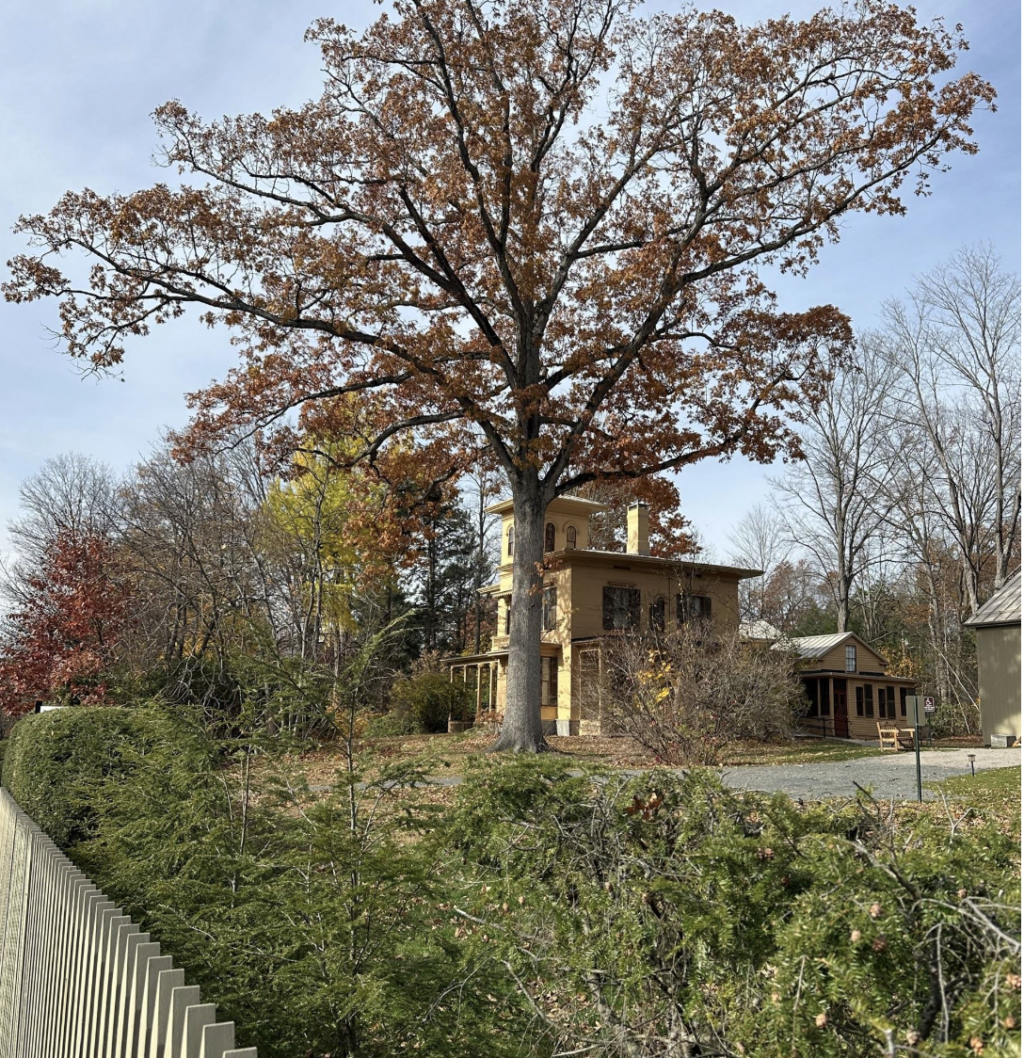
A spectacular white oak grows next door to the Dickinson Homestead at the Evergreens, the 19th-century Italianate home of Austin and Susan Dickinson, and also part of the Dickinson museum campus. Austin likely sited and planted this oak. Photo: Amherst Public Shade Tree Committee
by The Amherst Public Shade Tree Committee
This is the first in a series of 12 articles produced by the Amherst Public Shade Tree Committee (APSTC) under the title “Amherst Arbor Spotlight.” The series will focus on the town’s 12 species of shade trees and feature a different tree each month. New articles will be posted on the first day of the month on the APSTC website, and in the Amherst Indy, with links on Facebook, Instagram
White Oak: Quercus alba
The majestic white oak is one of the largest native trees in Amherst. It is slow-growing but long-lived, with a typical lifespan of 200 to 300 years. The tree can reach heights of 80 to 100 feet and has sturdy horizontal branches. A deciduous species, the white oak’s shiny green leaves turn a deep wine-red color in the fall and host many species of butterflies and moths. Its plentiful acorns are a vital food source for wildlife. Oak wood is heavy and strong, making it an ideal material for hardwood flooring and furniture fabrication. Early Americans used it for every purpose. In 1797, Boston shipbuilders constructed the outer hull, deck, and keel of the USS Constitution (“Old Ironsides”) from thick planks of white oak lumber. White oak is the preferred material for wooden barrels used to age wine and whiskey, as it imparts distinct flavors.
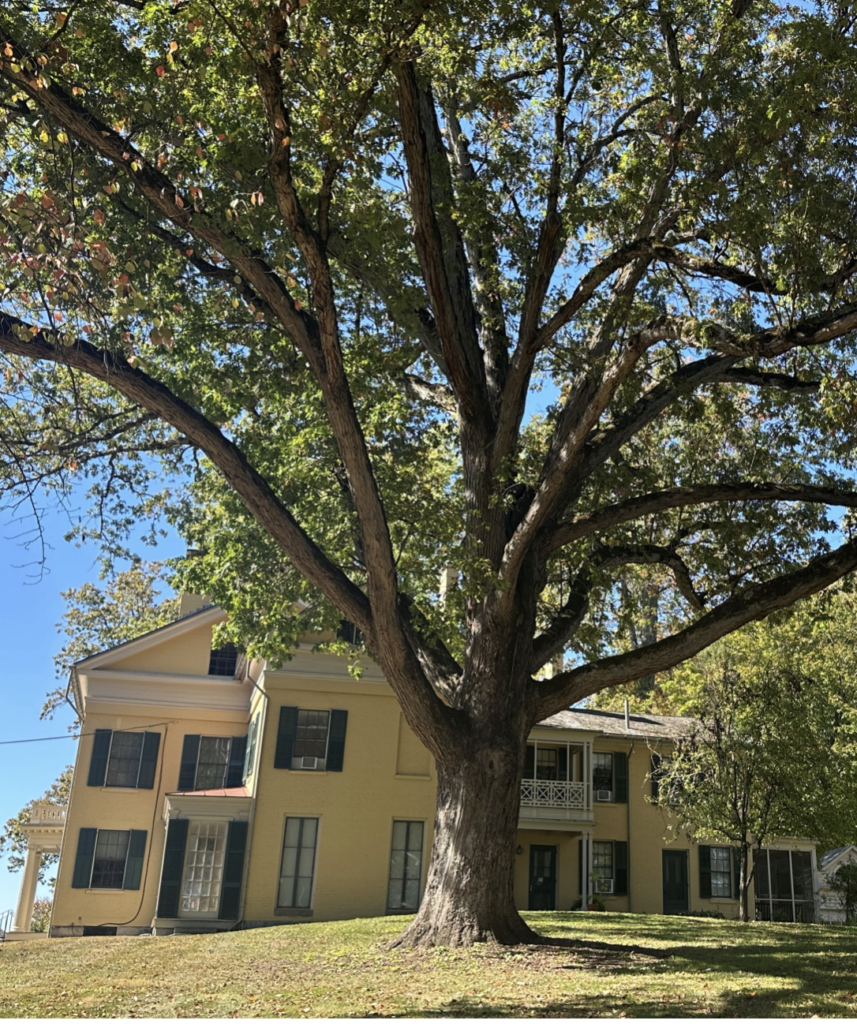
The white oak at the Emily Dickinson Museum—on the east lawn of the Homestead—is one of the most splendid in Amherst. Emily’s brother, William Austin Dickinson, may have planted this tree, which is clearly visible in a 1916 photograph of the property and is tall enough to have been planted during Emily’s lifetime (1830-1886). Austin co-founded the Amherst Ornamental Tree Association in 1857 to help beautify the town. Like his grandfather, he scoured the New England countryside for the best specimen trees to replant on his property, The Evergreens (see below), as well as on the Amherst College campus and the Town Common. A symbol of resistance, this white oak was one of the few trees to survive the hurricane of 1938 that toppled 3,000 trees in Amherst.
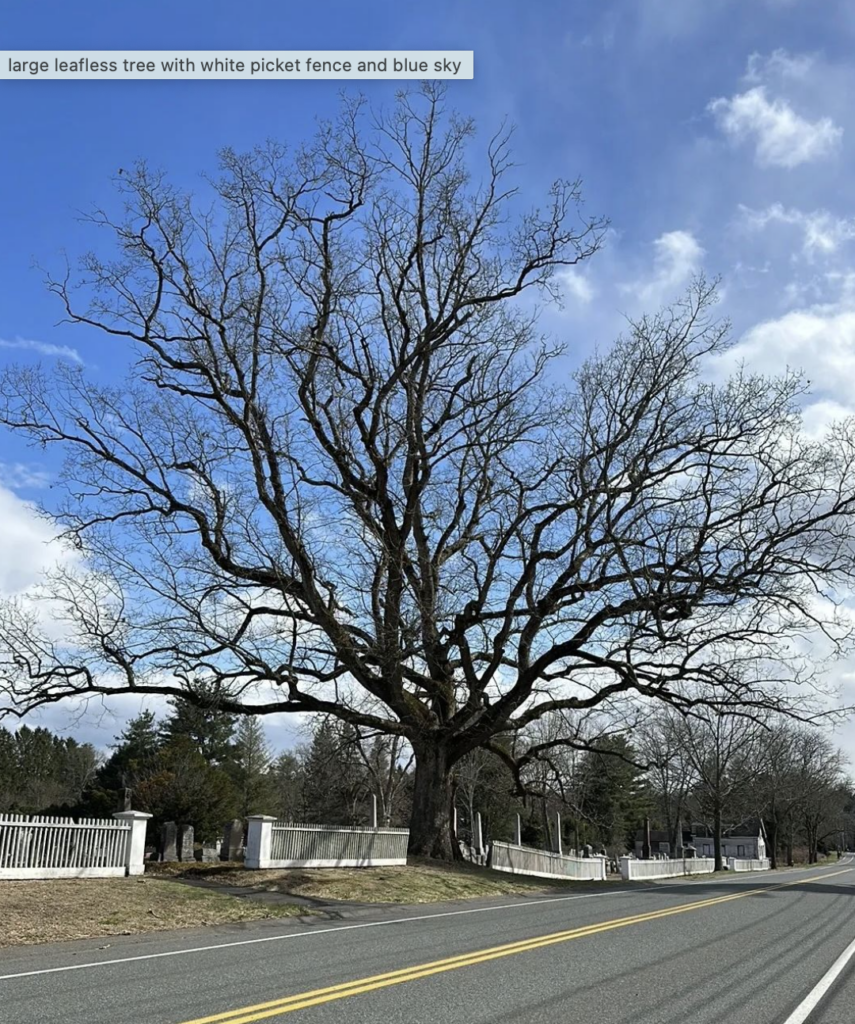
It’s hard to miss the imposing craggy white oak at North Cemetery on East Pleasant Street, located along the white picket fence. The town of Amherst created the North and South Cemeteries in 1818. (Though located near houses of worship, they are municipal, not church, cemeteries.) In 1846, the town approved $200 to add shade and ornamental trees at both locations. Perhaps this is when the white oak was planted, making it over 150 years old today. Surveyors often planted white oaks along property lines or as landmarks since they expected the trees to remain standing for many years.
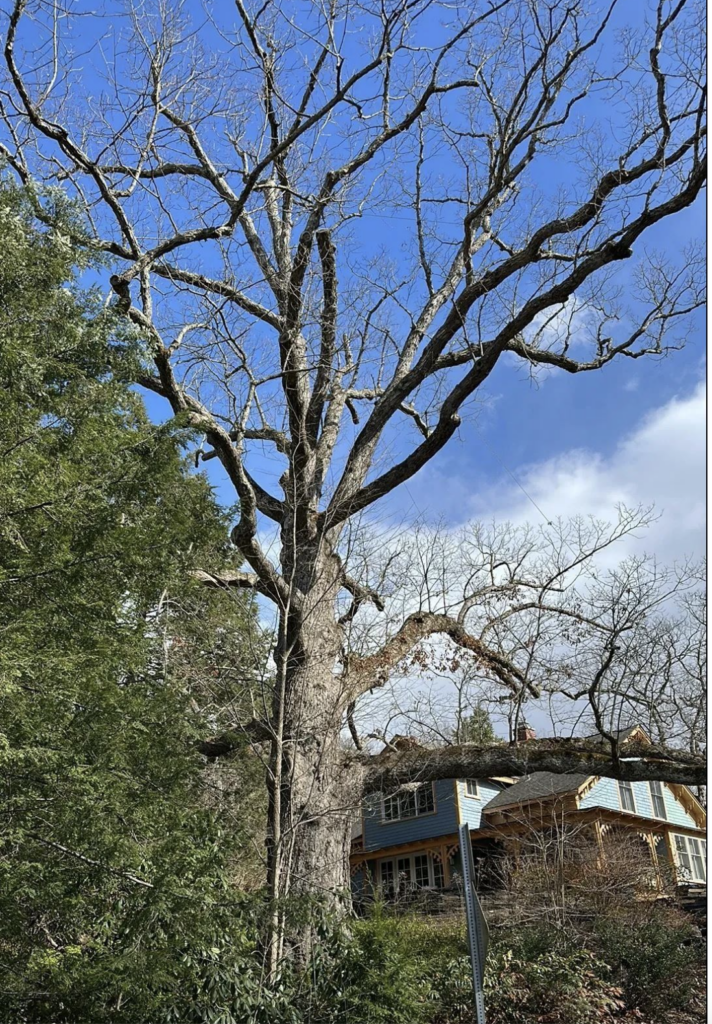
Towering on private property is an ancient white oak at 172 State Street, to the right of the Puffer’s Pond waterfall. In 1943, author W. R. Brown wrote in Trees of Amherst: “This great oak is the biggest white oak tree in Amherst and stands by the waterfall of the Golden Gate Pond, at the east end of Summer Street…. The Davey tree experts who did some work on it 30 years ago, think it must be over 300 years old. Its trunk is as sound as a nut and there are no dead branches to indicate senility.” If Brown’s dating was accurate, it makes this white oak nearly 400 years old! Though the tree is showing its age, the current property owners have taken care to keep it well pruned.
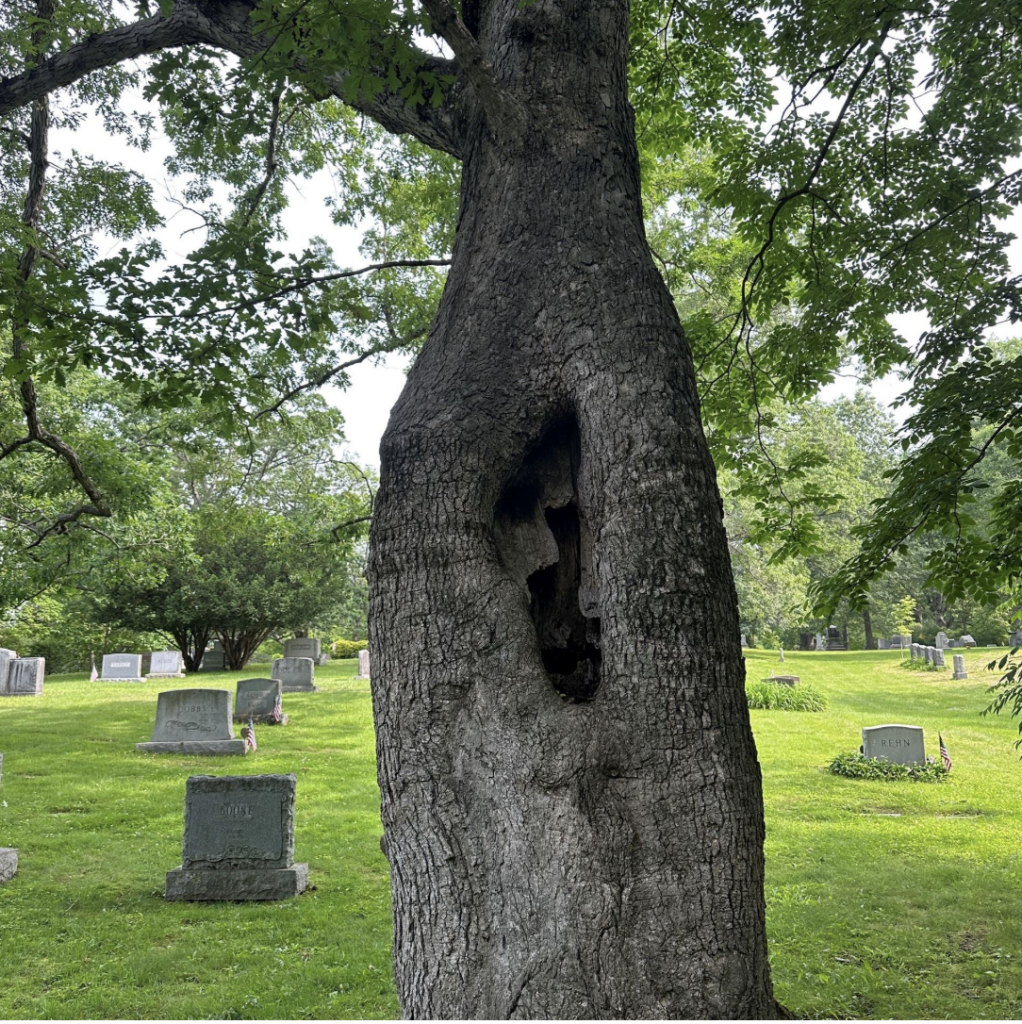
Amherst residents can see fine white oaks in Wildwood Cemetery, along with many other specimen trees (Austin Dickinson, co-founder of the Amherst Cemetery Association in 1887, designed the property’s original landscape with native trees as recommended by Frederick Law Olmsted). One oak in the southwest section of Wildwood is quite distinctive for the enormous cavity in its trunk, perhaps created when a large branch broke off many years ago. Animals and birds use such tree holes for nesting, roosting, and food caching.
Forests may be gorgeous but there is nothing more alive than a tree that learns how to grow in a cemetery.
–ANDREA GIBSON (1975 – 2025)
There is a young, thriving white oak at Orchard Hill Arboretum in South Amherst. The Arboretum is a town conservation area with a diverse collection of 75 species of trees and shrubs, all labeled for easy identification. It’s a great place to visit and learn!