
UMass Amherst Earns ‘Community-engaged University’ Designation for Third Time
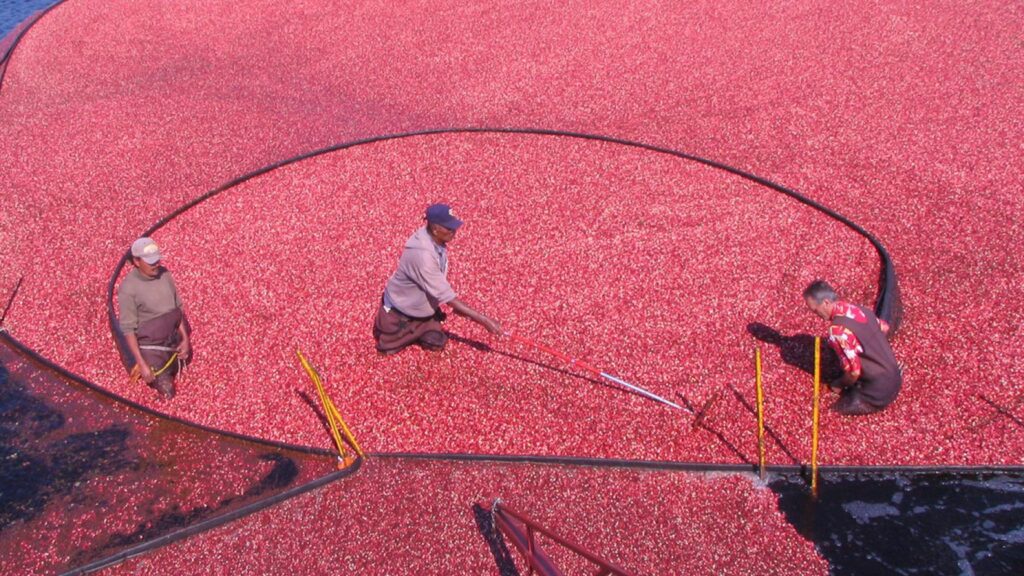
The UMass Cranberry Station's partnership with the Cape Cod Cranberry Growers Association was one of eight community parterrnships at Umass Amherst that were recognized as exemplary by the Carnegie Commission. Photo: umass.edu
Source: UMass News and Media
The University of Massachusetts Amherst has earned the 2026 Carnegie Community Engagement (CE) Classification, a designation by the American Council on Education (ACE) and the Carnegie Foundation for the Advancement of Teaching that highlights an institution’s commitment to community engagement.
The Carnegie Classifications are the nation’s leading framework for categorizing and describing colleges and universities in the U.S., frequently used by policymakers, funders and researchers as a critical benchmarking tool for postsecondary institutions. It is considered a mark of excellence for institutions that prioritize active collaboration with public, private and nonprofit partners to address humanity’s urgent challenges and serve the public good.
“UMass Amherst’s commitment to serving the common good is a guiding principle for everything that we do: our academic programs, our research and scholarship, our partnerships and collaborations for community engagement and economic development, and our creative and entrepreneurial endeavors,” said UMass Amherst Chancellor Javier A. Reyes. “I am gratified that UMass Amherst has once again achieved this mark of excellence.”
This is the third time UMass Amherst has earned the classification, after receiving it in 2008 for the first time, and again in 2015. UMass Amherst is among 157 public institutions nationwide to earn the classification for 2026.
The yearlong documentation and application effort involved members of the UMass Amherst Faculty Senate Council on Public Engagement and Outreach and the office of Civic Engagement and Service-Learning (CESL), along with members of the faculty, leaders of major campus engagement initiatives, deans and associate deans.
The university’s application focused, in part, on eight major academic-community partnerships being pursued by UMass Amherst with external partners.
Exemplary community partnerships reviewed by the Carnegie Commission include:
- The UMass Cranberry Station’s partnership with the Cape Cod Cranberry Growers’ Association includes both research and outreach programs to benefit the cranberry industry, which is an integral part of the economy and character of Massachusetts, supporting nearly 6,400 jobs and contributing $1.7 billion in economic impact annually. The partnership also impacts the community through sustainable land management practices and water quality. Current research projects linked to the partnership cover entomology, plant nutrition, physiology, pathology and weed management.
- The Holyoke Community Energy Project, a campus-community partnership with non-profits Neighbor to Neighbor Holyoke and OneHolyoke Community Development Corp., is designed to address pressing energy and housing challenges, with a focus on advancing residential electrification as a means to improve affordable housing conditions and tackle environmental justice issues impacting low-and middle-income, Black and Latine residents. The project’s cornerstone is the Energy Justice Leaders program, a cohort-based workshop series where Holyoke residents share and build their knowledge of energy issues through collaboration with academic researchers. The partnership upholds principles of mutual trust, respect and sustainability, aiming to build long-term relationships that foster civic engagement and drive equitable policy changes in the energy sector.
- The UMass Amherst Food as Medicine initiative includes partnerships with three food/produce prescription programs: Baystate Health, Wellspring Cooperative, and the Springfield Produce Prescription Project; Holyoke Health Center and Nuestras Raices; and Hilltown Community Health Center and Healthy Hampshire. The three programs aim to improve the consumption of fruits and vegetables for health and well-being and increase food security among community members, targeting a mix of youth, vulnerable adults, low-income individuals, and families across various towns in Hampshire, Hampden, Berkshire and Franklin counties. The initiative supports UMass’s role in addressing public health challenges and allows students to gain hands-on experience in data collection and program implementation while faculty refine their research in public health and nutrition.