
CPAC Recommends High Spending for FY27 but Pickleball Gets Nothing
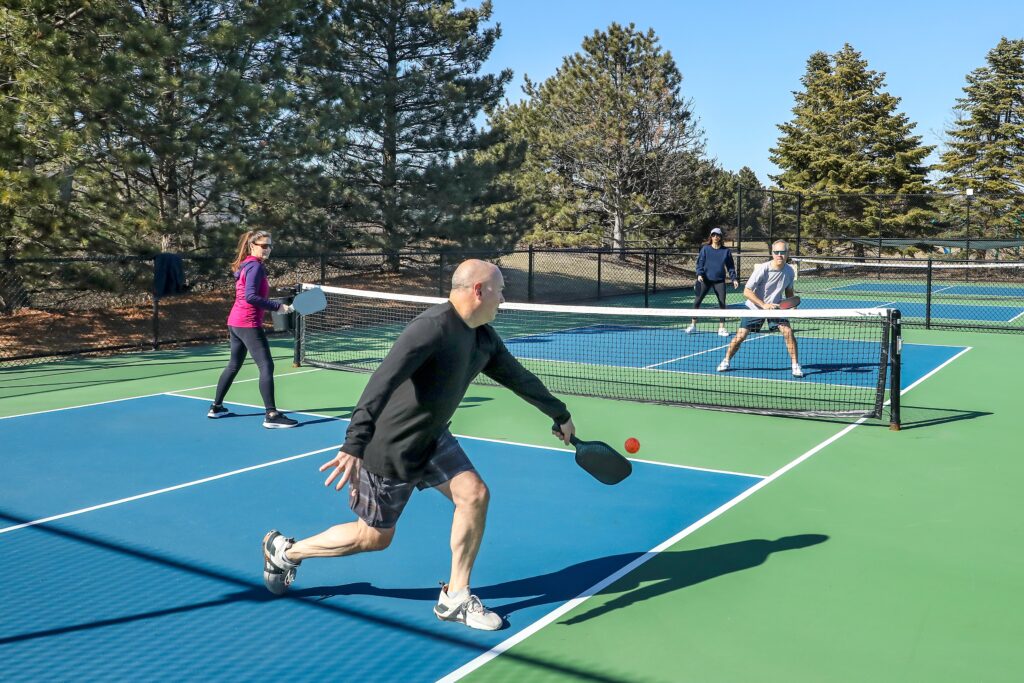
Photo: Shutterstock
Report on the Meeting of the Amherst Community Preservation Act Committee
This meeting was held over Zoom and was recorded.
The Community Preservation Act Committee (CPAC) voted on February 5, 2026 to recommend spending essentially their entire $3.1 million budget plus $1.5 million in future debt on 14 projects that applied for funds for FY27. Votes were taken on every application and were unanimous with the exception of the Jones Library building project. Conservation Commission representative Jason Dorney voted against any funding for this project and Amherst Historic Commission (AHC) representative Robin Fordham abstained. New CPAC member Marc Barrette was absent, and Bob Saul participated in deliberations but left the meeting before voting.
Eight projects were recommended at their requested amounts and five projects were recommended at lower funding levels than were sought. Two projects were denied any funding (pickleball courts at Groff Park and passive recreation at Mill River) and the committee recommended that funds be set aside in the General Reserve for the restoration of the Goodwin Church to give them time to develop their plan and return to the CPAC for approval by June 2027. Details of the recommended funding are shown below:
| Recommended by CPAC | ||||
| Project | Requested | Appropriation | Bonding | General Reserve |
| Civil War Tablets | $75,000 | $75,000 | ||
| Amity Street Redevelopment | $450,000 | $450,000 | ||
| War Memorial Bathhouse | $1,500,000 | $1,500,000 | ||
| Strong House | $275,148 | $275,148 | ||
| Part-time planner | $90,000 | $90,000 | ||
| Trails, bridges, boardwalks | $100,000 | $100,000 | ||
| Affordable Housing Trust | $575,000 | $325,000 | ||
| Town Hall Slate Roof | $1,000,000 | $1,000,000 | ||
| Skate Park design | $40,000 | $20,000 | ||
| Recreation/Conservation Signs | $100,000 | $100,000 | ||
| Mill River: historical survey | $125,000 | $75,000 | ||
| North & South Cemeteries | $100,000 | $50,000 | ||
| Goodwin Church restoration | $48,000 | $0 | $48,000 | |
| Pickleball courts at Groff Park | $650,000 | $0 | ||
| Jones Library building project | $1,252,306 | $477,000 | ||
| Mill River: passive recreation | $85,000 | $0 | ||
| TOTAL | $6,465,454 | $3,037,148 | $1,500,000 | $48,000 |
Financial Options
Finance Director Sean Mangano presented the committee with options for funding the projects based on the preliminary figures developed at their previous meeting. He noted that the committee did not have to recommend authorizing the entire budget as the unspent amount would be rolled over into future years. Mangano’s options included 1) no borrowing, which would require that the total amount recommended be reduced by a little over $1.5 million, 2) use $1.5 million in borrowing for the War Memorial bathhouse and reduce the other funding by about $62,000, or 3) borrow $2.1 million for the bathhouse and the Town Hall roof and leave a little over half a million dollars unallocated this year. He noted that taking on more debt affects the town’s bond rating and reduces the CPA funding available in future years. Most of the CPAC members were generally inclined toward option 2 and they went on to discuss how to shave off the $62,080 from their preliminary figures.
Pickleball Gets Nothing
Although the committee’s preliminary figure had proposed no funding for the pickleball courts, Recreation Commission representative Jonas Cox said he wasn’t happy about that. Chair Katie Zobel said she was told by Assistant Town Manager Dave Ziomek that this project likely wouldn’t return next year to try again. Ziomek indicated that a significant amount of staff time has been invested in this project and that there is some “fatigue” due to the length of time it has taken.
Zobel and Amherst Historic Commission representative Fordham noted that CPAC had not received letters of support for this project from the community, but Cox said that many people had attended Recreation Commission meetings to support the project when it was being discussed there and suggested that they might have thought that they did not need to continue to voice support as the town had taken the lead in moving the project forward for CPA funding.
Also noted was that pickleball had received a very high volume of supportive public comments when it was last before the CPAC for FY25 and that this year, most comments they received were either for or against the library funding. The pickleball courts received a unanimous vote for a $100,000 allocation by the FY25 CPA committee, but that amount was not sufficient to construct the courts at Groff Park. Ziomek acknowledged that not providing CPA funds this year might effectively end the pickleball project, and that it was unlikely to be brought back next year but expressed understanding that it was for the committee to decide.
Goodwin Church Gets Extension
Fordham informed the committee that members of the AHC (Hetty Startup and Joel Greenbaum) had met with representatives of the Goodwin Church and that they were working together to address deficiencies in their application, at least in part due to the recent death of their pastor. Fordham encouraged the CPAC to set aside the $48,000 that was requested in a General Reserve fund to give the applicants, who are members of a marginalized community, time to plan and return to the CPAC for an off-cycle request (before the end of June 2027). She noted that the building is on the National Register of Historic Places and that failing to repair the building in a timely manner would result in continued water damage. CPAC members ultimately agreed to Fordham’s suggestion.
Finding the $62,080; Library Funding Trimmed But Not Cut
The committee considered several options to reduce their recommendations in order to stay under budget. Member Tim Neale proposed further decreasing the already lowered amount for the Amherst Municipal Housing Trust, but eventually relented when several other committee members pushed back against that idea. There was general agreement to decrease the funding for the Skate Park by half ($20,000). Funding for Recreation and Conservation signage was increased back to the requested level, adding $50,000.
Dorney has repeatedly stated that the Jones Library project should not receive any CPA funds, as it is already receiving a substantial amount of town funding. He also questioned whether CPA funds could legitimately be used for the stated purpose. Planning Board representative Angus McLeod acknowledged that the project is already funded and that the work will happen regardless of this application for CPA funding. He offered a compromise of decreasing the preliminary figure by $100,000 to bring the total recommendation within this year’s CPA budget.
Zobel had previously stated that town officials believed that the library’s request was not supplanting previously allocated funds, but that the Town Council could seek legal guidance about this issue when the CPA recommendations go to it for authorization.
In the context of the Massachusetts Community Preservation Act (CPA), supplanting occurs when CPA funds are used to replace, rather than add to, the existing funding for projects or services that the municipality was already planning to fund, or has already appropriated money for. The CPA requires that funds be used to supplement (increase) local funding, and prohibits using them to supplant (replace) funds that are typically included in the regular municipal operating or capital budget.
Zobel also expressed concern that the Jones’ endowment would have to be used to cover the library’s share of the project if funds are not secured from other sources. The committee did not address other concerns that had been raised, such as the prohibition against the use of CPA funds for projects that do not meet the Secretary of the Interior’s Standards for Historic Preservation. The final vote on the Jones Library request was five in favor (Zobel, Neale, Keiter, McLeod, Cox), one opposed (Dorney), 1 abstention (Fordham), and 2 absent (Saul excused himself from the meeting before the voting took place, and Barrette).
On to the Town Council
The CPAC recommendations will go to the Town Council, which must authorize funding. This has not yet been added to their schedule.
It is ironic that the CPA Committee chose to give nothing to Dave Ziomek’s proposal to build public pickle ball courts. The request was squeezed out by the decision to award $477,000 to the lower ranked proposal from the Jones Library. The popularity of pickle ball in Amherst was demonstrated in November when a tournament at the private Bay Road Tennis Club raised $19,000 for the Friends of the Jones Library.
As a new recreation facility, the pickle ball courts are exactly the type of project the Community Preservation Act was designed for. CPA money is clearly not meant to be used as a slush fund for an entity to replace funds that have already been appropriated. The Town took on full funding of the $46.1 million library expansion in April, soon after the Jones Library Capital Campaign assured the Town Council that it could cover its agreed upon share of project expenses.
Pickleball would be something great for Amherst. I don’t play, but I have seen so many people who do. It promotes an active lifestyle, it gets people outdoors, it helps foster community. I do hope there is a possibility this can happen at some point.
I would like CPAC to prioritize 80% for sustainable and affordable housing for low and moderate income and workforce residents and seniors as Cambridge does so we don’t keep losing residents. Especially when we have such a tight budget and staff that are stretched to the max.
While researching what pickleball is, I was surprised to discover that there are 50+ tennis courts in Amherst.
I think this article would have seemed more objective, or less prejudiced, or less biased, or however you want to put it (It would have seemed like more solid journalism), if the issue and photo of pickleball hadn’t been featured at the top.
The issue of the ongoing struggle of Amherst trying to obtain CPA funds seems like a struggle that serves Amherst only. The CPA was started by former Republican Governor Paul Cellucci and Lt. Governor Jane Swift. Tax money from all Massachusetts taxpayers is collected and the CPA enables some communities to get a disproportionate amount of the money back. Right now our two state representatives are attempting to even out the state funding picture by obtaining funding for underfunded communities in Western Massachusetts, focusing on rural school aid, municipal aid, and equitable distribution of state resources. They are attempting to undo some of the damage done by the CPA.
There is active debate concerning the CPA in Massachusetts. Critics argue that it is used more for open space than for affordable housing. “Affluent Communities” like Amherst can thrive by preserving open space, therefore increasing property values, making it harder for less affluent communities and making it harder for members of those communities to afford to live in communities like Amherst. The “state match” has become more diluted making the program less rewarding for new adopters.
To obtain funds using the CPA we take money from underserved communities. As by their choice (and it is their choice), not all of Massachusetts is signed up for the CPA. 57% of Mass municipalities are members, which covers a majority, but not all of Massachusetts taxpayers (70%).
Speaking of being more objective:
There is no “ongoing struggle of Amherst trying to obtain CPA funds”. CPA funds come from primarily from Amherst taxpayers (it’s a “local option tax”) with some additional money from the state budget. While the latter varies as the state budget changes, the bulk of CPA funds accrue without trouble.
The second para conflates two different issues: equitable state funding for western MA and the state’s CPA match. Of course, both are funded by taxpayer monies, but the amounts are in no way linked to each other.
The commenter is right that the amount of state-budget derived “sweetener” is less than it used to be. When my old home town of Dedham decided not to adopt the CPA, it did so knowing full well that it was foregoing that ever-changing “state match.” Instead, Dedham’s choice was to not raise local property taxes to fund the CPA. That result is not, as the commenter suggests, a bug; local option is a feature.