
Cherry Hill Working Group Recommends Revolving Fund for Golf Course Finances
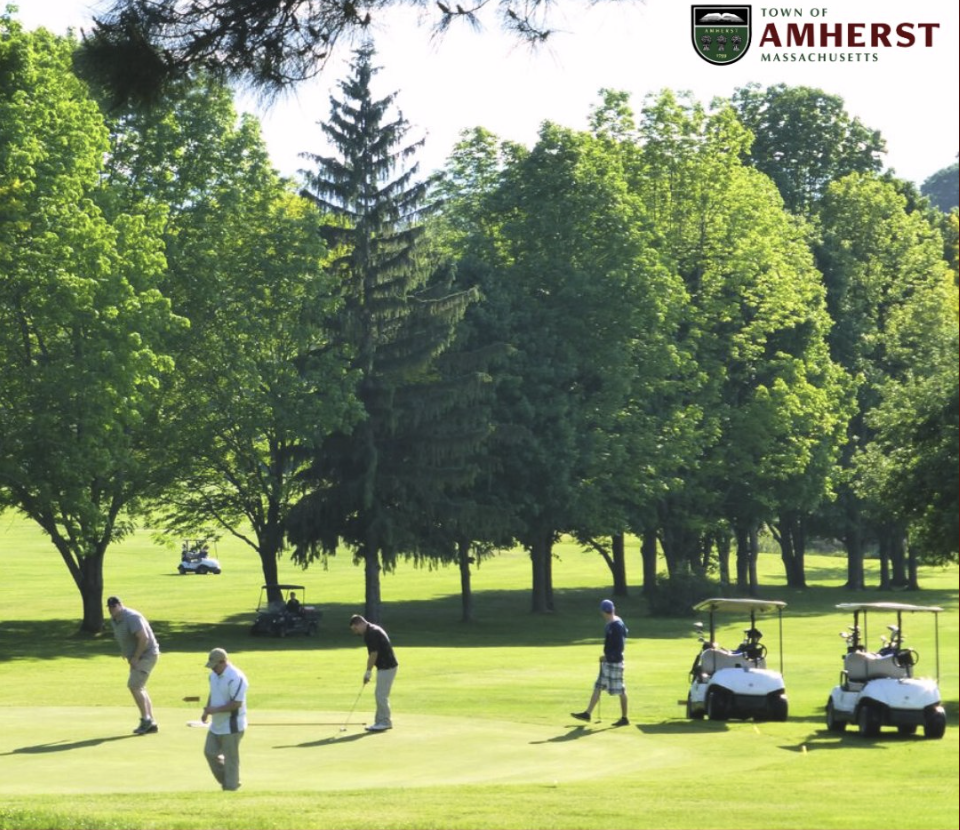
Cherry Hill Golf Course. Photo: amherstma.gov
Report on the Meeting of the Cherry Hill Working Group, March 2, 2026
This meeting was held over Zoom and was recorded.
Present
Michele Miller (Chair), Sanjay Arwade, Ryan Diplock, Sarah Goff, Hilary Matheson, Chris Pariseau, Anurag Sharma
Staff: Dave Ziomek (Assistant Town Manager) and Rey Harp (Recreation Director)
At the February 4 meeting of the Cherry Hill Working Group (CHWG), Amherst Finance Director Sean Mangano outlined two options for the golf course to be able to reinvest its profits into improvements and maintenance—an enterprise fund or a revolving fund. Currently, the course is included in the general budget. Members of the CHWG unanimously voted to recommend to the Town Manager that the course become a revolving fund.
The course had been an enterprise fund until the 1990s when both the sprinkler system and clubhouse needed major renovations that the fund could not cover. In recent years CHWG member Ryan Diplock demonstrated that the course has been profitable but the town has not contributed adequately to its upkeep and needed improvements. Diplock said that his accounting of the recent finances had been verified by Mangano.
Diplcok said the revolving fund transparently “marries the course’s revenue and expenses,” so that profits can be reinvested in the course, but the town can cover a short-term deficit. In an enterprise fund, the course cannot run a deficit. He did suggest that the town invest $110,000 a year for two years to pay for deferred maintenance, and the course could reimburse the town over the subsequent five years.
Diplock’s suggestions for increasing revenue include adopting a tee management system to optimize utilization, increasing fees, extending the course’s hours and dates, and expanding the food and drink options in the clubhouse. His model included the hiring of a full-time manager and a part-time employee. Assistant Town Manager Dave Ziomek pointed out that there is some risk to the revolving fund not being able to cover expenses in the event of an economic downturn, and this risk would be increased with the additional staff.
Working group member Hillary Matheson asked if going to a revolving fund would interfere with any effort of a Friends of Cherry Hill group to contribute to the course. Ziomek didn’t think there would be a conflict, citing the Friends of Puffer’s Pond who hold fundraisers and work with the town to improve the pond. He thought a Friends group for the golf course could work with Recreation Director Rey Harp to write grants and raise money for specific projects.
In public comment, long-time Cherry Hill member Andrew Pazmany suggested that the course become a non-profit organization in order to raise money, but stay in the town budget for general funding. He noted that the golfers at Cherry Hill were older and less affluent than those at private courses, so an increase in fees would be a greater hardship on them.
Course Fees to Rise Slightly
Harp reported that his staff has decided to increase membership fees by 10% and green fees by $2 in all categories for the coming year. Cart fees were increased last year and will remain the same, but the membership and green fees have been stable for several years, even though costs have increased. He felt that, even with the increases, the fees are very competitive with other golf courses. He will monitor how the increased fees affect use of the course.
The staff has also decided to purchase tee scheduling software from Lightspeed Golf. Harp said that they were considering moving to a new software system before the working group suggested it, but were deterred because of the cost. It is hoped that the more efficient scheduling will recoup the cost of the software.
Harp said he considered expanding the hours that the course was open, but did not have the budget for extra staff time. He is considering increasing the food and drink offerings in the clubhouse.
Member Sanjay Andrade wanted it to be made known that the CHWG never voted on increasing the fees, although he acknowledged that that was the prerogative of the Recreation Director. Matheson said she was bothered by the fact that the fees were increasing without any commitment to improve the course. She suggested working with the UMass Turf School to help improve conditions at Cherry Hill.
Needed Investment in the Golf Course
Diplock’s financial model included a large increase for fertilizer and for financial services in the new software program. The increase in fertilizer would allow the course to be fertilized in the spring, before the golfing season began. He stated that Cherry Hill spends only 10% as much as other courses on fertilizer. He noted that with the expected gain in efficiency from the tee management system and the increased fees, one-third of the needed increase in income was already gained.
Harp informed the group that two sustainability improvements were planned for the course—switching to electric golf carts and renovating the pump house. The costs for these items will be in the hundreds of thousands of dollars. There was no discussion about how to pay for them, but Diplock’s model did have the town fronting the golf course with $110,000 a year for two years.
Next Steps
In forwarding the recommendation to the Town Manager to form a revolving fund for the golf course, the group was hopeful that the fund could be created for FY27. The Town Manager will need to establish bylaws specifying what the golf course is responsible for and what the town will cover.
Working group member Anurag Sharma said that his sense from the group’s meeting was that “the golf course is a cherished possession of town but to keep it so, it needs some investment, which it is not getting” from the current funding structure.
Chair Michele Miller said that there are so many demands on the overall town budget that it is difficult for the course to get what it needs. It is hoped that the new funding structure will improve the situation. Harp said that, as with the revolving fund for the swimming pools, the financial situation of the golf course will be monitored continuously.
The working group’s next meeting is scheduled for Monday, March 23 at 7 p.m.