
New State Solar Permitting Rules Limit Local Control
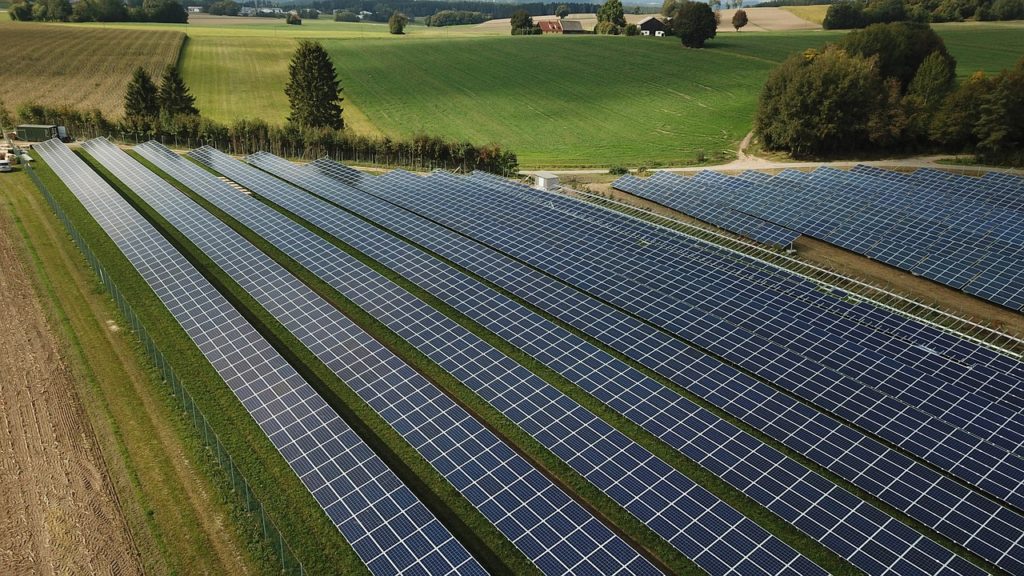
Photo: Pixabay.com. Public Domain
Report on the Joint Meeting of the Zoning Board of Appeals and Conservation Commission, March 3, 2026
This meeting was held over Zoom and was recorded.
Alex Weisheit, attorney for KP Law, met with members of the Zoning Board of Appeals (ZBA) and Conservation Commission on March 3 to discuss the implications of new solar siting regulations passed by the state as part of the governor’s 2024 Clean Energy Bill. Members of the Planning Board and the Energy and Climate Action Committee, town staff, and interested residents also took part.
The new regulations, which pertain only to large-scale ground-mounted solar arrays producing more than 25 kilowatts, went into effect on March 1, but guidelines for municipalities kick in on October 1. To meet the state’s climate goals, MGL Section 23C. states “Any provision in an instrument relative to the ownership or use of real property which purports to forbid or unreasonably restrict the installation or use of a solar energy system as defined in section one A of chapter forty A or the building of structures that facilitate the collection of solar energy shall be void.”
Of critical importance to municipalities is that all permitting for solar installations and Battery Energy Storage Systems (BESS) must be completed within 12 months of application, or they will be approved by the state’s Energy Facilities Siting Board (EFSB), an independent board supported administratively by the Department of Public Utilities.
Amherst is nearing the completion of a new solar bylaw, and Weisheit said that KP Law is also preparing a sample bylaw that will incorporate the new regulations. He cautioned that courts have ruled against towns that unreasonably restrict solar installations. He gave the example of a 2022 Supreme Judicial Court ruling against Lexington, because the town only allowed solar to be built on 2% of its land. Beginning in October, all disputes regarding solar siting and BESS will be settled by the EFSB, but Weisheit warned that appeals will be expensive, so it is important to have clear guidelines for municipal boards that meet the state’s requirements.
Towns do have some flexibility in regulating solar and battery sites, Weisheit said. In general, he thought that if a bylaw allowed the structures in at least 50% of zoning districts where they were legally and practically possible either by special permit or by right, it would be accepted by the state. The town may restrict solar arrays in wetlands and to specify dimensional requirements. He has also had success in prosecuting against a solar array built on a sleep slope that led to contamination of a stream due to increased stormwater run-off. He stressed that there must be valid reasons for any restrictions. The same guidelines apply to BESS.
Weisheit gave some reasonable restrictions that were likely to be accepted by the EFSB.
- Prohibitions in environmentally sensitive areas
- Limits on clearing vegetation
- Requirements for mitigation for loss of carbon sequestration from cutting down of forests
- Reasonable maximum lot size
- Reasonable screening requirements
Streamlined Permitting for Large-Scale Solar Arrays
The new guidelines mandate that each large-scale solar project needs only a single permit application and will receive a single decision on the permitting within 12 months of filing the application. Each municipality must appoint one official designee who will coordinate the process and issue a decision on projects. Smaller towns can turn this job over to the state. Large-scale solar projects of over 25 megawatts and BESS over 100 megawatts will be the jurisdiction of the state EFSB with some local input allowed.
Weisheit stressed that there is currently no means for waiving the 12-month deadline for issuing a decision on a permit. This means that all relevant boards—ZBA, Conservation Commission, Planning Board, etc.—must complete their deliberation in this time frame or the town will sacrifice its ability to decide.
KP Law should have its bylaw guidelines, which incorporate the new requirements, ready for municipalities to review in the next few weeks. The state is also supposed to issue its detailed guidelines in the next few weeks.
Solar bylaws should include a community plan, requirements for impact mitigation, when a peer review is required, criteria for approval, existing bylaws for setbacks and dimensional requirements, and a plan to decommission the installation. Weisheit reiterated that it is important to have clear guidelines and a clear process, because appeals of a decision can be very time-consuming and expensive.
No more solar farms, full stop. Panels belong on roofs, not the ground. Build housing and put them on the roofs. Put them over parking lots. Solar farms simply erase usable land for literally no reason. They arent even environmentally friendly, if the Valley wants to be serious about climate change we should be building a nuclear power plant.
I take issue with the accuracy of John’s comment. Plenty of farmers, for example, want to convert their land to solar farms, as it provides a reliable revenue stream for land that would otherwise lie fallow. You can’t build enough solar on top of roofs that would come even close to the amount you can get in a field, nevermind difficulty of maintenance, angle to the sun, installation of (necessary!) battery storage systems, etc.
“No more solar farms” is not a viable policy position, and thankfully in Massachusetts it is one that is increasingly being sidelined. Yes, in our backyard! We must all do our part, not burden others while we enjoy the fruits of their sacrifice.
Thanks for a concise summary of the new state rules, and what towns can and cannot do.
Thinking about Lexington which now can’t support the 1600 new condos* built under the MBTA act requirement, will historic 18c battlefields be exempt from solar farms?
*Boston Globe report.
Panels belong over roads and parking lots…and some roofs: the long lasting variety of standing seam roofing is convenient for hanging panels and should last more than one lifetime….at least longer than the life expectancy of the panels.
Some of the best intentions with respect to solar permitting haver resulted in the absolute worst statewide legislation that limited local control. In California, Maryland, and other states, “SolarAPP+ laws” are shutting down competition and innovation by pre-selecting a very limited-function state-approved solution as the preferred standard. Meanwhile, that solution is very limited in functionality and requires millions of dollars in ongoing government subsidies to scale in any meaningful way.
Policy should be technology-agnostic, clearly describe the goals and general means of compliance so that the market will absorb the BEST possible solution (not just the one named in the legislation), and it should be flexible enough to account for local jurisdiction nuances. Taking local control away is not the answer to getting things done better or faster!!
That’s a good point, Andrew, I hadn’t thought of unused farms, that is better than just growing grass. My fears is this land becomes forever locked as a solar farm. I like solar as well as most other green energy solutions, my worry is that these solar farms have to have fencing that prevents any human or animal movement through the space, and yeah, theyre not attractive. And I think there is an element of NIMBYism in some of the public excitement for them, as it gives them the idea that that land is now “safe” from ever housing poor people on it.