
Amherst Arbor Spotlight: Tupliptree
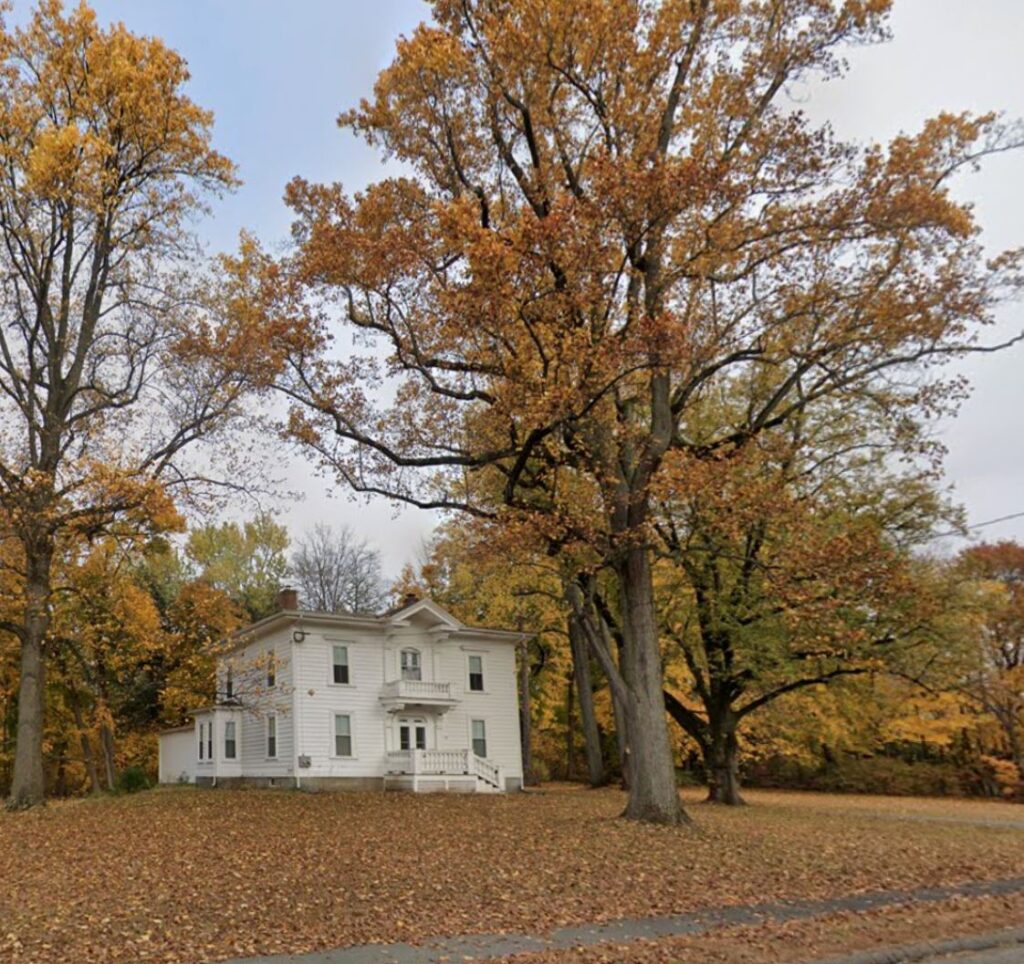
A large tuliptree at 99 Northampton Road, in front of a house built in 1900. Photo: Amherst Public Shade Tree Committee
by The Amherst Public Shade Tree Committee
This is the third in a series of 12 articles produced by the Amherst Public Shade Tree Committee (APSTC) under the title “Amherst Arbor Spotlight.” The series focuses on the town’s 12 species of shade trees and features a different tree each month. New articles will be posted on the first day of the month on the APSTC website, and in the Amherst Indy, with links on Facebook, Instagram. Read the previous columns here.
Tupliptree (Liriodendron tulipifera)
Also known as tulip poplar, tulip magnolia, and yellow poplar, the tuliptree is an excellent choice for planting in large open areas. It grows very straight and tall—it is the tallest of the eastern hardwoods, reaching heights of 150 feet—and its trunk can be unbranched up to 100 feet. The tuliptree gets its name from its springtime flowers, which resemble tulips with greenish yellow petals accented with orange. The flowers contain rich nectar that attracts bees, butterflies, and hummingbirds. The glossy green leaves have four broad lobes that turn golden yellow in autumn. Tuliptrees are native to eastern North America and can live for 200 to 300 years.
Tuliptree lumber is valued for its lightness and workability. Its white wood is used to craft furniture, crates, toys, and musical instruments. It was favored by loggers for railroad ties and fence posts. In 1785, George Washington planted two tuliptrees that still stand today, flanking the garden gate at Mount Vernon. Numerous indigenous tribes used the long straight tuliptree trunk for dugout canoes, a critical mode of transportation.
Tuliptrees shade several historic structures in downtown Amherst. It’s hard to miss the giant tuliptree that welcomes visitors to the Inn on Boltwood on the Town Common. The tree is approximately 70 feet tall and its trunk is 59 inches in diameter. Its summer leaves help conceal the ravages of age; its upper branches have snapped over the years to create a somewhat stunted silhouette in wintertime.
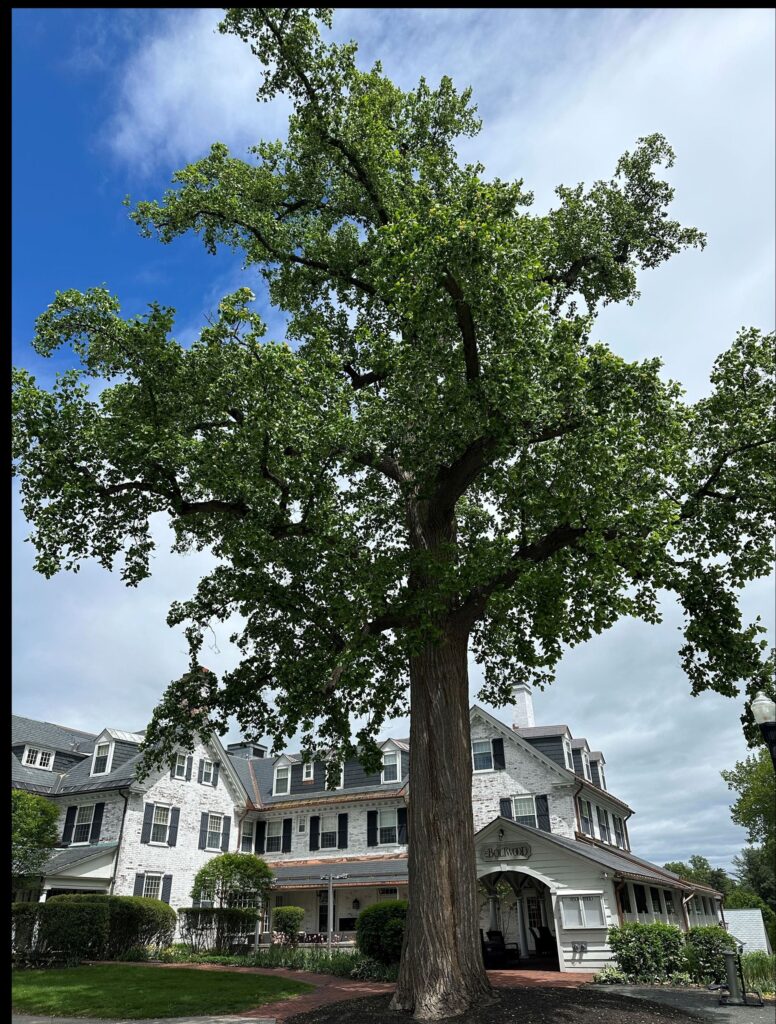
A prominent tuliptree grows at 30 North East street in front of the Jonathan Hubbard house, built in 1812. This tree may have once been part of a duo flanking the front door as there appears to be remnants of a tree stump to the right.
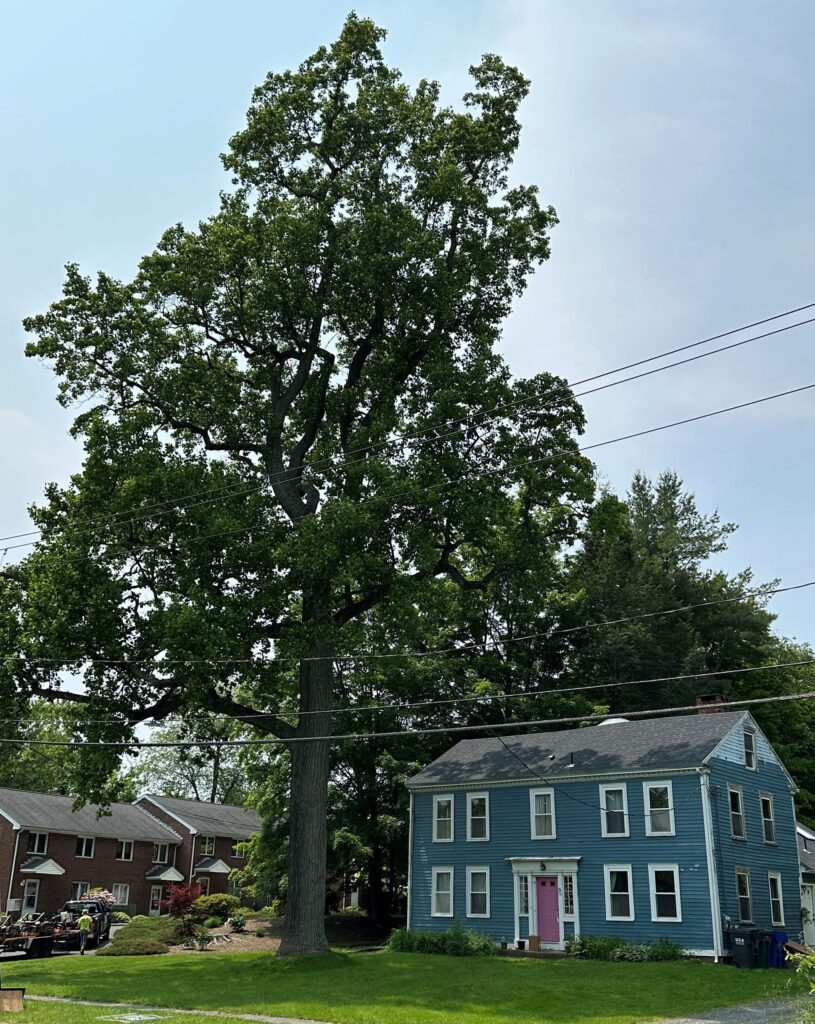
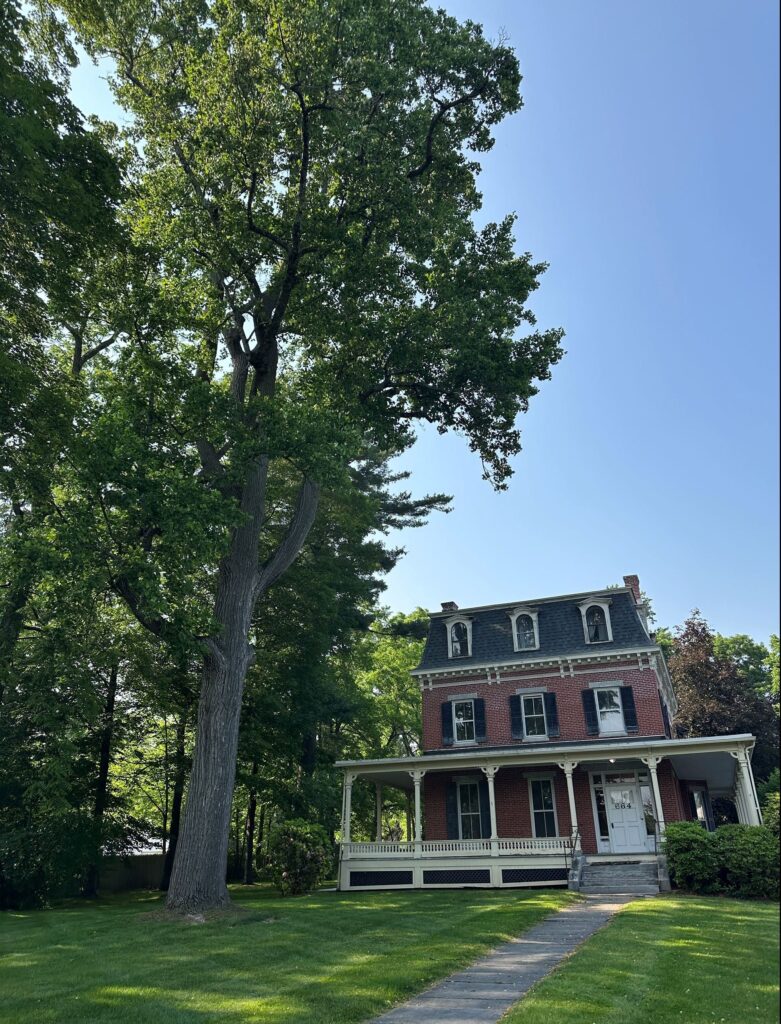
Nearby is another large tuliptree on the front lawn of the historic red brick Conkey-Stevens House, built in 1830 at 664 Main Street.
Up the hill to the west on Main Street stand two sizable tuliptrees on the front lawn of the Cyrus Kingman House, now operated as the Amherst Inn. The trees straddle the building’s front entrance, indicating they were intentionally planted, perhaps at the time the Victorian structure was constructed in the early 1850s.
A giant tuliptree grows across the street, between The Homestead and The Evergreens, on the Emily Dickinson Museum property. The tree, with its impressive trunk, is easily visible from the road.
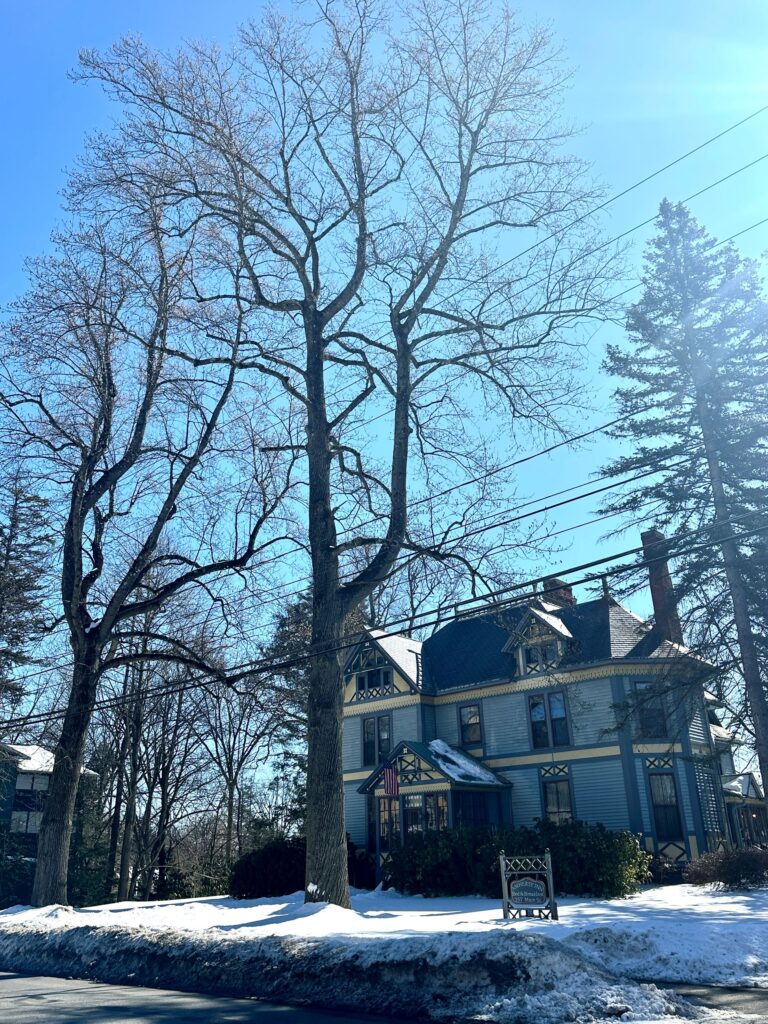
Photo: Amherst Public Shade Tree Committee
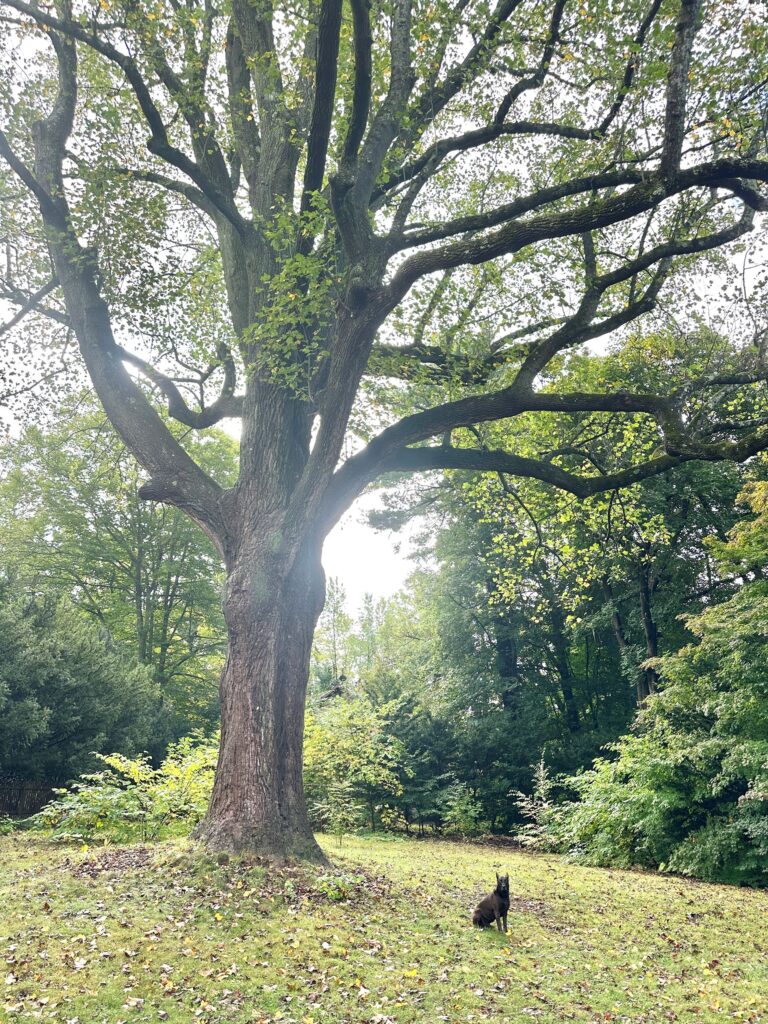
Arguably the grandest tree of all is the tuliptree at 30 Fearing Street. The enormous size of this tree is difficult to appreciate from the road as it grows on private property behind a house (though its towering branches high above the home are easily visible from public vantage points). In 2025, it measured 206 inches in circumference, making it the second largest tuliptree in the state of Massachusetts. The first, located on Keyes Street in Northampton, has a 207.6 inch circumference.
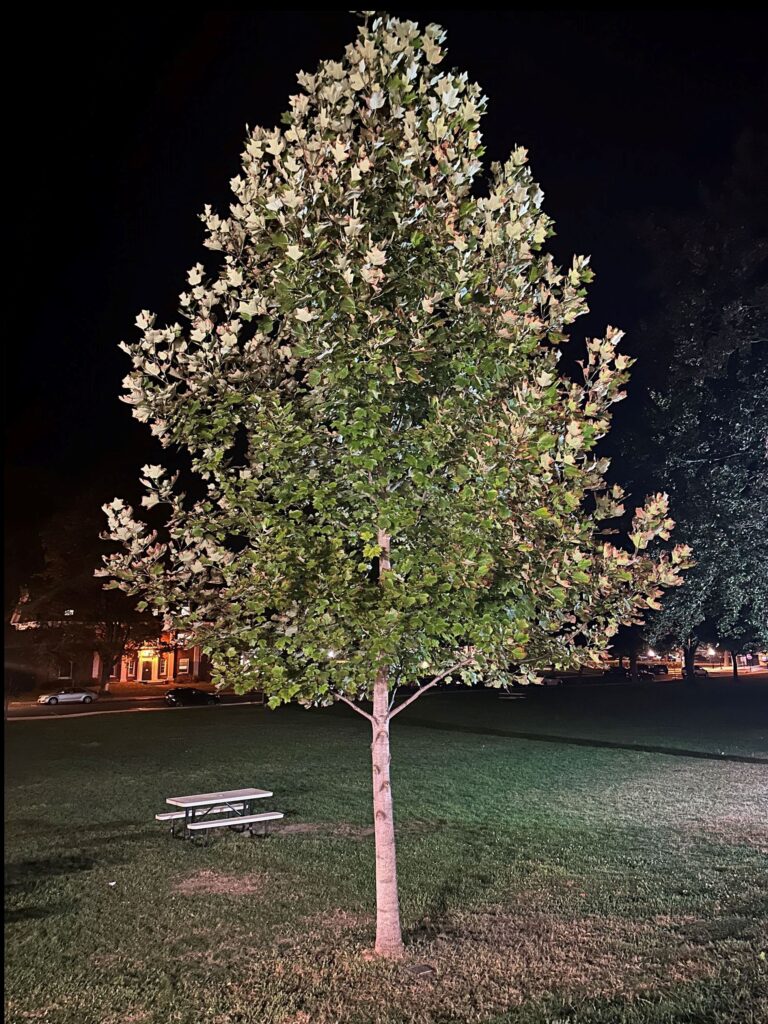
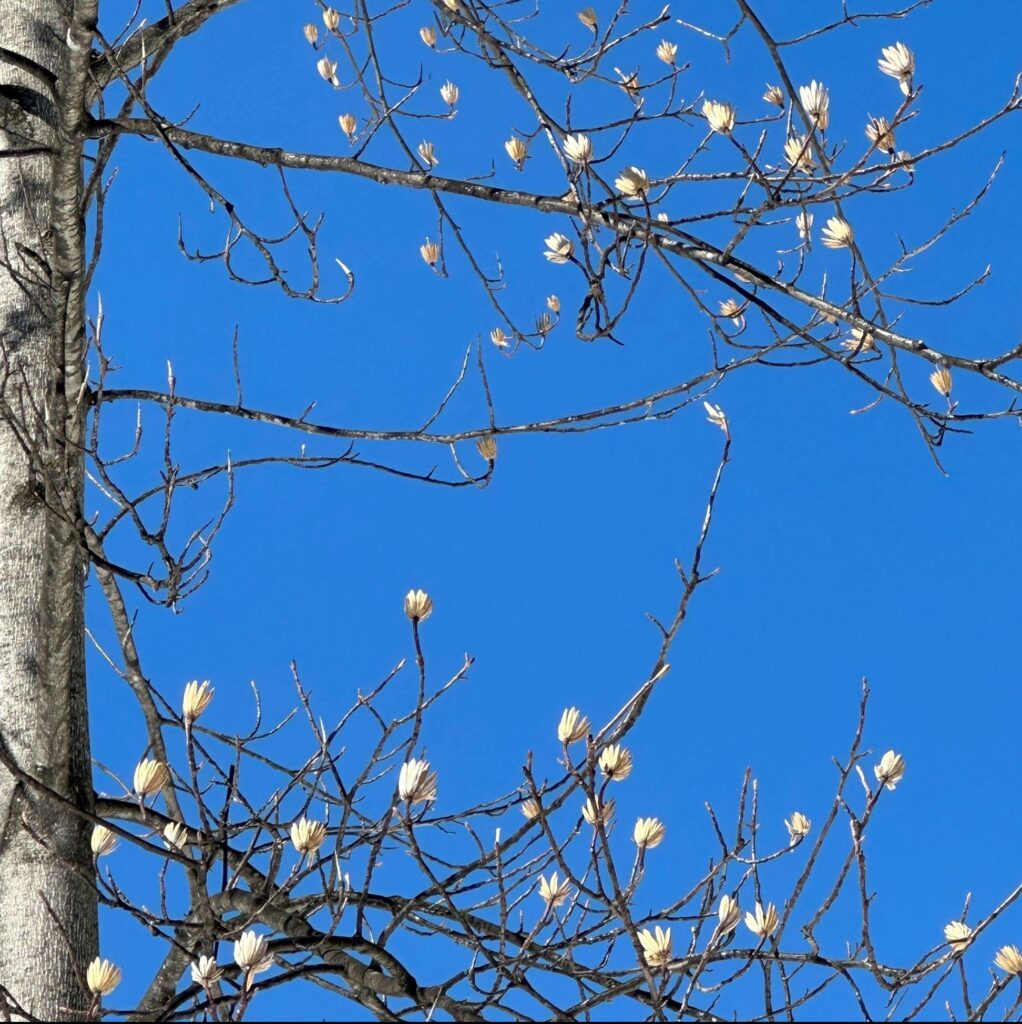
The tuliptree’s seed pods mature in summer and persist through winter, providing an easy identifying feature without its foliage. The seed pods measure two-to-three inches and appear like dried, brownish flowers. Winter winds, snow, and ice break the papery pods apart to release the tuliptree’s seeds, which provide food for birds and mammals, including finches, cardinal, quail, mice, squirrels, and rabbits.