Amherst Arbor Spotlight: American Sycamore
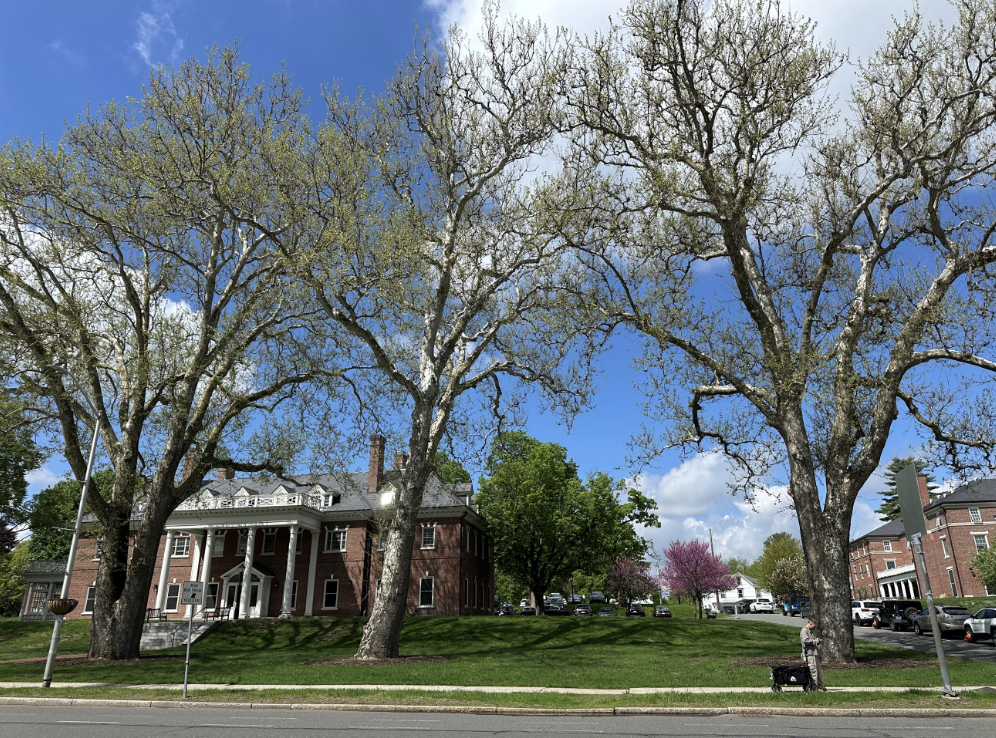
Three enormous American sycamores stand near the intersection of South Pleasant Street and Northampton Road. Photo: Amherst Public Shade Tree Committee
This is the fourth in a series of 12 articles produced by the Amherst Public Shade Tree Committee (APSTC) under the title “Amherst Arbor Spotlight.” The series focuses on the town’s 12 species of shade trees and features a different tree each month. New articles will be posted on the first day of the month on the APSTC website, and on the first Friday or each month in the Amherst Indy, with additional links on Facebook and Instagram. Read the previous columns in the series here.
American Sycamore:Platanus occidentalis
Native to the eastern United States, the American sycamore is the largest deciduous hardwood in North America. This grand shade tree can attain heights over 150 feet. Sycamores have light gray outer bark that peels in small plates to expose a creamy white inner bark, creating a dappled camouflage effect. The trees create distinct silhouettes in winter with their craggy branchlets that grow in radiating patterns. Some people confuse sycamores with sugar maples as their leaves are quite similar, though sycamore leaves tend to be much larger. The American sycamore is a great street tree. It is low maintenance and adaptable, tolerating extreme weather, pollution, salt, and wet soils.
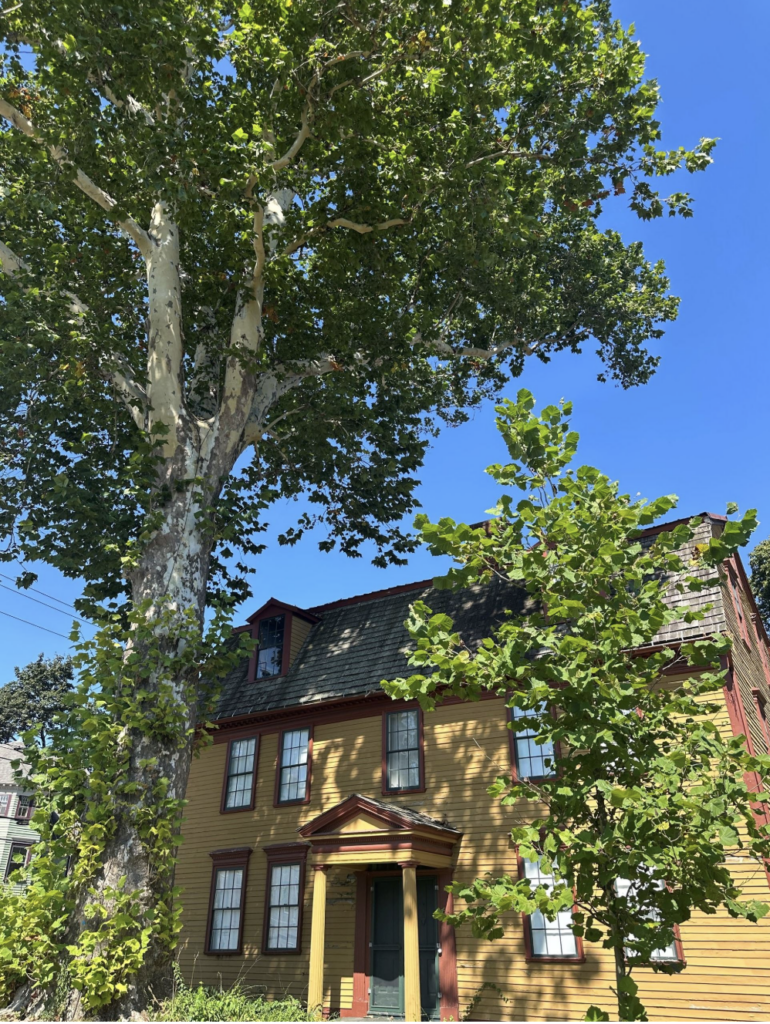
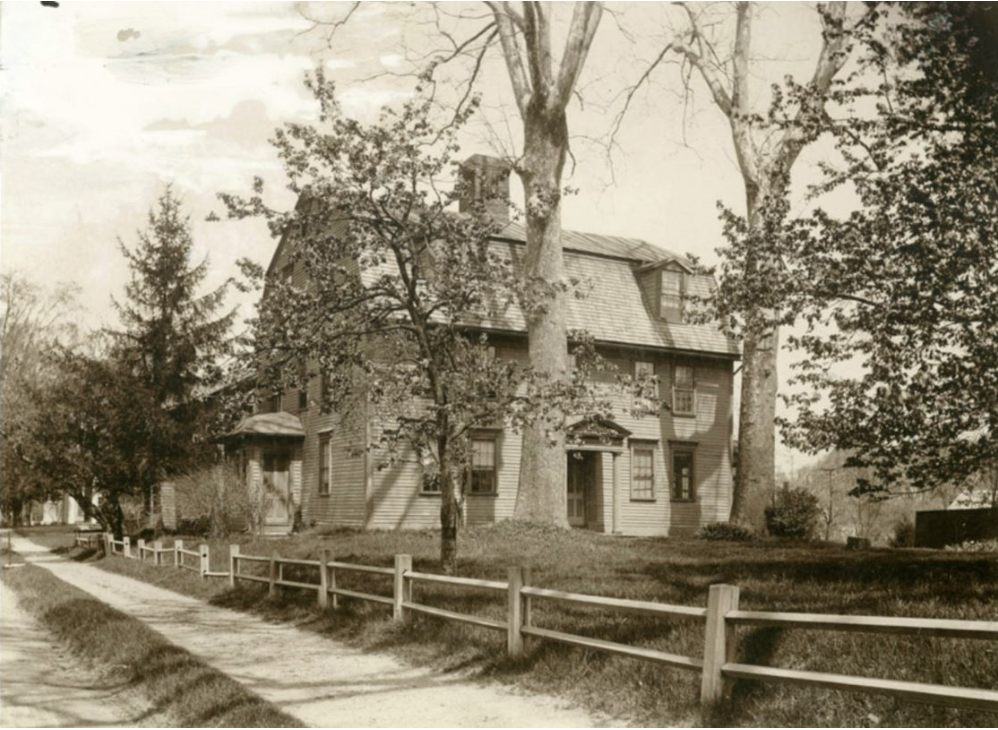
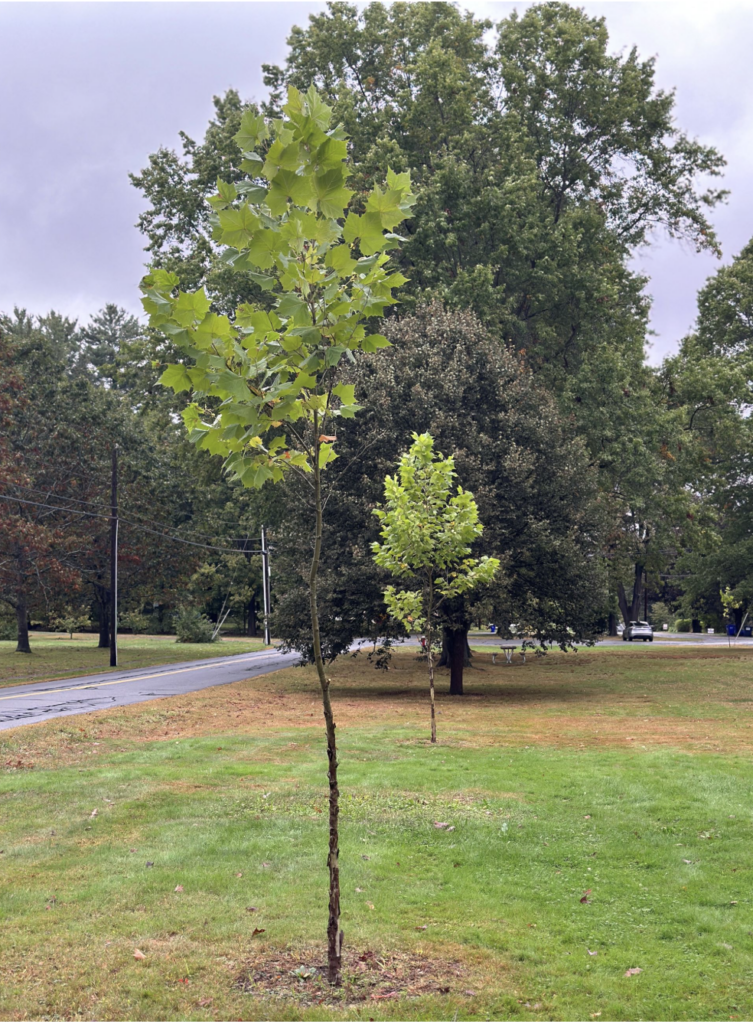
Amherst is home to several historic and noteworthy sycamores. Arguably, the oldest is located at 67 Amity Street, planted in the 18th century by Nehemiah Strong in front of the house he built for his son Simeon at the time of his marriage in 1763. (Today the Strong House, home to the Amherst Historical Society, is one of the oldest structures in town.) Nehemiah planted two sycamores—referred to as “bride and groom” trees—flanking the front door. This was a common practice since the long-lived sycamore symbolized hope for a long marriage. Sadly, after 200 years together, the bride tree succumbed to age and damage from a hurricane; it was removed in 1957. Today, the still-standing groom tree is nearly three centuries old. In 2022, the Massachusetts Department of Conservation and Recreation awarded Amherst a grant to prune and cable the tree’s branches and install lightning protection. The grant also funded the planting of a new bride tree. It will take the bride many years to catch up to her mate, which measures 17-feet in circumference!
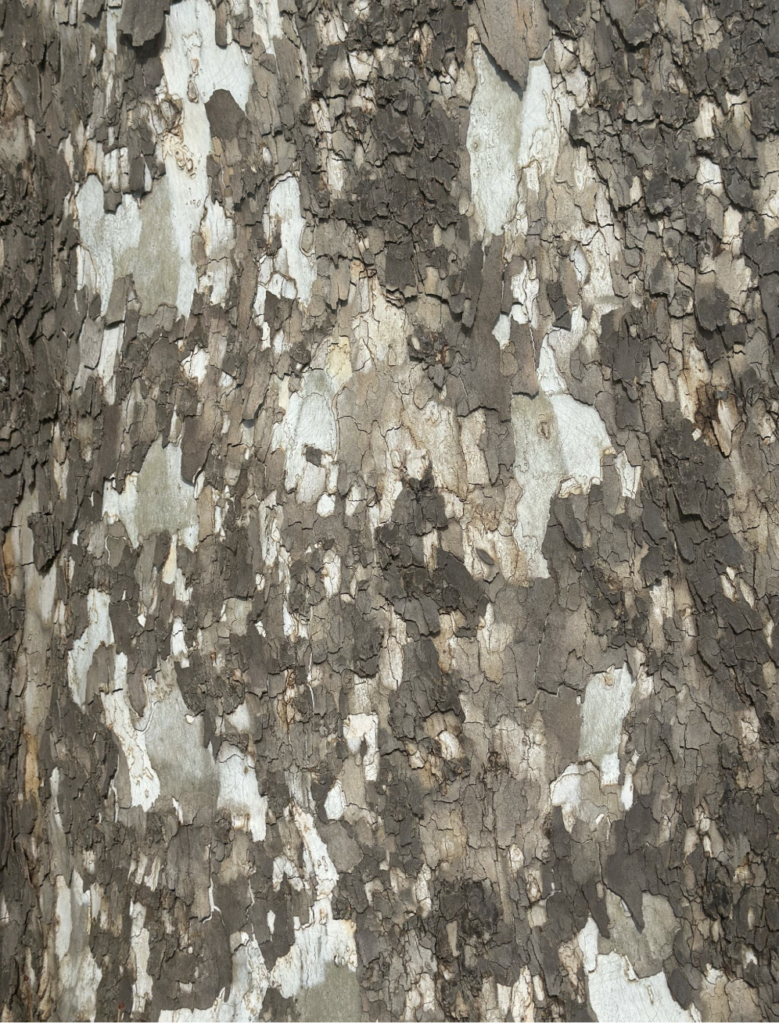
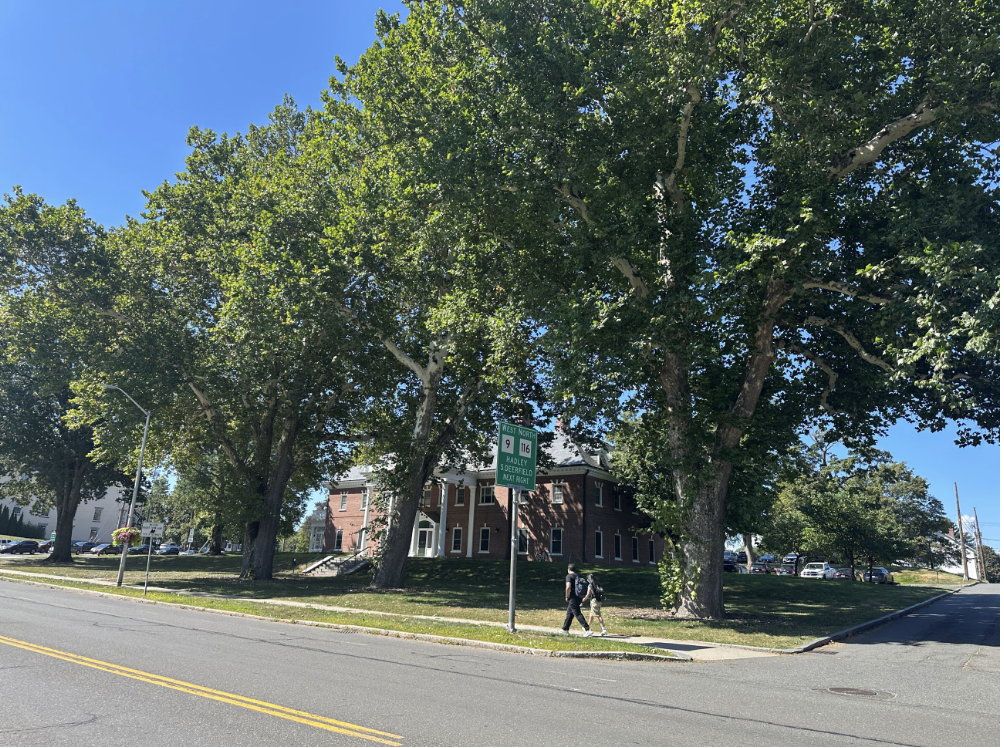
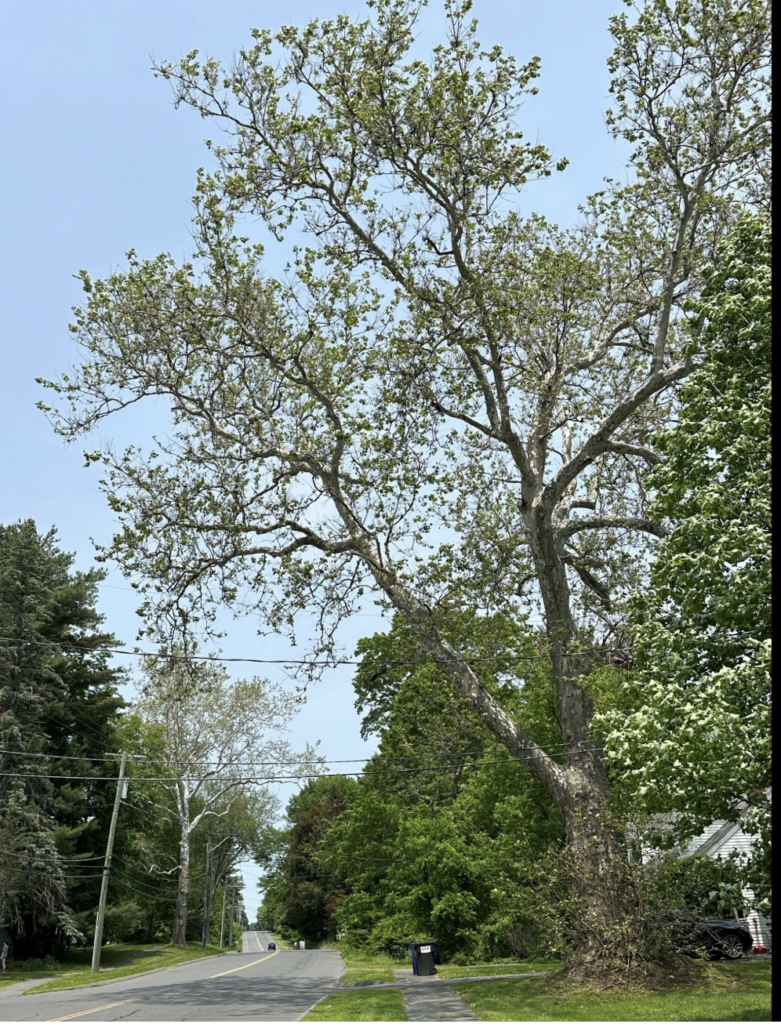
American sycamores are found all around Amherst. Two large sycamores straddle North East Street just north of the intersection with Main Street. Other sizable sycamores are located at 155 Pine Street and 242 West Street, just north of Crocker Farm Elementary School.
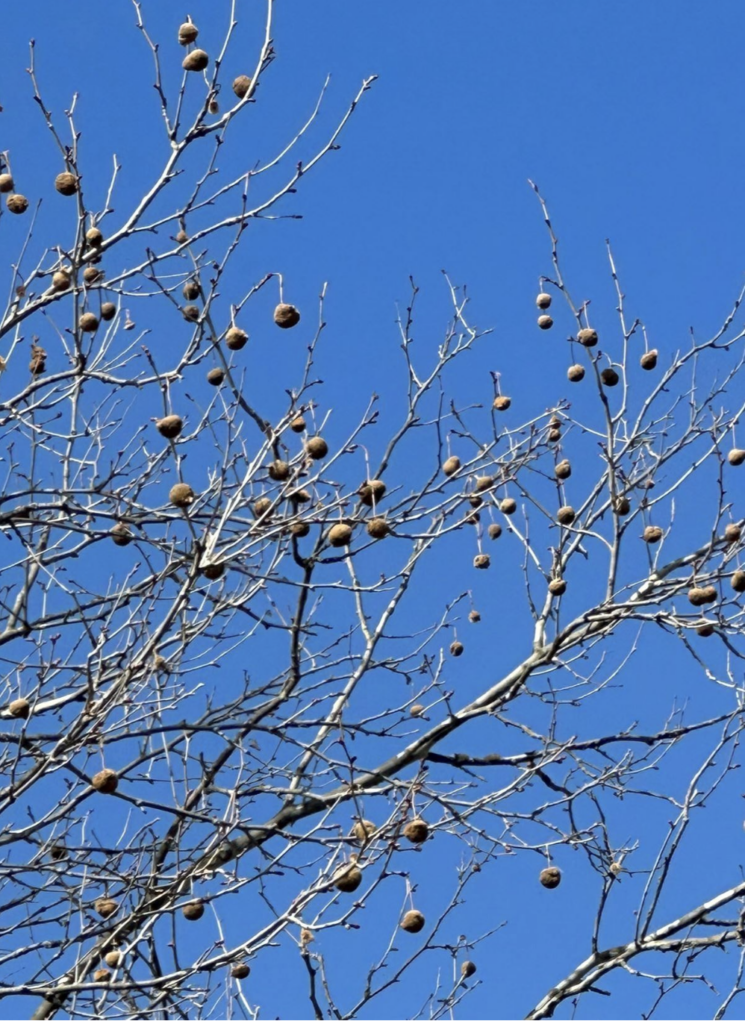
The American sycamore on Pomeroy Court retained hundreds of its “buttonballs” last winter. Each ball consists of numerous, densely packed seed-like fruits.
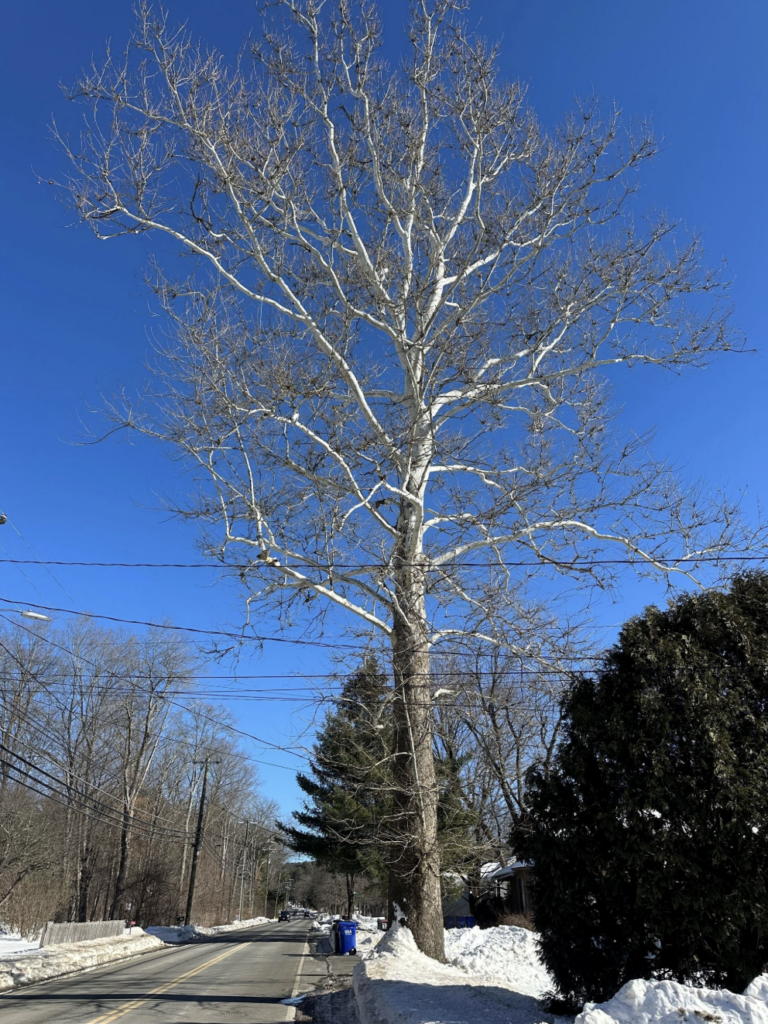
A grand sycamore soars at 98 Pelham Road. Its white branches are particularly striking in winter.
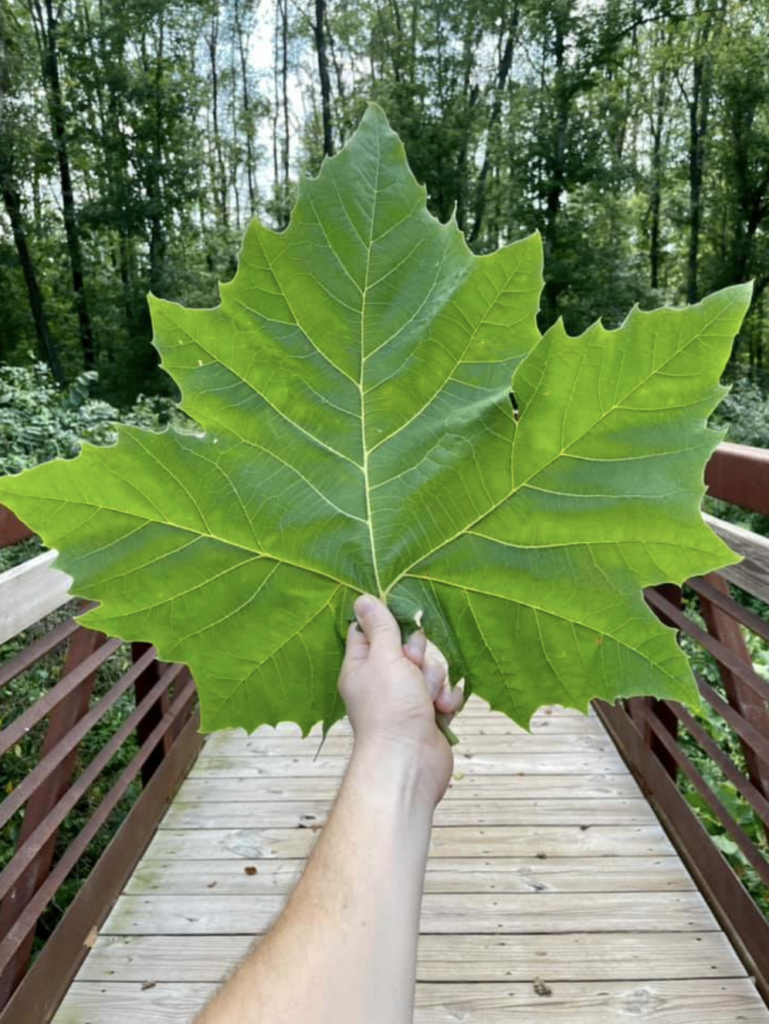
Sycamore leaves are often mistaken for maples, however they’re significantly larger! The massive leaves can measure 12 inches wide, one of the largest of all native North American trees.
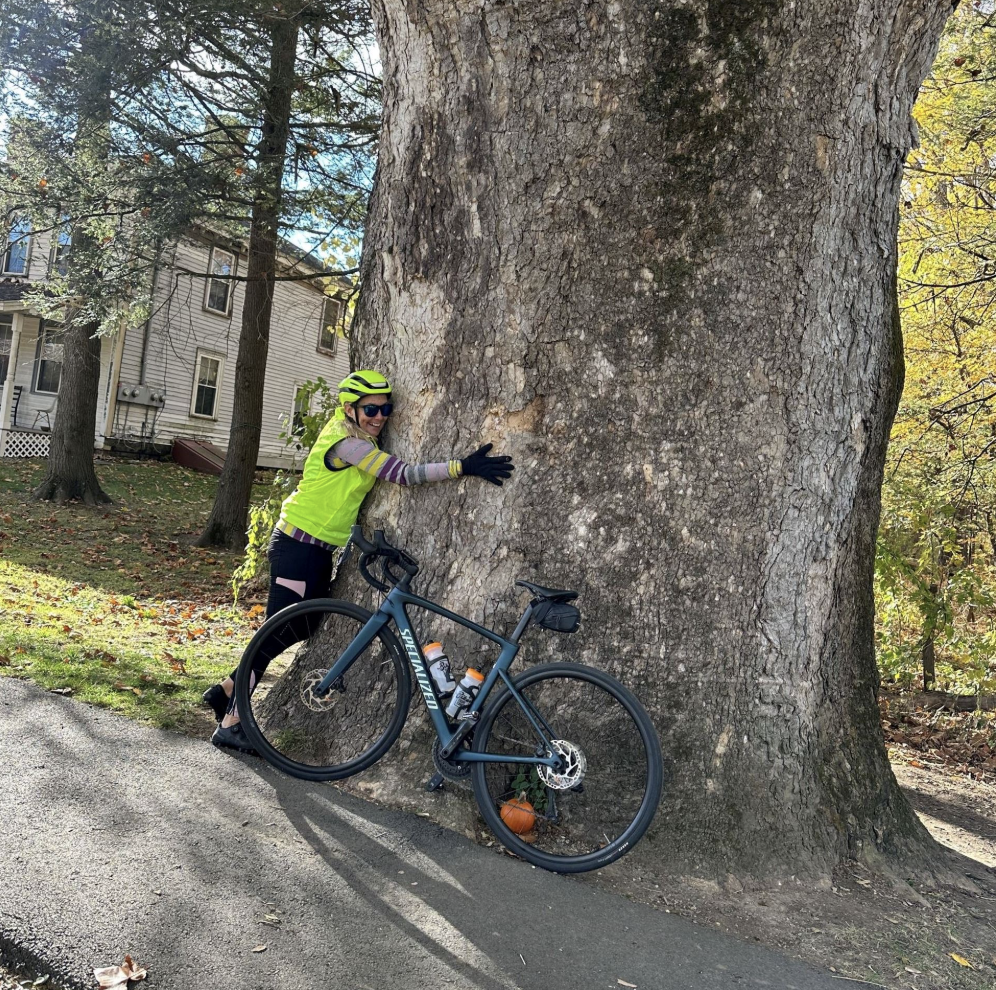
Though not in Amherst, a famous American sycamore tree grows in nearby Sunderland, MA. Known as the Buttonball Tree, it is the largest sycamore in the state; some even claim it as the “widest tree east of the Mississippi.” It is 25 feet in circumference! The Buttonball Tree is over 300 years old. A stone plaque notes the tree’s existence when George Washington led the signing of the United States Constitution in 1787.