
Planning Board Ends Archipelago’s Atkins Corner Development for Now

Architect's rendering of the proposed housing development at Atkins Corner. Photo: amherstma.gov
Report on the Meeting of the Amherst Planning Board, December 3, 2025
This meeting was held over Zoom and was recorded.
Present
Doug Marshall (Chair), Bruce Coldham, Fred Hartwell, Angus McLeod, Jesse Mager, Jerah Smith, and Johanna Neumann.
Staff: Nate Malloy (Senior Planner) and Pam Field Sadler (Assistant)
After Archipelago Investments withdrew its application for approval of a 140-unit mixed-use development at Atkins corner from the Conservation Commission on October 20 because of their inability to produce a design that complied with the town’s Wetlands Bylaw, the company requested and was granted withdrawal without prejudice from the Planning Board. The Planning Board granted Archipelago’s request with a 4-0-2 vote (with Angus McLeod and Jerah Smith abstaining and Jesse Mager absent). Because the project was withdrawn without prejudice, this means that Archipelago or another developer can bring a similar project forward in the near future. If the withdrawal had been granted with prejudice, no similar design could be considered for at least two years.
The South Amherst project had been on the Planning Board agenda for eight meetings beginning in May. It had also been discussed at eight meetings of the Conservation Commission before commission members gave Archipelago’s Kyle Wilson an ultimatum to present a plan that complied with the bylaw. The property under consideration is owned by Hampshire College.
When Planning Board Chair Doug Marshall asked why the application had been withdrawn from the Conservation Commission, Planner Nate Malloy replied, “I think that they just weren’t making progress in terms of site plans.” However, residents Gustavo Oliveira and Maria Kopicki added more specificity. Oliveira noted that the developer withdrew from the Conservation Commission “after repeatedly disregarding the commission’s request to bring plans that would conform with the wetland bylaws and insisting not only that they were not required to conform to our town’s wetland bylaws but that the bylaws should be changed.”
Kopicki added, “The problem was that the proposal was very much in the wetlands. The Wetlands Bylaw says that you cannot build between 0 and 50 feet of the wetland and, between 50 and 100 feet, you can only encroach upon that up to 20%. The plans that [Archipelago] produced were taking up the vast majority of the wetland buffer. This property (it’s actually two parcels), but about 50% of it is taken up by wetland and wetland buffer.”
Ken Rosenthal noted that the Planning Board would be acting on a request from Archipelago, not the property owner, which is Hampshire College. He said, “I suspect you’re not going to see anything that you don’t want to see from Hampshire College.”
Several board members expressed disappointment about the withdrawal. Johanna Neumann said, “I think it’s a real shame that this project is getting withdrawn.” She cited the energy efficiency of the proposed project and noted that the area was designated as a village center. Despite the contention by nearby residents that public transportation to the area was limited and that there are no sidewalks or bicycle lanes on West Bay Road which borders the site, Neumann deemed it a “really bike- and walker-friendly design.”
Marshall responded to Neumann, saying, “I think it calls into question the designation of that area as a town center if maybe it’s not viable.”
Bruce Coldham agreed with Neumann, stating that “Wilson’s argument was essentially an argument about the value of wetlands versus the value of housing.” Fred Hartwell added, “I think this project successfully addresses a great number of public policy objectives, and so I look forward to seeing if they can pull the rabbit out of the hat and get through the Conservation Commission and come back to us.”
McLeod worried about the effect of the project’s withdrawal on Hampshire College. He said, “Doing something with their land is one of the only pathways they have to financial solvency over the short term. And thinking about our role as planners for this community, if something were to happen to Hampshire, I think that would be pretty dire.”
Amherst College Plans Outdoor Vehicle Washing Area and Salt Shed on Dickinson Street
Amherst College acquired a former automobile dealership on Dickinson Street in 2014 for use as a maintenance facility. Now the college wants to add an outdoor vehicle washing area for those vehicles too large for the indoor facility. It also wants to move its salt shed from campus to the site. The proposal raised concerns from the Planning Board regarding the design.
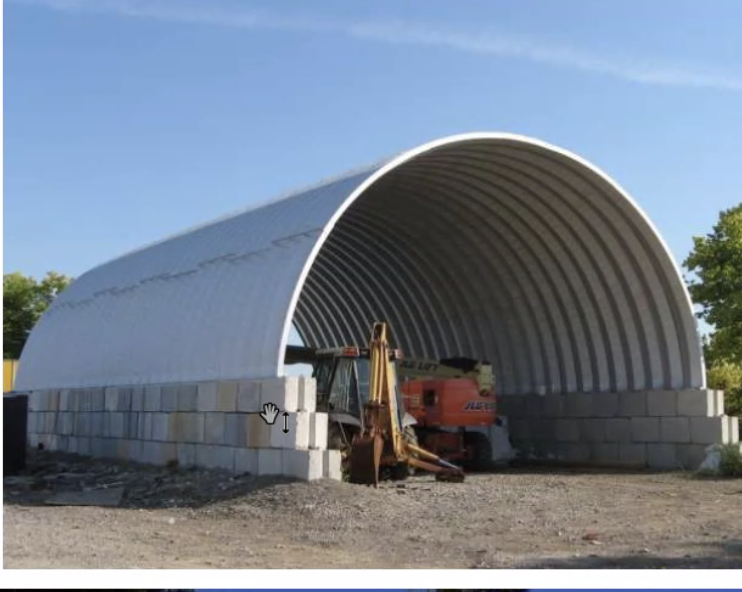
A depression will be created to catch both stormwater and water from the vehicle washing. There will be two drains with removable covers, one for stormwater draining to the Fearing Brook and one for the water from the vehicles into the sewer system. The salt shed will be an arched metal roof over a six-foot cinder block base.
Planning Board members had concerns about the lack of vegetative screening and especially about the fact that there was no delineation between the recently repaved asphalt sidewalk along Dickinson Street and the front parking lot at the main office of the building. Also, questions were raised about whether the lighting on the main building was dark-sky compliant.
Town Engineer Jason Skeels had questioned whether the oil-water separator for the vehicle wash met the town standards.
Amherst College Projects Manager Jason Bhajan and Kris Baker from Berkshire Design were unable to answer the concerns raised, so the hearing was continued until December 17 when the college can produce more complete designs regarding landscaping and lighting, as well as delineation of the sidewalk, and to answer Skeel’s questions about the oil-water separator. Malloy suggested that there be monitoring of the drainage after storm events for the first year to be sure that the system is functioning adequately.
Mindi Sahner, who is an abutter, asserted that the site has gone from “being rather charming-looking in 2014 when Amherst College first took it to what looks like an industrial backhouse facility that the college doesn’t want on their campus, and is instead relegating to a prominent corner of the nearby neighborhood.” She noted that the lights near the garage doors produce light pollution, and the amount of parking on the site has increased with the opening of the nearby Science Building. Sahner agreed with Planning Board members that more specific plans to improve the look of the site were needed.
Town Awarded Grant to Study Increasing Housing Density in East Amherst
While the Planning Board is still compiling the public input gathered at the October 29 listening session regarding an overlay district of dense housing along North Pleasant Street, Malloy informed members that Amherst has received $70,000 for a consultant to study ways of increasing housing density in East Amherst.
As to the possible overlay district in North Amherst, Malloy said the concerns raised about the adequacy of the infrastructure in that part of town for greatly increased housing means the town must decide what is the right kind of density given the concerns from the neighborhood. Coldham suggested that the university might be asked to accommodate some of the cars of residents in the overlay area to be able to minimize the amount of parking needed in the residential areas. The Housing Subcommittee of the Planning Board will continue to discuss these issues.
Mager said that he continues to read about form-based zoning, which can allow any use that will comply with set design standards. He thought form-based zoning might be applicable along main thoroughfares and other areas. Marshall stated that the downtown design standards being developed by Dodson and Flinker will include many of the features of form-based zoning. Malloy hoped these standards will be released soon.
Hearing on Preliminary Subdivision Plan on Shutesbury Road Postponed
The request from W. D. Cowls, Inc. to create a preliminary subdivision plan on Shutesbury Road to freeze the zoning in anticipation of a future industrial-size solar array being built at the location was postponed to the December 17 meeting. Representatives from W.D. Cowls indicated that they were unable to attend this meeting.