
Opinion: What Will We Do When ICE Comes to Amherst?
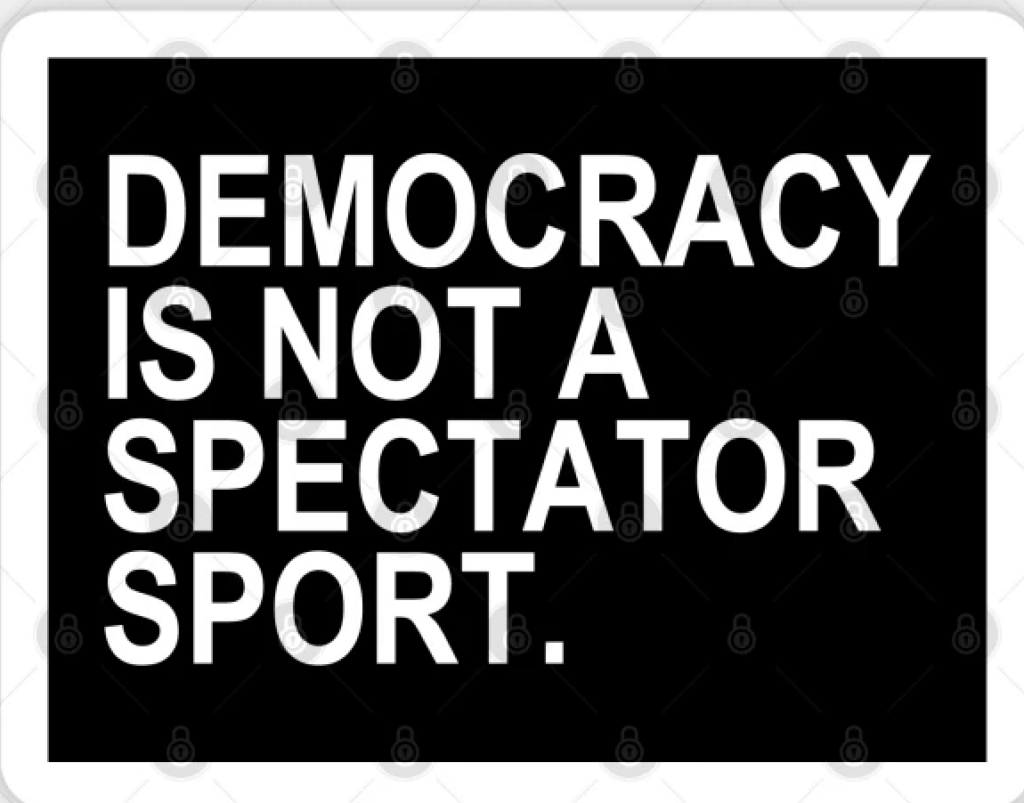
Photo: public domain
It was extremely encouraging to see so many young protestors willing to brave the cold at the ICE Out rally on the Town Common on January 30. There is a sense of building momentum, but we must be ready to be more involved.
Here in our “Amherst bubble”, we have little to fear, so far at least, for those of us who are white. And every gesture protesting ICE’s violent and sometimes murderous breach of our laws is welcomed. Props like the red hats or paperclips worn in Norway, or the yellow armbands (at least according to legend) worn in Denmark at the behest of their king during the Nazi occupation, were useful emblems that pushed “resistance” to the limit, with the limits being relative. Not even Nazis killed people for a fashion statement. Knitted red hats are catching on here now, as a protest against our own racist, authoritarian regime. But are we ready for actual confrontations or a work/commerce boycott lasting longer than a single day? We must be willing to put up with more than a minor inconvenience.
My thoughts continue to return to the anecdote chronicling Henry David Thoreau’s tax boycott protesting slavery and President James Polk’s imperialist war on Mexico. Thoreau went to jail, albeit for only one night, before being bailed out by an anonymous donor, but while there, he was visited by Ralph Waldo Emerson. The story goes that Emerson asked, “Henry, why are you in here?”, to which Thoreau responded, “The question is why are you not in here?” Whether the tale is fact or fiction, the night in jail did inspire Thoreau’s essay “Civil Disobedience” published in 1849.
I also think of the Japanese aphorism, spawned by that society’s famous strictures about social cohesion, “A nail that stands proud gets pounded down”.
Granted, spending time in a federal penitentiary, or even an IRS audit, is more arduous than a night in the Concord jail, though it should be added that Thoreau did actually protest being released, and the sheriff literally kicked him out. Most Americans have a lot more to lose than Thoreau, and in today’s surveillance/police state that is America in 2026, retribution can be harsh and swift. Are we prepared to take to the streets of Portland or Minneapolis, or even the, streets of Holyoke or Springfield, where there is a substantial risk of more than frostbite?
Watching people on our screens being tear gassed, dragged off and shot for protesting is motivating. Imagine how much more so it would be to see it up close and personal, as are the residents of Minnesota and Maine. What will we do if we start seeing our neighbors victimized by paramilitary ICE goons walking our own streets, or if our military confronts or invades our former allies, or if the 2026 election is obviously rigged or stolen? Right now, those are rhetorical questions. Let’s hope they remain so, but we should all think long and hard and prepare for what we will do if they become reality. Democracy and freedom are not spectator sports.
Civil Disobedience
While the issues of today are different from those of Thoreau’s time, with Trump threatening allies and foes alike with war and occupation, and the ferreting out and jailing and/or exiling of undocumented immigrants escaping the clutches of drug gangs largely funded by American consumers and armed via our lax gun laws, Thoreau’s florid prose resonates with our current political scene. (Acknowledged: his pronoun usage may not be acceptable by today’s standards). Below is an edited version of his essay.
Civil Disobedience by Henry David Thoreau (1849)
The mass of men serves the state thus, not as men mainly, but as machines, with their bodies….. Such command no more respect than men of straw or a lump of dirt…..Others–as most legislators, politicians, lawyers, ministers, and office-holders–serve the state chiefly with their heads; and, as they rarely make any moral distinctions, they are as likely to serve the devil, without _intending_ it, as God. A very few–as heroes, patriots, martyrs, reformers in the great sense, and _men_–serve the state with their consciences also, and so necessarily resist it for the most part; and they are commonly treated as enemies by it.
How does it become a man to behave toward the American government today? I answer, that he cannot without disgrace be associated with it. I cannot for an instant recognize that political organization as _my_ government which is the _slave’s_ government also.
All men recognize the right of revolution; that is, the right to refuse allegiance to, and to resist, the government, when its tyranny or its inefficiency are great and unendurable.
In other words, when a sixth of the population of a nation which has undertaken to be the refuge of liberty are slaves, and a whole country is unjustly overrun and conquered by a foreign army, and subjected to military law, I think that it is not too soon for honest men to rebel and revolutionize. What makes this duty the more urgent is that fact that the country so overrun is not our own, but ours is the invading army.
Unjust laws exist: shall we be content to obey them, or shall we endeavor to amend them, and obey them until we have succeeded, or shall we transgress them at once?
Why does it not encourage its citizens to put out its faults, and _do_ better than it would have them?
Let your life be a counter-friction to stop the machine. What I have to do is to see, at any rate, that I do not lend myself to the wrong which I condemn.
Under a government which imprisons unjustly, the true place for a just man is also a prison.
If a thousand men were not to pay their tax bills this year, that would not be a violent and bloody measure, as it would be to pay them, and enable the State to commit violence and shed innocent blood. This is, in fact, the definition of a peaceable revolution, if any such is possible….. If the tax-gatherer, or any other public officer, asks me, as one has done, “But what shall I do?” my answer is, “If you really wish to do anything, resign your office.” Is there not a sort of blood shed when the conscience is wounded? Through this wound a man’s real manhood and immortality flow out, and he bleeds to an everlasting death. I see this blood flowing now.
.…the rich man–not to make any invidious comparison–is always sold to the institution which makes him rich. Absolutely speaking, the more money, the less virtue…..
The best thing a man can do for his culture when he is rich is to endeavor to carry out those schemes which he entertained when he was poor.
But, if I deny the authority of the State when it presents its tax bill, it will soon take and waste all my property, and so harass me and my children without end. This is hard. This makes it impossible for a man to live honestly, and at the same time comfortably, in outward respects……. Confucius said: “If a state is governed by the principles of reason, poverty and misery are subjects of shame; if a state is not governed by the principles of reason, riches and honors are subjects of shame.”
I saw that the State was half-witted,…… and that it did not know its friends from its foes, and I lost all my remaining respec for it, and pitied it…..It is not armed with superior wit or honesty, but with superior physical strength.
I have never declined paying the highway tax, because I am as desirous of being a good neighbor as I am of being a bad subject; and as for supporting schools, I am doing my part to educate my fellow countrymen now. It is for no particular item in the tax bill that I refuse to pay it. I simply wish to refuse allegiance to the State, to withdraw and stand aloof from it effectually.
I think sometimes, Why, this people mean well, they are only ignorant; they would do better if they knew how: why give your neighbors this pain to treat you as they are not inclined to? But I think again, This is no reason why I should do as they do, or permit others to suffer much greater pain of a different kind.
If we were left solely to the wordy wit of legislators in Congress for our guidance, uncorrected by the seasonable experience and the effectual complaints of the people, America would not long retain her rank among the nations.
There will never be a really free and enlightened State until the State comes to recognize the individual as a higher and independent power, from which all its own power and authority are derived, and treats him accordingly.
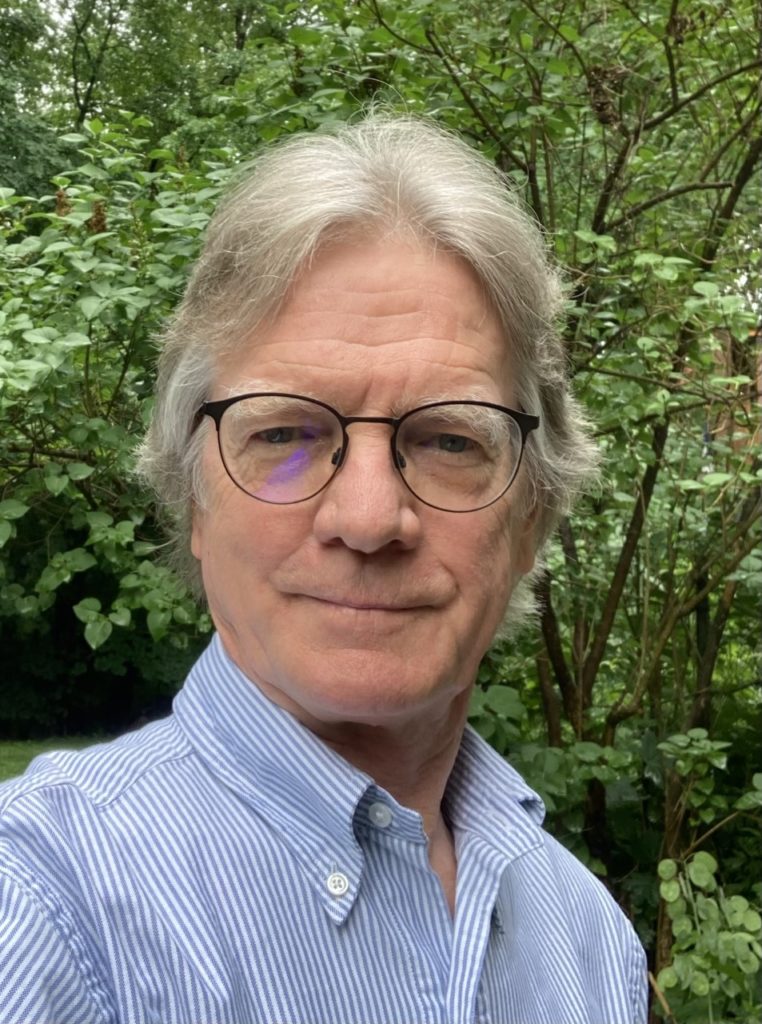
John Varner is a resident of Amherst.
Reminder:
WEDNESDAY FEBRUARY 4: LUCE IMMIGRANT JUSTICE BYSTANDER TRAINING AND HOTLINE FUNDRAISER. 6-8 p.m. First Congregational Church, 165 Main Street, Amherst. Learn from LUCE how to respond effectively to ICE sightings and attempted detentions. Free to attend. Register and/or donate at: https://bit.ly/luceamherst
More info – https://secure.ngpvan.com/SrMWZcpCekuJaMMYfdvgPg2
I’ve been told the LUCE training is full- but perhaps the demand will show there’s need for another.
LUCE is holding another ICE observer training on March 8th.