
Opinion: Will Jones Library Request for CPAC Money Prevent Funding for Preservation of Goodwin A.M.E. Zion Church?
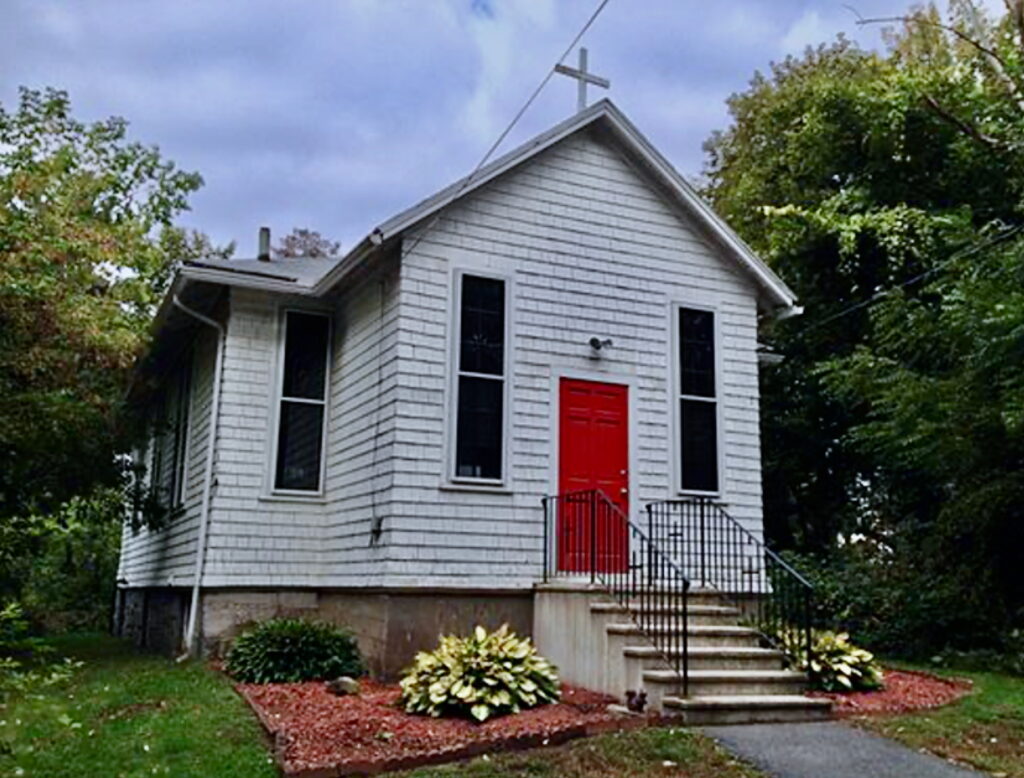
Goodwin AME Zion Church, Woodside Avenue. Photo: Hetty Startup

Two issues related to historic preservation are really riling me up these days. First, in an address about the status of his proposed East Wing addition to the White House, it seems that our President has decided to take aim at the National Trust for Historic Preservation (see also here). He’s now going after the Kennedy Center building and also proposing to get rid of another architectural gem in D.C., the Cohen Building. Our public discourse feels like it is being strong-armed and short-circuited. I want the fact that this is happening nationally to make me braver in speaking out about what is currently happening in the town’s CPAC (Community Preservation Act Committee) deliberations. I am very concerned that the Jones Library is coming before CPAC to request funds for its expansion project, even though the funds they seek have already been awarded. There is another twist to the situation, which is also maddening. I will get to that shortly.
But let me back up. Does everyone in town know how the Community Preservation Act and our committee both work to dispense public funds? I acted as the Amherst Historical Commission (AHC) representative to our town’s CPAC for one year, and I can report that the process of review and deliberation is quite complicated. The State’s CPA “is a smart growth tool that helps communities preserve open space and historic sites, create affordable housing, and develop outdoor recreational facilities.” This is truly a godsend for the work of our town and the quality of life here. The act tries to ensure that towns in the Commonwealth can strengthen their local economies “by expanding housing opportunities and construction jobs for the […] workforce, and by supporting the tourism industry through preservation of the [state’s] historic and natural resources” (see here). Amherst’s CPA Committee was created in 2001 and its funds come from a 3% property tax levy (on Amherst’s residents) that is matched by state funds.
The Amherst Community Preservation Committee
Our town’s CPA is made up of nine members: one member each from the town’s Conservation Commission, Recreation Commission, Historical Commission, Planning Board, and Housing Authority. In addition, there are four members from the town at-large, appointed by the Town Manager. The remit is structured so that four categories of need are supported each year from available funds. In the town of Amherst, historic preservation, housing, and open space must each receive at least 10% of the available funds. While recreation is an eligible category for funding and typically receives funds, its funding is not mandated. Seventy percent of the funds available are flexible and can be allocated across any of the four categories.
As a town, we have the benefit of a Community Preservation Act plan that has studied the needs, possibilities, and resources of Amherst. The 2021 plan stated that the town was “…committed to using a transparent and inclusive process as we continue to implement the CPA in Amherst in the most effective way that we can.” However, there is only so much money each year to fund projects in these four categories. It is often the case that some projects seeking support submit requests exceeding the amount allocated for each category. A process of ranking in committee sometimes results in funding being reduced or even denied. Reserving some money to be bonded over time is possible.
There has always been support for community preservation projects. But over time, our town’s CPAC has favored projects for properties owned by the town. This trend seems backwards to me, even though it may seem desirable. I don’t think the act was intended solely as a funding tool for municipal projects, as there are other budget lines and funding streams dedicated to them.
Our current trend risks sidelining private individuals and/or non-municipal projects. The CPA is hosted by the town government and has a town staffer as a liaison to the committee, much like other town boards and commissions. I am never really sure if this means that non-municipal projects get less funding.
This past October, the AHC met and as part of its discussions, began to review the applications for the upcoming year in the Historic Preservation category. Due to some miscommunication with applicants from the town, the deliberations continued on into the November meeting. And The Indy reported on those meetings.
“As a preservationist, roofs attract my attention because they protect everything else in a building and therefore, funding [roof] repairs, such as stabilization, conservation, or preservation requests, are usually time-sensitive and cost-effective.”
To me, despite what I said earlier about town versus non-town projects, the Town Hall (constructed in 1889) roof request seemed to be the most urgent. As a preservationist, roofs attract my attention because they protect everything else in a building, and therefore, funding roof repairs such as stabilization, conservation, or preservation requests is usually time-sensitive and cost-effective. Town Hall, a stellar Richardsonian Romanesque building in the heart of Amherst Center, is part of the Amherst Central Business District and has its own Form B listing on MACRIS (The Massachusetts Cultural Resource Information System). This is also true for the Jones Library (1928), although I note here that the 1993 addition has been torn down to make way for a new addition, scheduled for completion in 2027.
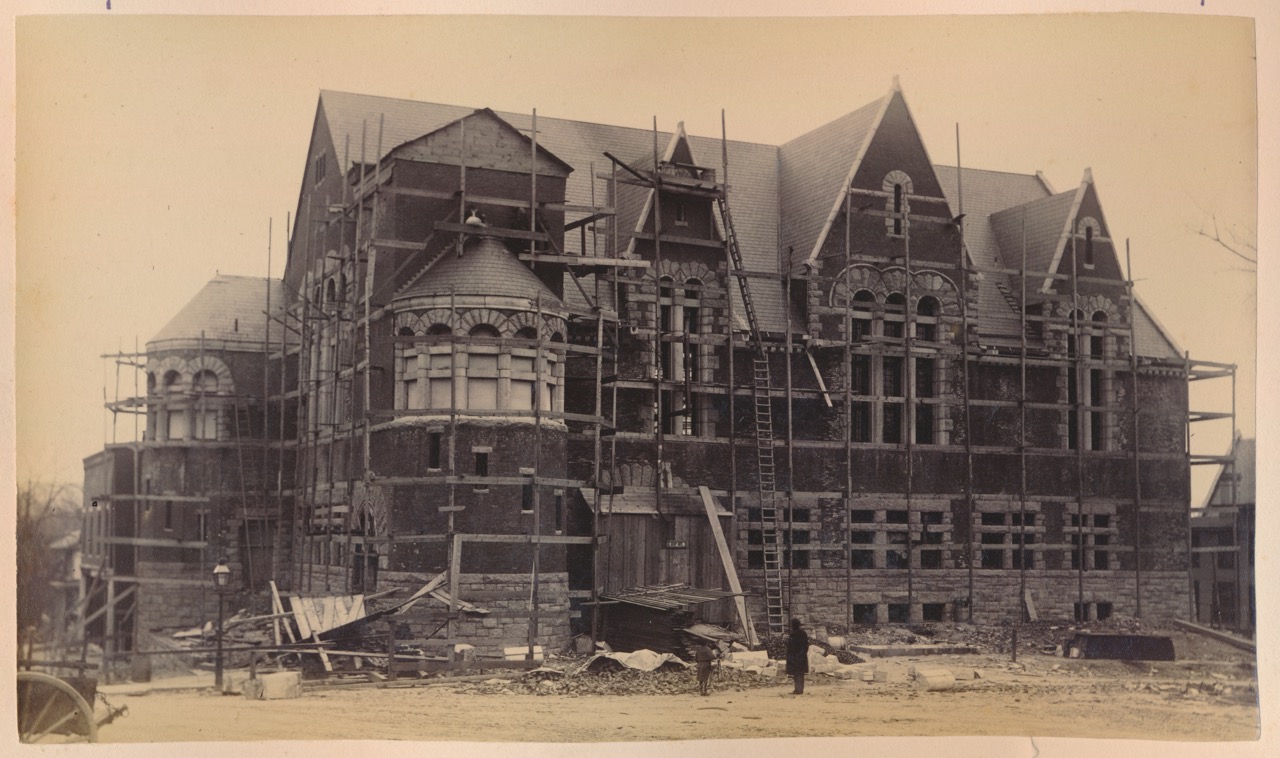
The Jones Library, Inc. appeared before the AHC in October 2025, where I am a member, finishing out the last six months of my second term. At the October meeting, the commission advised against allocating funding for the windows, as the work was already included in the construction documents and budgets. And I questioned why the Jones was applying for funding under these categories at all, as funding for all three issues (windows, interior woodwork, and front entrance) was already determined, either in value engineering review, the Section 106 process, the final RFP, and the award of $46.1 million by the town to fund the project.
The AHC was certain at the time of their request that the windows were included in the construction documents and budgets. They were not as certain about whether the woodwork and exterior trim were likewise included but it was subsequently confirmed that they are also part of the budget. The phrase from the President of Town Council of “…not a penny more” was ringing in my ears.
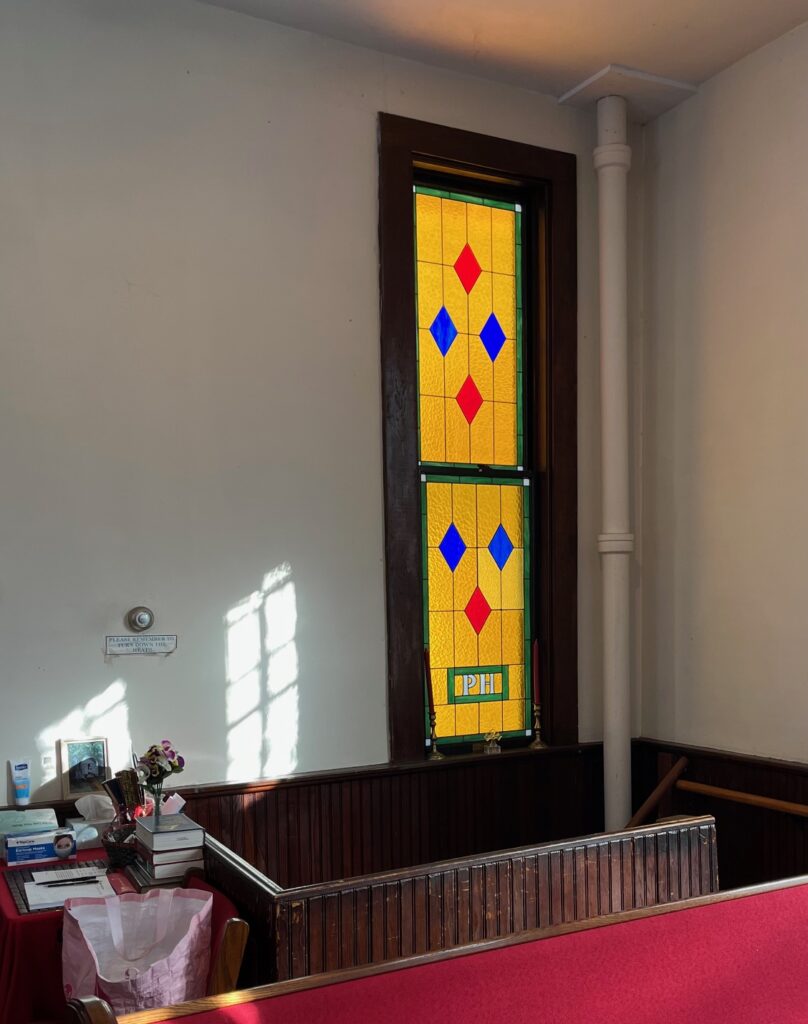
The Goodwin A.M.E. Zion Church
Goodwin A.M.E. Zion Church applied for $46,000 in CPA funds. It appeared that this important historic resource in our town might not be considered for funding due to issues with their application, such as the lack of photographic documentation. We have since learned why. A leader of the church died recently, and those who brought the application forward were unfamiliar with the process. Two members of the AHC have since met with the church leadership to assess the church’s condition. I am very concerned they may not be considered for CPAC funds, solely because of irregularities in their application. Advocates for the Jones Library at the meeting seemed to think their claim was worthy (more worthy?) even though what they were asking for was already covered by other funding from the town.
There is a disconnect for me in prioritizing the use of additional town funds for a large library addition (with two branch libraries that remain open and many other college and public school libraries also available) while a small, historically significant African-American church is neglected. What is even harder to countenance is that the Goodwin Church has historically been linked to Amherst College (for decades in the 1800s until they requested a separate parish), and Amherst College is a strong supporter of the Jones Library expansion project. Many current and former college employees have worked directly with the library to advance this project or have served as elected or appointed members of Town boards and committees that make funding decisions for the project.
The Civil War Tablets
In AHC deliberations about the library expansion over the past few years, much has been made of the importance of housing the Civil War tablets in the expanded library, with the implication that this aspiration speaks to the project’s inclusiveness. Advocates for the library expansion and funding made the point that the new building behind the historic one on Amity would be open to all and designed to encourage racial amity. But let’s not forget that in recent grant cycles, the Jones Library expansion has already received considerable town funds, and the Goodwin/AME church has not. They may also have fewer places to turn for financial support than the library does. The Jones Library, and perhaps some members of the CPAC as well, can’t get out of their own way to see that the Goodwin Church is at least as, if not more, deserving of support and that funding it would be a direct expression of racial equity.
The views expressed here by Hetty Startup are her own and do not represent the views of the Amherst Historical Commission as a whole.
Hetty Startup is an architectural historian who lives in Amherst, where she serves on the Historical Commission and works with college students. She is a frequent contributor to the Amherst Indy.