
Opinion: On the Wisdom of Borrowing from One’s Endowment

Photo: Shutterstock
A Lesson the Jones Library Should Heed
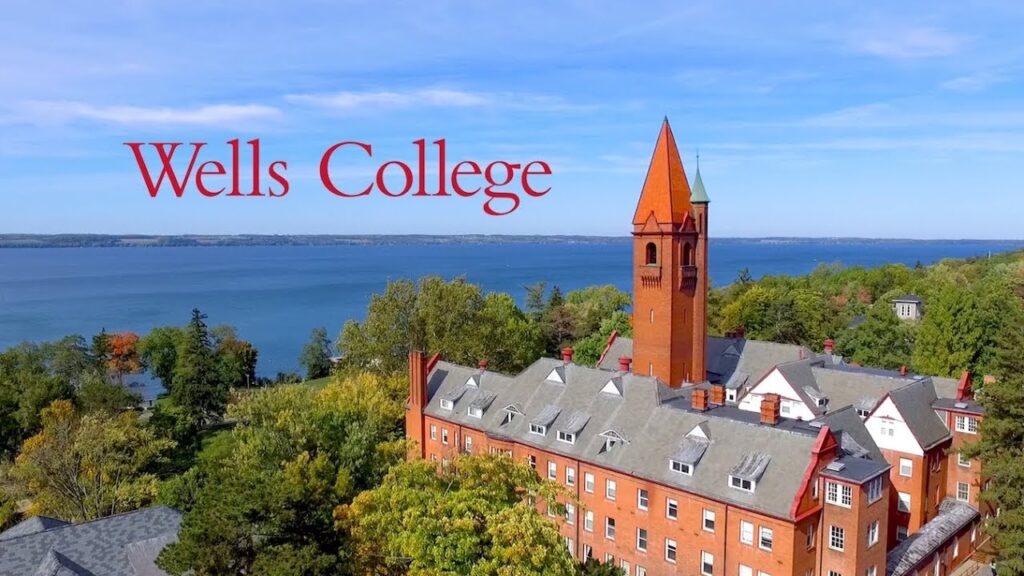
In 2010, Wells College, my alma mater, again found itself in challenging financial circumstances. A very small women’s college, founded in 1868 by Henry Wells – he of Wells Fargo fame – it had made the controversial decision to go coed in 2005, arguing that this would be the way out of its financial woes. It was not.
Thus, in 2010, another plan to return the college to financial health was proposed. Precedent was established when the New York State Supreme Court allowed the college to borrow from its own restricted endowment: $16.9 million out of a total endowment of $38.8 million, or close to 45%. Of that amount, the college was required to repay $14.9 million, at the rate of $500,000 per year, interest-free. It appeared to be an eminently workable plan.
Fast forward to 29 April 2024. One week before classes ended, at 8:00 am on a Monday morning, students, faculty, staff, and alums were shocked to receive an e-mail from the Board of Trustees announcing the imminent closure of the college on 30 June. Only the vaguest of reasons was given: That the college did not have enough financial resources to continue operating.
Yet barely a month before the announcement, official communiques painted a rosy future: Enrollment numbers were looking hopeful, future first-years had enjoyed their New Students Day on 5 April, and current students were choosing their rooms and their classes for the coming year.
What had gone so terribly wrong? We do not know what the precipitating events were that led to the sudden closure, but the college’s troubles had been evident for some time. One of its biggest problems was a steady drop in enrollment, a real difficulty for a small college that was heavily dependent on tuition as its main source of revenue. Between 2016 and 2024, Wells went from 563 students to only 333 – a nearly 40% drop. Certainly this was something that the college’s administration and trustees could not ignore. But a look at the 990 forms from those years seems to indicate that their strategy to resolve this problem was to throw money at it – a lot of money.
Jonathan Gibralter, the new president, had promised to increase enrollment to 700 students. Over a six-year period, he received bonuses of over $300,000 – on top of a yearly salary of close to $300,000 – even as enrollment plummeted. For five of those years, “Student Search Services” – firms that promised to increase enrollment – were engaged at a total cost of $2.3 million. (Curiously, the “corporate headquarters” of both firms turned out to be located in postal boxes.)
And that debt incurred from borrowing from the college’s restricted endowment? Certainly the repayment had seemed doable. Yet we learned that only about $4.5 million had been repaid since 2010. A debt of $10.5 million remains, and because the college’s endowment must be made whole before it can be transferred to a legacy institution, the only way to do that is to sell the campus. (That sorry tale has yet to reach its end.)
The moral of this story – the part that the Jones Library should heed – is two-fold. When there is money in the bank in the present – one’s endowment, in this case – it is tempting to borrow from it for urgent needs. It can work. But it must be done only with the clear-headed knowledge that the future is uncertain and unpredictable, and that plans to repay the debt must be fully and objectively thought out; they must be devoid of rosy optimism and magical thinking, and they must be firmly grounded in the realm of reasonable financial possibility. To do otherwise – especially when one is in the enviable position of being able to walk away from the mess and let it become someone else’s problem – is the height of irresponsibility.
Denise Barberet lived in Amherst for 34 years and is now a resident of Chicopee, where a new 34,000 SF public library was opened in 2004. Its cost was $9.3 million. It is centrally located, with plenty of parking, and though it is new, it feels like a lovely old library.
The Jones Library demolition-expansion project was led by the rosy optimism of PR spin from the very beginning, starting with the trumped-up need for a larger building when the already-large former Jones building was being poorly managed and running at a deficit each month. Advocates for a full renovation instead of demolition of the Jones worked tirelessly to get the message out that a brick addition with a metal roof was more than worthy of a full renovation, but could not be heard over the more powerful voices of the Amherst Forward PAC and the Jones Library Trustees who spun the facts to the public. Sadly, the public will now be left to foot the bill of the $9 million shortfall, while Library Trustees and the PR professionals they hired can simply move on. It’s a sad lesson for Amherst.