
Opinion | The Amherst Public Shade Tree Committee: Planting for People We Will Never Meet
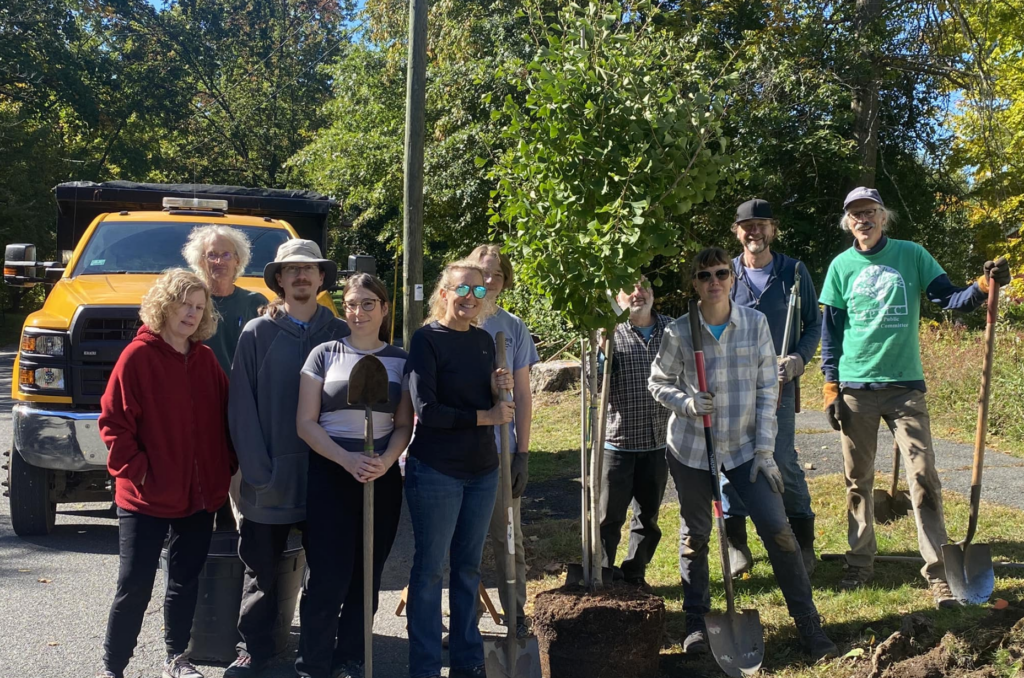
Members of the public join the Amherst Public Shade Tree Committee at a recent planting. Photo: amherstma.gov
Social Injustice Goes Global

Around the world, climate promises are colliding with reality. Governments are struggling to meet the commitments they made, while some corporations that once promoted ambitious environmental goals are quietly stepping back. The distance between public promises and everyday experience is becoming harder for communities to ignore.
For generations, New England has imagined itself as a region of abundance — where forests remain green, rivers keep flowing, and four distinct seasons provide a predictable rhythm of life. But that familiar story is changing.
Droughts, extreme heat, flooding, and aging infrastructure are challenging the assumption that Massachusetts will always have unlimited natural resources. Communities are being forced to rethink how they protect the water, trees, land, and public spaces that shape daily life.
The question is no longer whether climate change will affect New England, but how communities will respond — and whether they will do it together.
The challenge is not only environmental; it is economic. Massachusetts’ latest drought warning, issued as dry conditions raised wildfire risk, is a reminder that climate disruption is reaching regions once considered relatively protected.*
But the future of climate action happens around a picnic table.

On a warm August evening, residents gathered on Amherst’s North Common for the annual potluck hosted by the Amherst Public Shade Tree Committee. There were no speeches. Instead, there was homemade couscous, fresh biscuits, laughter, and conversations beneath a canopy created by trees planted decades earlier.
The trees towering above the picnic table were planted by people who understood the challenge facing Massachusetts. The question is whether we can carry that same spirit of stewardship into the future — not only for forests and public spaces, but for the systems and communities that hold us together.
The future will be shaped by the communities we build, the conversations we have, and the moments when neighbors gather to decide what is worth protecting.
Because democracy is strengthened every time people choose to care for something larger than themselves.
The Democracy of Trees
Species and ecosystems around the world are disappearing as humans transform the planet — clearing forests, paving landscapes, polluting rivers, and extracting resources from oceans faster than nature can recover. Climate change is accelerating those pressures.
Yet restoration often begins with something surprisingly small.
A single tree can become a starting point for renewal. In damaged forests, researchers have found that remaining trees — sometimes the few that survive after clearing — can act as living bridges between the old ecosystem and the new one. They provide shade, shelter, and food, attracting birds, monkeys, bats, and other animals that carry seeds from nearby forests. Those seeds help new plants grow, creating the conditions for more species to return.
Nature recovery happens through connection, cooperation, and countless small contributions. The same principle can be seen in Amherst.
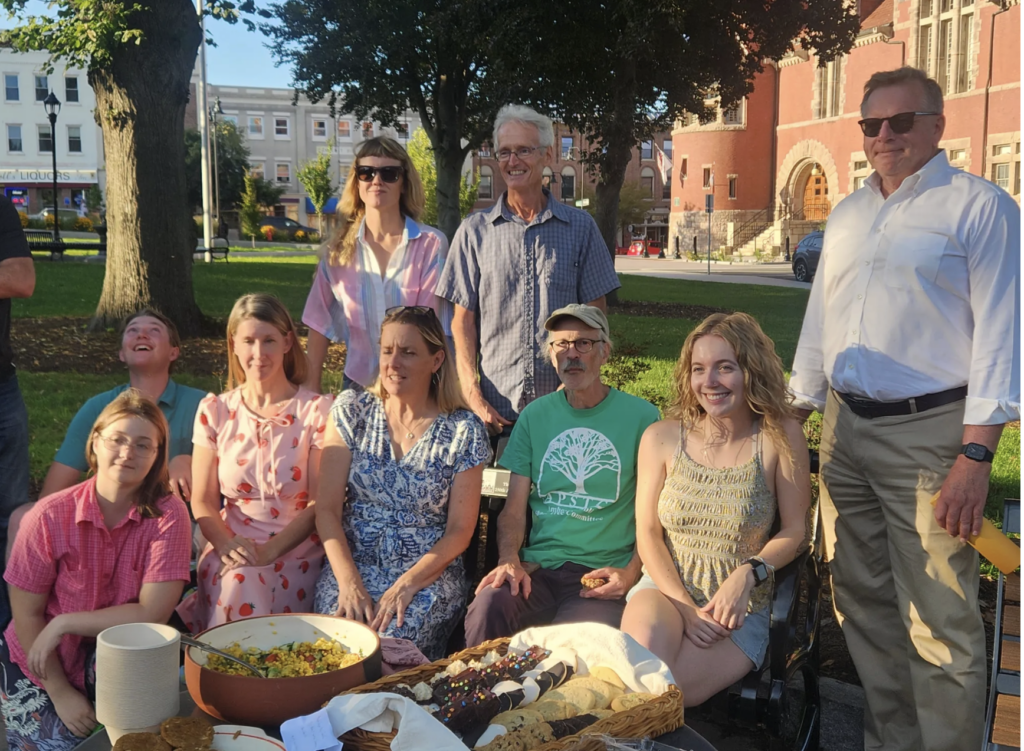
Thus, the people caring for Amherst’s urban forest are practicing a quieter form of civic engagement.
A tree planted today is a vote for tomorrow and a belief that small actions can create lasting change.
Town Manager Paul Bockelman said the Shade Tree Committee was probably “the best commission to join.” The results are impossible to miss. Every tree planted becomes visible evidence that public service can improve everyday life. He praised the committee’s latest efforts.
A tree planted today is a vote for tomorrow and a belief that small actions can create lasting change.
Planting for People We Will Never Meet
Nearby, Tree Warden Alan Snow reflected on another successful year. Hundreds of saplings had found new homes. Street trees had been planted. Heritage trees were being documented, protected, and preserved. Plans were already taking shape for the committee’s 50th anniversary.
The accomplishments were significant, even if they were easy to overlook. Decades from now, a child walking to school may never know that the shade cooling their sidewalk began with volunteers who spent a Tuesday evening digging holes, carrying saplings, and caring for a future they would never fully experience.
That is the quiet power of local stewardship.
Around the world, conservation efforts are increasingly recognizing a lesson: Lasting recovery does not always come from trying to control every outcome. Often, it begins by protecting the conditions that allow life to return — healthy ecosystems, connected habitats, and communities willing to invest in the future.
When old-growth forests remain intact, scientists often caution against unnecessary intervention. Nature has spent centuries developing its own systems of balance. The greatest act of conservation is simply allowing those systems to continue.
The picnic on Amherst’s North Common felt like a living example. Students worked alongside retirees. Climate advocates shared tables with longtime residents. Conversations moved easily between memories of historic trees and hopes for those that would not reach maturity for decades.
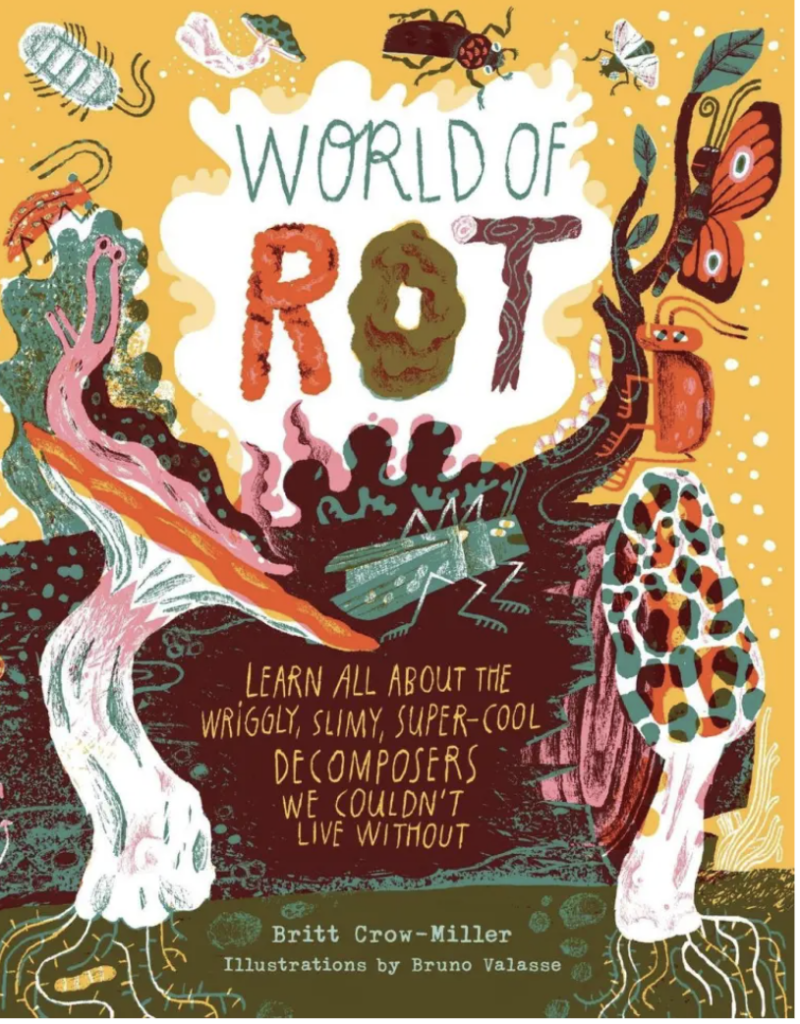
Britt Crow-Miller, a longtime advocate for community engagement with nature, pledged proceeds from her next book to support conservation efforts.
Books, Trees, and Giving Back
Earlier that summer, at the Sustainable Amherst Fest, visitors were invited to guess the age of a tree by counting its rings.
Three participants correctly identified the tree slice as approximately 90 years old and received copies of a book by Crow-Miller, a professor at the University of Massachusetts Amherst.
Another attendee described adding two trees to a historic home, continuing a tradition that stretched across generations. Even conversations about urban forestry eventually become conversations about family, memory, and loss.
Trees are landmarks of relationships that mark homes, neighborhoods, childhoods, and the passing of time.
But the exercise offered a lesson far beyond dendrology. Every ring represented a year no one could predict.
The Great Depression. World War II. The Civil Rights Movement. The rise of the internet. COVID-19. The climate crisis.
The tree endured them all. Its rings quietly recorded each passing year. Long after the people who planted it were gone, it continued to grow.
Perhaps that is why communities keep planting trees.
Every sapling is an act of optimism made visible. It is a quiet declaration that the future matters, even if we may never sit beneath its full canopy. To plant a tree is to believe that someone else — a child walking to school, a neighbor seeking shade on a hot afternoon, a bird looking for a place to nest — will one day benefit from a decision made today.
In that sense, trees are among the most hopeful investments a community can make. They remind us that stewardship is measured not in election cycles or quarterly reports, but in decades. The people who plant them are, in effect, writing a love letter to a future they may never see.
Thus, a healthy democracy works with nothing more complicated than a shovel, a shared meal, and the decision to leave the world a little greener than we found it.
Read previous “Social Injustice Goes Global” columns here.
Rizwana Khan is a writer, educator, and human rights advocate in Amherst.
I was working on a poem about trees and lifespans when I bumped into Rizwana Khan’s story, thanks to my neighbor Henry Lappen. Fun and remarkable how much mutuality there is between her story and my poem–now I better read Britt’s book! Thank you, Rizwana (and Henry)!
There was a time when cultures took a long view like the good folks planting trees today for people not. yet born. Bateson, G. (1980), “The Oak Beams of New College, Oxford”. In Brand, S. (ed.), The Next Whole Earth Catalog. Random House. p. 77, tells the story of a college building constructed hundreds of years ago in England with oak timbers. The college foresters planted oak trees to provide replacement timbers they knew would be needed centuries in the future. We are all trustees who have inherited this good earth from generations past. Our legacy includes an obligation use it sustainably so we can pass it on to those who come after us.