
Resistance Is Not Futile: Finding Resistance, Resilience, and Hope in Cinema
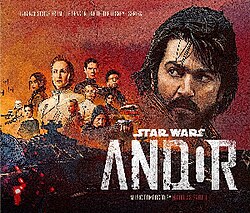
Photo: Wikipedia
This column also appeared in Eben Shapiro’s Substack on February 1, 2026.
Earlier this week, Eben Shapiro wrote in the Indy about the collective trauma engendered by authoritarianism, a trauma that rips the fabric of society and that often lasts for decades. He illustrated this generational damage with examples from two recent films.
Just as film offers us a way to viscerally grasp the damage that tyranny can inflict, so too can film offer us an opportunity to imagine alternative responses to that tyranny. We have the capacity to write that story, and the folks in the streets in Minneapolis are showing us that we might put a stop to this political dumpster fire now before it becomes a generational tyranny requiring the sacrifice of countless lives and leaving us with multigenerational trauma to overcome.
I’d like to suggest some exemplary and inspiring films on resistance, resilience, and hope in the face of tyranny. Readers probably have a better catalog than I do for such films (you’ll note that most of my examples are pretty dated, as am I), but here is an eclectic list of some examples of films that I think send the message that resistance is not futile and that hope is an engine of persistence. I invite readers to share their own favorites and to help produce a longer list.
Andor (2022-2025): Set within the fictional Star Wars universe, the TV series is centered upon thief-turned-rebel spy Cassian Andor during the formative years leading up to the events of the original 1977 Star Wars film and the rebellion against the tyrannical Galactic Empire. The series explores how Andor becomes radicalized against the Empire and how the wider Rebel Alliance is formed. There’s considerable online discussion about whether/how this is a commentary on the tyranny of the Trump administration.
Battle of Algiers (1966): A pseudo-documentary depicting actions undertaken by rebels during the Algerian War (1954–1962) against the French Government in North Africa, which ultimately produced an end to the French occupation and Algerian independence.
Braveheart (1975): Epic historical war drama. William Wallace, in the first war of Scottish Independence, leads his countrymen in a rebellion to free his homeland from the tyranny of King Edward I of England.
Eyes on the Prize (1987-1990): Twenty-episode PBS series chronicling the American Civil Rights Movement.
Invictus (2009): Nelson Mandela, in his first term as President of South Africa, initiates a unique venture to unite the Apartheid-torn land: enlist the national rugby team on a mission to win the 1995 Rugby World Cup.
Michael Collins (1996): Historical biopic of Irish revolutionary Michael Collins, the man who led a guerrilla war against the UK, helped negotiate the creation of the Irish Free State, and led the National Army during the Irish Civil War.
Spartacus (1960) – The slave Spartacus survives brutal training as a gladiator and leads a revolt against the Roman Republic. Also made into a tv series (2010-2013).
The Matrix Trilogy (1999–2003): The story follows hacker Neo as he discovers reality is a simulation (the Matrix) built by machines to pacify humanity while using them as a power source. Across three films, Neo struggles to embrace his power to reshape the balance between humans, machines.
No (2012): Historical drama depicting the advertising strategies used during the political campaigns for the 1988 Chilean national referendum in which citizens voted on whether dictator Augusto Pinochet should remain in power for another eight years.
Selma (2014): A dramatization of Dr. Martin Luther King Jr.’s campaign to secure equal voting rights via an epic march from Selma to Montgomery, Alabama in 1965.
Te Rua (1991): A hundred years after the theft from New Zealand of three irreplaceable Maori carvings, two Maori activists travel to the Berlin museum where the carvings are stored and hold a piece of German Art hostage, in order to repatriate the carvings.
The Seven Samurai (1954): a masterpiece of the renowned Japanese director, Akira Kurosawa, follows the story of a village of desperate farmers who seek to hire samurai to combat bandits who will return after the harvest to steal their crops.
The Singing Revolution (2006): was a largely non-violent, five-year movement (1987-1991) that liberated the Baltic states of Estonia, Latvia, and Lithuania from Soviet occupation. Centered on mass demonstrations, over 300,000 people gathered in Estonia to sing forbidden patriotic songs, utilizing national unity and cultural identity to peacefully restore independence.
The War at Home (1979): Oscar-nominated documentary tells the story of the impact of the war in Vietnam on one American town, using the Midwestern city of Madison, Wisconsin as a microcosm for the 1960s Antiwar Movement. I was there, in Madison at the time, and to this day believe that the war at home made the war in Vietnam untenable, and contributed substantially to ending that heinous tragedy. Available on Kanopy.
V. for Vendetta (2005): Dystopian thriller set in a future where a fascist theocratic regime has subjugated the UK. The story centers on V, an anarchist and masked freedom fighter who attempts to ignite a revolution.
Walkout (2006): Walkout is the true story of the Chicano students of East L.A. who, in 1968, staged several dramatic walkouts in their high schools to protest academic prejudice and dire school conditions.
Weapons of the Spirit (1987-remastered 2026): A very long time ago, when I actually taught a film class at UMass Amherst, I used this film, a documentary about a small French Huguenot village that, in the midst of the Nazi occupation, hid in plain sight, 5000 Jews and saved their lives, in what the director calls a “conspiracy of goodness.” I have heard that today, the same village is providing sanctuary to immigrants. I continue to look back on this film as one that reminds us that we do not have to surrender to evil, and when we openly refuse to do so, our actions may be contagious.
Art Keene is a retired anthropologist and the managing editor of the Amherst Indy.