
Views on Views: Water Features in Landscape Design: Fountains, Ponds, and Waterfalls
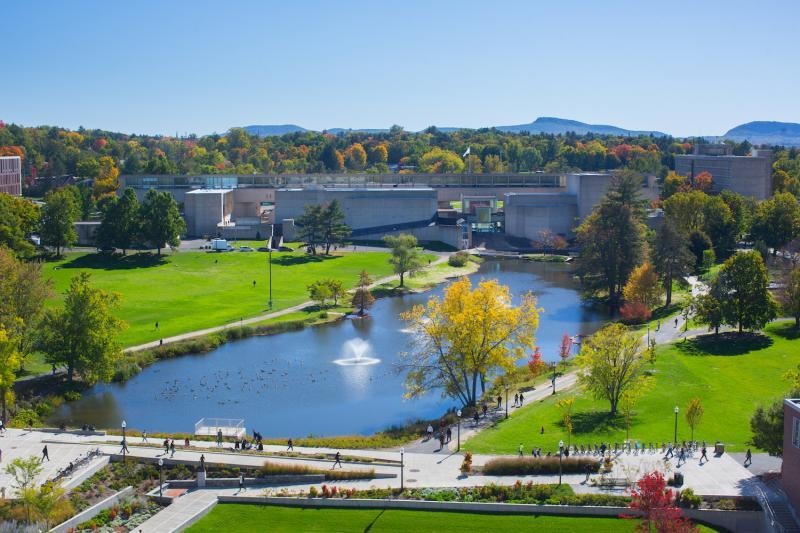
UMass Campus Pond. Photo: umass.edu
This is the eighth column in a ten-part series. View the previous articles in the series here.
Before I retired, I lived and worked with college students in Amherst. They were mostly sorority women, and I remain in touch with some of them as their former house director. I fully expect to continue this kind of connection across the years. It’s wrong to generalize, especially given the stereotypes about the town’s Greek life, and I’m sure what I say applies to most college students. I remember “my” students as caring and smart, funny and annoying, all at the same time; occasionally they broke my heart, but it was ‘heart work,’ in truth, that I had signed up for.
Living close to the UMass campus in a large house with gardens, I often invited them to see how we (they and I and the townfolks) shared the same space, hoping to encourage them to be more mindful of the environment. We all loved the Campus Pond and trails nearby, as well as visits to Puffer’s Pond and Amethyst Brook, especially during the first semester coming out of the pandemic. I showed them where Tan Brook was, so close to where we lived, and invited classes from UMass to study it, granting access through our property. Tan Brook is a wonderful town resource that could be day-lighted for a more interesting setting for a couple of neighborhoods.
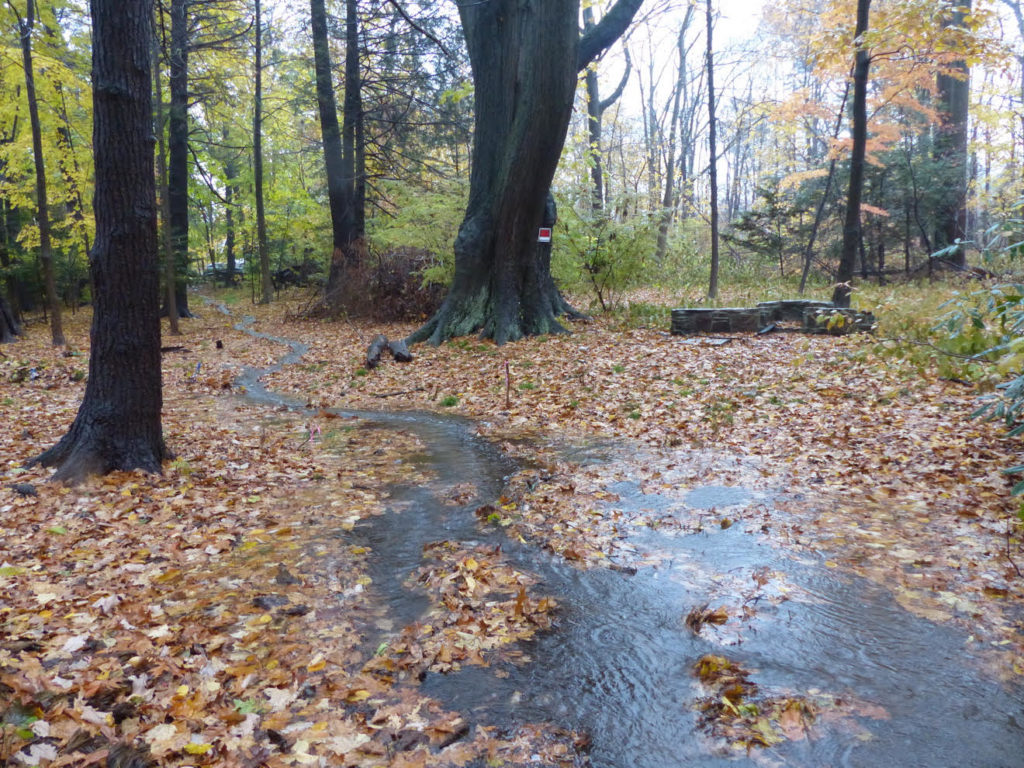
Read More About Tan Brook: Amherst History Month by Month: The Spaces in Between (Amherst Indy)
Tan Brook empties into the Campus Pond at UMass, one of the most prominent water features in town. The pond is a feature humanly modified from a natural body of water. It was largely imagined during the years when UMass was known as the Mass Agricultural College, when a dam was added to a natural stream.
The presence of water is the commonality here. Proximity – and equal access – to water is a deep human need, as vital as a drink of water. When I occasionally accompanied students on walks, it was often to landscapes defined by arresting water features.
While it was clear we were drawn to natural landscapes as much as to nights out at Lit (a college bar now gone) or The Spoke (the popular college bar on East Pleasant Street), there was a hard event every term during move out, when the dumpsters overflowed with clothes, furniture, and single-use plastics along with the recycling and the trash. The ideal of the earth/world and our bit of it as “a common treasury for all” seemed remote in those moments. The desire for beauty in nature nonetheless guided the students as they headed off on study abroad programs and posted pictures of all the places they visited: fountains in Rome, waterfalls, the Alps, lakes, or the ocean somewhere, reflecting brilliant azure-blue skies
Where am I going with this introduction?!
Even when I doubted a commitment to our shared environment at a micro level, there was no doubt that my students—like all of us, to be sure—loved seeing places of natural beauty ornamented by, or defined by, water. For water is elemental.
Amherst has some very satisfying water features that significantly enhance our quality of life. The first place that comes to mind is the Enos Cook Fountain in Sweetser Park, seen below in a charming watercolor painting currently on view at the Amherst branch of Greenfield Savings Bank.
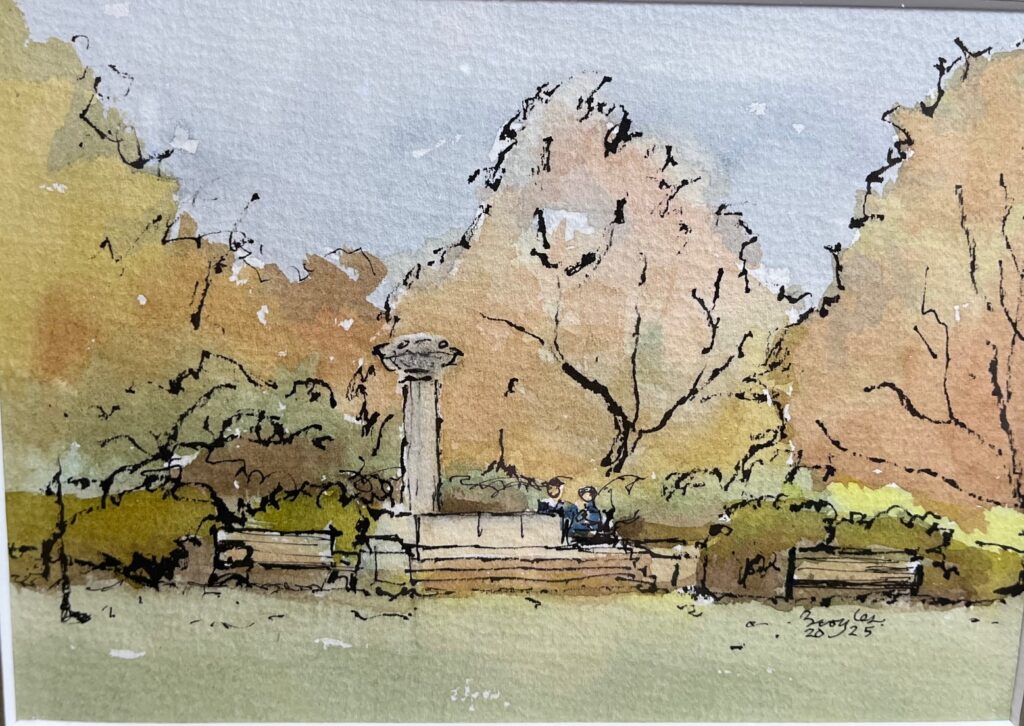
But as it has been so cold recently – and we are seeing the town having to deal with mountains of snow – I’d suggest waiting till spring to look more closely. What is interesting is that it was planned by the Olmsted Brothers, the legacy firm of Frederick Law Olmsted (1822-1903), who is usually considered America’s founder of public parks. Olmsted’s firm also planned Amherst’s original design for the Town Common as a naturalized intervale bordered by fences and roads.
Thanks to funding from the Community Preservation Act Committee in 2015, metal piping inside the Cook fountain was repaired and its stonework, particularly the bowl of the fountain, was restored. 2015 also marked the centennial of the founding of the Amherst Garden Club. From this time forth, the entire structure of the fountain was protected from winter damage by temporary coverings on all sides.
I write this, certain that Indy readers may have their own favorite water feature or body of water to go to in town. There is something of consequence in visiting such places that always offers well-being and/or serenity. According to the magazine Psyche, we need these kinds of spaces to thrive as humans. And it could be something as fleeting and simple as catching snowflakes in one’s mouth while out for a walk or a cross-country ski adventure.

Puffer Falls is one of our best landscape features in this category. Located on Mill Street in the Puffers Pond and Mill River Conservation Area, it is a beautiful sight in all seasons, but particularly in winter. I love walking by here, either via the road or via the Julius Lester Trail from the Mill River Recreation Area. Perhaps we all know the impact that waterfalls can have, inducing relaxation and calm. The sound of waterfalls and visual effects create a “Blue Mind,” an almost meditative experience. Waterfalls also generate high levels of negative ions (via the Lenard effect), which can boost mood, increase serotonin, and create a sense of revitalization.“
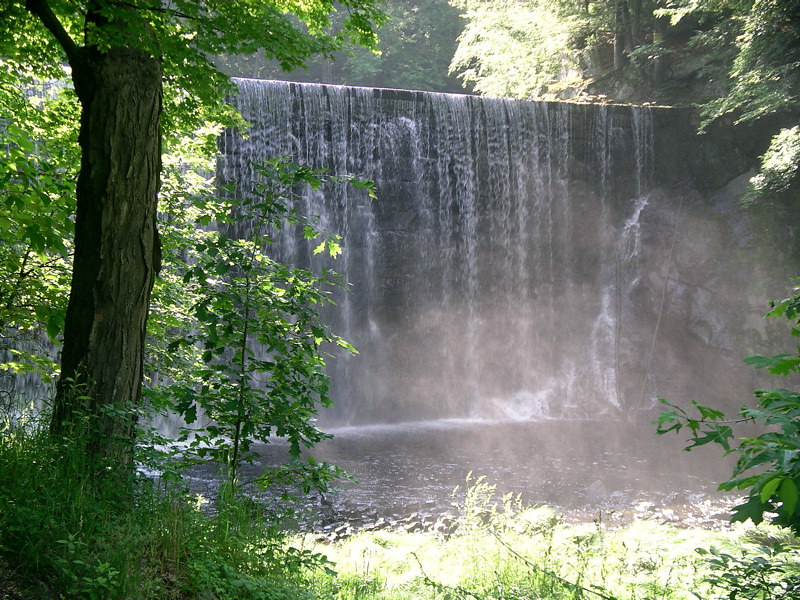
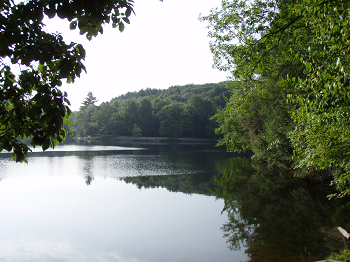
Safety improvements planned for Puffers Pond, Dike, and Dam include recommendations for dredging the pond and improving the beach area and the surrounding trails. Puffers Pond has significance for the whole town, ecologically as well as for recreation and community use. As our Assistant Town Manager, David Ziomek, says, “It’s a cooling center for the town, and many thousands of people use it throughout the year.”
A few years ago, Indy editor Kitty Axelson-Berry submitted this photograph of Wentworth Pond.
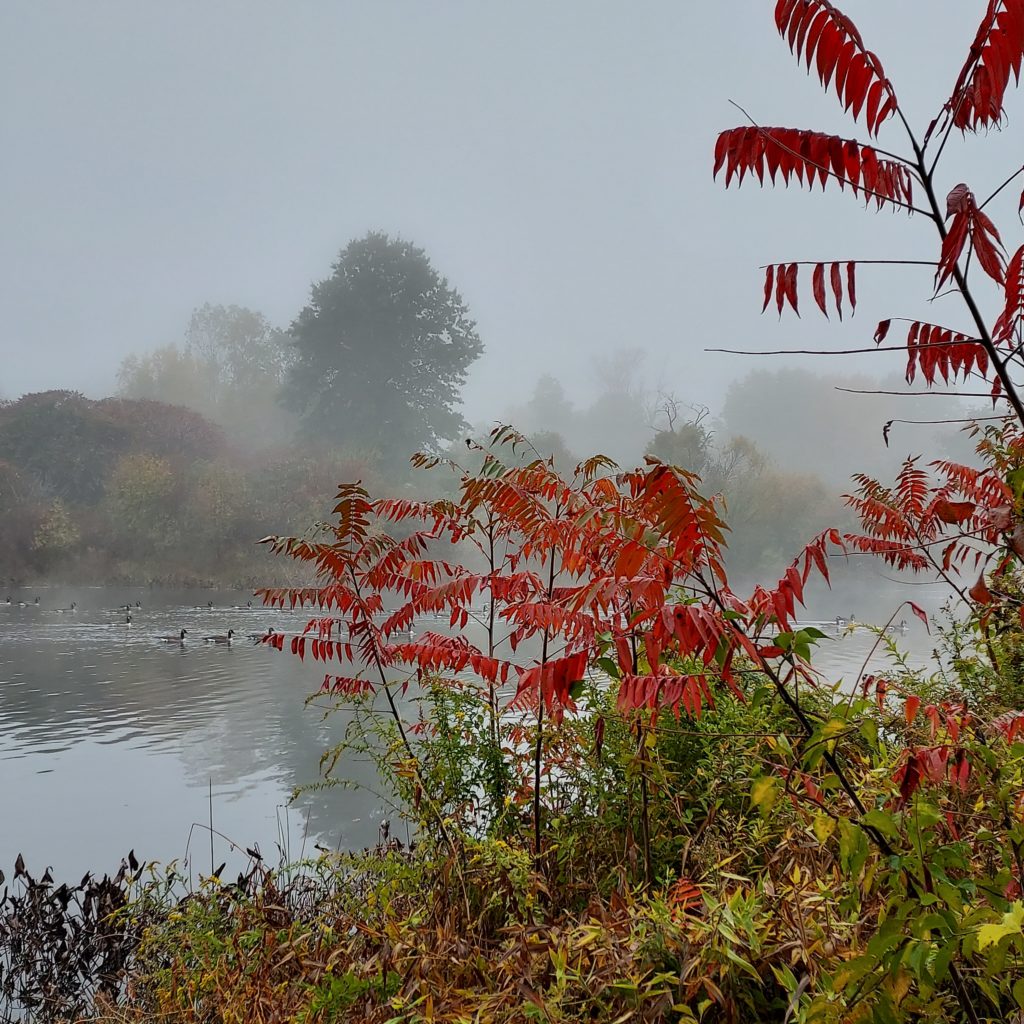
Wentworth Pond is also a popular place to take walks, as is Sweet Alice Conservation Area and along the Mill and Fort Rivers, which are tributaries of the Connecticut River.
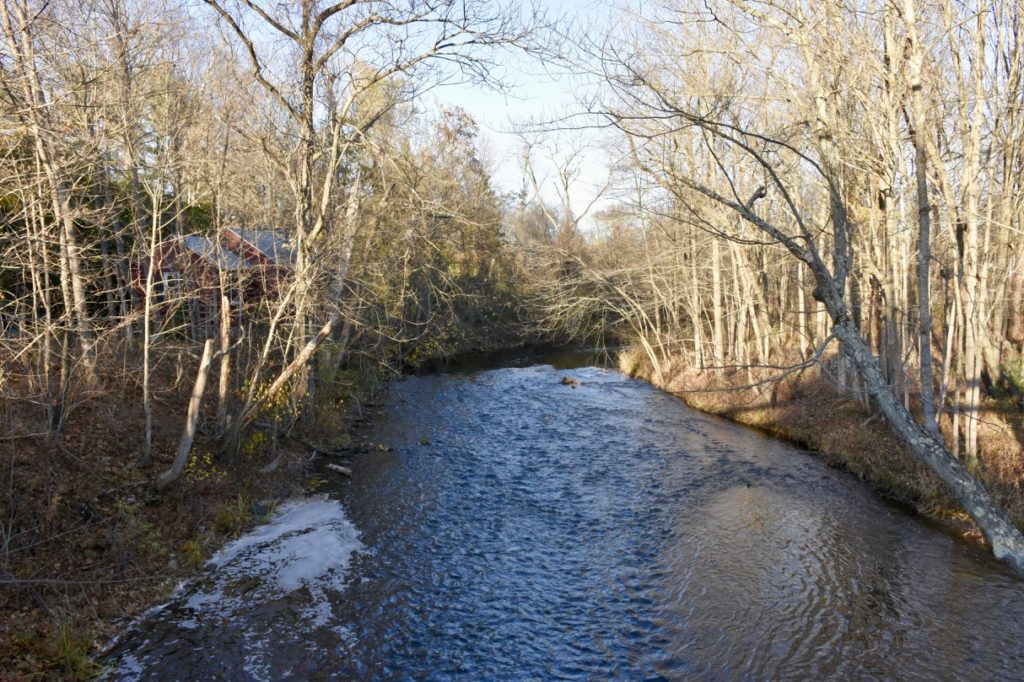
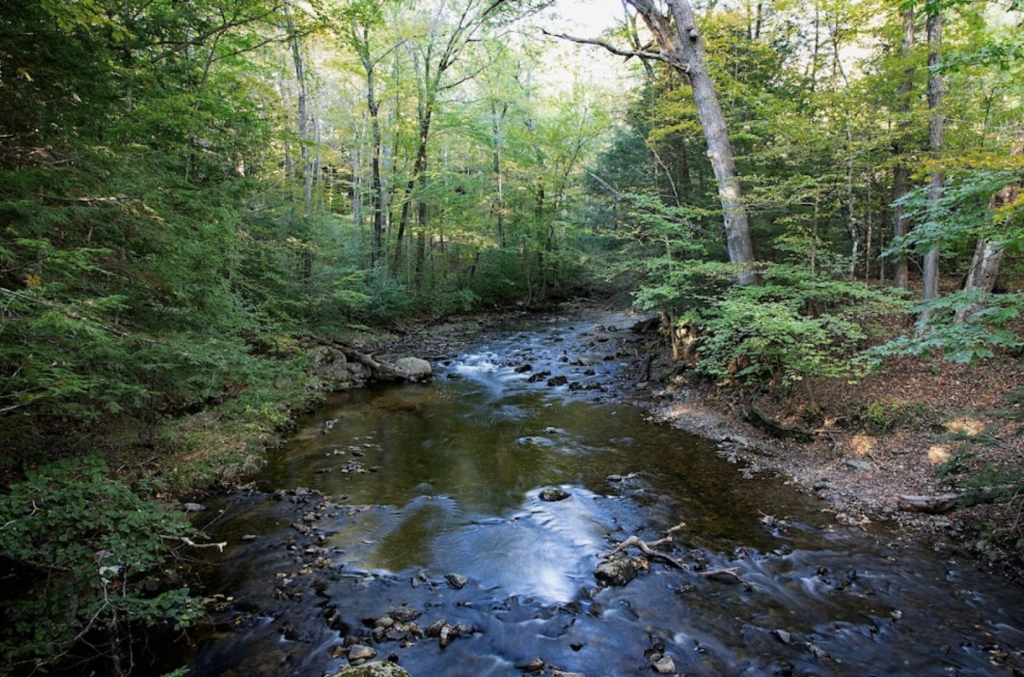
My first experience of living in Western Massachusetts was in the hilltown of Ashfield, which had a lake, and it was a real focal point for the town, providing recreation and amenities close to the town center, such as tennis courts, picnic tables, and a couple of set-ups for grilling by the town beach.
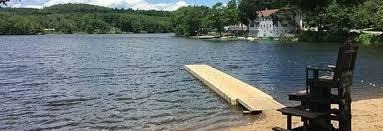
It was possible to walk by and see small bundles of kindling laid aside for others to make a fire. That’s the way that a small hilltown rolls.
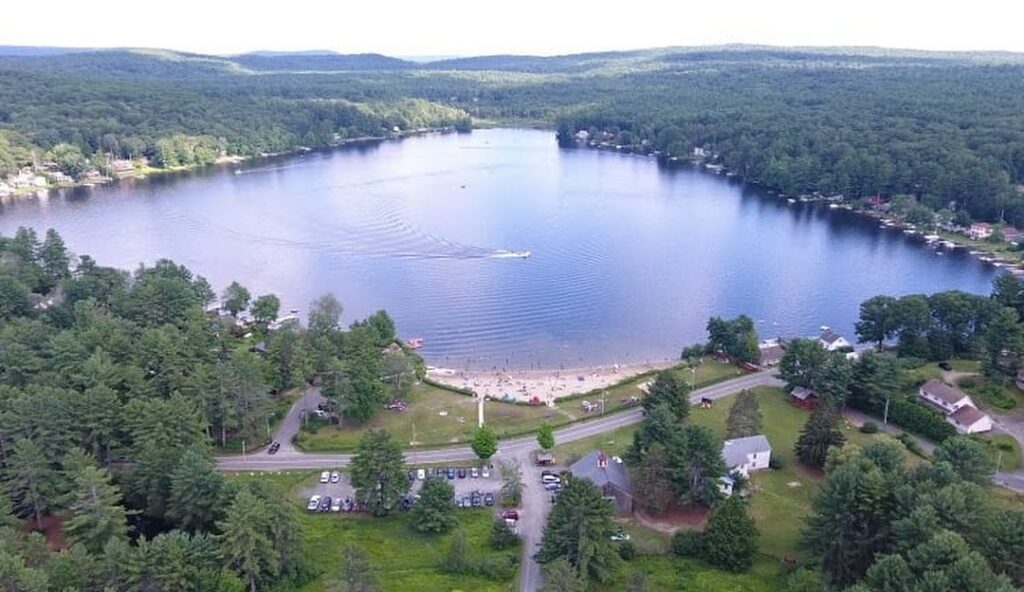
Closer to Amherst is the 127-acre Lake Wyola, in Shutesbury, which is a magnet for folks from across Western MA year-round, with swimming and boating in the summer and ice fishing, XC skiing, skating, and snowmobiling in the winter.
Like a deer that longs for a stream of water (Psalm 42:1), so our souls long for these water features in our landscapes. The art historian in me knows that artists in the past had elevated ideas of rebirth or renewal and represented these themes with reference to water in many different manifestations. Images might refer to baptism, or a sacred ‘crossing’ or transition, even one from life to death. And in our current political crossroads, as Krista Tippett has said on her radio program On Being, it is landscapes, scenes with water, that we might crave as “…We do not want to live in a world in which we scroll through videos of real people humiliated and dying at the hands of other real people, with these videos at our children’s fingertips too.”