Amherst in 2040? Open House Previews New Design Standards for Downtown
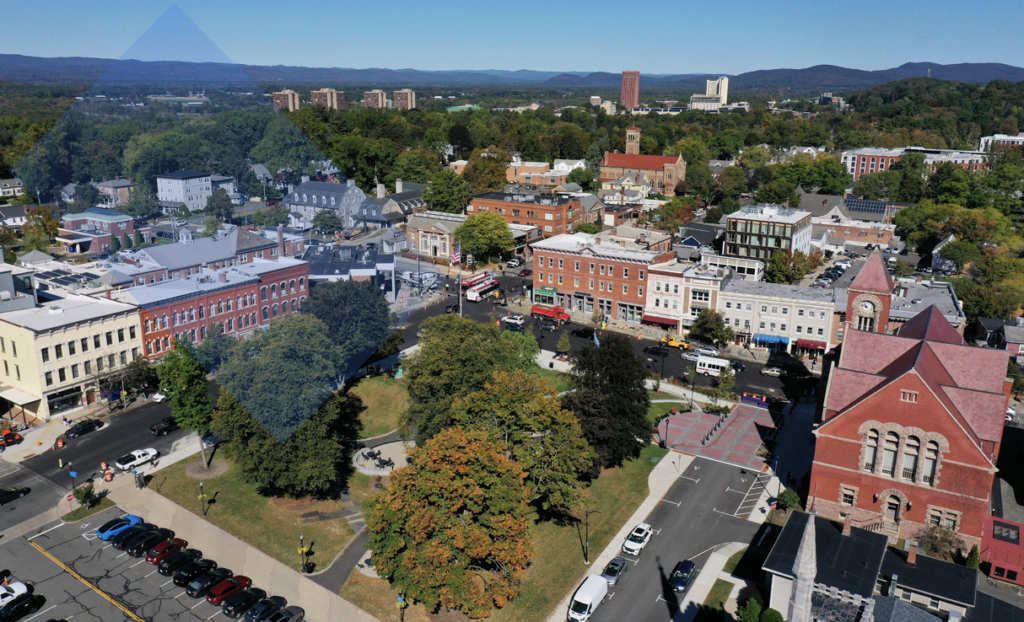
Downtown Amherst, MA. Photo: amherstma.gov
By Art Keene and Maura Keene
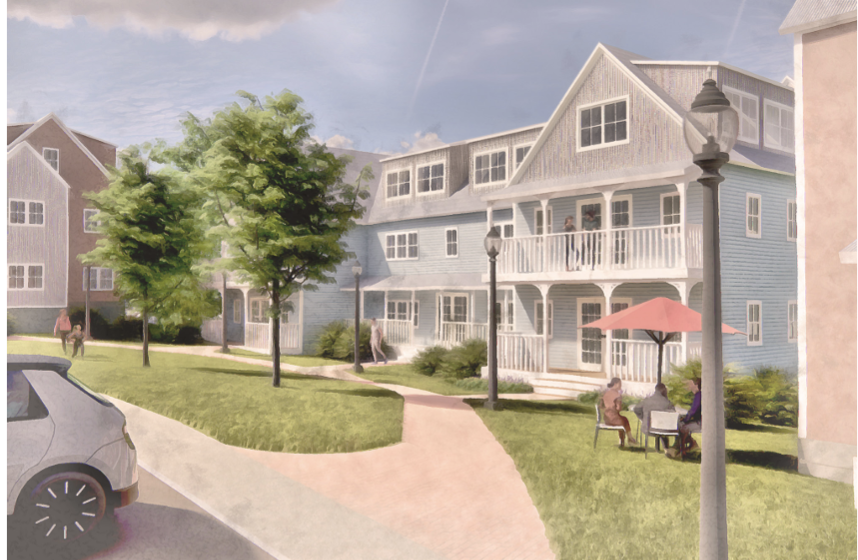
Renditions of how Amherst’s downtown might look in the year 2040 were on display the evening of March 11 as representatives of Dodson and Flinker Landscape Architects reviewed their proposed downtown design standards to an audience of about 50 people at an open house at Amherst’s Unitarian Universalist Meetinghouse. The event was recorded and can be viewed here.
The draft standards represent the product of two years of research and outreach to the community and were produced in consultation with a working group of 20 appointed stakeholders representing the diverse interests of the downtown area, exploring the question, “What kind of downtown do we want?”
The members of that working group are:
Sarah Barr, Amherst College
Dylan Barstow Manz, Developer, Archipelago
Clare Bertrand, Resident
Ira Bryck, Resident
Nancy Buffone, UMass
Bruce Coldham, Planning Board member
Gabrielle Gould, former BID Director, Roberts Group
Shoshana King, Shade Tree Committee member
Alex Laguerra Siena, Property manager, Amherst Innovative Living
Tony Maroulis, UMass
Doug Marshall, Chair, Planning Board
Janet McGowan, Resident
Susannah Muspratt, Resident
John Page, BID Director
Jacob Robinson, Director, Chamber of Commerce
Jonathan Salvon, Architect
Steve Schreiber, Resident
Elizabeth Vierling, Resident
Karin Winter, Planning Board member
Tracy Zafian, TAC Chair
The committee also received input at a public forum and workshop on the standards in December of 2024. And the town conducted a visual preference survey of downtown residents in October of 2024.
Aims of the project were to develop:
- A consistent vision for the town center
- Design standards that would yield a vibrant streetscape
- Economic development
- Predictability and consistency of downtown building design/architecture
- Preservation of small-town feel
The project has two parts: creating a vision that shows what downtown Amherst will ideally be like in the future and developing design standards to guide changes in the downtown toward that vision. Both aspects were summarized at the open house.
The draft findings have been compiled in three richly illustrated volumes, each more than 70 pages in length.
Volume 1: Context and Vision introduces the project’s purpose, explains its intent and relationship to other regulatory mechanisms, and articulates the vision and guiding design principles for downtown Amherst.
Volume 2: Zoning and Design Standards for Private Development sets requirements for private development and is divided into several parts: Downtown Design Zones, Highest Priority Zoning Revisions, Other Necessary Zoning Revisions and New Design Standards.
Volume 3: Standards for the Public Realm provides design standards for public realm improvements, including streets, sidewalks, street trees, lighting, and furnishings, and is intended primarily for improvements to be made by the Department of Public Works (DPW).
Many of the proposed design changes will be accompanied by proposals for changes in zoning (see Volume 2).
Consultants Peter Flinker, Dillon Sussman, and Nate Burgess from Dodson Flinker devoted the first part of the meeting to summarizing the findings in each volume. Attendees were then invited to visit three stations where they had a chance to chat with the consultants, Economic Development and Planning Director Jeff Bagg, Housing Coordinator Greg Richane, Town Manager Paul Bockelman, Town Councilors Cathy Schoen, Pam Rooney, and Jennifer Taub, and Planning Board Chair Doug Marshall as well as members of the working group. Sussman asked attendees to indicate aspects of the guidelines that they liked and didn’t like on a chart provided for that purpose and to leave specific comments on sticky notes. The room quickly came to life as lively discussions broke out at each station.
For example, Sarah Morton and Sarah Barr had an interesting exchange on the need for a grocery store in downtown Amherst, especially if the town intends to increase residential density there. Barr, who is Director of Community Engagement at Amherst College, pointed out that to her surprise, many of the younger people with whom she has spoken don’t shop for groceries in supermarkets, but rely on delivery services like Instacart. She wondered whether younger people would see access to groceries within walking distance as essential.
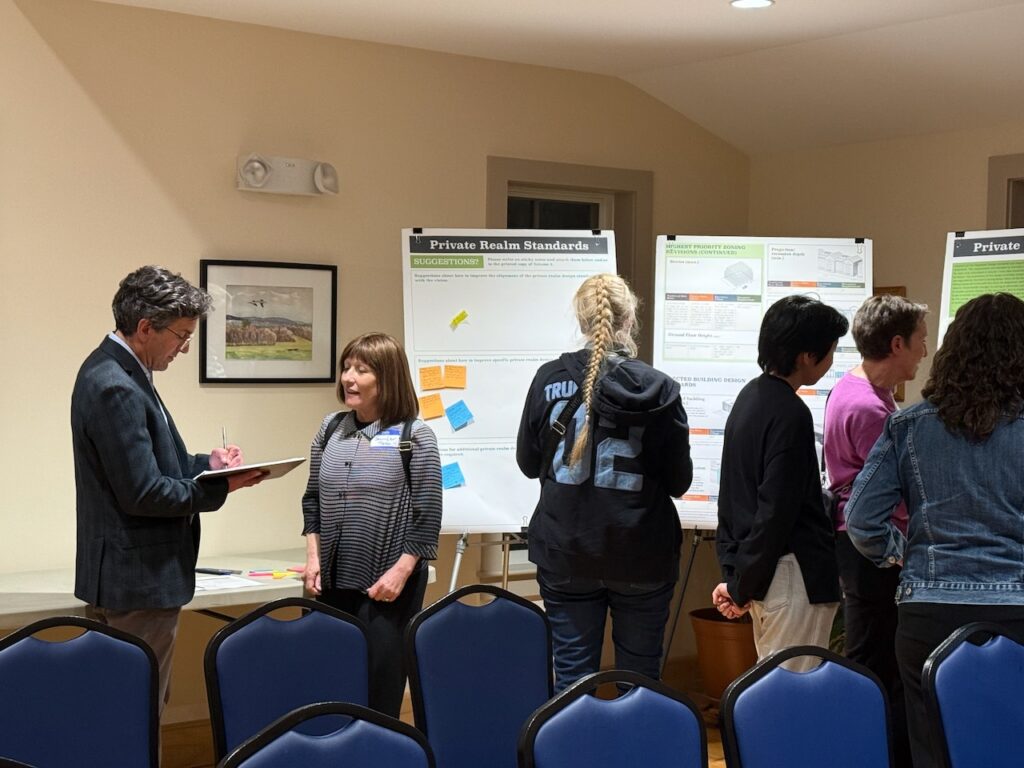
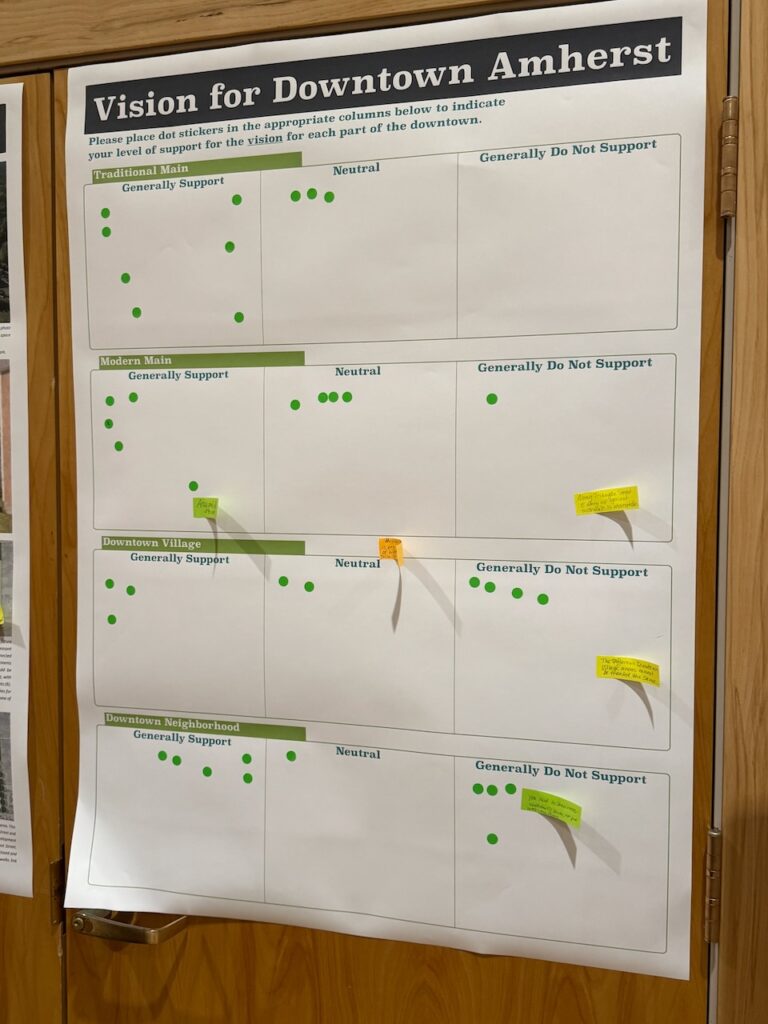
Flinker and Sussman emphasized that there will be additional public presentations in the coming months where the consultants will take feedback. Another presentation is scheduled for the March 18 Planning Board meeting. They encouraged residents to visit the Design Standards website, explore all three volumes, and leave feedback. The consultants will continue to take feedback until July 1, 2026. Comments on individual design standards can be made here. Click here to submit multiple comments by downloading a spreadsheet.
Defining Context Zones
The town’s current design standards are based on the idea of new development being compatible with the scale, character, and historic integrity of surrounding structures. This has presented all manner of challenges that are apparent in inconsistencies and incompatibilities throughout the downtown. Among the design problems noted by the consultants are inconsistent design between old and new structures, adjacent neighborhoods that are not all well connected to downtown, some areas being too dark at night, the lack of groceries downtown, inconsistent setbacks and uneven sidewalks, problematic minimum and maximum setbacks, and inconsistent relationships between buildings and streets. All of these issues and more are addressed in the proposed new standards.
A Vision of Amherst 2040
Based on community feedback, the consultants developed the following vision for Amherst in 2040, which guides the proposed design standards.
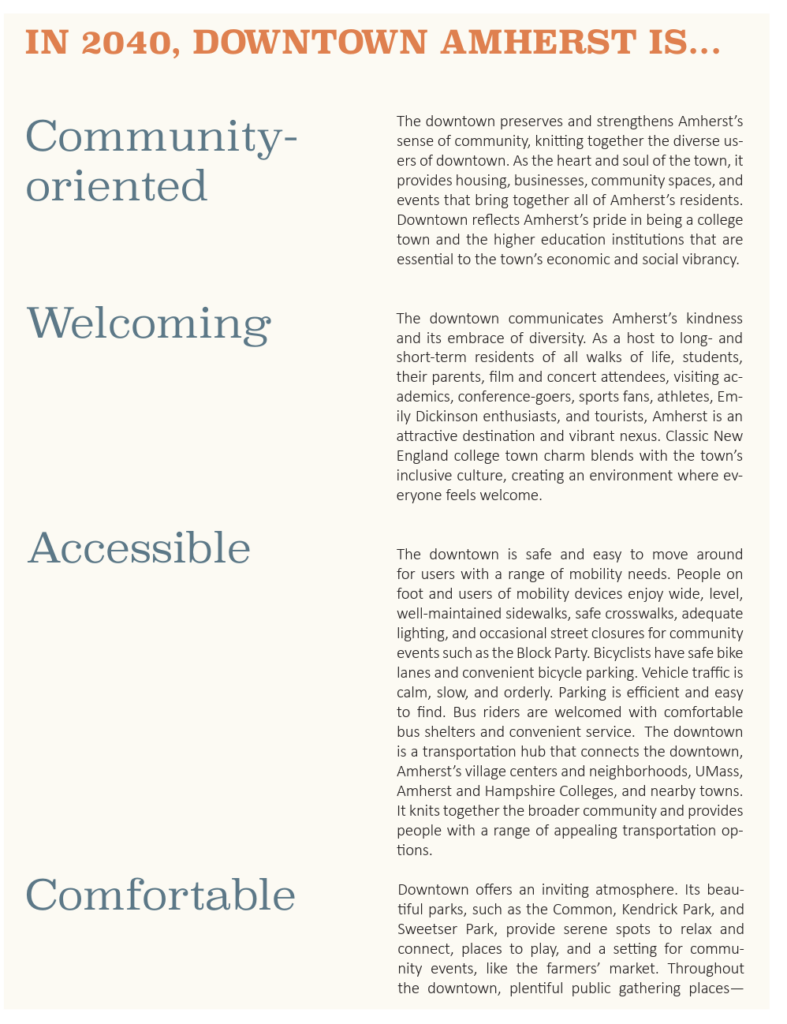
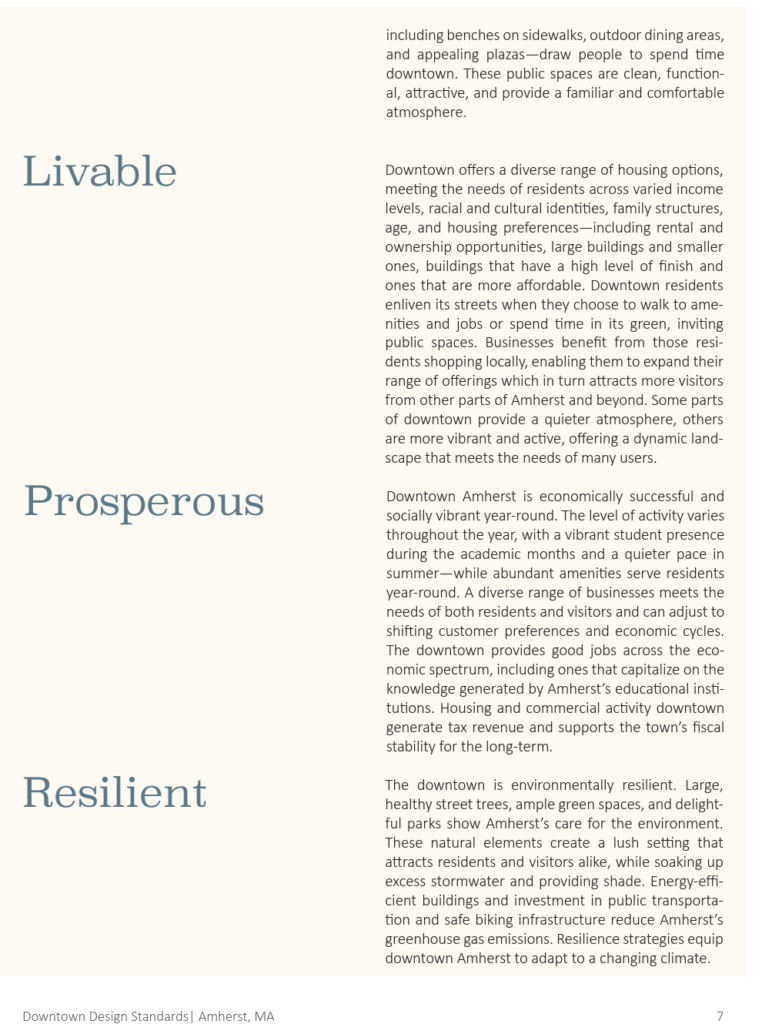
Four Downtown Design Zones
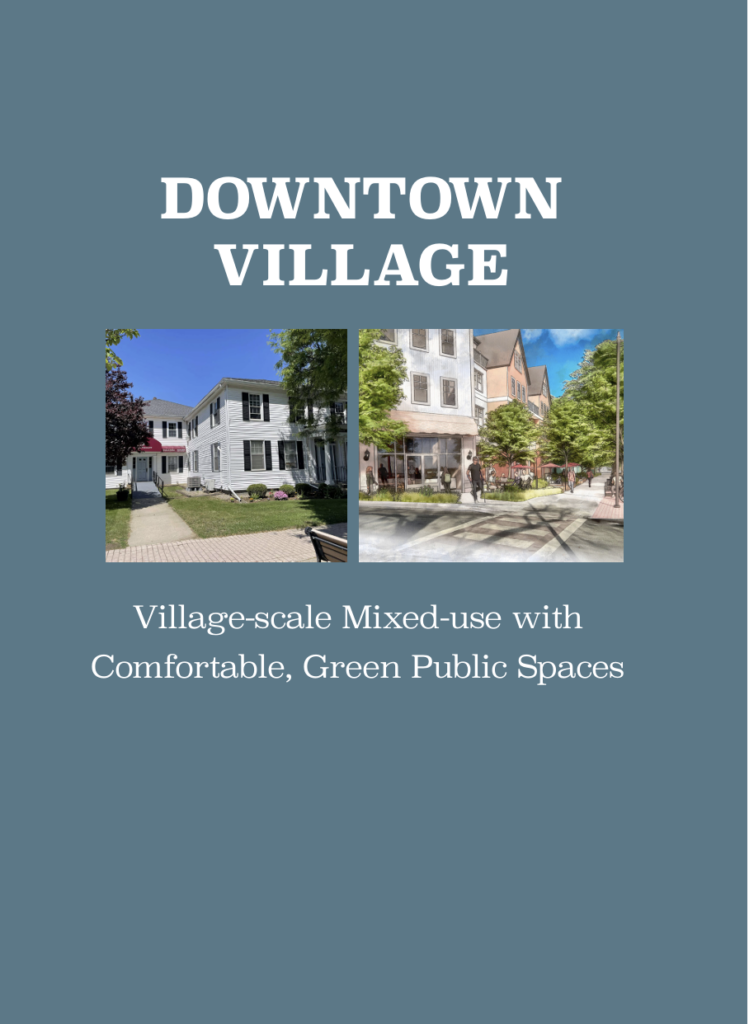
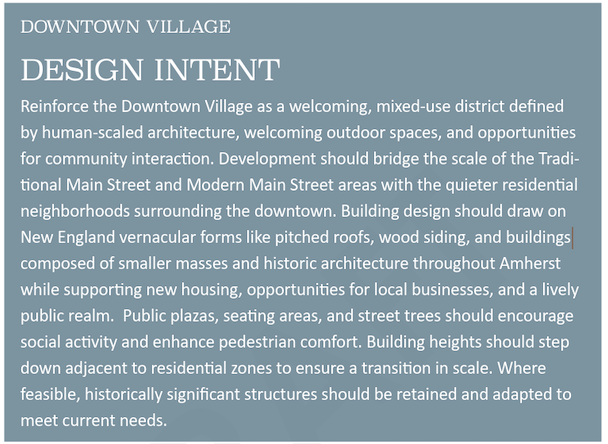
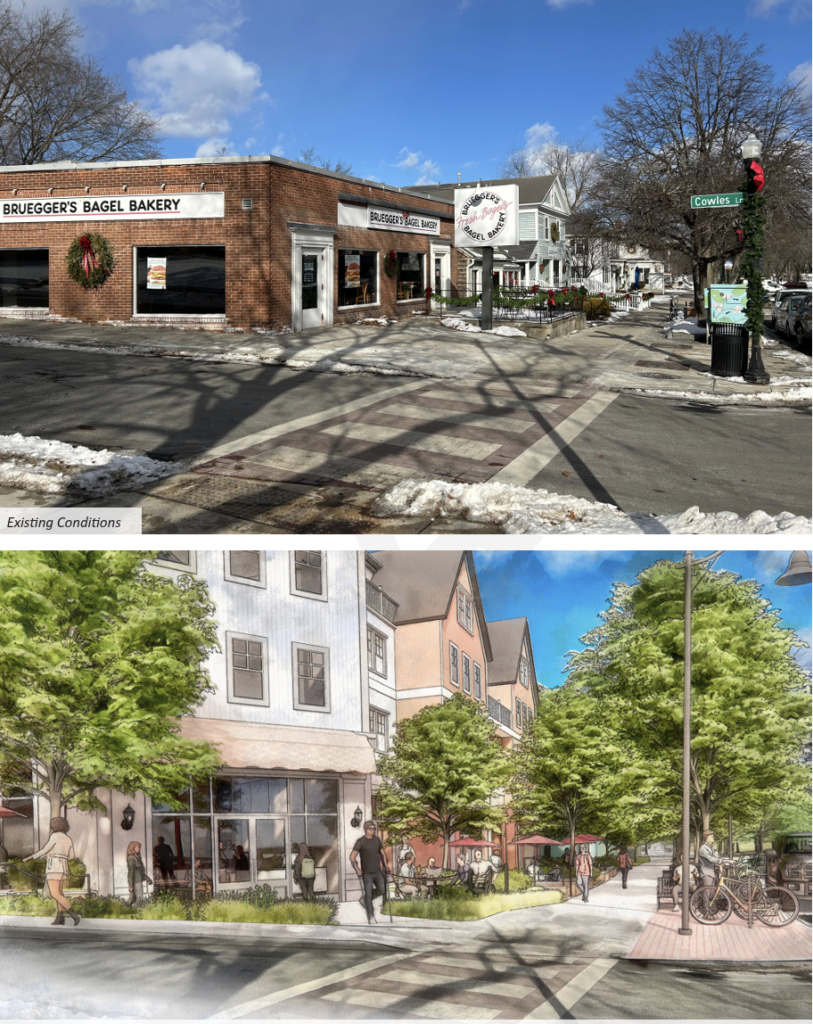
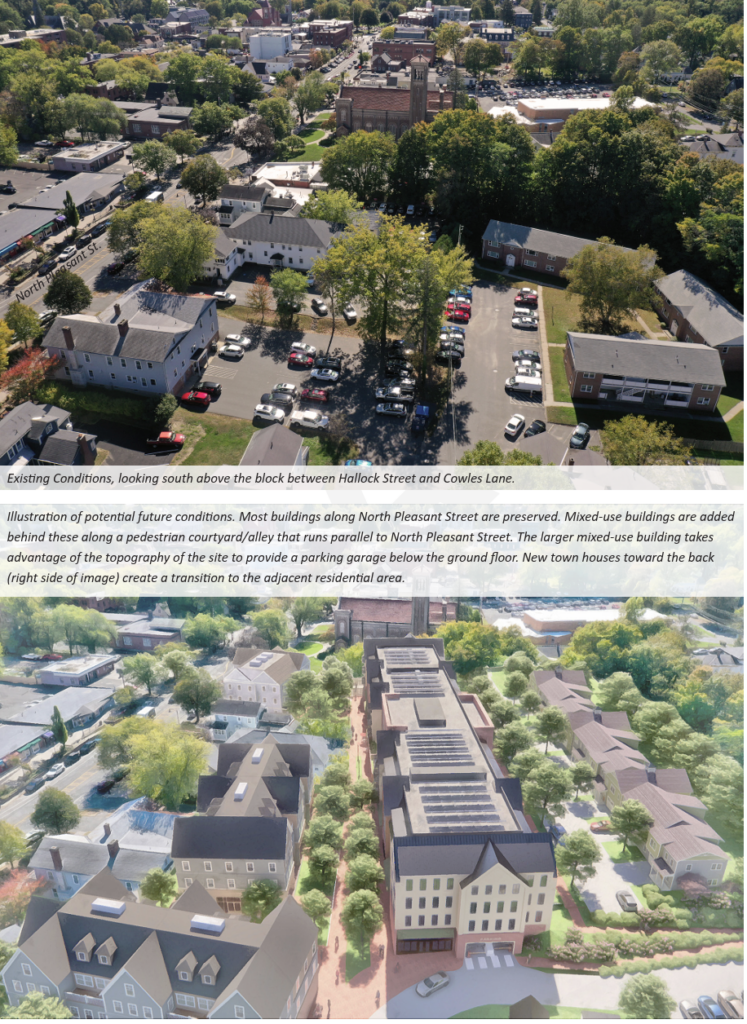
In an effort to reconcile inconsistent design, especially between old and new, the project has defined four distinct design zones, each tailored to different conditions and guiding new development to enhance what makes each area distinctive. Those four zones or neighborhoods are represented on the map below. Each zone (summarized in Volume 1) has its own design guidelines.
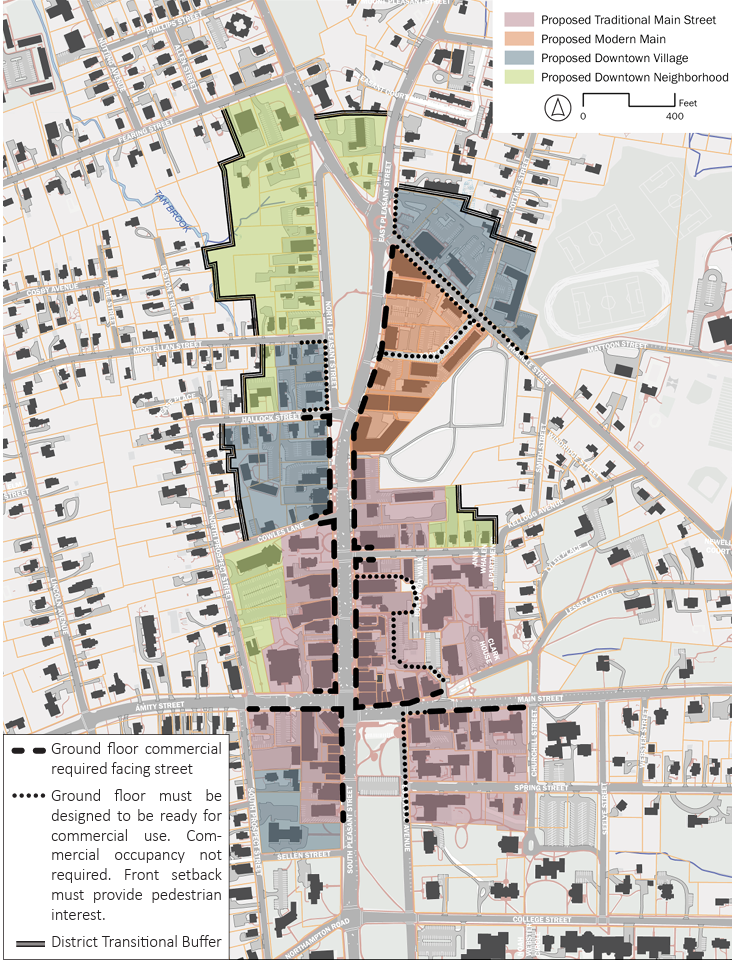
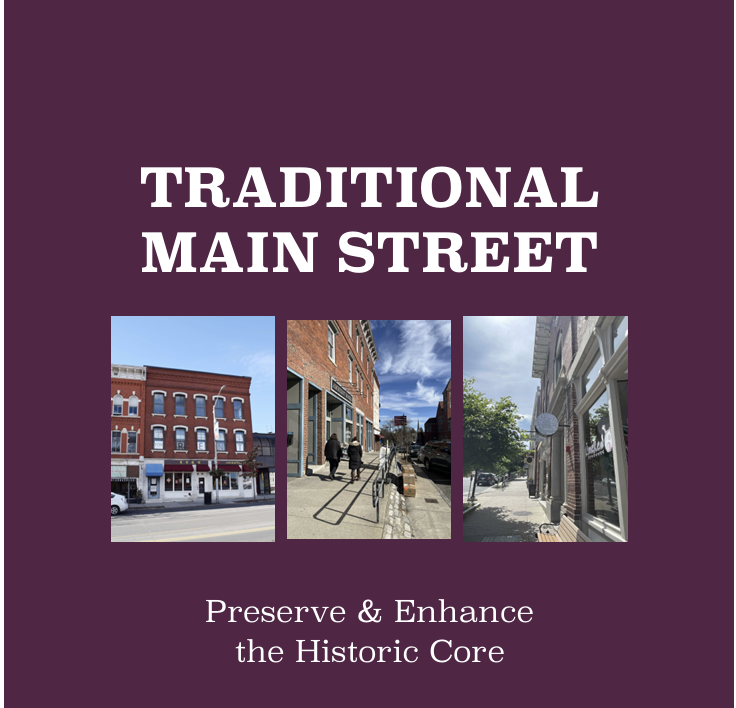
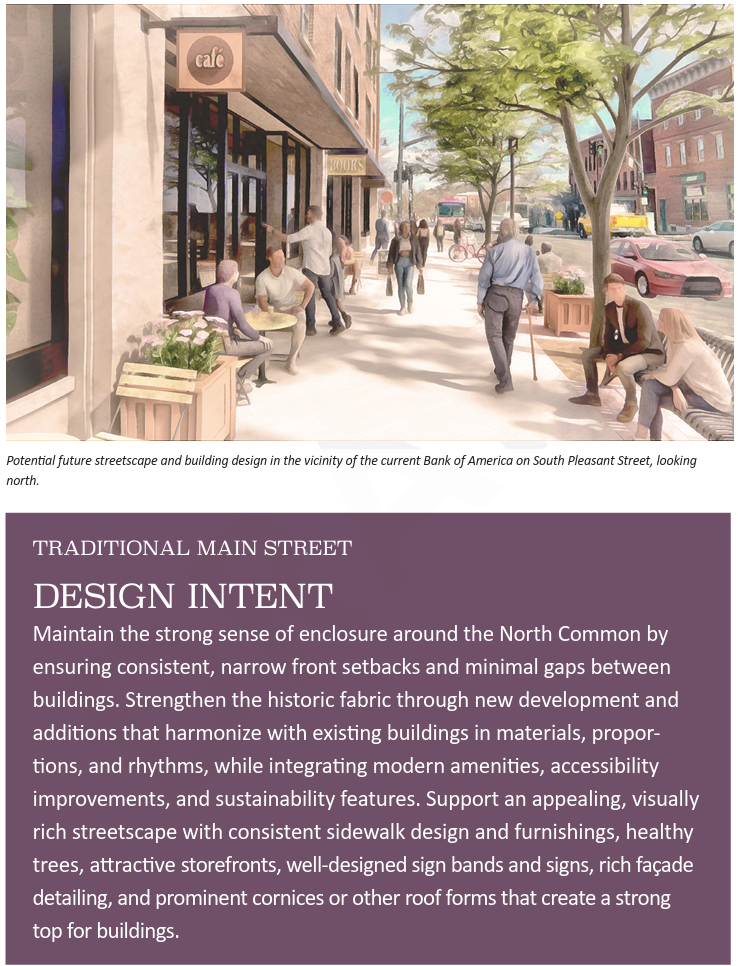
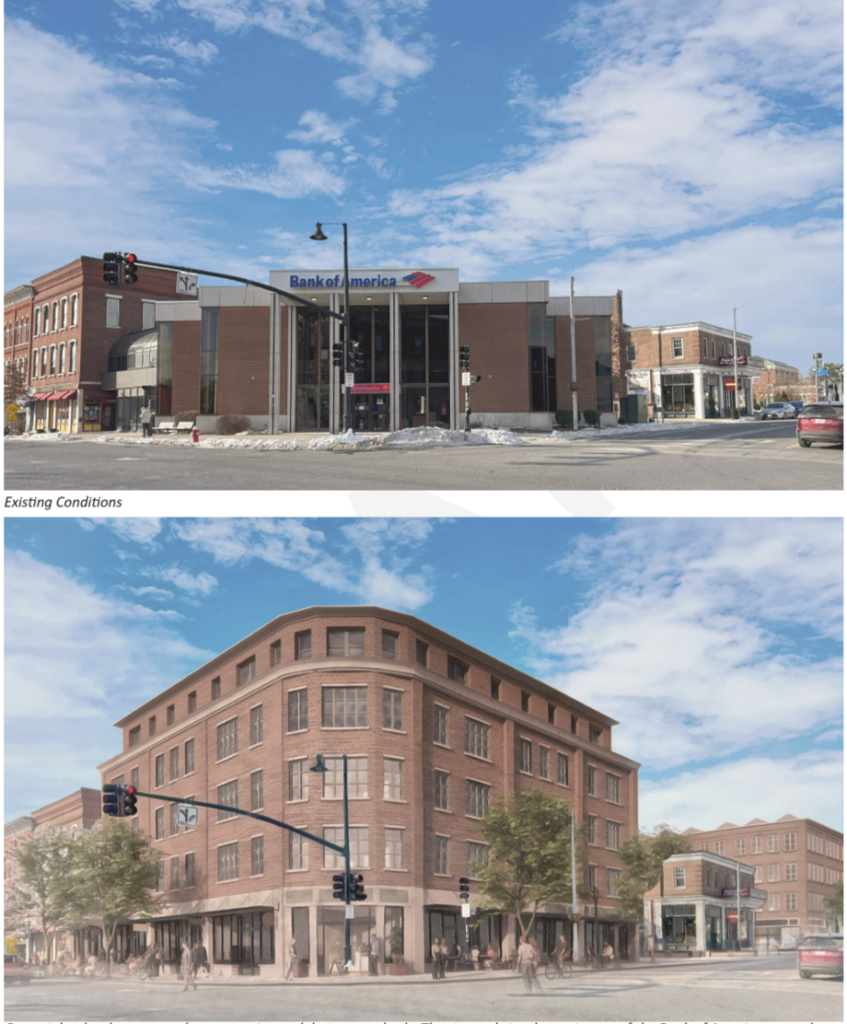
Traditional Main Street
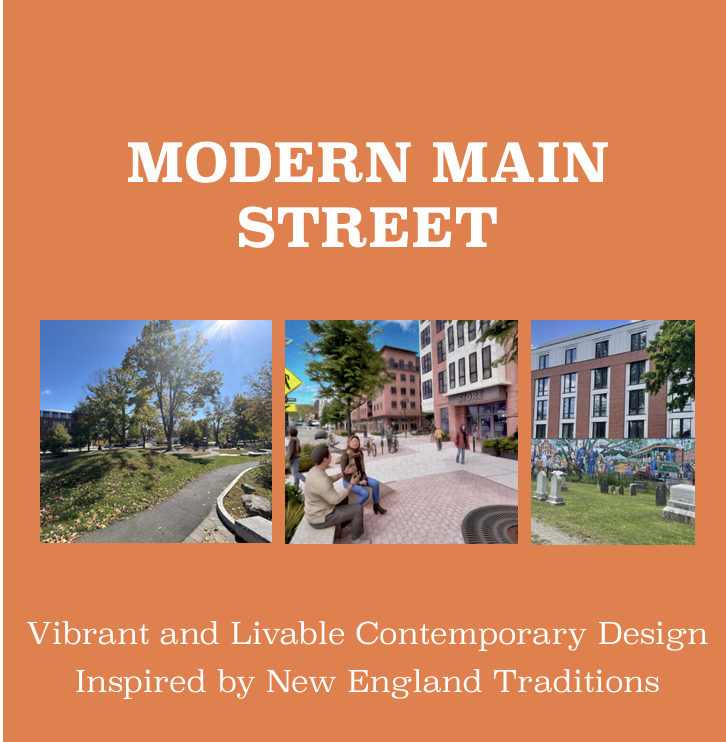
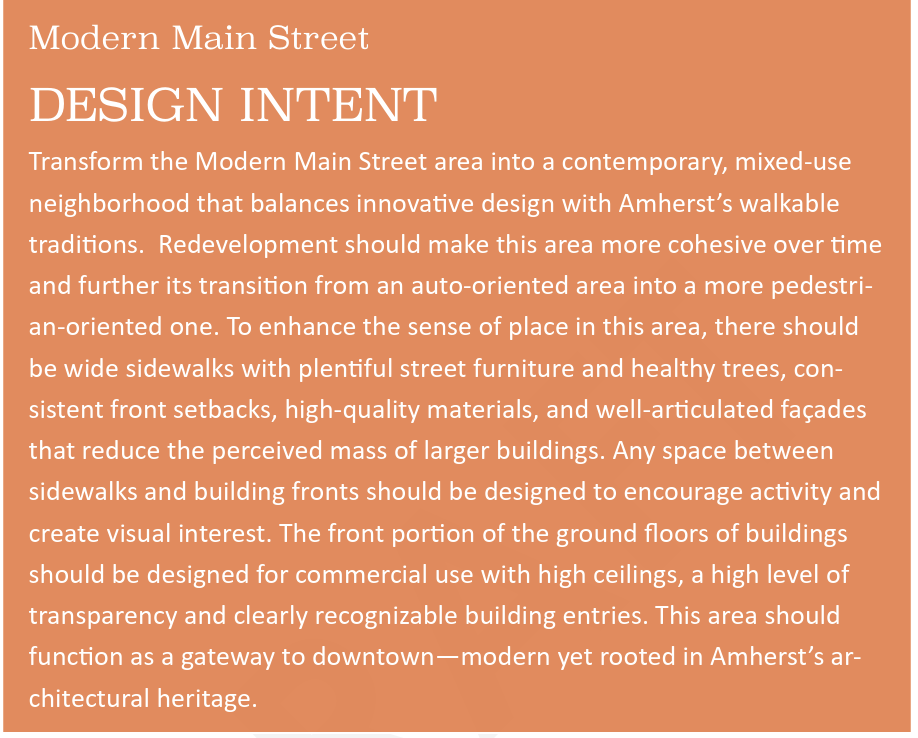
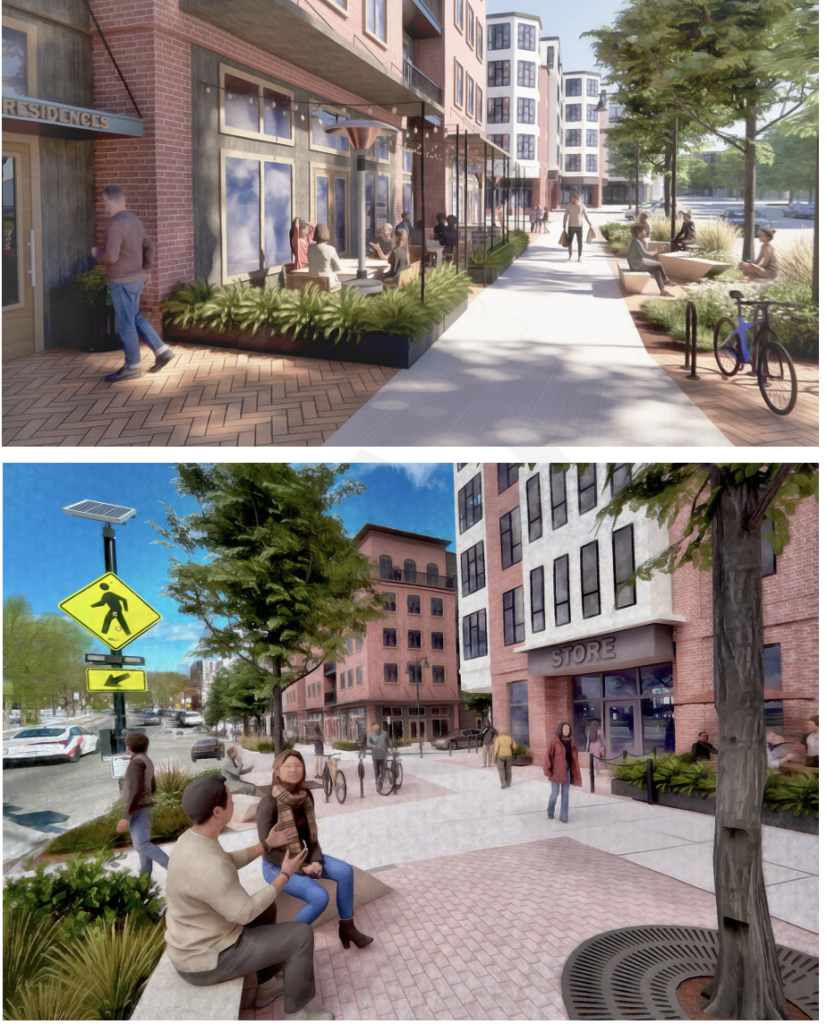
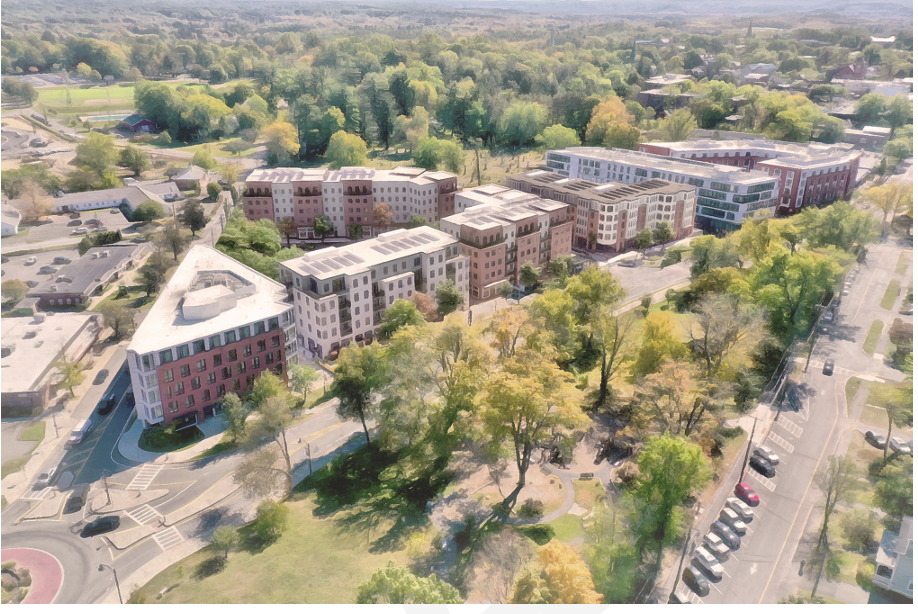
Modern Main Street
The area on East Pleasant Street with the five-story modern mixed-use buildings.
Downtown Village
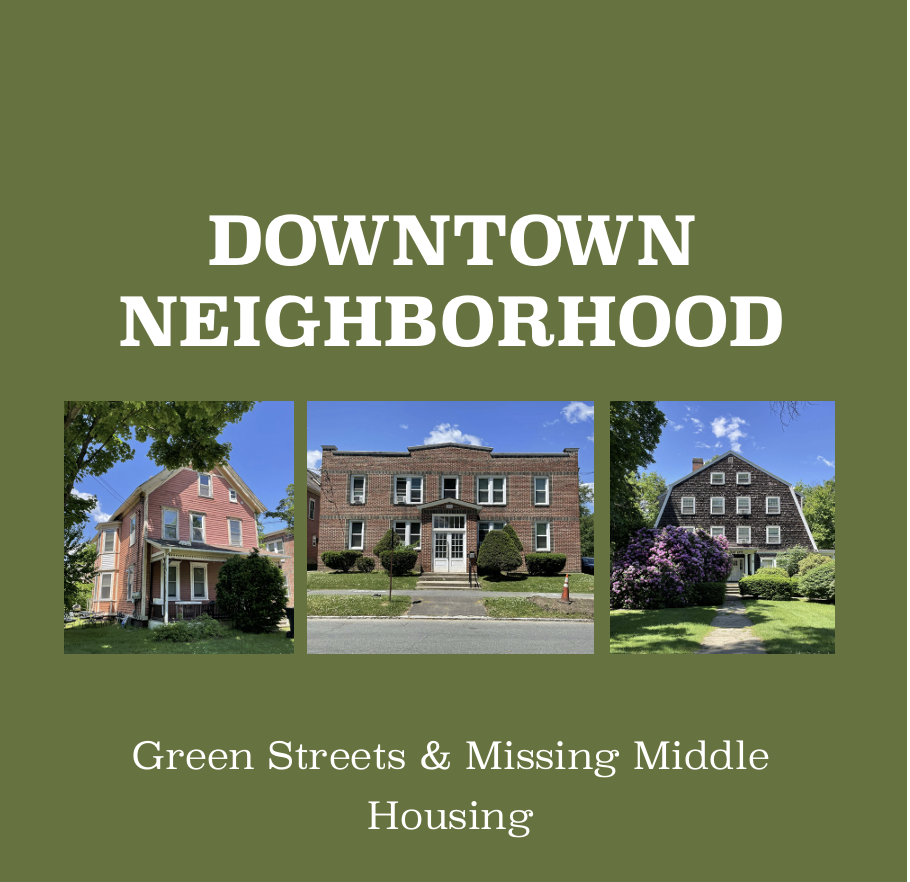
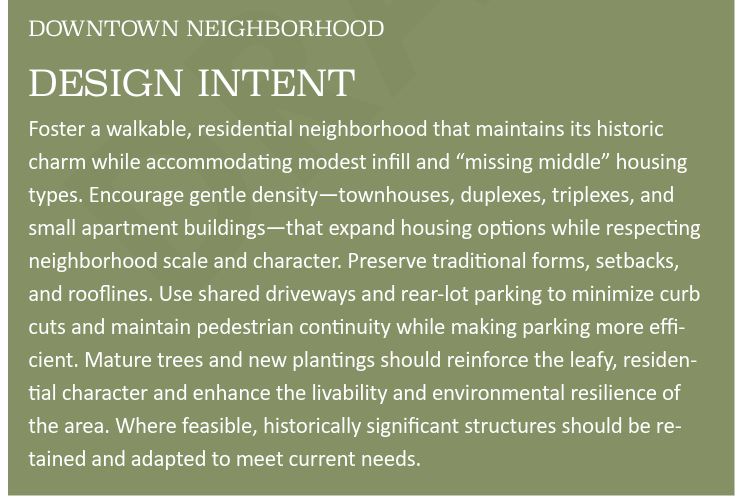
Downtown Neighborhood