
Opinion: Reflecting on the School Budget – Specials or Essentials?
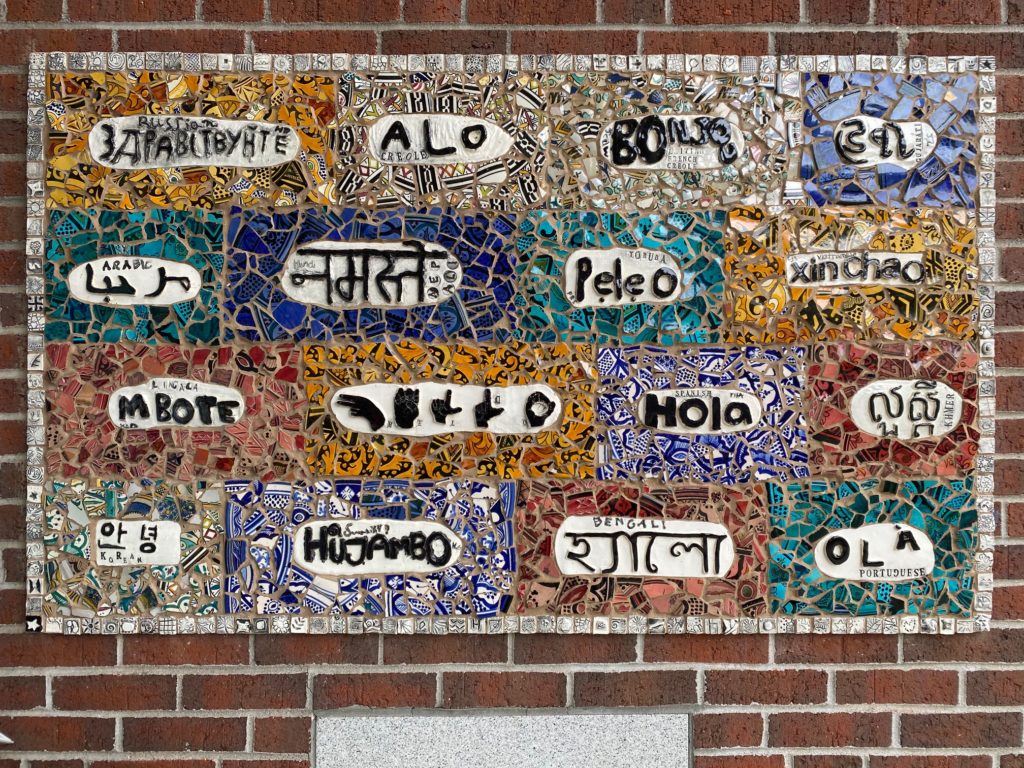
School Art. Wildwood School. Photo: Toni Cunningham

Imagine a music class in which the teacher explains “this piece of music is lovely, but it contains 17,642 notes so we can’t afford to learn it. Instead, we will learn this other piece which is quite nice and only contains 9,807 notes.”
Absurd? Of course, but quite analogous to the discussion the Amherst School Committee is having about “specials” like music, art, and movement. I do not fault the committee; I do not even fault the budget makers who are trapped in conventional ways of thinking about staffing and curriculum priorities. What are these traps? To start with, our language is a trap. What does it mean to call the arts “special”? (What does it mean to call “special education” special? Another important question to ask but it requires a different sort of answer.). In terms of the arts, it suggests that they are not part of the core mission of the schools, not essential to children’s capabilities, expressiveness, self-confidence, and appreciation of the world. This suggestion too is absurd.
I once had a colleague who claimed that schooling went downhill after Christmas vacation in the second grade. That was when reading took over as the great sorting mechanism, and schools became prisoners to language like “grade-level” and “basic skills.” And such language abuse led to the steady encroachment of standardized assessment, subscribing to another myth and cloaking score manipulation in the supposed reality of numbers.
The arts are not susceptible to the tyranny of metrics; they are more fundamental, more central, more essential to development as children and as young adults. I have often said that all of our school classrooms should more resemble our early childhood and kindergarten classrooms, in which the arts and expressive activities are seamlessly integrated into the children’s experiences.
I have a book recommendation for the School Committees, school administrators, and indeed everyone concerned about learning. C. Thi Nguyen is an academic philosopher, and he describes himself as a “philosopher of games.” His new book is entitled The Score: How to Stop Playing Somebody Else’s Game. It is based on the premise that there is a gap between what is being measured and what actually matters. It is both a clever and a wise book because (almost) everybody loves games and will understand his deep and important approach. Whether bridge, chess, Dungeons & Dragons, or the Super Bowl, striving to win is the important thing; winning is actually less important than the striving. That’s why betting on sports ruins them, just as standardized testing ruins education. It makes winning more important than striving.
Music and art and physical education are all more about the striving than the winning; that is why they seem more dispensable than reading and math. It is the tyranny of metrics that creates specials.
It is the tyranny of metrics that makes learning fearful instead of joyful. Isn’t it time we return to the essentials in our schools?
Michael Greenebaum was Principal of Mark’s Meadow School from 1970 to 1991, and from 1974 taught Organization Studies in the Higher Education Center at the UMass School of Education. He served in Town Meeting from 1992, was on the first Charter Commission in 1993, and served on several town committees, including the Town Commercial Relations Committee and the Long Range Planning Committee.