
Town Will Study Culverts to Prepare for Climate Change
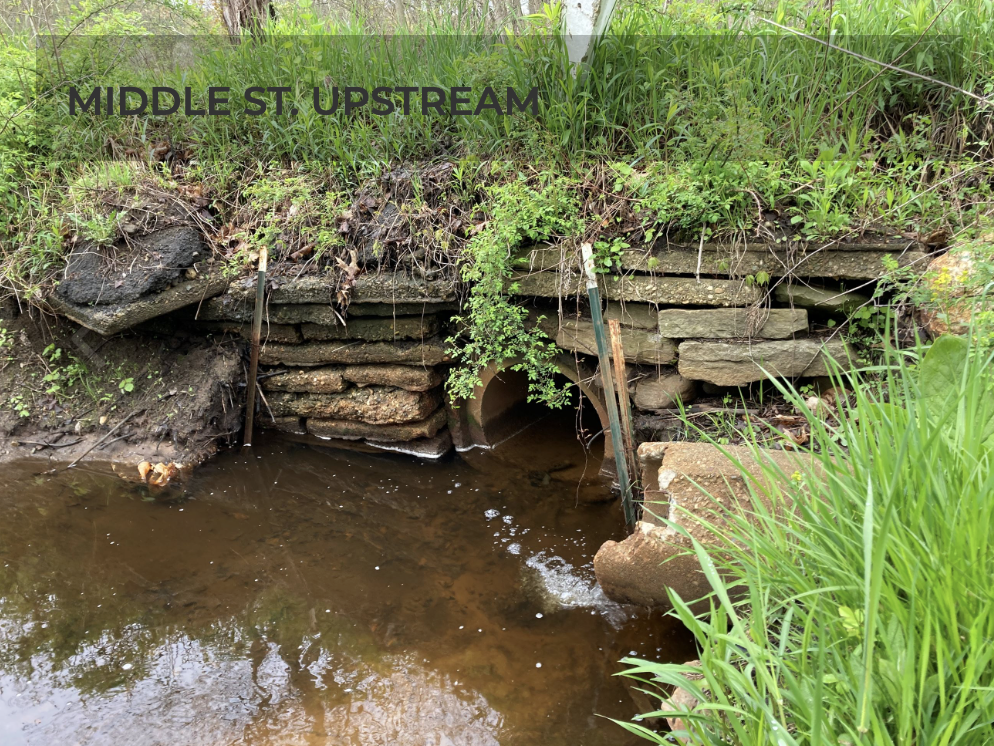
Culvert on Middle Street. Photo: amherstma.gov
Amherst has partnered with four other towns in the Fort River watershed to evaluate the more than 1000 culverts in Amherst, Belchertown, Hadley, Pelham, and Shutesbury. The Pioneer Valley Planning Commission (PVPC) received a $616,000 Municipal Vulnerability Preparedness (MVP) grant from the Massachusetts Executive Office of Energy and Environmental Affairs to study all culverts in the five towns and to develop priorities for repairing or replacing them.
Liam Gude, Senior Environmental Scientist at the PVPC, set the stage for the 15 interested people in attendance in the Town Room at Town Hall by highlighting the predicted warming of the local climate over the next 25 years. The current average temperature in the Pioneer Valley is 46 degrees. It is expected to rise to 48 degrees by 2030 and 52.5 degrees by 2050. Days over 90 degrees are currently about four per year, but will be nine in 2030 and 21 in 2050. With the warmer weather, there will be heavier rainfall and more serious storms, increasing the chance of flooding and property damage.
Culverts provide a primary protection against flooding by directing water into streams and rivers. They also protect against erosion and improve aquatic habitat for fish, amphibians, and turtles by providing connections between aquatic habitats. DPW Environmental Scientist Beth Willson said that Amherst has about 600 culverts, many in poor repair.
PVPC has teamed with the Franklin Regional Council of Governments and other organizations to hire and train up to eight young people to survey all the culverts in Amherst, Pelham, Shutesbury, and Hadley over the summer. Belchertown completed its survey last year. Two training sessions will be held in May and June. Gude said it takes him about 15 minutes to evaluate each culvert.
After the survey is completed, PVPC will compile a priority list of the culverts most in need of repair or replacement. This proactive study will hopefully prevent culvert “blowouts,” which are more costly to repair than fixing the culverts before they fail. Also, the group will develop designs for the culverts needing replacement, so that when grant money becomes available, the work can be done expeditiously.
Jeremy Barker Plotkin, former owner of Simple Gifts Farm, suggested that the group approach farmers to inventory the culverts on their own land, especially since there are federal and state funds available for repair.
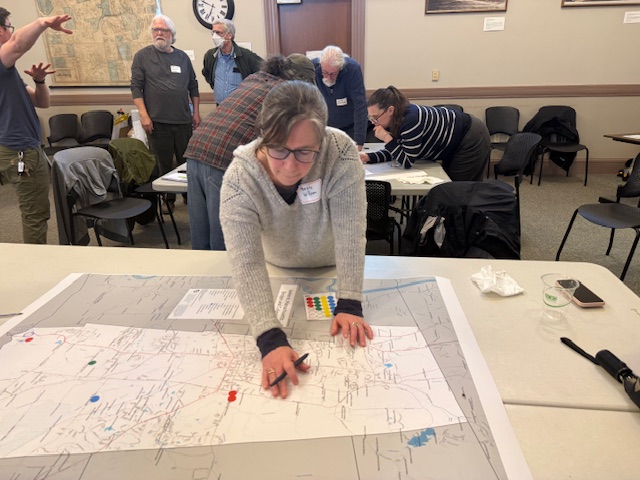
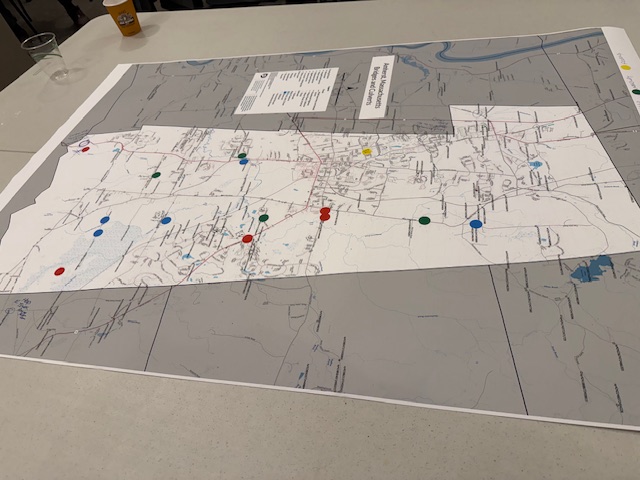
The second part of the Amherst program was devoted to participants examining a map of the town with all of the culverts marked. Attendees indicated which culverts most needed repair, where the roads flooded, or where potholes recurred year after year. The town has applied for funds to replace about six culverts in the coming year, including one on Potwine near Plum Brook (this in addition to the one on Potwine that was recently repaired) and one on West Pomeroy Lane near Hickory Ridge.
Conservation Commission member Bruce Stedman is the Amherst representative for the culvert survey.
Finance Committee Recommends Purchase of Pelham Property in Watershed
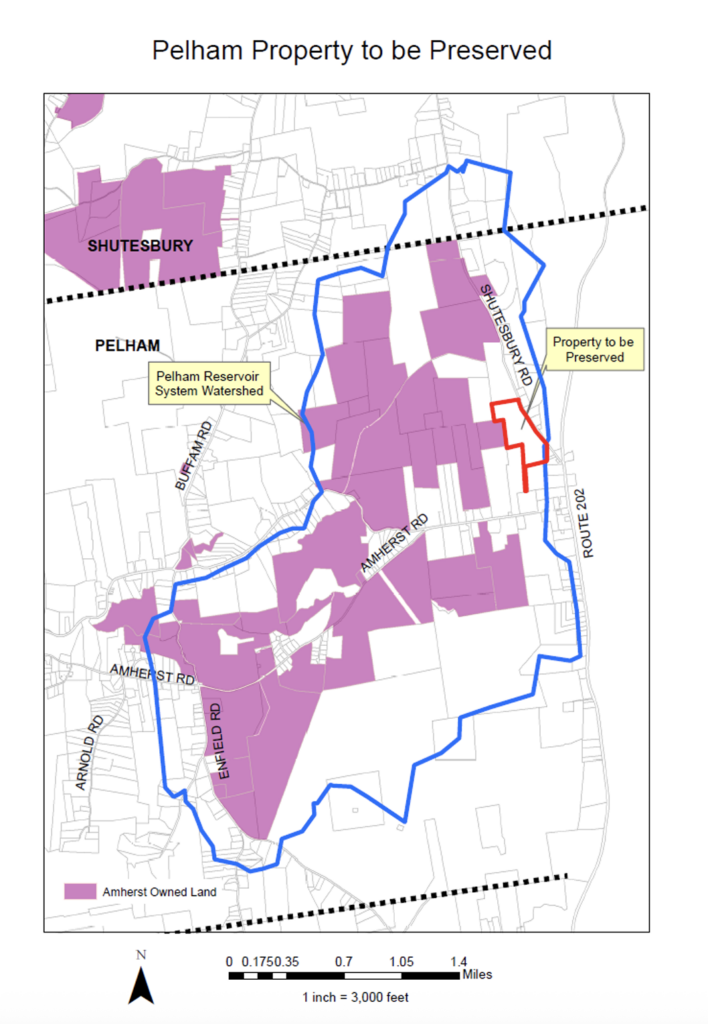
In another action designed to protect the Fort River watershed, the Finance Committee voted unanimously (4-0 with Lynn Griesemer absent and non-voting member Joe Jayne supporting) to recommend the purchase of the Aaron family property, 54 acres near Route 202 in Pelham. The land abuts watershed protection land already owned by the town. It is undeveloped, and Amherst DPW plans to keep it that way. If the land were sold privately, it could be turned into five single-family lots.
According to DPW Environmental Scientist Beth Willson, the land will be open for passive recreation compatible with drinking water protection rules. The Kestrel Land Trust will help the DPW monitor the property to prevent camping, fires, or other inadmissible uses. But Willson said there will not be much work to monitor, because there will be no trails to maintain and no extra mowing. It is expected that the property will not get a lot of recreational use, but is important for keeping Amherst’s water supply clean.
The property is appraised at $355,000, but Amherst has received two grants which cover all but $55, 000. The town received $213,000 from the Drinking Water Supply Protection Grant Program of Massachusetts Energy and Environmental Affairs and $90,800 from the Catalyst Fund of the Massachusetts Audubon Society. The remaining funds will come from the Water Fund retained earnings, so no additional debt will be incurred for the town. Amherst will have to pay property tax to Pelham, but the cost is low because the land is protected from development.
A public forum regarding the land purchase will be held prior to the Town Council meeting at 6:30 p.m. on March 23. The council is expected to vote on the purchase at that meeting.
The primary purpose of a culvert is to prevent the road from washing out, if you don’t contain the water in steel, stone, or concrete, it will scour out all the gravel under the road and it will collapse. The debris will block drainage, causing flooding, and the silk will go downstream, getting into the gills of the fish and such, but the primary issue is preventing the road from collapsing.
The underlying problem is twofold. First, a lot of the culverts were built in 1939-41 to replace ones that were washed out either by the hurricane in 1938 or by some of the floods earlier in that decade. So they’re old.
And they also were built when a heavy truck weighed 4 tons. Today one can legally drive a 40 ton dump truck through Amherst, and some of them weigh close to twice that! Culverts weren’t designed to support anything near this amount of weight….
It’s rained before, and it will rain again — heaven knows it did in 1938. The difference now is that we have 11 ton school buses going down the street and 40 ton trucks delivering our home heating oil, etc. So it’s a really good idea to do this, I applaud it.
And UMass ought to be included as the water doesn’t care if it’s on campus or not.
But the average temperature is gonna increase by 6 degrees in the next 5 years?!?
Really….
Editor’s note: The article has been corrected.
“The current average temperature in the Pioneer Valley is 46 degrees. It is expected to rise to 48 degrees by 2030 and 52.5 degrees by 2050.”
Thanks for the catch, Ed.