
Opinion: In Defense of Priorities – What Amherst Actually Demands of Its Schools
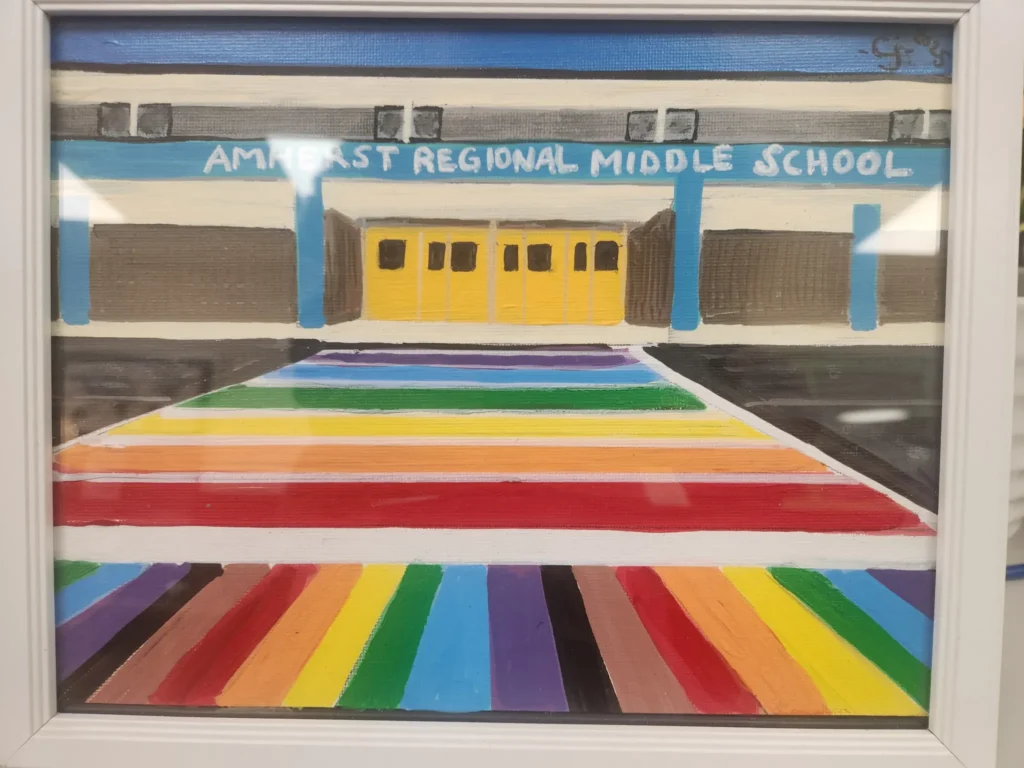
Photo: Rizwana Khan
Social Injustice Goes Global
Recently, in the Amherst Indy, Michael Greenebaum, a longtime principal of Mark’s Meadow School, framed the issue in an elegant analogy like this:
“This piece of music is lovely, but it contains 17,642 notes so we can’t afford to learn it…”
It captures that quiet frustration with systems that reduce beauty to numbers, but it also sidesteps the reality that districts like Amherst and other school districts in Massachusetts are actually dealing with. Because this isn’t really about notes but about limits.
In an Amherst School Committee meeting, the debate is about what happens when everything matters—and the budget says you don’t get everything,
Amherst is dealing with declining enrollment, rising special education costs, inflation hitting everything from buses to staffing, and a shrinking share of the town budget.
Translation: the system isn’t choosing between good and bad but choosing between good and necessary.
What leadership is actually telling us (if we’re listening): that Local leaders haven’t been subtle.
School Committee chair Sarah Marshall said:
“After years of whittling away at programs and staff… [we face] devastating cuts…”
Superintendent E. Xiomara Herman pointed out something even harder to ignore:
“Education is not equitable across our subgroups.”
And departments are competing for what one official called “scraps.” Not ideals and that’s a system under pressure.
The global reality check feels uniquely frustrating but it’s not. Finland is the system that everyone loves to cite when they want to talk about joyful, holistic education integrating the arts beautifully. But Finland makes absolutely sure kids can read early—and they intervene fast if they can’t.
Or Singapore, which is even more direct: strong foundations first, enrichment layered on top. Not because they don’t value creativity, but because they know what happens when students fall behind in basics and these systems aren’t anti-art but are pro-sequencing.
Metrics: The villain we love to hate and call metrics a “tyranny.”
But in Amherst, the data is telling us something we can’t afford to ignore. Achievement gaps are real. Fewer than 36% of Black and Hispanic students are meeting expectations and that’s not a spreadsheet problem but a human one.
And without metrics, it’s dangerously easy to pretend those gaps don’t exist—or worse, to assume they’ll fix themselves.
Reading and math aren’t just “academic priorities” but access points. If you can’t read confidently, you’re locked out of most of the world we’re supposedly preparing students for.
Meanwhile, the world isn’t exactly stable, and this debate is also happening at a complicated moment.
The ongoing conflict in Ukraine and escalating tensions across parts of the Middle East displaces families at a scale that classrooms can’t ignore. Some of those students arrive in American schools, including Massachusetts, interrupted education, trauma, and gaps that require immediate, structured support.
Then there’s the aftershock of COVID-19 pandemic disruption that didn’t just pause learning but reshaped it. Students didn’t just “fall behind” academically but lost routines, social development, and confidence. Teachers are still rebuilding that foundation in real time.
And layered on top of that is the constant hum of TikTok, Instagram, and algorithm-driven attention. Students are navigating a world where focus is fractured, comparison is constant, and identity is shaped in public. Schools aren’t just competing with distraction but competing with an entirely different ecosystem of learning and validation.
Add to that a political climate that feels increasingly unstable—nationally and globally.
And then, back to the basics: Inflation is squeezing everything—school budgets, family budgets, municipal planning.
Poverty and housing instability haven’t magically skipped Amherst, Massachusetts just because it’s a college town. Students move, families struggle, and schools absorb the impact.
So, when we talk about priorities, we’re not talking about an ideal system with unlimited time and resources but about a system being asked to do more than ever, under conditions that are harder than ever.
And that reality doesn’t make the arts less valuable, but it does make the question of sequencing—and sustainability—impossible to ignore.
A significant portion of students are classified as high needs. Which means schools are constantly stabilizing, supporting, compensating and that changes the equation.
Everything sounds reasonable until you add it up.
The elementary schools run on a budget of roughly $26 million. The regional schools push closer to $40 million. Those numbers that should be able to hold everything: music rooms humming, art drying on racks, kids moving through gym spaces that feel like relief instead of obligation.
But then the line items start telling a different story.
Special education isn’t optional. It is legally required and is growing. Transportation costs, salaries, benefits, health insurance all rise, quietly and suddenly that “big” budget is already spent before you even begin.
And counterintuitively, the enrollment is down, but costs aren’t. Fewer students, yes—but more complex needs and thus more support required per child; specialists and interventions.
So, the system shrinks on paper but expands in responsibility. Which means the part of the budget that’s flexible is really small and that’s the part people are arguing over and that’s where “specials” live.
At some point in these discussions everyone already knows but hasn’t quite wanted to say it out loud: We can’t do everything from values to trade-offs.
Do you add a reading specialist or keep a music position?
Do you reduce class size or preserve art frequency?
Do you meet rising needs or maintain what used to feel like a full experience?
There’s no villain in that room but just a group of people trying to make decisions inside a system that is already stretched. As one local official put it, almost plainly:
“We have really big problems to fund and really hard decisions to make.”
In that context it’s a quiet acknowledgment.
What This Means for the Arts
So, when we say the arts matter—and they do—it’s not controversial. Which is why they’re often the first-place pressure shows up because they’re one of the few places where a decision can still be made.
In Amherst, Massachusetts, the issue isn’t whether we value the arts but whether we’ve built a system that can afford everything we value at the same time.
Right now, the answer seems to be no and that makes people accountable to every line of the budget: Limits.
And so, when we circle back to whether the arts matter more than ever, the question is whether in this moment, in this town, inside this budget? Every program, every position, every expansion has to fit into a system that is already full. It’s not about whether something is valuable but about whether we can pay for it and that’s math.
The goal isn’t to choose between joy and rigor, or art and literacy but to make sure every student can actually access both. And right now, that means giving students the tools to read the world and then, make sure they can create within it because appreciating the music matters, but only if you can read the score.
Rizwana Khan is a writer, educator, and human rights advocate in the Town of Amherst.
Great article. This really puts the decisions to be made in perspective. As an artist myself I certainly feel the arts are essential. But our ability to take in and comment meaningfully on what’s happening in our world through the arts takes skill. I agree that early foundational support is essential. Target our spending. Working with colleges’s students to get more tutors is a win-win for students at all levels. Making education a priority is key to a healthy society.