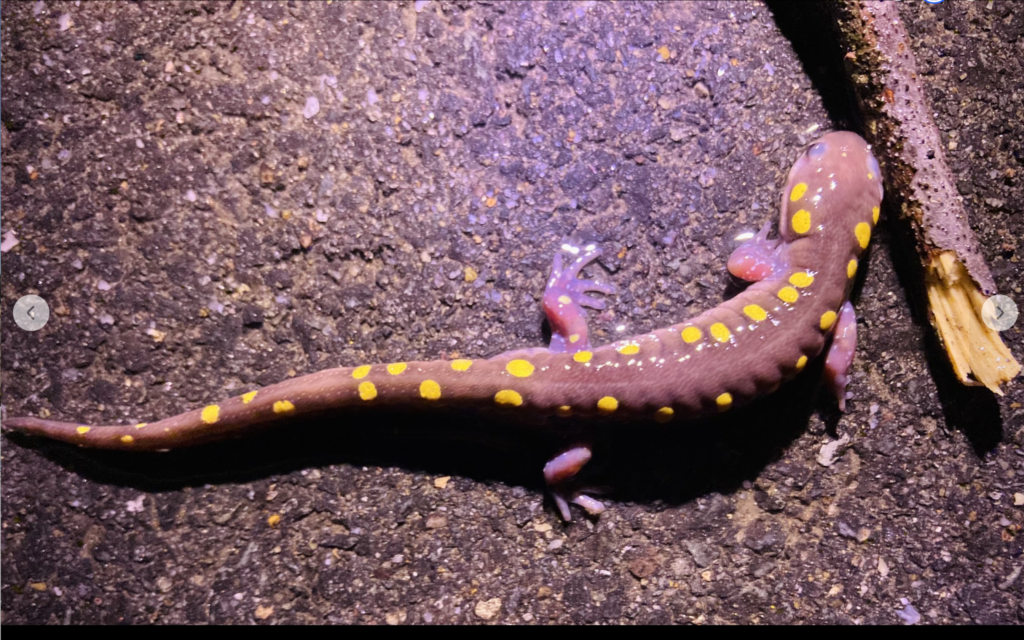
Hitchcock Center Reports Record-Breaking Amphibian Migration
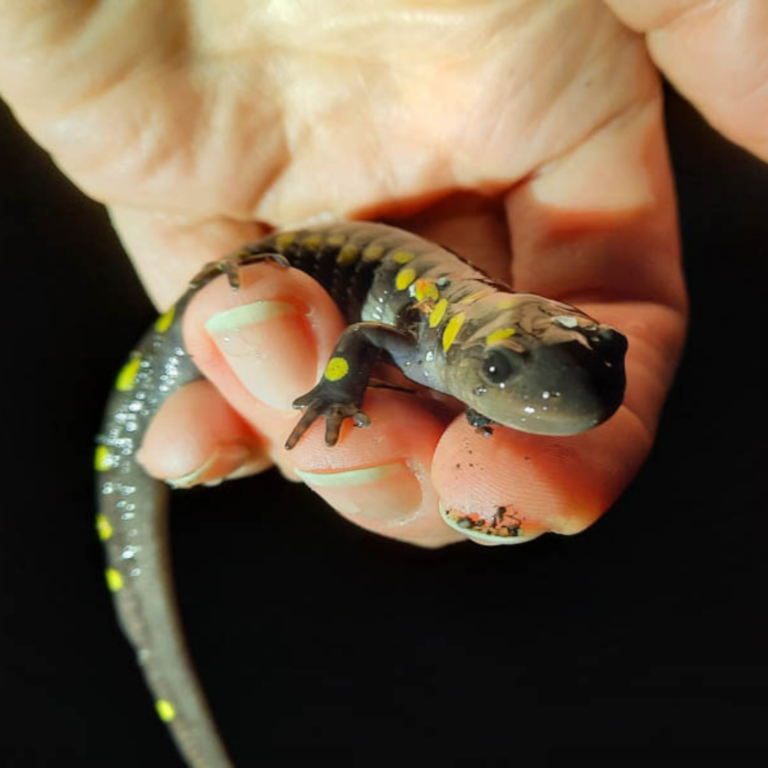
Spotted salamander. Photo: Hitchcock Center For the Evironment
The following story was compiled from reports from the Hitchcock Center for the Environment and The Town of Amherst’s Town Manager Report for March 23, 2026.
Every year, the Town of Amherst partners with the Hitchcock Center for the Environment during the “Big Night” amphibian migrations. Portions of Henry Street will be temporarily closed to through traffic on anticipated migration dates to ensure safety for amphibians and volunteers.
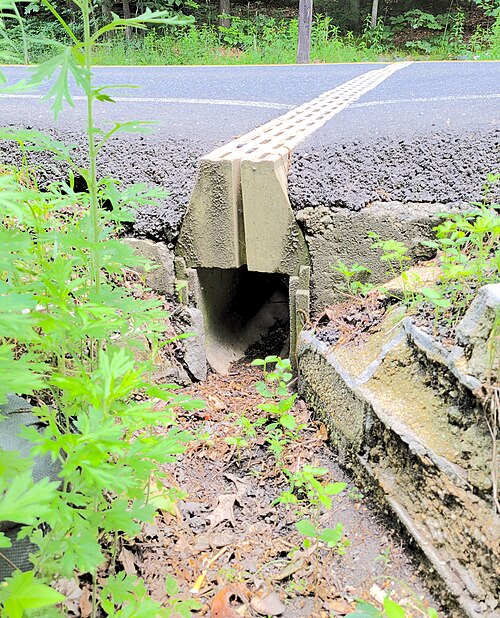
Henry Street separates salamanders and other amphibians from vernal pools (small temporary ponds) and other wetlands where they migrate every spring to mate and to lay eggs. On Big Night, amphibian mortality can be especially high on roads as amphibians cross in search of their resident vernal pools. The salamander tunnels on Henry Street serve to shepherd the amphibians safely from the uplands on the east side of Henry Street, to the vernal pools to the west. During Big Night, volunteers gather in the area to aid amphibians’ safe crossing.
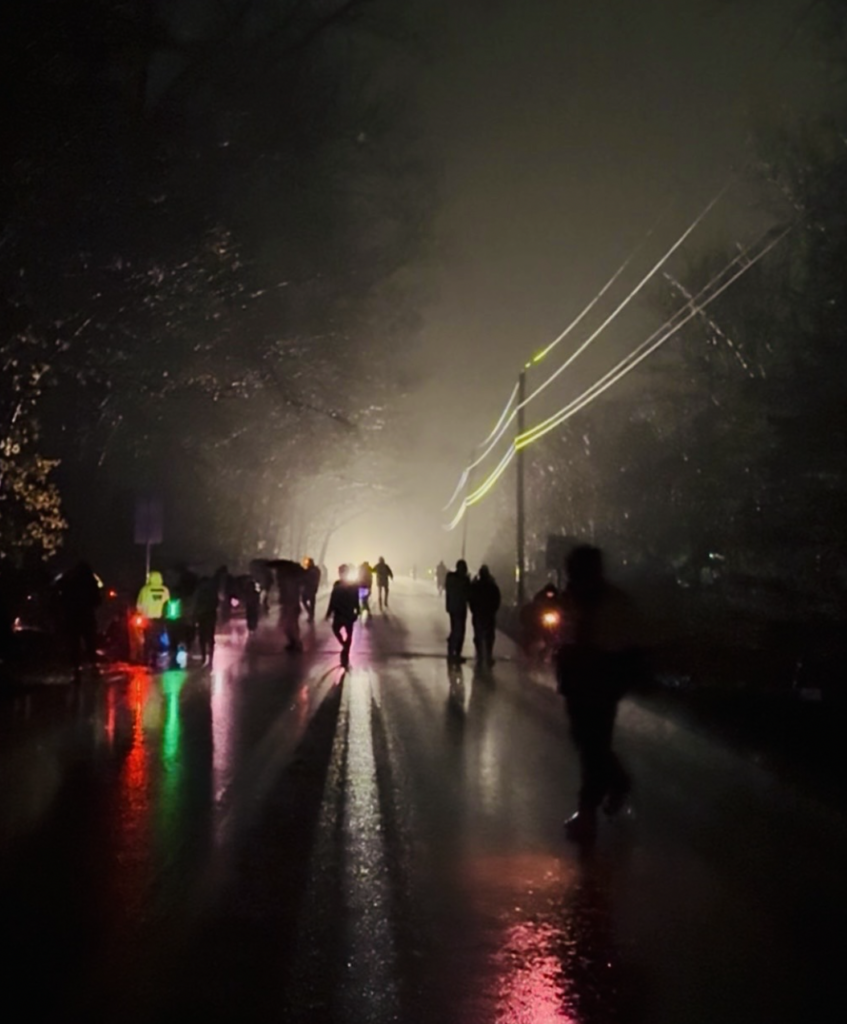
This year, Big Night was truly a big night. On Monday, March 15 our local salamander population moved with a record 250+ salamanders, and 170+ frogs counted. There was also movement on Tuesday and Wednesday night though counts for those nights were not available.
Big night drew more than 150 volunteers, families, students, and community members coming by to see and support local amphibians. When Hitchcock staff left around midnight on Monday, people were still showing up to help. The Hitchcock Center expressed its gratitude to all who helped out this year.
It is also notable that Hitchcock staff recorded the lowest number of amphibian fatalities we’ve seen in years. The Center thanked the Town of Amherst for closing the roads early on the first warm, rainy nights of spring, and all who drove the long way around Henry Street. Doing so protected local wildlife, and the people volunteering to help them.
Hitchcock staff and local student volunteers will be getting to work soon maintaining the Henry Street salamander tunnels, and then, in the coming weeks, collecting data on salamander eggs laid in their vernal pools. Updated numbers will be posted on the Hitchcock’s Big Night Migration Group Facebook Page.
Salamanders of New England Film Screening
The Hitchcock Center will host a screening of the film “Salamanders of New England” with filmmaker Ray Asselin and herpetologist Alan Richmond on Thursday, April 2, at 6 p.m. There will be a Q&A following the film. The Hitchcock Center is located at 845 West Street in Amherst on the campus of Hampshire College.
Salamanders are some of our most mysterious amphibians. Living below ground, or underwater, they’re seldom seen, if ever, by most people. Probably the most familiar is the Red Eft, that bright orange juvenile stage of the Red-spotted newt that seems to magically appear on the forest floor during or after rains. Terrestrial salamanders, when they do come to the surface, are primarily nocturnal, so we don’t get many opportunities to see them. The aquatic species remain just as elusive, given that few of us are spending any time in the kind of underwater worlds they inhabit.
“The Salamanders of New England” film will offer a close look at every salamander species that inhabits New England. We’ll see examples of the typical complete salamander life cycle, from egg to larva to adult, as well as some interesting behaviors. Time-lapses will show larvae developing in their transparent eggs. All 12 New England salamander species will be featured, with scenes we promise you’ve likely never witnessed.