
A Better World is Possible: The Year Cuba Taught Itself to Read
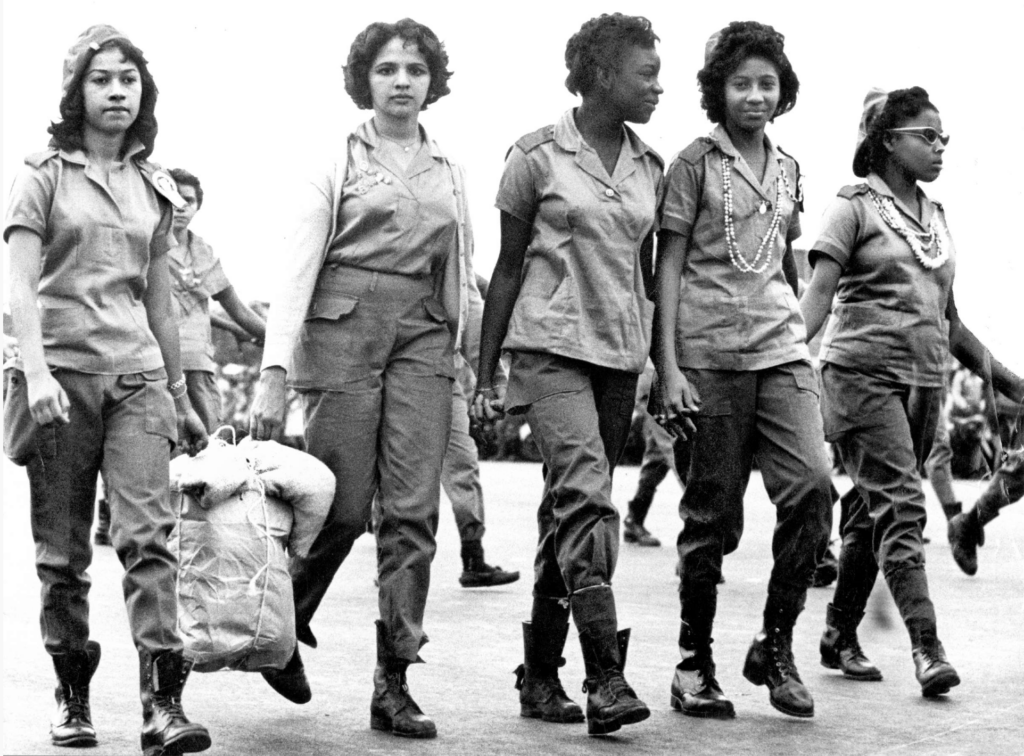
Five female literacy volunteers return to Havana at the end of the literacy campaign in December 1961. Photographer unknown. Public domain.
In a single year, a young revolution mobilized an entire nation — and nearly wiped out illiteracy. Six decades later, the world is still taking notes.
The following article was written by Claude AI with only minor edits and additions by The Indy, for accuracy and stylistic consistency.
Editor’s Introduction
Last week, President Donald J. Trump announced that his next target for conquest would be Cuba, prediciting a friendly, or perhaps not friendly takeover if necessary, once the war in Iran is concluded. He said, “I do believe I’ll be … having the honor of taking Cuba. That’s a big honor. Taking Cuba in some form… I mean, whether I free it, take it. Think I can do anything I want with it.”
Cuba is currently experiencing a severe humanitarian crisis. An acute oil shortage has been caused by a U.S. fuel blockade — after American intervention ousted Venezuelan president Nicolás Maduro, Venezuelan oil supplies to Cuba were cut off, and Trump issued an executive order blocking oil tankers from other countries, including threatening tariffs against Mexico and other suppliers.
Nearly every aspect of Cuban society is under strain: garbage is piling up in the streets, hospital stays and surgeries are being limited and people have died when power has been suddenly cut off to life sustaining equipment. People are using wood fires to heat water, and blackouts have become commonplace. Blackouts in many areas last up to 20 hours, affecting refrigeration for food and medication and contributing to public health crises.
The UN Secretary-General warned that he is “extremely concerned” about the humanitarian situation, cautioning it could “worsen, or even collapse” if Cuba’s oil needs go unmet. UN human rights experts condemned the U.S. executive order as a “serious violation of international law.”
When I visited Cuba in 2002, I found a poor county that nonetheless was able to provide its people free universal health care, free universal education, a thriving cultural landscape, and world-leading innovations in medicine and organic agriculture. With all of that currently under dire threat, I thought it would be a good time to revisit just one of Cuba’s revolutionary accomplishments and, as we struggle with our own political and economic crises here in the United States, ponder what thoughtful mass mobilization might achieve. – Art Keene
The Year Cuba Taught Itself to Read
The teenage girl had never been far from Havana. But in the spring of 1961, sixteen-year-old Miriam packed a lamp, a lantern, and a primer into a knapsack, and set off into the Cuban countryside to teach a sugar cane farmer to read.
She was one of more than 100,000 young volunteers — many of them teenagers — dispatched to the farthest reaches of the island as part of the most ambitious literacy campaign the Western Hemisphere had ever attempted. They called it the Year of Education, and by the time it was over, Cuba had done something that took most developed nations generations: it had very nearly eradicated illiteracy in the span of twelve months.
What the Campaign Did
When Fidel Castro’s revolutionary government came to power in 1959, it inherited a country in which roughly 24 percent of the adult population — and in rural areas, as many as 42 percent — could not read or write. The new government declared 1961 the “Year of Education” and set a breathtaking goal: achieve near-universal literacy before the year was out.
The logistics were staggering. The government trained some 120,000 volunteer literacy workers, drawn largely from urban high schools and universities. These brigadistas, as they were called, were dispatched to remote mountain villages, tobacco farms, and fishing communities where illiteracy ran deepest. They lived with local families, ate what their hosts ate, and taught by the light of kerosene lanterns — the lámpara del pueblo, the people’s lamp — after long days of agricultural labor.
The teaching materials were deliberately political. The primary textbook, Venceremos (“We Shall Overcome”), paired basic reading lessons with content that reinforced revolutionary values — lessons on land reform, the Bay of Pigs invasion, and the dignity of labor. Literacy was not presented as a neutral skill but as an act of citizenship, even liberation.
Alongside the youth brigades, more than 13,000 professional teachers fanned out to coordinate the effort, and thousands of worker-teachers led evening classes in factories and urban neighborhoods. At its peak, the campaign was the largest organized civilian mobilization in Cuban history.
What The Campaign Accomplished
By December 22, 1961, when Castro stood before a crowd in Havana and declared Cuba a “territory free of illiteracy,” the results were remarkable. The national illiteracy rate had plummeted from roughly 24 percent to approximately 3.9 percent — a transformation achieved in less than a year. Over 700,000 adults had learned to read and write. Cuba had gone from one of Latin America’s more illiterate nations to one of its most literate almost overnight.
The campaign also accomplished something subtler and harder to measure. The young brigadistas who lived among Cuba’s rural poor returned to their cities changed, with a firsthand understanding of rural poverty and inequality that no classroom could have provided. The farmers and cane cutters who learned to read reported not just new practical skills but a transformed sense of dignity and social participation. The act of teaching and learning had become, quite deliberately, an act of solidarity.
The United Nations praised the campaign as a model, and Cuba’s literacy rate today — hovering around 99.8 percent — remains among the highest in the world and a source of enduring national pride.
What the World Can Learn
The Cuban campaign holds several durable lessons for societies still grappling with illiteracy — and there are many
UNESCO estimates that roughly 739 million adults worldwide remain unable to read. And here in the United States, Approximately 21% of U.S. adults—roughly 43 to 45 million people—are functionally illiterate or have low literacy skills, meaning they read below a 5th or 6th-grade level. This issue means many adults struggle to complete basic tasks like reading medical forms, bank statements, or helping children with homework. Roughly 44% of American adults did not read a single book in the course of 2024.
The first lesson of the 1961 Cuban Literacy Campaign is the power of social mobilization. Cuba succeeded in large part because literacy was framed not as an individual deficiency but as a collective national project. The stigma of illiteracy was replaced, at least rhetorically, with the honor of learning. Communities became invested in the outcome.
The second is that scale requires unconventional teachers. Cuba could not have staffed the campaign with trained educators alone. By deploying motivated young volunteers — and training them intensively but briefly — the campaign achieved a student-to-teacher ratio that no professional corps could have provided. Similar models have since informed campaigns in Nicaragua, Brazil, and parts of Africa.
The third lesson is more uncomfortable. The campaign’s success was inseparable from the authoritarian context in which it occurred. The Cuban state could compel participation, control messaging, and mobilize resources in ways that democracies cannot replicate. The political content embedded in the curriculum was propagandistic by design. Any honest accounting of the campaign must hold its genuine achievements alongside these realities.
What remains beyond dispute is the scale of what was done — and the audacity of imagining it could be done at all. In a single year, a small Caribbean nation decided that no citizen would be left behind by the written word. Miriam and her lantern lit the way.
Read More
When the Pencil Was The Sword (Jacobin)
Bernie Sanders Was Right About the Cuban Literacy Campaign (Truthout)
Trump’s Cruelty is Strangling Cuba (Truthout)“
A Better World Is Possible” is an Indy feature that offers snapshots of creative undertakings, community experiments, innovative municipal projects, and excursions of the imagination that suggest possible interventions for the sundry challenges we face in our communities and as a species. Have you seen creative approaches to community problems or examples of things that other communities do to make life better for their residents that you think we should be talking about? Send your observations/suggestions to amherstindy@gmail.com. See previous posts here.