
REAL ID enforcement is here—what women need to know about travel, voting and name changes
Ivan-Marc-via-Shutterstock_2570373917
For years, Americans heard warnings that the REAL ID deadline was coming. The deadline was postponed so many times that it became easy to tune it out.
That grace period is over.
Since May 7, 2025, a standard state driver’s license or identification card that is not REAL ID-compliant is no longer sufficient identification for adults going through airport security for domestic flights. Travelers can still use a passport or another form of identification accepted by the Transportation Security Administration, but an ordinary noncompliant driver’s license no longer does the job.
And as of February 1, 2026, showing up at the airport without acceptable identification can be more than an inconvenience. Travelers who need TSA’s ConfirmID identity-verification process may now have to pay $45.
For millions of Americans, especially women who have changed their names through marriage or divorce, getting a REAL ID can also expose a surprisingly frustrating problem: proving that the person on a decades-old birth certificate is the same person standing at the DMV today.
Here’s what you need to know.
What REAL ID actually does
REAL ID is not a new national identity card. It is a federal security standard for driver’s licenses and state identification cards.
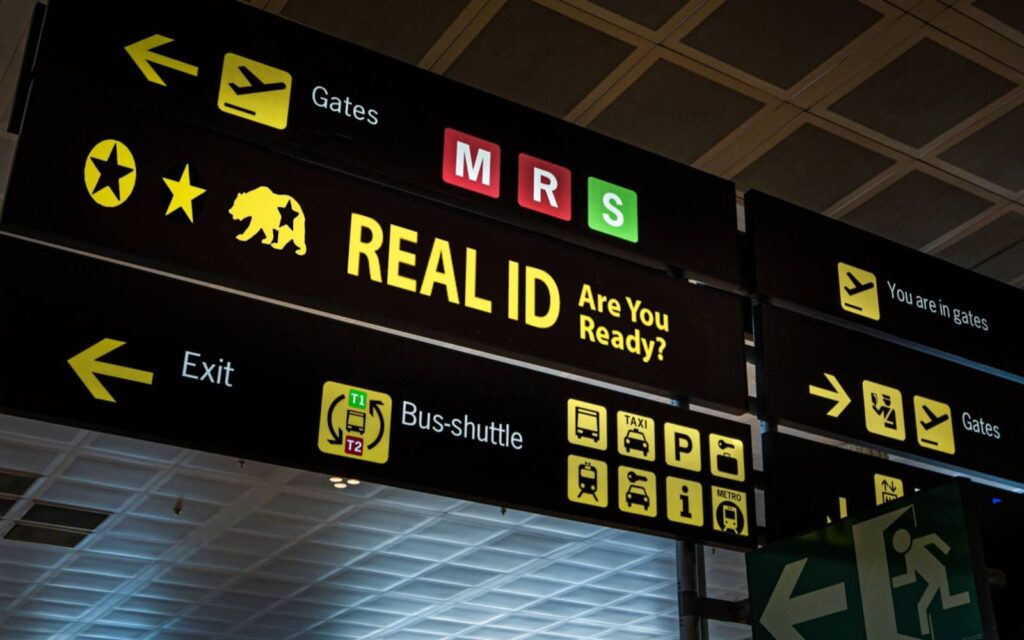
A REAL ID-compliant license or state ID generally has a star near the top of the card. If yours doesn’t, check with your state’s licensing agency rather than assuming it qualifies.
Adults 18 and older can use a REAL ID at TSA security checkpoints for domestic air travel and for access to certain federally controlled facilities. You do not need a REAL ID to drive, and states can continue issuing standard driver’s licenses and identification cards.
You also don’t necessarily need a REAL ID to fly. A valid U.S. passport or passport card is among the alternatives accepted by TSA, along with several other federally recognized forms of identification.
The practical advantage of REAL ID is convenience: If you have a compliant driver’s license, the ID you already carry in your wallet can get you through airport security.
What happens if you arrive at the airport without one?
The rules became more consequential in 2026.
TSA’s current system allows travelers 18 and older who don’t have a REAL ID, passport or another acceptable form of identification to use TSA ConfirmID. The service costs $45 and attempts to verify the traveler’s identity.
The payment covers a 10-day travel period, which can be useful for a round trip completed within that window. But paying the fee does not guarantee that TSA will be able to verify your identity or allow you through the checkpoint.
The process can also take additional time and may involve additional screening.
In other words, ConfirmID is better viewed as a backup for an unexpected problem than as an alternative to obtaining proper identification.
What you generally need to get a REAL ID
Each state administers its own REAL ID program, so applicants should always check their state motor vehicle agency before showing up for an appointment.
In general, however, expect to provide documentation establishing:
Your identity and lawful status. A U.S. passport or certified U.S. birth certificate is commonly used.
Your Social Security number. Depending on the state, acceptable documents can include a Social Security card, W-2 or other official record.
Your current residence. States typically require documents such as utility bills, bank statements, leases, mortgage documents or government correspondence.
And then there is the category that causes headaches for many applicants:
Your name history.
If the name on the document you’re using to establish identity or lawful status doesn’t match your current legal name, you may have to provide documentation connecting the two.
Married, divorced or remarried? This is where things get complicated
Consider a very common situation.
A woman was born Jane Smith. She married decades ago and became Jane Jones. She later divorced but chose to keep Jones, which she was legally entitled to do.
Her driver’s license says Jane Jones. Her Social Security record says Jane Jones. Her tax returns say Jane Jones. Her bank accounts, mortgage, voter registration and employment records all say Jane Jones. She may even have a passport saying Jane Jones.
Then she applies for a REAL ID and an employee tells her she needs her marriage certificate from 30 years ago.
It can seem absurd: If every government agency already knows you as Jane Jones, why should you have to prove a marriage that may have ended decades ago?
The answer depends partly on which document you are using to establish your identity and lawful status and your state’s particular documentation rules.
If you present a birth certificate showing Jane Smith while your current legal name is Jane Jones, the licensing agency needs documentation establishing the connection between those names. A certified marriage certificate may be the document that creates that link.
A divorce does not automatically erase a married surname. If you divorced and continued legally using your married name, your divorce itself did not change your name back to your birth name. Jones remains your current name unless you legally change it.
That distinction is important.
What if an agent insists you need a marriage certificate?
First, don’t assume either that the employee is correct or that the request is ridiculous. Ask a very specific question:
“Which document I presented has a name that does not match my current legal name, and which published REAL ID requirement requires the marriage certificate in my situation?”
That can clarify the problem quickly.
If you are relying on a birth certificate in your birth name, the agency may legitimately need a certified marriage certificate or another legal document connecting that name with your current one.
But if you are presenting an acceptable identity or lawful-presence document already issued in your current legal name — for example, a current U.S. passport — ask the employee to explain why additional documentation is required under your state’s rules.
Do not get into an argument at the counter. Ask to speak with a supervisor if necessary, and pull up your state’s official REAL ID document checklist on your phone. The relevant question isn’t whether an employee thinks married or divorced applicants “usually” need a marriage certificate. It is what documentation your state officially requires given the particular documents you are presenting.
If the requirement is correct, you’ll need the appropriate certified record. If the employee has applied the rule incorrectly, a supervisor may be able to resolve the problem without forcing you to hunt down an unnecessary decades-old document.
And remember that photocopies or unofficial records often aren’t enough. When a marriage certificate, divorce decree or court order is required, agencies commonly require an original or certified copy.
Check your state’s requirements before your appointment. Some states require original or certified name-change documents rather than photocopies. Massachusetts, for example, requires original or certified versions of marriage certificates, divorce decrees or court documents used to document a name change.
What if you changed your name back after divorce?
That’s a different situation.
Suppose Jane Jones divorces and legally resumes the name Jane Smith. She should update her records with the Social Security Administration and then her driver’s license or state ID, passport, voter registration and other important accounts.
Her divorce decree may provide the legal documentation authorizing restoration of her former name. Depending on the state and circumstances, another court order may serve that purpose.
The goal is to create an unbroken documentary trail:
Jane Smith → Jane Jones → Jane Smith.
If you have married more than once and changed your name each time, that chain can become longer. You may need more than one marriage certificate, divorce decree or court order to connect the name on your original identity document with the name you use today.
This is one reason it’s worth keeping certified copies of name-change documents permanently, even long after a marriage ends.
Where do you get certified copies?
If you’ve lost the original documents, you don’t necessarily have to find the copies you were given decades ago. Certified marriage certificates can generally be ordered from the vital-records office in the state where you married, while a certified divorce decree is usually obtained from the court that granted the divorce. Court-ordered name changes can be obtained from the court that issued the order. Requirements and fees vary by state, so use your state or court’s official website rather than assuming an online document service is the issuing authority.
- Marriage certificate: Request a certified copy from the vital records office in the state where the marriage occurred. Depending on the state, the record may also be available from the county, city or town clerk that recorded the marriage. USAGov directs people to the vital-records office of the state where they were married.
- Divorce decree: Request a certified copy from the court that granted the divorce, generally through the court clerk. USAGov recommends contacting the clerk in the county or city where the divorce occurred.
- Divorce certificate: Some states also issue a shorter divorce certificate through their vital-records office. That’s different from the actual court decree, so you should verify which document your DMV requires.
- Court-ordered name change: Request a certified copy from the court that issued the name-change order.
REAL ID and voting: Don’t confuse two different sets of rules
REAL ID has generated confusion about voting, but the two issues should not be conflated.
There is no nationwide requirement that voters have a REAL ID.
States establish their own voter identification requirements. Depending on where you live, you may be asked for a driver’s license, state ID, passport or another form of identification. Other states have different procedures for confirming identity.
What can cause trouble is a mismatch between your voter registration and your identification.
For example, if you changed your surname after marriage or divorce but updated your driver’s license without updating your voter registration — or vice versa — you could encounter additional questions at the polls. In some circumstances, a voter may have to cast a provisional ballot while eligibility is confirmed.
That’s why a name change should trigger a simple administrative checklist: update Social Security, your driver’s license or state ID, passport if applicable, and your voter registration.
And don’t wait until Election Day to discover that the name on one government record doesn’t match another.
Check the name on your voter registration before Election Day
You can use USAGov’s voter-registration status tool, which directs you to your state’s official election website. Check the name shown on your registration and compare it with the identification you expect to use when voting. If you’ve married, divorced or otherwise changed your legal name and the records don’t match, don’t wait until Election Day to address it. Follow your state’s instructions for updating your voter registration, since voter ID and name-matching requirements vary by state.
REAL ID is not proof of citizenship

Another source of confusion is the difference between identity and citizenship.
REAL ID establishes that a state-issued credential complies with federal identification and security standards. It should not automatically be treated as documentary proof of U.S. citizenship. Lawfully present noncitizens can also qualify for REAL ID credentials.
That distinction matters whenever proposals arise to require documentary proof of citizenship for voter registration.
A birth certificate, U.S. passport, naturalization certificate or certificate of citizenship serves a different evidentiary purpose from a REAL ID driver’s license.
Whatever happens with future voting legislation, keeping your underlying documents organized can save enormous frustration.
Create an “identity file” before you need it
You shouldn’t have to carry your birth certificate and marriage records around with you. But you should know where they are.
Consider keeping a secure file containing your certified birth certificate, current passport, Social Security information, certified marriage certificate or certificates, divorce decree or decrees, and any court orders documenting legal name changes.
If you’re missing one of those records, replace it before you’re standing at a DMV counter, preparing for an election or getting ready for a flight.
Certified marriage certificates can generally be obtained through the appropriate state or local vital-records office. Divorce decrees are generally available through the court that finalized the divorce, while some states also issue divorce certificates through their vital-records offices.
The bottom line
REAL ID is no longer something to put on a future to-do list. The federal air-travel requirement is already in effect.
If you have a passport and are comfortable traveling with it domestically, you don’t technically need a REAL ID for air travel. But for anyone who wants the convenience of using a driver’s license at TSA checkpoints, getting one eliminates another potential problem on travel day.
And if you’ve ever changed your name, take one additional step before your REAL ID appointment: trace the name on the identity document you plan to present all the way to the name you use today.
If an employee asks for a marriage certificate or divorce decree, find out which name discrepancy they are asking you to document. If the request doesn’t appear to match the state’s published requirements, politely ask for a supervisor and the specific rule. If it does apply, having certified copies of your records can turn a bureaucratic roadblock into a relatively simple transaction.
Most importantly, keep the issues straight: REAL ID is primarily about federal identification requirements, including domestic air travel. Voting is governed by separate federal and state election laws. But in both situations, having consistent records — and being able to document how your legal name got from then to now — can prevent an administrative headache when it matters most.
Useful official reader resources are USAGov’s REAL ID guide, TSA’s current acceptable-ID list, and USAGov’s voter ID guide.
This article was originally published in The Queen Zone.