Opinion: Apocalypse Prep: Pooling Community and Campus Resources
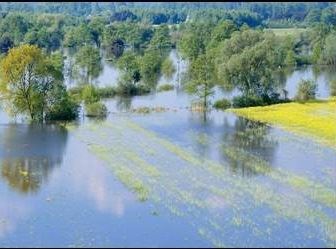
Historic flood in Amherst. MA. Photo: amherstma.gov
Local and Green

The following column appeared previously in the Amherst Bulletin.
From Conway’s washed‑out roads to Hadley’s flooded fields, it’s getting harder to pretend that “apocalypse” is just a Netflix genre. Climate events, pandemics, political instability, and war‑related supply chain shocks are already affecting our lives in the Valley. And the news on many fronts gets crazier every day.
But if you were going to pick a safe place to face the uncertainty of this era, the Connecticut River Valley would be near the top of the list.
Our region is rich with assets: some of the best soil and farmland in New England, a network of small towns and civic organizations, and a wonderful public university with globally recognized research capacity and lots of creative brainpower. The question is whether we treat those assets as a loose collection of institutions — or as the backbone of a serious, local survival plan.
With regard to the climate, we already know what’s coming: more flash flooding along rivers and brooks, more dangerous heat waves, more high winds knocking down power lines, growing risk of summer droughts that hit farms and wells at the same time and more. We’ve seen it in the past few years, as farmers watched a season’s work drown in a few days of rain, then heard warnings about wildfire conditions a few months later. That is not a one‑off. It’s a preview.
Local governments are trying to catch up. Local communities’ climate action plans, state MVP (Municipal Vulnerability Preparedness) grants, and scattered resilience projects are serious efforts, but not enough.
This is where UMass Amherst should step up to work with the region.
UMass already has the pieces of a resilience framework. Its emergency management systems are far more robust than what most small towns can afford. Its climate scientists are modeling the very storms that are hammering our roads. Its public health programs train the people who staffed local clinics and contact tracing teams during COVID. Its agricultural extension is already helping farmers respond to floods, pests, and shifting seasons.
What we haven’t done is to combine those pieces into a shared, public project that residents across the Valley can see and use.
Imagine if every incoming UMass student got basic training in local climate risks, emergency response, and mutual aid — then spent a day each year practicing alongside town emergency officials and neighborhood groups. Imagine campus buildings deliberately designed and funded as regional cooling centers and charging hubs, open and ready during the next multi‑day outage. Imagine UMass Extension, local farms, and food co‑ops treating “local food system resilience” as a measurable goal: how many people could we reliably feed for how long if trucks stopped rolling for a month?
None of this requires waiting for Washington. It requires the Valley to see itself as a single, interdependent organism instead of separate communities and campuses.
That means towns inviting UMass into real shared planning. It means UMass accepting that part of its mission, in an age of overlapping crises, is to keep its region alive and functioning. And it means residents — students, renters, homeowners, farmers — showing up to demand stronger food, energy, health, and communication commons. It could start with UMass adopting an “anchor strategy” as it started to do in 2015 with the creation and launch of the University /Town of Amherst Collaborative (UTAC).
Preparing for “the apocalypse” in western Mass looks like:
- Neighborhood phone trees that actually work during the next flood, heat wave, or pandemic
- Outreach to neighborhoods and dorms to help residents and students prepare in advance for extended outages and different types of emergencies
- Libraries, schools, and campus buildings wired to serve as refuges
- Local farms with the support and infrastructure to bounce back after disaster, with a planned distribution system
- Shared regional and campus resources
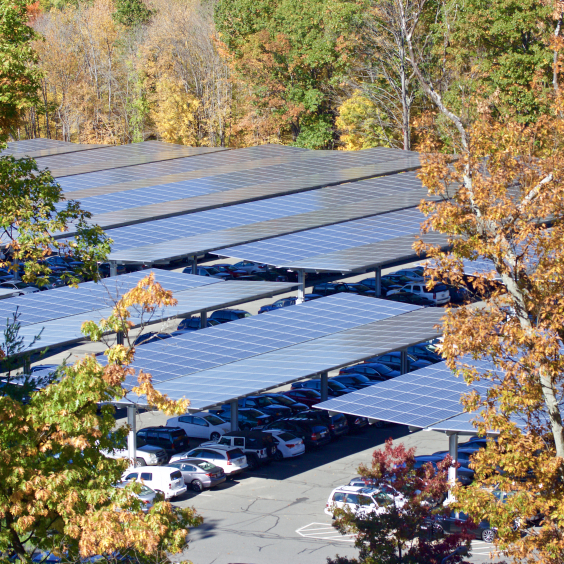
- Sourcing and owning local renewable electricity within a joint electricity aggregation
- Back up electricity generation/battery storage for municipal and campus buildings and incentives for residents and businesses to purchase their own
- New construction and infrastructure embedded with climate resilience features
- A community/campus green lab to generate new ideas for community/campus resilience, including business start ups
- Shared Umass and high school classes on emergency preparedness
- A generation of students who leave Amherst not just with degrees, but with lived experience in community resilience.
We can’t stop the oceans from heating, glaciers and permafrost from melting, mosquitos from moving north or wars from disrupting global markets. But we can use our multiple resources so that our people won’t face those shocks unprepared.
We have shown that our communities and campuses can rise to support immigrant justice and defend ourselves from the possibility of ICE raids, and other causes in the past, so we have practice in separately acting but not so much in working together.
Western Massachusetts still has time to prove that “apocalypse” doesn’t have to mean collapse. It can mean a difficult but necessary turning toward each other — toward the messy work of building the commons that will help us survive the next flood/drought/heatwave/power outage/pandemic or other crisis. If any place can do it, western Massachusetts can.
Darcy DuMont is a former town councilor and sponsor of the legislation creating the Amherst Energy and Climate Action Committee. She is a founding member of Zero Waste Amherst, Local Energy Advocates of Western MA, and a non-voting member of Valley Green Energy Working Group. She can be contacted at dumint140@gmail.com.