
In Amherst, a Short Errand Can Take Hours Without a Car
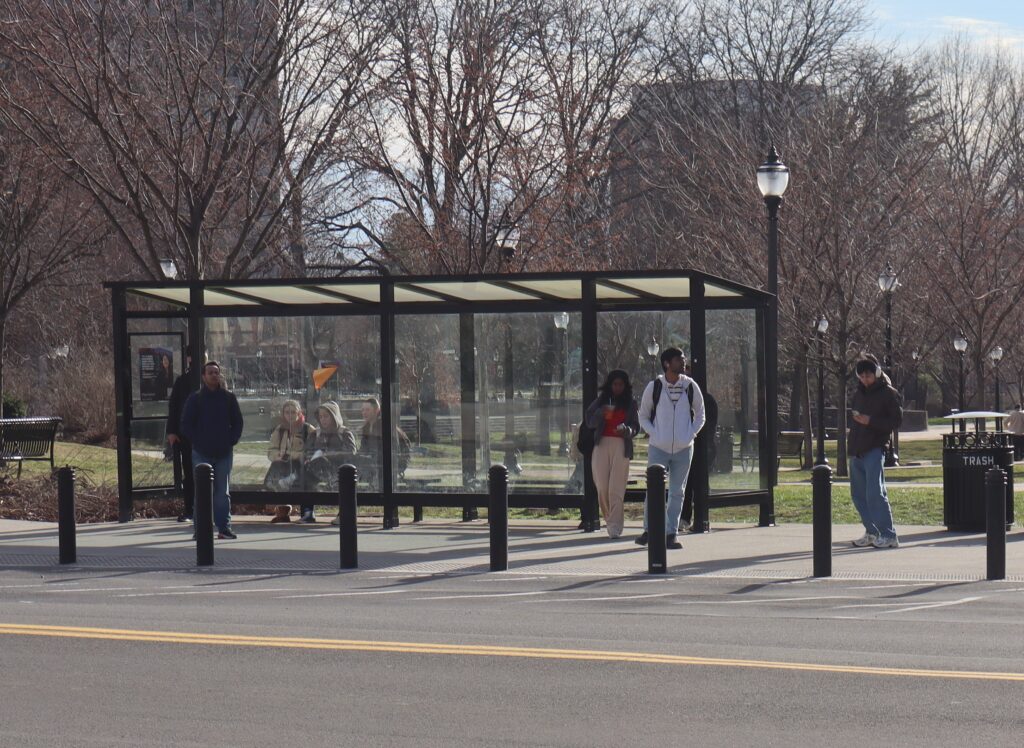
Students wait at a PVTA bus stop near the Studio Arts Building on North Pleasant Street at UMass Amherst, where limited service can extend travel times for those without cars. Photo by Kinjal Pandey
On a cold Saturday morning in Amherst, a rider stands at a bus stop near North Pleasant Street, checking their phone and scrolling through a short grocery list. Milk, eggs, maybe some fruit. The Route 33 bus is expected soon, but timing matters. If they just missed it, the next one may not arrive for another 40 minutes. By the time they reach a store in Hadley, shop and return, what should have been a quick errand can take up most of the afternoon.
In a town like Amherst, distances are relatively short. Many essential services are only a few miles away. But for people without cars, including students, staff and other residents, access depends less on distance and more on how well transit fits into daily routines.
Amherst is shaped in part by its colleges. The Five College Consortium, which includes the University of Massachusetts Amherst, Amherst College, Smith, Mount Holyoke and Hampshire College, brings a large student population into the region. At the same time, Amherst is also home to year-round residents, families and workers who rely on local infrastructure in different ways. That mix shapes how transportation is used and who depends on it.
The Pioneer Valley Transit Authority (PVTA) connects Amherst with nearby towns, including Hadley and Northampton. Several routes link residential areas, campuses and retail centers. Route 33 stops at Big Y in Amherst and Stop & Shop in Hadley. The B43 runs along the Route 9 corridor, connecting Amherst, Hadley and Northampton, with stops near major stores such as Target and Walmart. Route 31 serves South Amherst and includes a weekend extension into shopping areas.
On paper, the system reaches most essential destinations. In practice, frequency plays a larger role.
Route 33 typically runs every 30 to 40 minutes on weekdays and Saturdays, with longer gaps on Sundays. The B43 follows a similar pattern, especially on weekends, when service often runs about once an hour. Missing a bus is not just a delay. It can reshape an entire trip.
“A grocery run ends up being something you have to plan your whole day around,” said Rishav Chakravarty, who previously relied on buses before getting a car. “I eventually bought a cheap second-hand car because buses were too time-consuming and restrictive. I was often paying for taxis anyway.”
For others, the costs show up in different ways. One student, who asked not to be named, said they avoid bus trips during the winter altogether.
“In the winter, I just don’t go out as much,” they said. “I order groceries and food instead, which ends up costing more. It also makes you feel kind of stuck at home.”
A trip that might take 15 minutes by car can stretch into hours when factoring in wait times, transfers and return schedules. For many riders, errands are planned around bus timing rather than convenience.
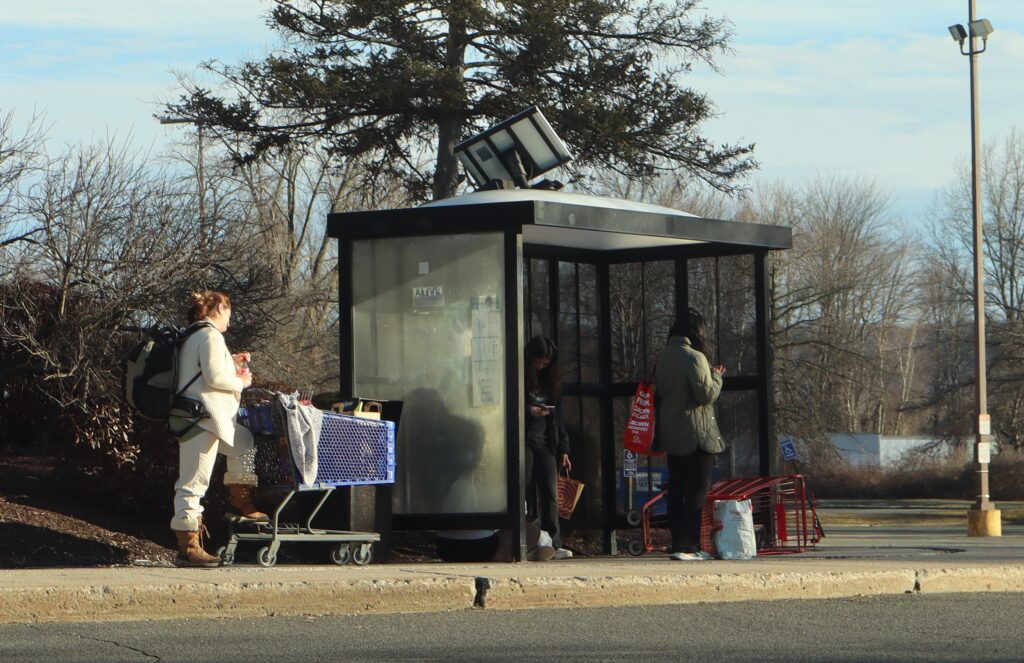
The design of nearby shopping areas adds another layer. Hadley’s retail corridor is built primarily for cars. Stores are spread across large plazas along Route 9, often separated by wide roads and parking lots. Even when buses stop nearby, reaching store entrances or moving between locations can take longer than expected.
That becomes more noticeable when carrying groceries, especially during winter, when sidewalks narrow and conditions are harder to navigate.
Service timing creates additional constraints. Evening buses run less frequently, and some routes stop earlier than riders expect. Weekend service, when many people plan errands, is often the least frequent. Missing a connection can mean waiting close to an hour.
Recent changes, including a weekend extension of Route 31 into shopping areas, have expanded access in some parts of Amherst. Still, the experience of using the system often depends on timing and coordination.
Transit limitations reflect broader constraints. Staffing shortages and funding levels affect how often buses run and how late they operate. Those limits show up in everyday decisions about when and how to travel.
People adapt in different ways. Some combine errands into a single trip. Others rely on areas where multiple services are located close together. Many use real-time tracking apps to reduce uncertainty and avoid long waits.
These strategies help, but they do not remove the underlying tradeoff. The difference between a bus that comes every 15 minutes and one that comes every 40 or 60 minutes shapes how people plan their day. It affects what feels manageable and what becomes difficult.
In a town where essential destinations are close together, accessibility is not just about whether a place can be reached. It is about whether getting there fits into everyday life for the people who live and work here.