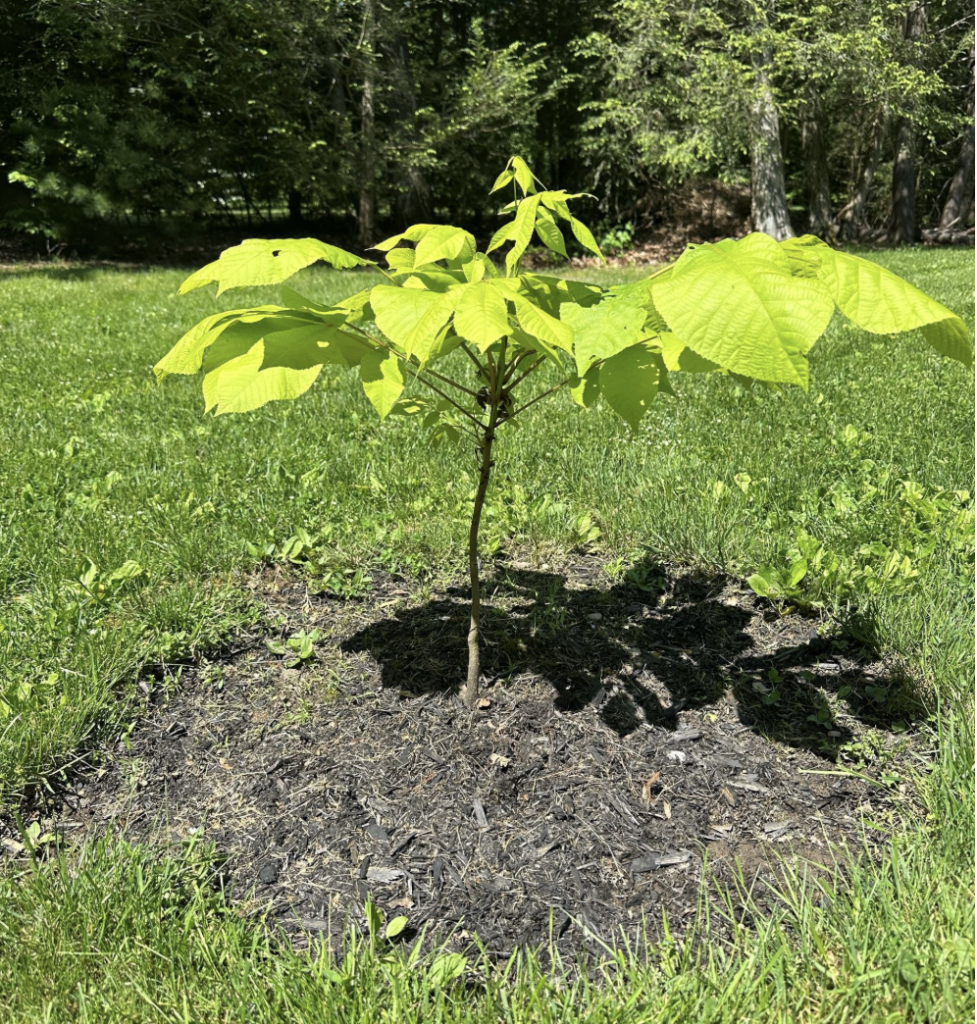
Amherst Arbor Spotlight: Shagbark Hickory
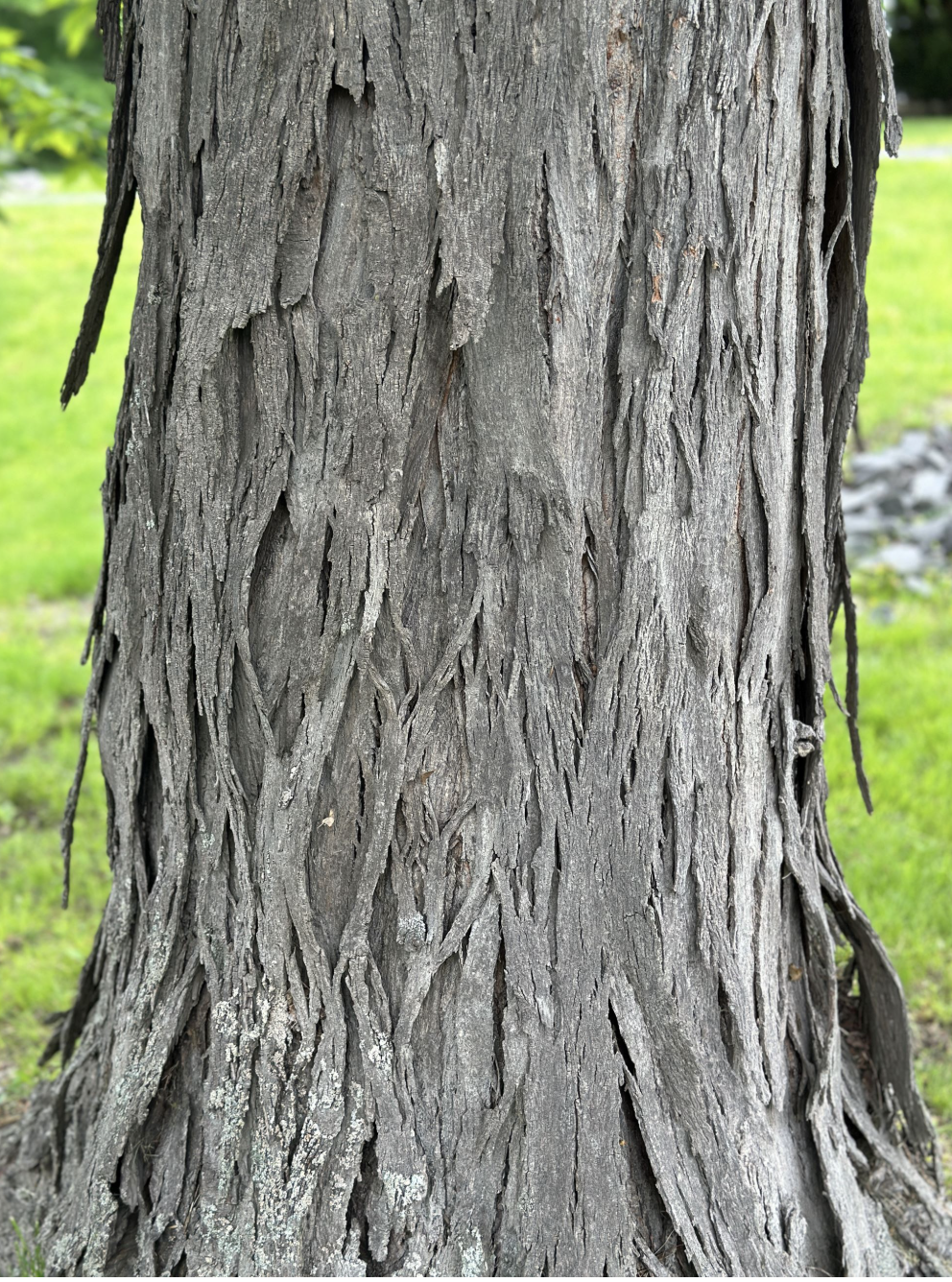
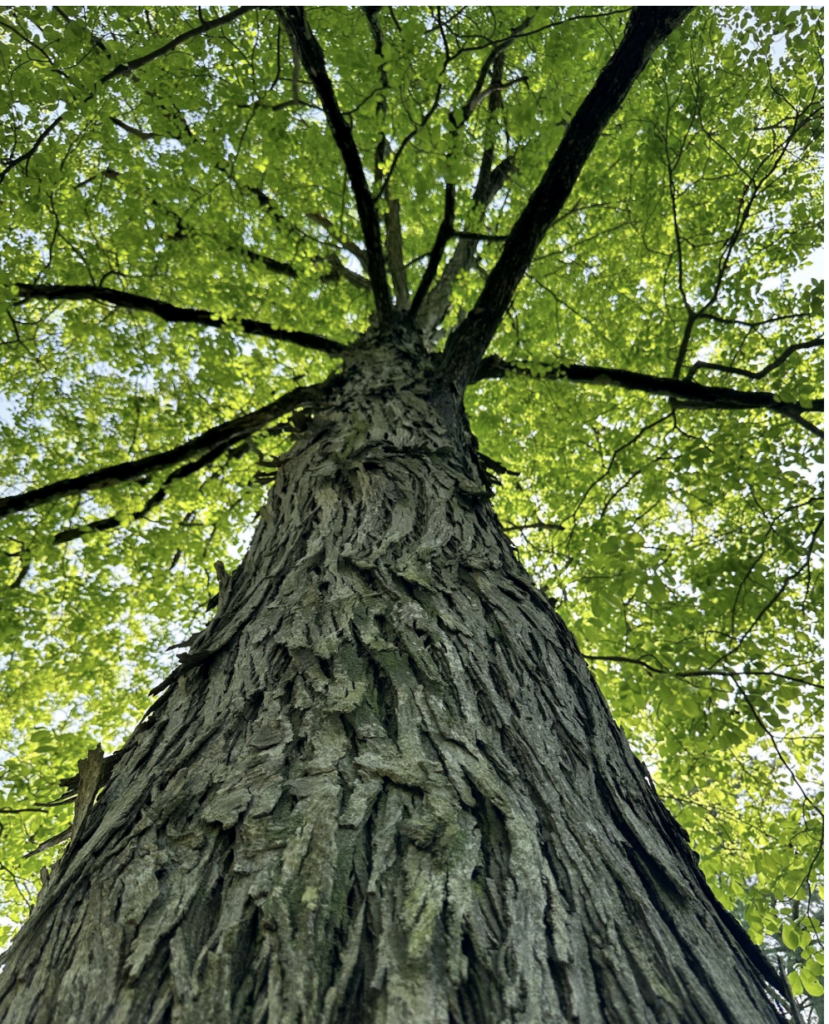
The shagbark hickory's shaggy bark creates deep, dry crevices. Warblers, nuthatches, and other birds search for insects hidden under the peeling bark. The tree is also a habitat for bats, who use the bark for daytime roosts. This shagbark is at at 300 West Street. Photo: Amherst Public Shade Tree Committee
by The Amherst Public Shade Tree Committee
This is the sixth in a series of 12 articles produced by the Amherst Public Shade Tree Committee (APSTC) under the title “Amherst Arbor Spotlight.” The series focuses on the town’s 12 species of shade trees and features a different tree each month. New articles will be posted on the first day of the month on the APSTC website, and in the Amherst Indy, with links on Facebook and Instagram. Read the previous columns here.
Shagbark Hickory: Carya ovata
Once you see the trunk of a mature shagbark hickory, you probably won’t forget it. This native deciduous tree is named for its bark, which peels away in large plates and gives the tree its distinctive shaggy appearance. It is a slow-growing but long-lived tree with an average lifespan over 200 years.
The shagbark hickory is a member of the walnut family and produces sweet edible nuts prized by animals and humans alike. It is one of the hardest woods in North America, ideal for making shock resistant tool handles, drumsticks, and gymnasium flooring. The wood is also valued for smoking food. The species is generally pest and disease resistant.
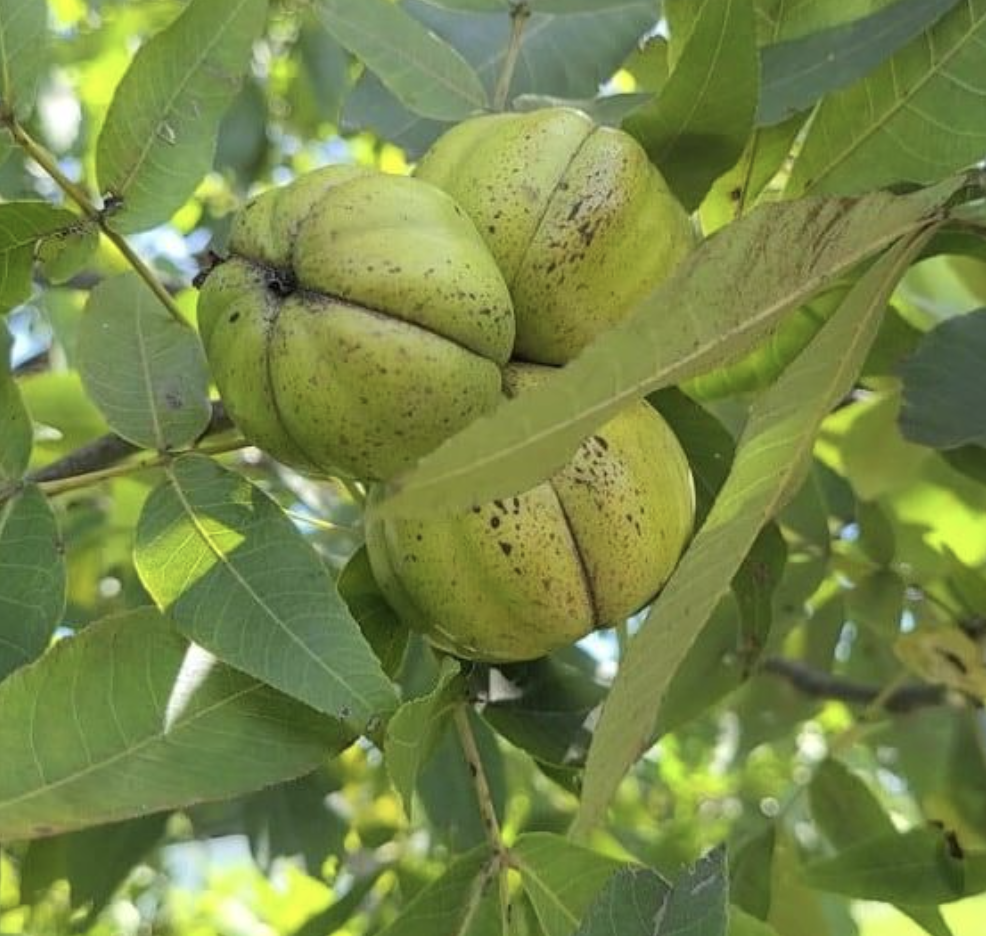
Shagbark hickories have hard shelled nuts that are an important food source for bears, deer, rabbits, turkeys, squirrels, chipmunks, and many species of birds. The trees begin producing large quantities of nuts around age 40. The nuts are protected by hard outer green husks that split open when ripe in autumn. The highly nutritious nuts have been described as a walnut lightly sprinkled with maple sugar.
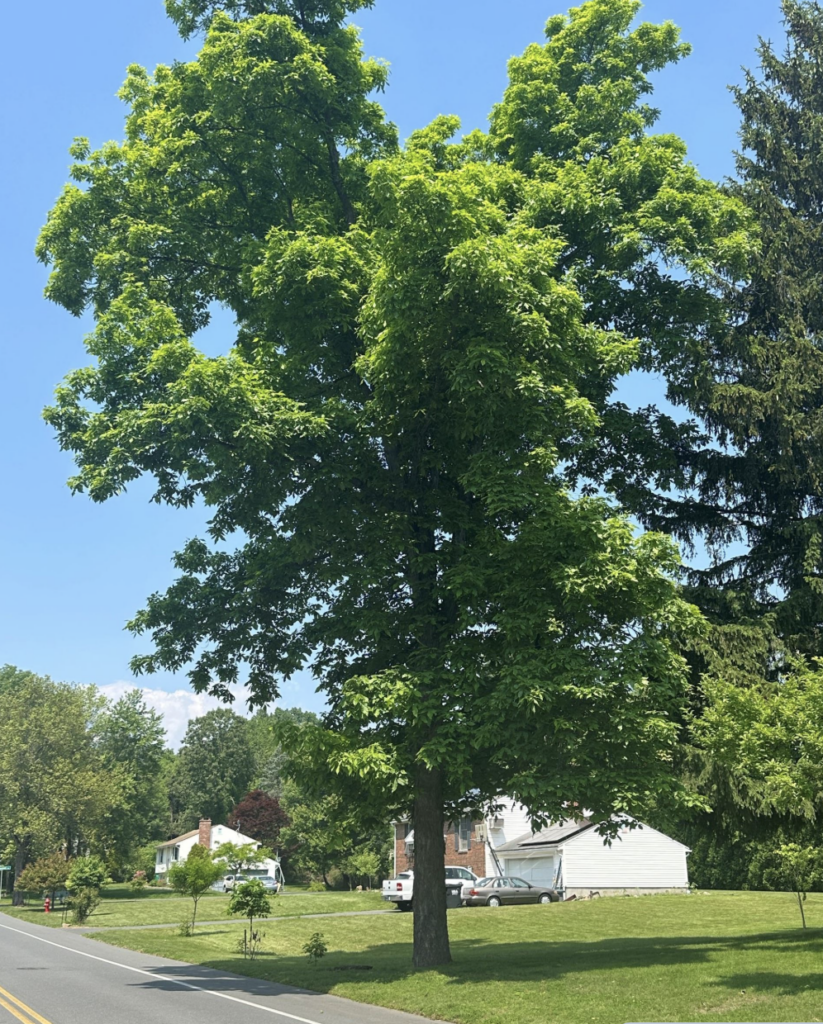
Humans covet the shagbark hickory’s aromatic “green wood” (freshly cut lumber that has not dried out) for smoking meats, particularly pork products like ham and bacon. Indigenous peoples of North America have cultivated shagbark nuts for millennia, boiling the pounded kernels to make a sweet hickory milk called “pawcohiccora” (Algonquian) used in cooking.
This shagbark is at 245 East Hadley Road.
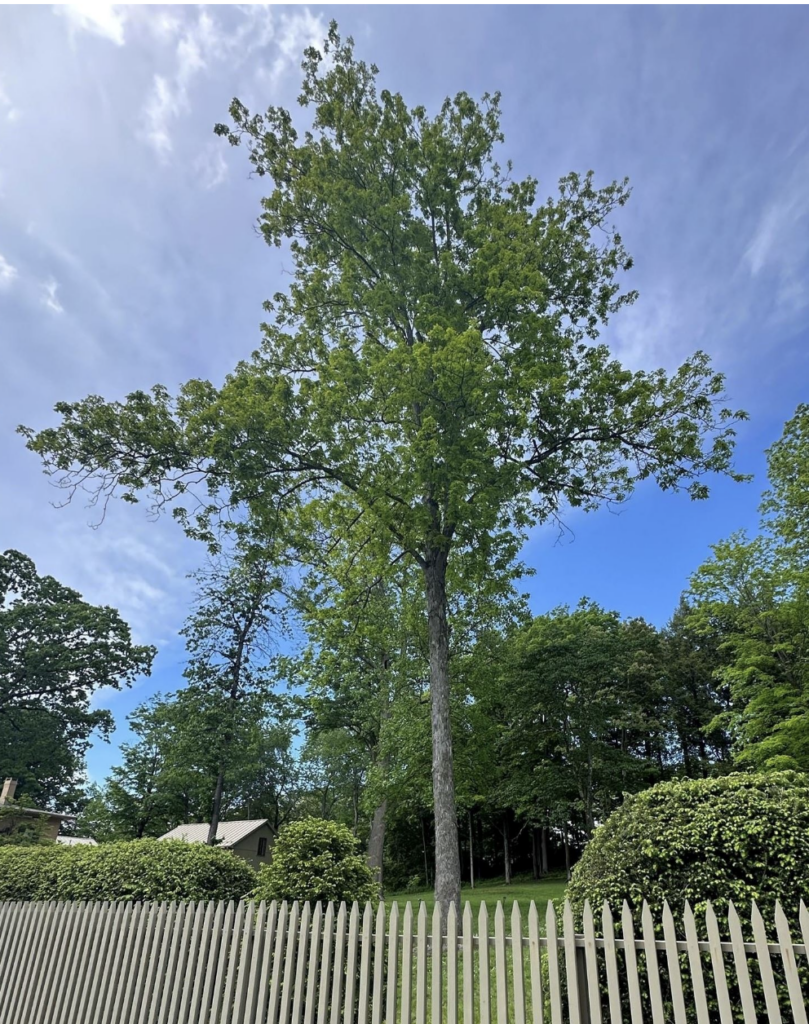
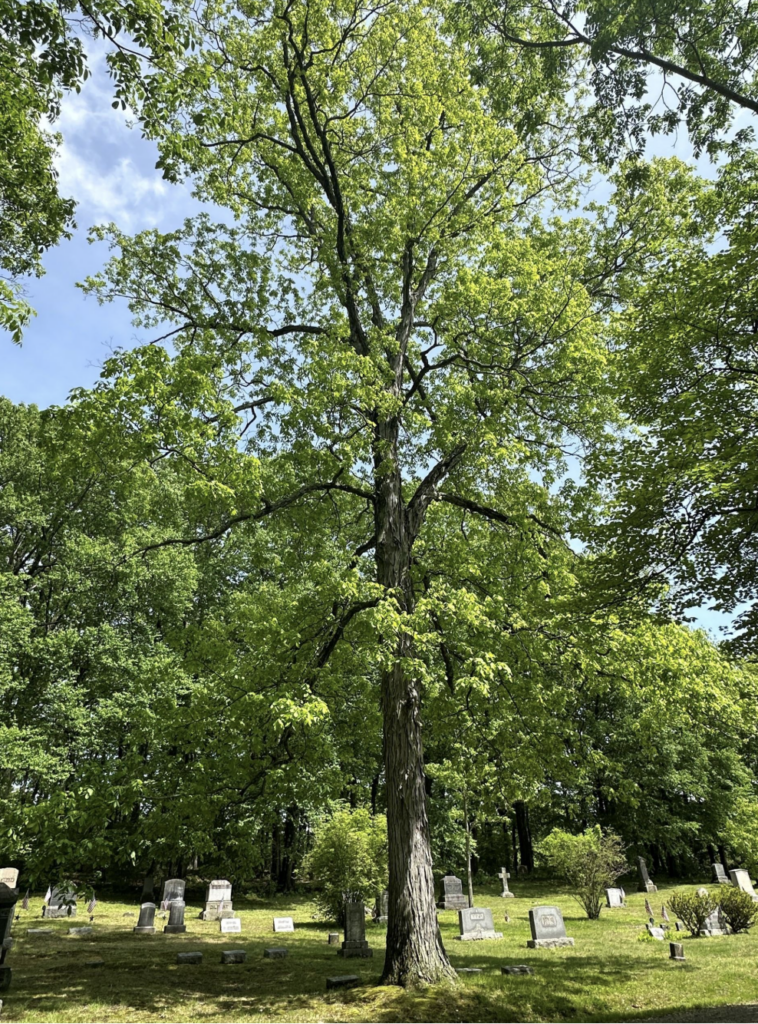
Mature shagbark hickories can be observed at the Emily Dickinson Museum and at Wildwood Cemetery. Their common connection is likely Austin Dickinson, older brother to Emily. Austin established the Amherst Ornamental Tree Association in 1857 to help beautify the town. Three decades later, in 1887, he co-founded the Amherst Cemetery Association to create Wildwood.
Inspired by the landscape designs of Frederick Law Olmsted and the 19th-century Rural Cemetery Movement, Austin Dickinson worked on Wildwood Cemetery’s original layout. He designed curving roads that meander through woodlands and open spaces, and was careful to only plant native trees.
There are several shagbark hickories in the cemetery, including two enormous examples that, judging by their size, are original to Austin’s site plan. Today their impressive heights and gracefully draping branches shade the early 20th-century tombstones of the Merritt and Kellogg families.
Each spring, the reddish golden scales covering a shagbark’s buds dramatically curl back to reveal new leaves.
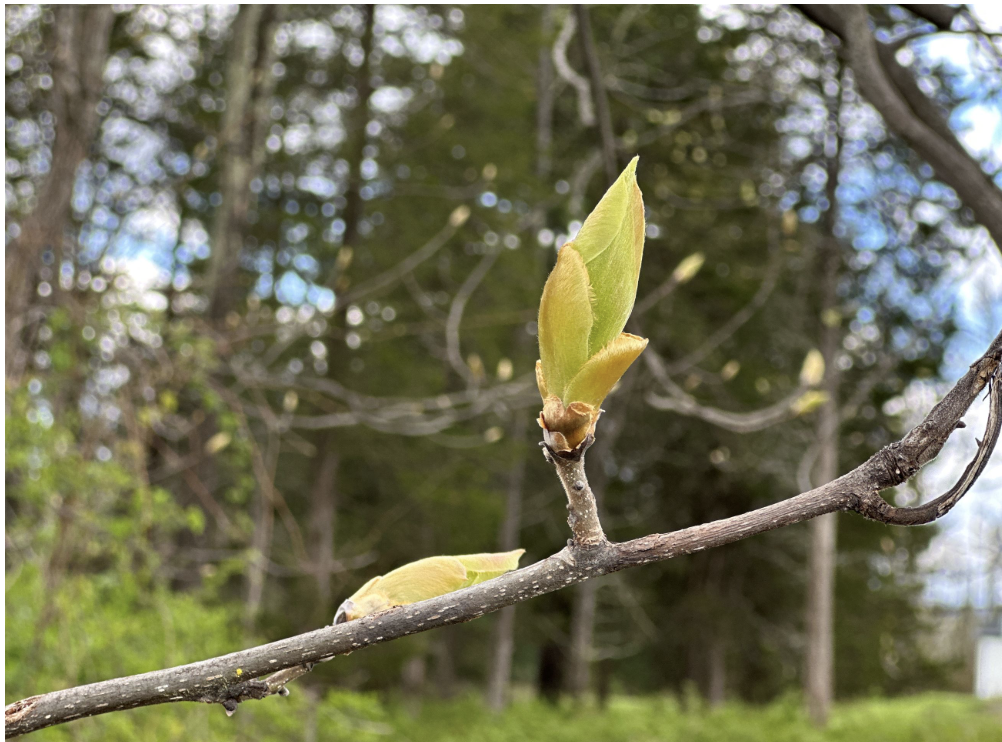
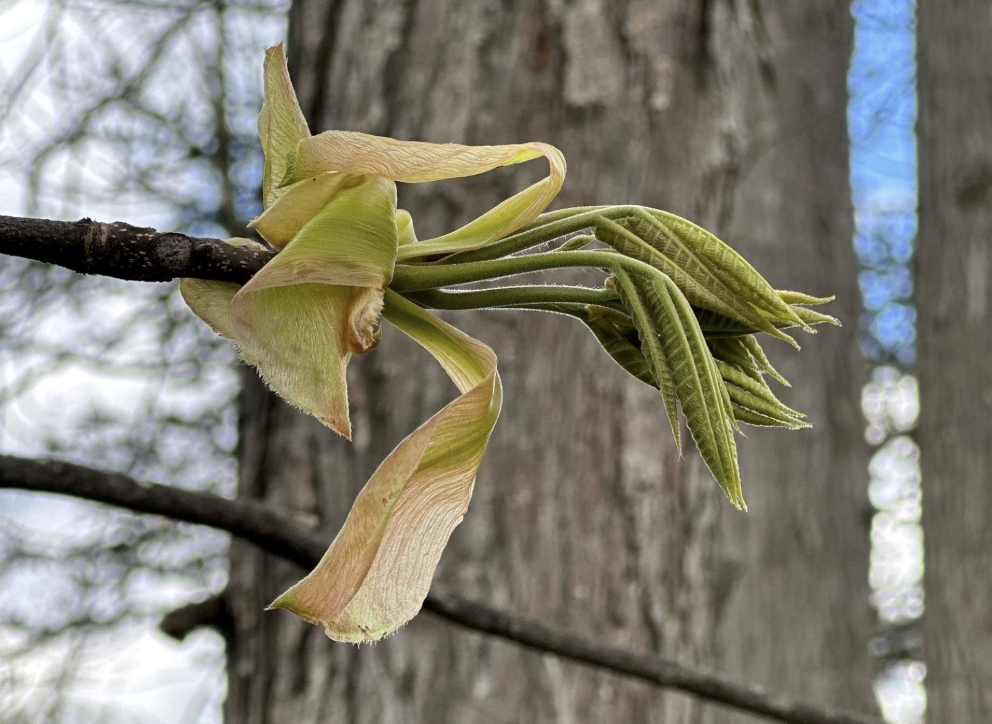
Shagbark hickories develop long tap roots, making them difficult to transport or sell in nurseries. It is helpful to first grow seedlings in containers, and it is best not to move or replant the tree once established.
The young tree’s bark is smooth and striated. It doesn’t begin peeling and curling until maturity, around age 40.
The Public Shade Tree Committee handed out free shagbark hickory saplings at the Amherst Sustainability Fair in spring 2024. Two years later, the young tree pictured here measures only 24 inches high, indicative of the species’ slow growth. Planting a shagbark hickory is a long-term investment in the future!