
Opinion: Peace Walk: The Practice of Returning
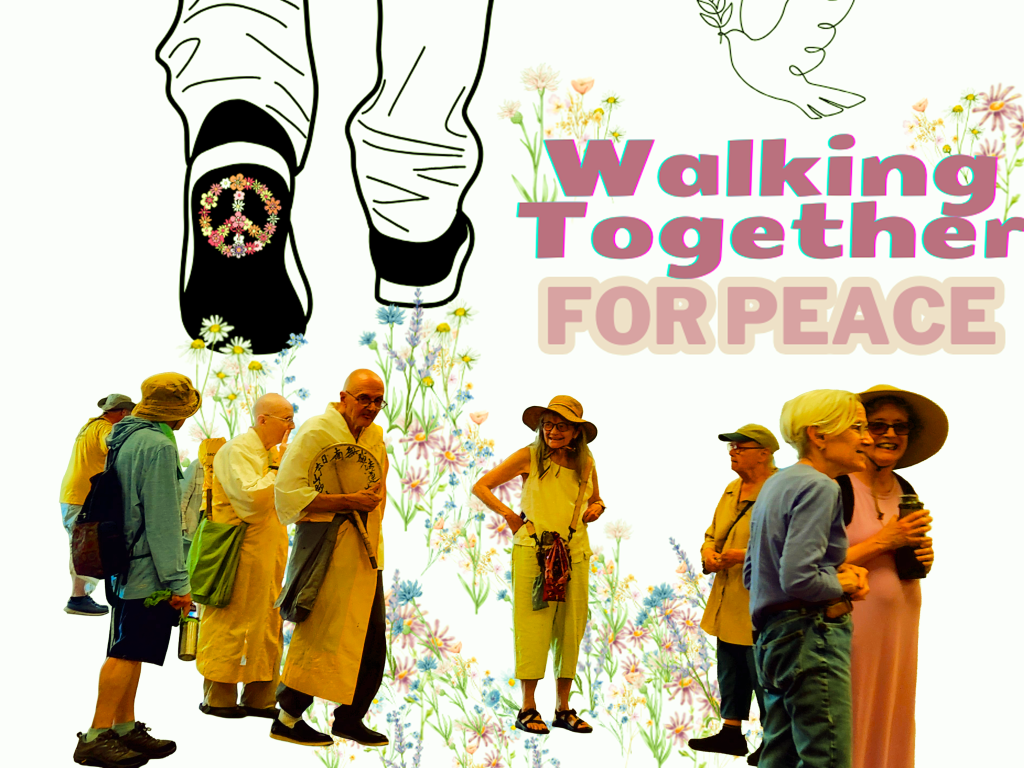
Photo: c/o Rizwana Khan
By Rizwana Khan
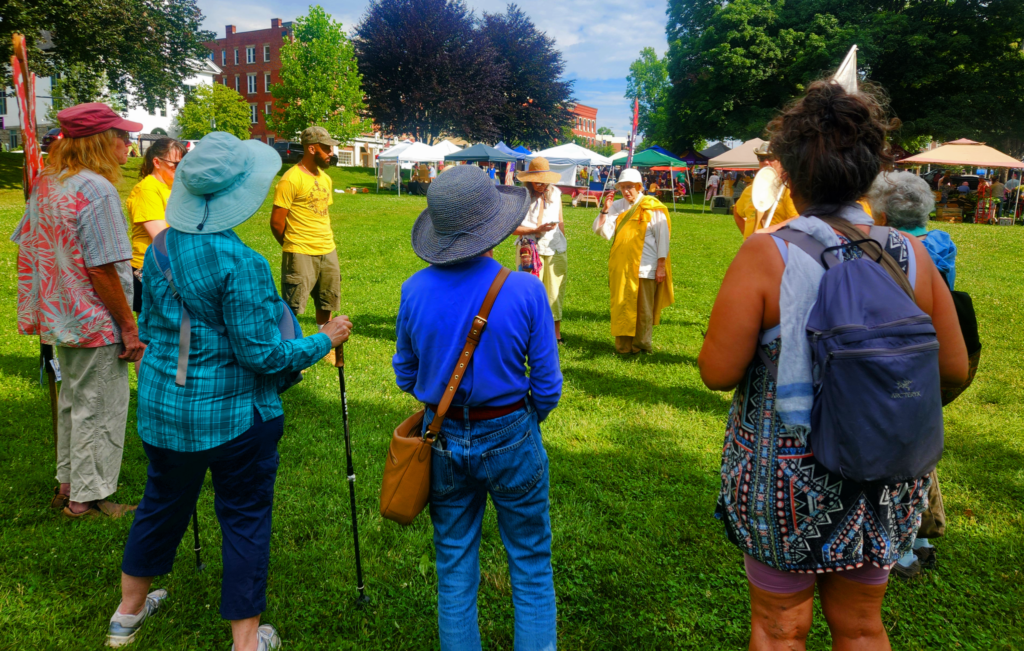
In Amherst, a small circle of people standing quietly on the Town Common might not appear remarkable at first glance. Yet the Common functions as a living civic space where democracy’s strength rests on the willingness to remain together despite differences.
Across the United States, Americans marked the nation’s 250th birthday even as extreme heat and severe storms altered public gatherings. In Washington, President Donald Trump delivered a weather-delayed address before a massive Independence Day fireworks display, while communities across the country adapted their own traditions to the realities of an unusually hot Fourth of July.
In Amherst, at first glance, the gathering might have seemed unremarkable: a handful of neighbors standing together in silence. Yet that modest assembly revealed something essential about democratic life. The gathering affirmed that community is re-created each time ordinary people choose presence over isolation, dialogue over division, and peace over indifference.
In that shared space, no single voice dominates; instead, leadership circulates through the gathering, and authority emerges from participation rather than hierarchy. Memory is carried collectively rather than individually, passed across generations through stories, rituals, songs, and repeated acts of public witness.
A Tradition of Presence
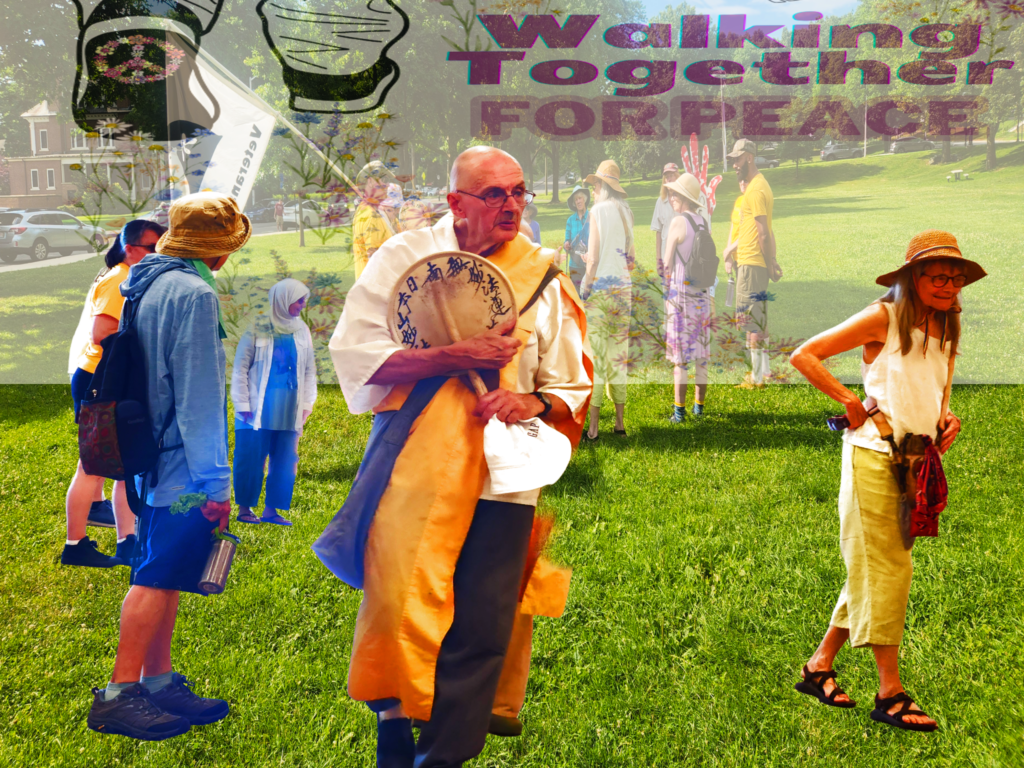
Among those who have provided continuity over decades, Sister Claire of the New England Peace Pagoda has embodied a tradition of engaged Buddhism rooted in nonviolence. Following the path established by Nichidatsu Fujii, the Japanese Buddhist monk who founded the Nipponzan Myohoji order, Peace Pagoda monks and nuns have walked across the United States carrying drums, chanting prayers for peace, and protesting war, nuclear weapons, racism, and environmental destruction.
Alongside them stand members of the Northampton Friends Meeting. For generations, Quakers in the Pioneer Valley have taken part in campaigns against militarism, including opposition to the Vietnam War, the Gulf War, the wars in Iraq and Afghanistan, nuclear proliferation, and excessive military spending.
Veterans of the Vietnam War who later became peace advocates walked alongside them. Others recalled weekly vigils during the Iraq War, demonstrations after Sept. 11, and protests against the invasion of Afghanistan. Their presence transforms the Amherst Peace Walk into a moving meditation, and walking becomes an act of resistance against violence.
Each year, older activists pass these stories to younger generations. Even on a day of oppressive heat, the willingness to walk together affirmed that peace is sustained by ordinary people who continue showing up, year after year.
Walking as Witness
The walk itself became the message. Each step connected participants to decades of civic memory, continuing conversations that began long before they arrived.
A striking example of this occurred when a group of Buddhist monks walked across the United States from Texas toward Washington. At nearly every stop, crowds gathered, drawn by their stillness in a noisy world — a moment of calm, of peace, and of feeling like enough.
That sentiment reflects a growing desire for communities that offer belonging without demanding perfection, and connection without constant performance. Presence matters as much as speech; silence itself becomes a form of public speech. During moments of collective quiet, the walk invites reflection. Listening matters as much as speaking, and what united the participants was a shared willingness to walk together.
Peace as a Discipline
In a society that often rewards speed, certainty, and constant competition, walking becomes a quiet act of resistance. It slows people down enough to notice each other and creates space for listening. It reminds participants that peace is not merely an idea to be discussed but a practice to be lived.
In an age of endless noise, the walk for peace offers the simple experience of moving through the world together. Across the United States, peace walks, pilgrimages, climate marches, and community walks function as forms of participation that are at once personal and public. Younger generations are often less attached to traditional institutions, yet they remain deeply drawn to practices that create connection, meaning, and shared experience. Rather than beginning with formal membership, participation begins with presence.
Communities, in this sense, remain alive only through continuous interaction. Every conversation, every gathering, and every shared walk becomes a way of renewing the civic body.
A Walk to the Mosque
The Amherst Peace Walk offered a clear example of this. Even in extreme heat that shortened the route, participants still gathered and walked together toward the Hampshire Islamic Center.
The center does not display an exterior sign identifying it as a mosque, an absence that raised quiet questions about visibility and identity in public space. It also reframed the walk itself. For immigrant religious communities, questions of visibility are often complex, and the lack of external markers prompted reflection on what it means for a faith community to be rooted in tradition while also being visibly part of the civic landscape.
These questions surface within a broader national conversation about Islam in America, one often shaped by misunderstanding, polarization, and suspicion. Against that backdrop, the Amherst Peace Walk offered a different image: people of different faiths walking together rather than apart, sharing stories rather than slogans, and practicing hospitality rather than suspicion.
Community, in this sense, is not built only through formal institutions or official declarations, but through repeated acts of presence — walking together, listening, and creating spaces where difference becomes a starting point for conversation rather than a barrier.
Following the Sept. 11 attacks, President George W. Bush visited a mosque and declared that “Islam is peace,” drawing a clear distinction between the faith and terrorism. The speech was widely seen as helping reduce anti-Muslim hostility during a period of national grief and uncertainty.
Returning, Again and Again
We inherited institutions that often ask for loyalty before belonging. Increasingly, people are seeking the reverse: communities built through shared practices rather than polished rhetoric.
Despite oppressive Fourth of July heat, more than a dozen people still gathered for Amherst’s annual Peace Walk. The Amherst Common serves as a living demonstration that belonging is a profound act of returning, again and again, to stand for peace
A peace walk embodies the belief that the life of a community ultimately depends on the willingness of ordinary people to show up. Its power lies not in the size of the crowd, but in who chooses to be present for one another and for the common good.
Rizwana Khan is a writer, educator, and human rights advocate in Amherst.
I hope Ms Khan’s beautiful and essential piece stays at the top of the Indy feed long enough for people to read and be inspired by it. An authentic Fourth of July message!