
A Forest That Remembers
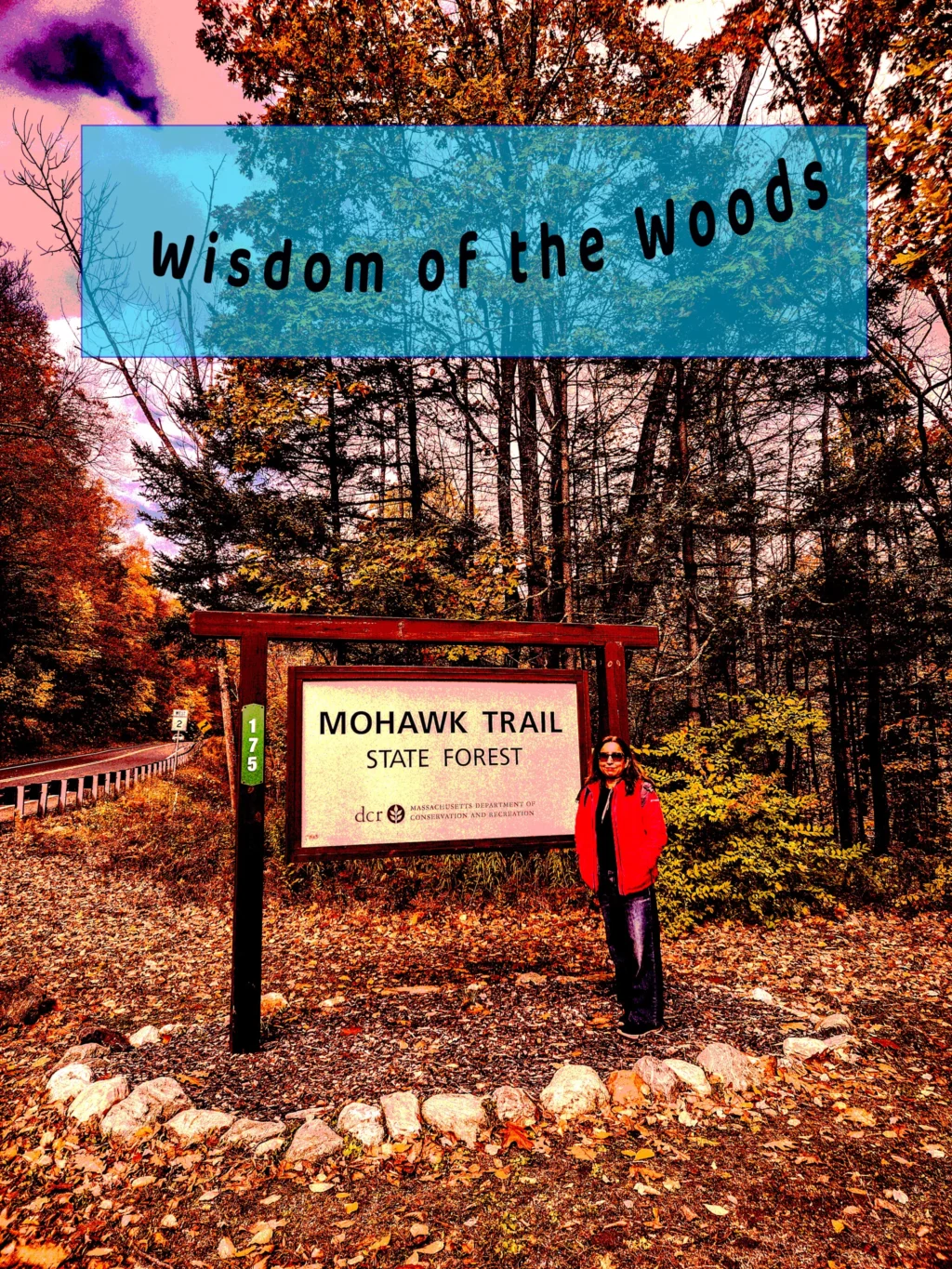
The author at the Mohawk Trail State Forest. Photo: c/o Rizwana Khan
Fire, ancient pines, Indigenous connections to the land, and the quiet wisdom of renewal.
Some journeys begin with a plan, while others begin with a weather forecast that turns out to be wrong. I had checked the forecast before leaving for Mohawk Trail State Forest, but the rain followed me into the hills. The sky was gray, the air was damp, and the familiar world seemed to grow quieter with every mile. I had come to photograph trees, but the forest would reveal more once I stopped looking.
Mohawk Trail State Forest, in the hills of western Massachusetts, holds a landscape shaped by time, water, weather, and generations of human relationships with the land. The Deerfield River moves through the surrounding region, while the forest rises in layers of green, brown, and gray. On a rainy day, the trees seemed to absorb the light rather than reflect it. The damp ground softened every footstep, and the woods felt like a place to enter quietly.
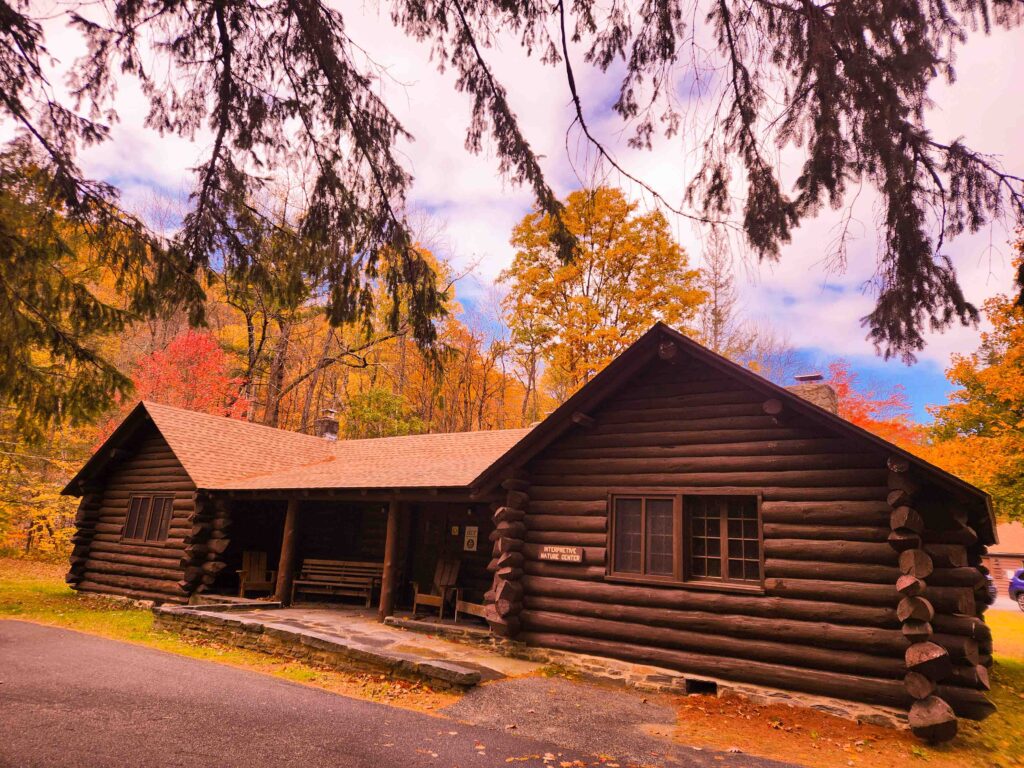
A Place Outside the Ordinary World
The timber walls of the rustic log cabin at Mohawk Trail State Forest recalled an older relationship between shelter and landscape, when a building could appear to grow out of the woods rather than stand apart from them. I paused there, taking in the rain-darkened wood and the stillness around it.
There was no phone reception or Wi-Fi in the hills. That absence soon became a kind of release. I could listen to the rain, watch the trees, and notice the details that ordinarily disappear beneath the noise of daily life.
The forest offered something harder to schedule: the chance to be present.
The Unexpected Fire
Then I came upon a clearing where a fire was burning. The flames stood out against the damp forest, their movement a striking contrast with the rainy day. Nearby, the forest manager and two contractors were removing invasive honeysuckle, practical, physical work that is part of the ongoing effort to care for the forest.
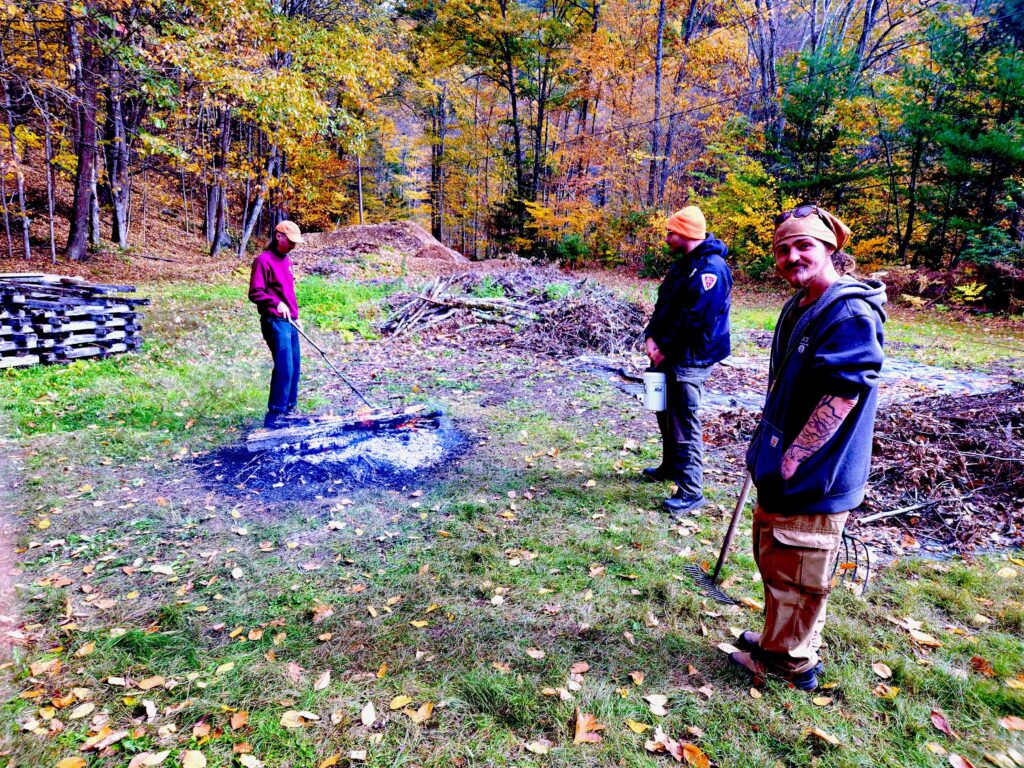
How easily fire becomes a symbol of destruction. We see flames consuming wood and imagine only what is being lost. Yet fire has also shaped many landscapes over long periods. Under the right ecological conditions, and when carefully managed, it can maintain certain habitats, return nutrients to the soil, and create openings where new growth can emerge.
Not every fire benefits a forest. Wildfires can devastate communities, destroy habitat, and leave lasting ecological damage. But the fire I encountered prompted me to think beyond the simple opposition between life and death.
The Healing Power of Fire
In nature, endings are rarely as simple as they appear. A fallen tree becomes shelter for insects and fungi. Decaying wood returns nutrients to the earth. Openings in the canopy allow sunlight to reach plants that have waited in the shade. Disturbance can alter a landscape, sometimes painfully, while also creating conditions for other forms of life.
In some ecosystems, certain plants are adapted to periodic burning, and some seeds respond to heat or to the conditions that follow a fire. In other places, fire can be damaging, especially when it is unusually intense or occurs in an ecosystem that is not adapted to it. Renewal depends on the living relationships within each particular landscape.
Standing near the clearing, I began to think about the difference between destruction and transformation. The two are not interchangeable, and loss should never be romanticized. Still, nature offers many examples of life continuing beyond what has ended. The fallen tree, the decomposing leaf, and the ash left by a fire can become part of a larger cycle.
This is not to say that every wound heals quickly. It is that life often finds possibilities in the spaces change leaves behind. What looks empty today may become the beginning of something that could not have grown there before.
Rings, Roots, and Memory
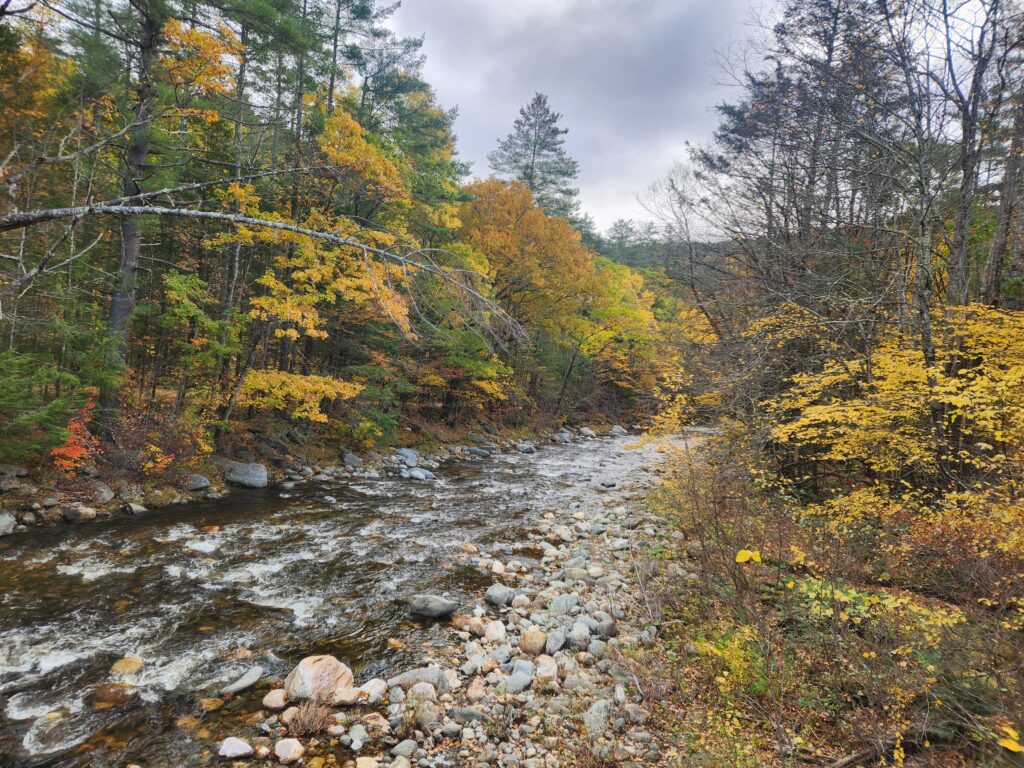
The forest also invited me to consider the relationship between trees and the people who have lived with them across generations. Indigenous peoples have maintained diverse relationships with forests throughout North America, including relationships grounded in sustenance, knowledge, responsibility, ceremony, and care for particular places. These relationships are not all the same, and no single story can represent every Native nation or community.
The name Mohawk evokes the Indigenous history of this region. The land has a history that reaches far beyond modern state boundaries, recreational trails, or the signs marking a public forest. It is important to remember that landscapes are places of memory, relationship, and belonging.
For many Indigenous communities, relationships with particular places carry cultural, spiritual, historical, and communal meaning. Practices of stewardship are best understood through Indigenous knowledge and voices rather than reduced to a universal story.
Trees hold traces of time in their rings. Old trunks record years of growth, drought, injury, and recovery. Deadwood continues to shelter living organisms. A clearing may reveal evidence of a disturbance that took place long before a visitor arrived.
A forest’s memory is held in relationships among soil, water, fungi, roots, leaves, animals, and the changing conditions of the landscape. It is also carried in the stories and responsibilities of people who have known a place across generations.
To walk through such a place is to enter a history that cannot be measured by the length of a visit alone. The trees were growing before I arrived and will continue their lives after I leave. My photographs can preserve a moment, but they cannot contain the whole story.
The Ancient Pines and the Passage of Time
The older trunks rose with a quiet authority, and their branches held the marks of seasons I could only imagine. A tree’s life includes periods of abundance and stress, broken limbs, competition for light, and changes in the soil and climate around it.
Deciduous trees shed their leaves when conditions become less favorable for maintaining them. Evergreens follow another strategy. Their needles can remain on the branches for several years, allowing them to retain foliage through successive seasons. Each strategy is an adaptation to a particular set of conditions.
Far from Massachusetts, the great bristlecone pines of the western United States can survive for thousands of years under harsh conditions, a reminder that endurance can take forms very different from rapid growth.
Mohawk Trail State Forest is known for old-growth hemlocks (500 years old), red spruce (400 years old), and white pines, which are among the tallest trees in New England.
We often measure time by deadlines, appointments, and the quick succession of events. Trees measure it through growth, dormancy, injury, and adaptation. Their lives encourage a slower perspective, one in which survival does not always mean remaining unchanged.
The Pond and the Small Lives Around It
Elsewhere, the pond appeared motionless from a distance, yet its surface concealed a busy world. Water supports plants, insects, amphibians, and other forms of life, while its edges create a meeting place between land and water.
I noticed small reminders that a landscape is never merely a backdrop. It is a network of living beings, each responding to light and the rhythms of the seasons. What appears quiet to a human visitor may be full of activity that takes patience to notice.
The rain changed the way I saw the place. Leaves glistened, trunks darkened, and the forest floor seemed to hold the light close to the earth. Instead of searching only for a dramatic photograph, I began to pay attention to the shape of a branch, the texture of bark, and the way water gathered on a leaf.
Renewal Is Not the Erasure of the Past
By the time I thought again about the fire, it no longer seemed separate from the rest of the forest. It belonged to the same larger story as the fallen branches, the decaying leaves, the old trees, and the plants reaching toward the light.
Renewal does not mean that nothing has been lost. A burned tree may not recover, and a habitat may change permanently. A living thing may disappear, and its absence may matter. But the transformation of a landscape can also create new conditions for life. The past is not erased; it becomes part of what follows.
The same thought led me back to the work in the clearing. Removing invasive honeysuckle was not simply a matter of clearing space but an effort to change the conditions in which native plants and other organisms could grow. Ecological restoration is an ongoing process of care.
The forest offered no simple promise that it would restore everything damaged. Instead, it suggested that renewal requires participation: the patient work of understanding a place, recognizing what threatens its balance, and making room for life to continue.
What the Forest Revealed
In “Song of Myself,” Walt Whitman wrote, “I believe a leaf of grass is no less than the journey-work of the stars.” The line captures something of what I felt among the trees: The ordinary leaf, the fallen branch, and the damp earth are not insignificant details. Each belongs to a world of relationships much larger than itself.
I had come to photograph trees, but the forest drew my attention to the cabin, the fire, the pond, the old pines, and the people working in the clearing, all of which became part of a single experience. The forest is a living community, continually responding to change.
A visitor cannot understand an entire landscape in an afternoon. A photograph cannot explain the history of a place, and a single story cannot speak for all the people whose relationships with that land extend across generations. Sometimes the most respectful response is to recognize how much remains beyond our knowledge.
As I left Mohawk Trail State Forest, I carried with me an image of flames in a clearing, the quiet presence of old trees, and the feeling of being briefly removed from the demands of the ordinary world. The rain had changed the light, and the forest had changed the way I looked at it.
The forest must open before light can reach the ground. What falls becomes nourishment in time, and in the quiet space left behind, life begins again.