
Opinion: Beyond the Party—Who Is Responsible for Amherst’s Neighborhoods?

Social Injustice Goes Global

Amherst’s student-housing story begins at night, when a house filled with students becomes a vastly different kind of neighbor to the people who live in that neighborhood year-round.
The West Downtown Neighborhood Association wants Amherst Police to patrol North Prospect Street more often and UMass to take student behavior seriously when somebody is calling at one in the morning. But underneath the noise complaints is a much harder question: what does it actually mean to be a community when thousands of its members are here part-time and temporarily, while thousands of others are full-time permanent residents?
The economic relationship of UMass students to the town is obvious. Students rent apartments, buy food, go downtown, use local businesses, and become part of the financial ecosystem. But the social relationship is different. There is no line on a university spreadsheet for the neighbor who cannot sleep because of a party, the student who has no idea who lives next door, or the landlord who has grown accustomed to treating repeated complaints as somebody else’s problem.
Universities measure enrollment, retention, research dollars, and institutional reputation. Towns measure traffic, taxes, property values, garbage disposal, public safety, and whether the person living next door can get some sleep before going to work at six in the morning.
And then the students, many barely twenty years old and living away from home for the first time, are figuring out adulthood all at once.
UMass has Off-Campus Student Life and Community Relations that says its town-grown program reviews off-campus activity and considers responses to community concerns.
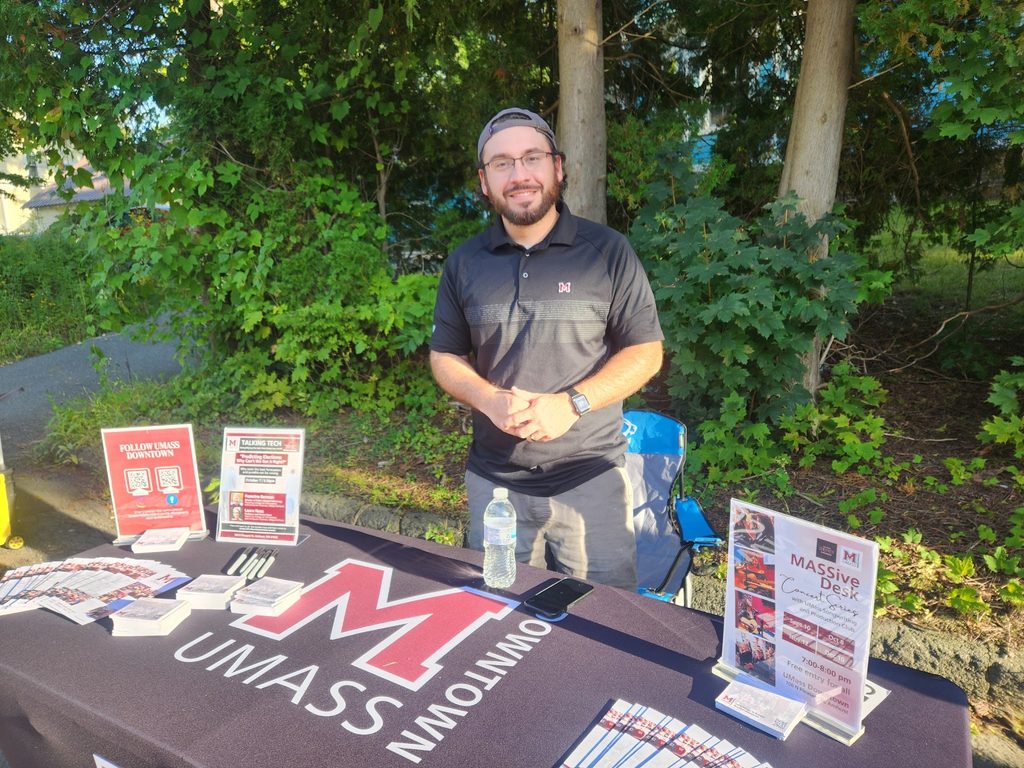
Amherst has a Good Neighbor Registration program for student gatherings, under which police can respond to complaints and, when excessive noise continues, can issue citations. UMass also has Good Neighbor Grants designed to bring students and permanent residents together through neighborhood projects.
Imagine being the person who has been awake until two in the morning listening to bass thumping through the bedroom wall, cars parking on sidewalks, and empty cans being scattered around the street. You call someone, are told it is a police matter, and it becomes a landlord matter.
After enough rounds of this, a neighborhood begins to fracture.
Students start to see permanent residents as people who want to ruin their college experience, while permanent residents start to see students as temporary invaders who do not care about the place where they happen to be living. Neither version solves anything.
Who is responsible for building the relationship before everyone gets angry?
The West Amherst Downtown Neighborhood Association announced an organizational meeting for November 1, inviting neighbors. As their neighborhood changes, along with so many others in town, they hope that the residents will talk to each other rather than simply complain. And Amherst needs communication to happen, two-way conversation between all the different players.
At the beginning of every academic year, students moving into heavily student-populated neighborhoods could be welcomed by both UMass and the town not with another PDF nobody reads, but with an actual introduction. Here is the neighborhood, the people who live here, what you need to know, who you call when something goes wrong, who your neighbors can call, and what being a good neighbor looks like.
Landlords could be part of that conversation instead of appearing only when rent is due or something has gone badly wrong. Police could identify properties generating repeated documented complaints instead of responding to the same address again and again as though every incident has appeared out of nowhere. UMass could have a meaningful role when off-campus behavior repeatedly affects the surrounding community, because trust is created when somebody answers the phone.
Everyone has something to lose if this relationship deteriorates. Students need housing, landlords need tenants, downtown businesses need customers, UMass students, and a functioning relationship with the town. Police need clear lines of responsibility and permanent residents need a livable neighborhood. These interests do not automatically coexist.
A university can provide an extraordinary college experience without becoming an island. A town can welcome thousands of students without treating its permanent residents as collateral damage from being a college town. And students can enjoy Amherst without pretending that the town disappears when they close the door of their rental house. In a caring community, when people have enough connection to one another, these problems do not immediately become somebody else’s problems.
Alex Kent and Felicia Sevene’s effort to revive the West Downtown Neighborhood Association is a reminder that a neighborhood is created when people know who lives around them—and care enough to know when something is going wrong.
Students graduate and UMass enrollment rises and falls, but the people who live on these streets year after year will still be here. So, while students are here, how do we teach them that they are not just occupying a bedroom but are living in somebody’s neighborhood?
Rizwana Khan is a writer, educator, and human rights advocate in Amherst.
Student rentals are degrading the town. Some streets and neighborhoods feel lost. Others, like mine, are in the process of being lost. The zoning proposal to limit student rentals to the primary arterial streets in town would be a means to save or revive our neighborhoods.
I love the idea of requiring landlords to attend an annual move-in meeting with the Police liaison and neighbors once a year for at least one of their properties.
Hi Darcy, couldn’t agree more. We’ve lived and paid taxes in Amherst for 46 years. We’ve had some wonderful students living next to us. We’ve had some entitled, noisy, here to party students also. This and other repercussions are part of the story others seem to leave out.
One of these is the amount of vehicles in the neighborhood now. A family with children (which is what our neighborhood used to be) had 1, maybe 2 vehicles. The 3 rentals that are surrounding us now have 4 plus 8 plus 4 registered but more like 6, plus 9, plus 5 vehicles here going in and out of the neighborhood at all times of the day and night. 20 plus vehicles at times. And then there’s the visitors, sleepovers etc.
In the past we had 9 guys, (NINE) renting next to us that got away with everything for nine months. We did all the things people are supposed to do, like Shalini Bahl-Milne in her August 4 opinion piece, Amherst Isn’t Afraid to Talk. It’s Afraid to Listen. – THE AMHERST CURRENT suggested, exchange phone numbers, offer ways to help such as tools needed etc and that all blew up in our face. They would party all ours of the night, call us pretending to be the police, harass and come speeding in at 2:00am yelling “F_ _ _ You” almost every night. The toilet on the front lawn said it all. So they ruined it for us because of the following…
The town management and their various departments, UMass, the town council and the landlords did nothing to solve these issues except talk about it. Because of their inactions and unless they change to help long term residents in a more meaningful way, we have to consider an attorney if things get out of control again. In the recent past, when a complaint call was made to the police, we would hear back: “okay, they’ll be out as soon as they can, they’re all tied up with other calls”, so we question how much better things are.
And we continue to be stressed over the condition of our town. We can’t drive anywhere for fear of causing a flat. Why isn’t the DPW getting the funding they need? 4 million allocated but a 47.7 million backlog! After working for them for 38 years, supplying treated water to the community, it is hard to watch our infrastructure and the departments that do this work get this little attention. The circle we’ve taken care of, raked and mowed for all these years is missing curbing and the students and others think it’s a new parking spot, there or in front of our mail box! Would you go to a different town to visit someone and do these things?
We think the people that are pushing for build, build, build and ADU’s everywhere, (who don’t have rentals or ADU’s in their neighborhood and probably never will), that it would be good they experienced what other neighborhoods are going through before wishing more of it on us. You know, the ones our town planning head call slum neighborhoods. The town management needs to support the long term employees and residents that care about their neighborhoods. Right now they’re all a mess and getting worse.
I tried to post a very similar post as this in response here: Amherst’s Housing Crisis: Why Accessory Dwelling Units Matter
but they wouldn’t acknowledge it or even give me a reason why.
Jeff :
The landlord of that property needs to be called on the carpet . We had a similar nuisance rental
property in our neighborhood . We had a positive experience by interacting with Officer Larramee , Edmund Smith and others . Reach out to them .
David, thanks. Yes we had a positive experience with them and everyone involved. I think Bill has retired. But even so, in that particular incident, nothing changed. That was in the past and one of our worst experiences. We hope the town and landlords get better at this. Every couple years you just don’t know what you’re going to get.
Jeff:
I have a funny feeling that the property manager of “the house next door” is the same person who manages or owns the 12 “non-conforming” ADUs ?
These are some of the reasons I voted NO on Ballot Question 7! It would allow houses on 5000sf lots. And, the unintended consequences could be worse than the ADUs by jamming four houses with a a minimum of 16 residents on our current 20,000sf RN lots.
Hi Hilda,
No, to be fair, it wasn’t that property manager. It was another we’ve had trouble with having too many tenants and cars there every year and too much noise. This year it hasn’t been too bad. But we agree about the non-conforming ADUs. It just seems like cheating and we know what’s going to get packed into them.
We just flick our outside lights when the music and rowdy voices from transient rental houses are too loud and the young occupants and their visitors immediately quiet down. And then we call the free garbage pick up people who pick up empty beer cans in the street for them..Ya right…ps police historically have been very helpful .
Residents of neighborhoods afflicted with “with the noise, litter, public urinating and commotion of student parties” need to organize and go to Hampshire Country Superior Court in Northampton to seek injunctive relief (and possibly money damages as well) based on the well-established legal doctrine of “private nuisance.” Landlords who permit a private nuisance are legally responsible for misconduct by their student tenants whose antics make life miserable for neighbors. Property ownership is a matter of public record at the Amherst Town Tax Assessors property search web page.
An actionable private nuisance is any activity that unreasonably interferes with homeowners’ quiet use and enjoyment of their property. For example, if noise keeps either children or adults awake at night, or interferes with ordinary activities like watching television, reading or conversation, that constitutes unreasonable interference entitling the homeowners to injunctive relief, money damages, or both.
To pursue a private nuisance claim in Superior Court in Northampton, one needs an experienced attorney. There are excellent litigators in Amherst and Northampton. One need not go far afield to hire a big (and likely very expensive) law firm. I suggest residents contact local attorneys based in Amherst or Northampton, asking first “Do you do Superior Court civil litigation?” If the answer is “yes,” the next question is “Who is your most experienced Superior Court litigator?” That is the lawyer you want to consider hiring. Interview several, discuss legal fees and expenses frankly, and make your own decision.
One lawyer can represent a group of people if their interests are aligned and if they can make all decisions by consensus. If the group members cannot resolve disagreements during the course of litigation, each faction must hire another lawyer. That provides a powerful incentive to reach unanimous decisions.
Attorney Michael Pill, How do you keep it all straight, or keep a straight face? You represent student landlords to help them build student housing that bends bylaws that needed straightening by the Zoning Board of Appeals, all while trying to skirt the owner occupancy requirement, also while suggesting the town council change the sketchy wording in the bylaw, all while now giving advice to homeowners how to protect their basic rights! When do you sleep?
Yes, one can call the cops, or file a nuisance action in court, both of which have potentially very serious consequences for young people who are simply trying to “have fun” in college. This is institutionalized conflict management, in an increasingly punitive legal system. And, it often ends up policing the college students, not the landlords who create and profit from the conditions that encourage this behavior. But that misses Rizwana Khan’s more important points — (1) how can we build community to prevent individual conflicts from getting to that point, and (2) how can we institutionalize these larger values along with property owner rights and student civil liberties?