
Feinberg Series Panel Will Explore Role of Corporations in Shaping US Immigration Law
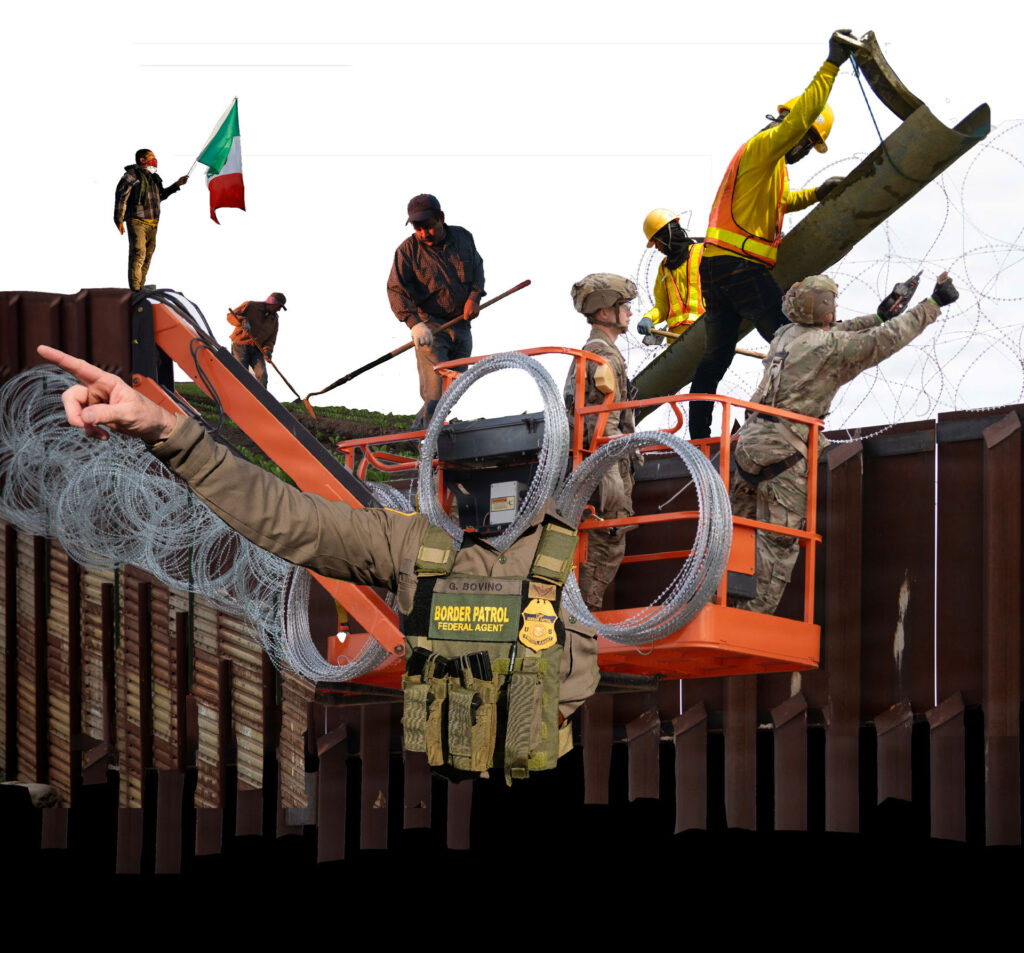
Photo: UMass Department of History
The Feinberg Distinguished Lecture Series at UMass will present a panel discussion on Thursday, October 29, at 6:00 p.m., exploring the role that corporations have played in shaping US immigration law. The event, entitiled The Business of Borders, will be held over Zoom and is free and open to all. Register for the link here. The event is part of a year-long series entitled Escape from Oligarchy: The History and Future of Rule by the Rich. View the full schedule of events here.
About the Panel
Corporations have played major roles in shaping US immigration laws. Some capitalists, such as weapons makers, surveillance companies, and private prison companies, profit directly from anti-immigrant policies. Others hold a more complex position: they need workers but want to limit their rights.
Policies toward immigrants go hand in hand with imperial intervention abroad, with roots in centuries of colonization and displacement. Even as capitalists and governments have insisted on a “strong border,” they have selectively ignored national borders when laying claim to foreign resources, labor, and markets.
Panelists will illuminate the relationship between national borders, capitalist profits, and workers’ well-being while suggesting pathways for worker resistance.
A public Q&A moderated by Kevin Young (Associate Professor, UMass Amherst History Department) will follow. The 2026-27 Feinberg Series is presented by the UMass Amherst Department of History and partners.
The Panelists
Aviva Chomsky is professor of history and coordinator of Latin American Studies at Salem State University. Her research focuses on labor history, immigration and undocumentedness, Central America, Cuba, and Colombia. Her forthcoming book, “Extractivism on the Periphery: Colombia’s Wild Northeast” examines the history of Indigenous peoples and globalization from one region’s perspective. Other publications include Central America’s Forgotten History: Revolution, Violence, and the Roots of Migration (2021); Undocumented: How Immigration Became Illegal (2014), A History of the Cuban Revolution (2011, 2nd ed. 2015), Linked Labor Histories: New England, Colombia, and the Making of a Global Working Class (2008), They Take Our Jobs! And 20 Other Myths About Immigration (2007), and West Indian Workers and the United Fruit Company in Costa Rica, 1870—1940 (1995). She has been active in immigrant, Latin America, and Palestine solidarity since the 1980s.
Julio Flores is a former leader of the Salvadoran teachers’ union, ANDES 21 de Junio, and of several organizations in the 1970s and 1980s, including the Bloque Popular Revolucionario (Popular Revolutionary Bloc), the Coordinadora Revolucionaria de Masas (Revolutionary Mass Coordinating Council), and the Frente Democrático Revolucionario (Democratic Revolutionary Front). He lived and organized in the US from 1991 to 2015. More recently, he co-founded the Escuela Política para un Nuevo Proyecto (School for a New Political Project) and is currently a political and social organizer in El Salvador.
Cecilia Guerrero is the chair and founder of A Luta Sigue, an organization that identifies working-class leaders and supports them in building organizations, with the overarching mission of instilling a working-class identity through education and class struggle. Through A Luta Sigue, she has supported groups including the Tennessee Drivers Union, Poder Popular (Nashville People Power Committee), Southern Youth Solidarity Network, and the Workers’ Unity League. Guerrero is a third-generation organizer from Northern Mexico, raised in a family of steelworkers. Organizing in the US for over a decade, she supports thousands of working-class people in labor, neighborhood, and immigration struggles.
About the Feinberg Series
Amid escalating war, fascism, and climate destruction, the threats posed by billionaires and giant corporations have never been so stark. What are the roots of this situation, and how can we fight back?
The 2026-27 Feinberg Series explores the global history of oligarchy and resistance to it. Events will trace oligarchy’s origins in colonialism, capitalism, and racism while centering the popular movements that have fought for equity and democracy. The series brings together students, scholars, journalists, and community organizers. They will draw from history to understand corporate power, envision alternatives, and inform struggles for justice in the present.
The history department’s signature event series, the Feinberg Family Distinguished Lecture Series is offered every other academic year thanks to the generosity of Kenneth Feinberg ’67 and associates. Each iteration of the series focuses on a “big issue” of clear and compelling concern, generally a policy or social issue. Regularly attended by thousands of people from across the world, Feinberg Series events ground the theme in historical inquiry, context, analysis and experience and featuring a wide variety of events, including lectures, exhibitions, performances, panel discussions and film.
Read more and view the schedule on the Feinberg Series website: www.umass.edu/feinberg