
Boosting the Creative Economy: Social Well-Being in the Hard Times of the Great Depression
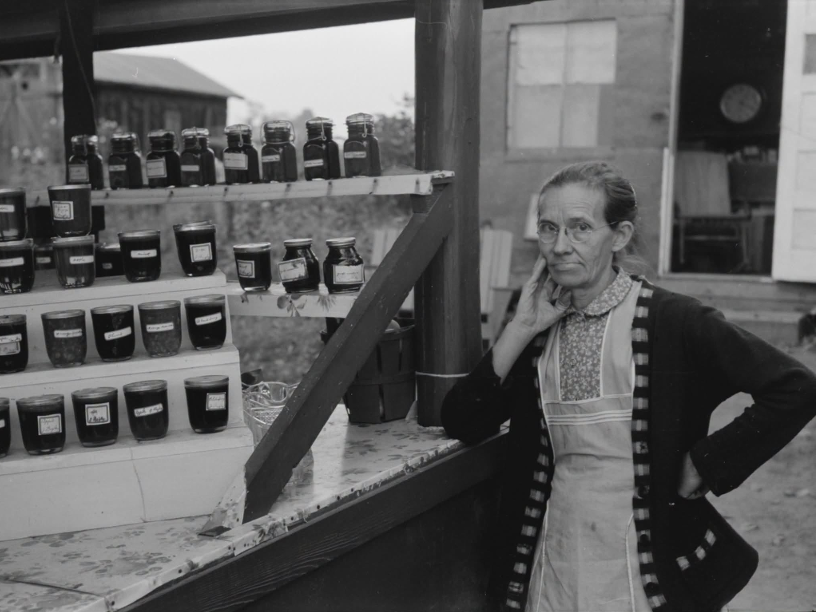
A farmer selling homemade jelly near Northampton, MA, October 1939. Photo: Russell Lee (1903-1986). Gelatin silver print, Courtesy of the Library of Congress, Farm Security Administration - Office of War Information Photograph Collection
By Hetty Startup
This is the third article in a five-part series on the creative economy and social welfare. Read Part 1 here and Part 2 here.
By the time the Social Security Act was passed in 1935, this region’s poor farms and poorhouses — the subject of the first article in this series — had been discontinued or transformed into very different types of institutions and organizations. Deerfield’s fascinating craft-revival experiment, the subject of the second article, had passed its prime, though it has enjoyed a renaissance since the early 2000s.
During the Great Depression, President Franklin D. Roosevelt’s administration did a number of things to encourage cultural uplift and employment, especially in the construction trades. These efforts helped dig the country out of the prevailing economic turmoil. Roosevelt’s federal administrators hoped to reduce rural poverty and preserve traditional craft skills, and in this way, residents’ ambitions in places like Deerfield lived on into the 1930s.
Federal, state, and municipal interventions addressed a range of complex social, economic, and cultural issues. The interwar years — the period between World War I and World War II — were characterized by comprehensive reform and change, with the federal government and its New Deal programs providing a kind of state patronage.
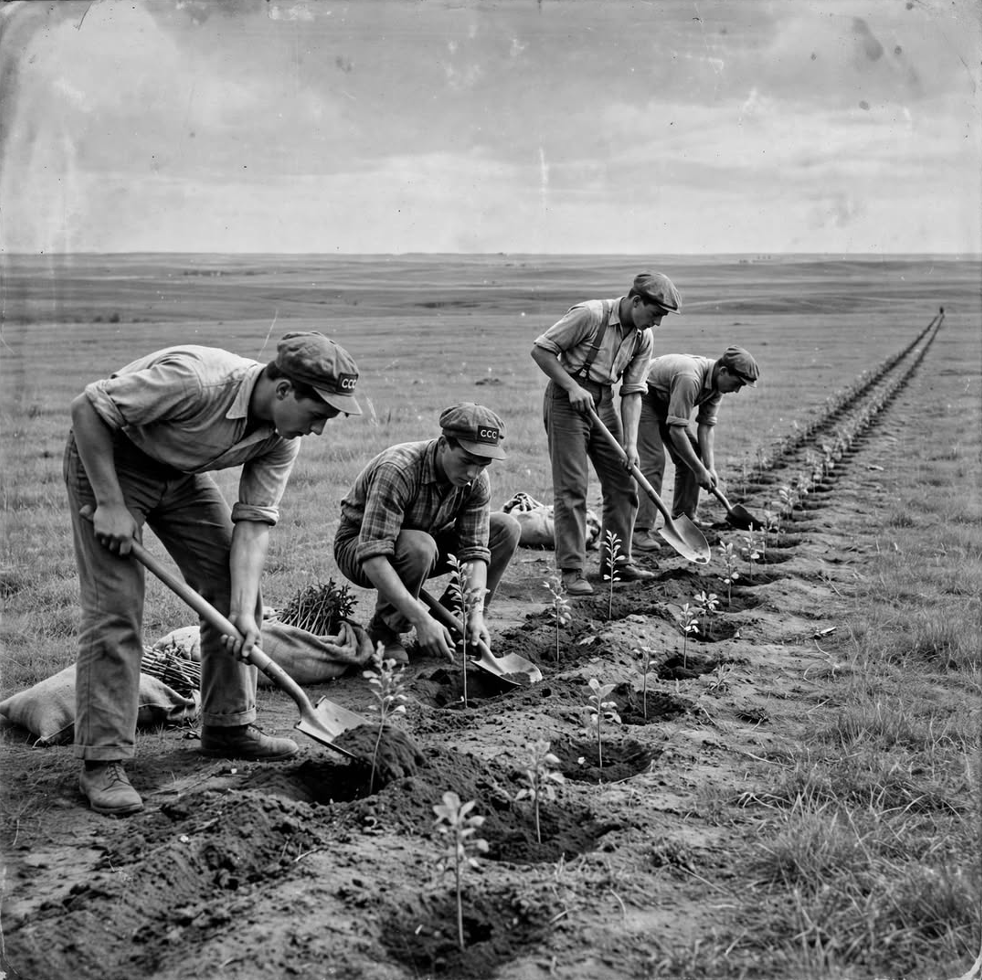
Roosevelt first used the phrase “New Deal” in 1932, in his speech accepting the Democratic presidential nomination. During his first 100 days in office in 1933, the government focused on emergency relief, banking reform, and economic stabilization. The Social Security Act and labor protection laws followed in the mid-1930s. The New Deal also created organizations and programs such as the Civilian Conservation Corps (CCC) in 1933, the Works Progress Administration (WPA) in 1935, and the Farm Security Administration in 1937.
I’ve been interested in the work of the CCC since the late 1980s, when I started working for a cultural resource management firm in Rhode Island and we were often listing or recording its buildings and structures. Its impact has been lasting, and it is significant that the CCC embraced design ideals that fused the Arts and Crafts and Colonial Revival movements. But its work was also broadly environmental.
One New Deal project, the Great Plains Shelterbelt Project, attempted to address the Dust Bowl directly. Launched in 1934, it created a living wall of trees, planted in windbreak belts that ran across six states, from North Dakota to the Texas Panhandle. The shelterbelts helped keep the winds that swept the Great Plains during the Dust Bowl years from stripping away the topsoil. The federal government paid for the trees, and much of the planting was done by workers on federal relief programs. Farmers donated strips of their land for the shelterbelts and watched the saplings thicken into real forests over the years. By the time the project wound down in 1942, some 220 million trees had been planted in more than 18,000 miles of windbreaks.
Roosevelt’s inner circle in his first term included his wife, Eleanor Roosevelt, who, like her female compatriots in Deerfield, was a devotee of the Arts and Crafts movement. The WPA featured the arts as a whole, beginning in 1935. Under this umbrella, the WPA created projects supporting the nation’s writers, musicians, artists, and performing arts workers.
I’ll share a couple of anecdotes about FDR, as together they remind us that progress is never an even trajectory.
First, in 1937, Roosevelt proclaimed Oct. 12 as Columbus Day, honoring the Italian explorer as a hero. The proclamation proved very controversial over time, because the people Columbus labeled “Indians” experienced “violence, murder and enslavement” at the hands of his followers, along with “forced conversion … to Christianity and … the introduction of several new diseases that would have dramatic, long-term effects.” One of the first things Columbus did in the so-called New World was to seize six Indigenous Lucayan Taíno people, believing they would make good servants. Today, many states and communities observe Indigenous Peoples Day instead of, or alongside, Columbus Day.
The second anecdote is happier. In 1935, Roosevelt made an excellent hiring choice when he put Harry Hopkins in charge of the WPA. Hopkins had arrived in Washington in 1933 to run federal relief efforts, after a career as a social worker in New York City that began in its settlement houses. I like the through-lines in this series that tie some of its themes together.
According to the Living New Deal project, “in January 1941, FDR sent [Hopkins] to England as his personal envoy to assess whether Great Britain could survive the Nazi onslaught. Hopkins’ first meeting with Winston Churchill sparked a friendship and strengthened the U.S.-British relationship that helped the allies win the war.”
The WPA helped create the Historical Records Survey (1935-1943), which hired people to index archives across the country, sometimes partnering with organizations such as the Daughters of the American Revolution or agencies such as the National Archives in Washington to complete the inventories. The Trump administration has also threatened the National Archives.
In Massachusetts, the survey hired people to inventory church records and a wide range of county documents. These researchers, new to this kind of work, also compiled lists of historical portraits, engravings, and prints. Overall, the goal was to provide meaningful employment in hard times while supporting the arts.
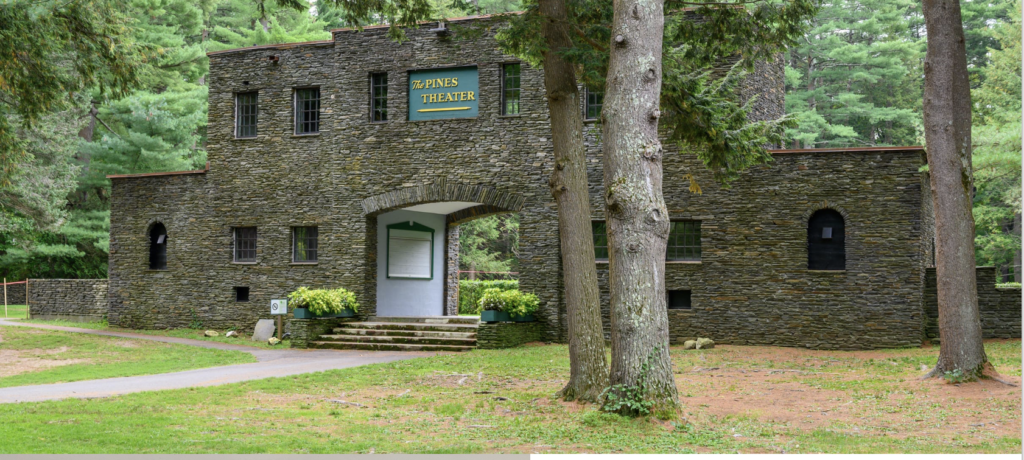
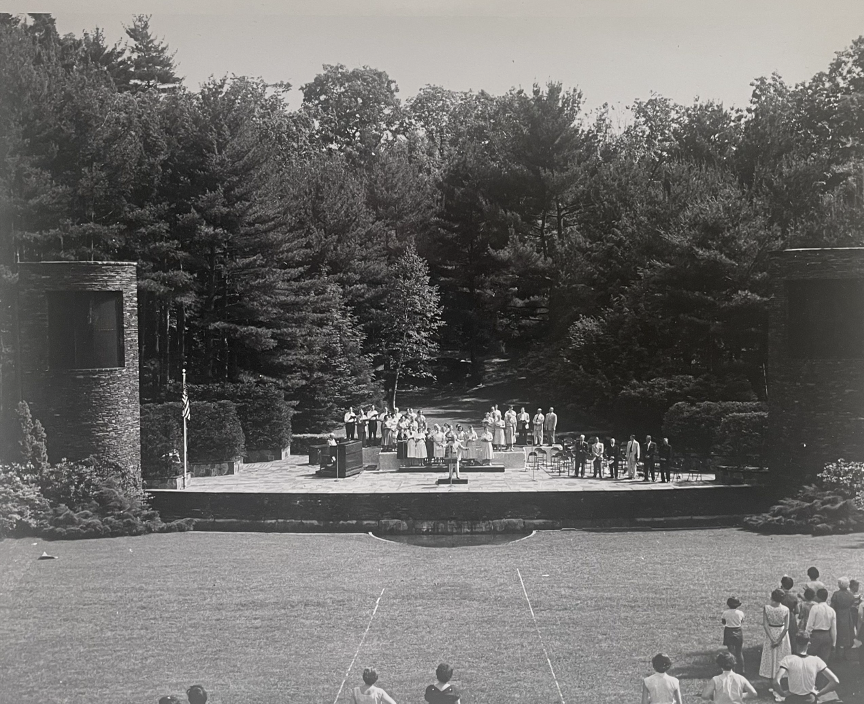
New Deal cultural uplift is also evident at the Northampton post office, where artist Alfred D. Crimi painted a mural in 1940, and at the Pines Theater at Look Park in Florence, built with WPA labor.
In Sunderland, the WPA built in 1937, the Sunderland Hatchery, now one of five hatcheries in the state operated by MassWildlife. It continues to raise brook, brown, and rainbow trout to provide recreational fishing opportunities in the area.
The WPA built the Green River Swimming and Recreation Area in Greenfield. The CCC built in the late `1930’s, a system of cabins in Charlemont and Savoy along the Mohawk Trail, which opened in 1914 and is considered New England’s first scenic auto route. The Savoy cabins had wavy clapboard exteriors painted dark brown, with fieldstone chimneys and flagstone pathways.
The complex in Mohawk Trail State Forest in Charlemont, still located by the Cold River, includes cabins, an administration building (see photo below) intended as a residence for a ranger and the ranger’s family, and other facilities.
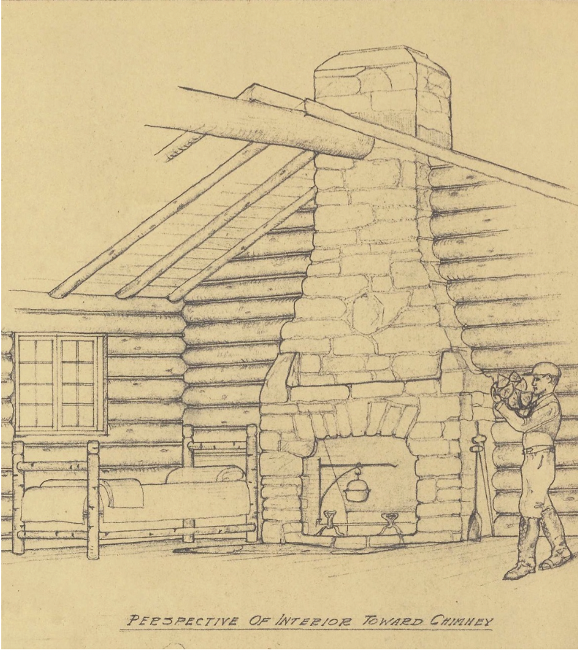
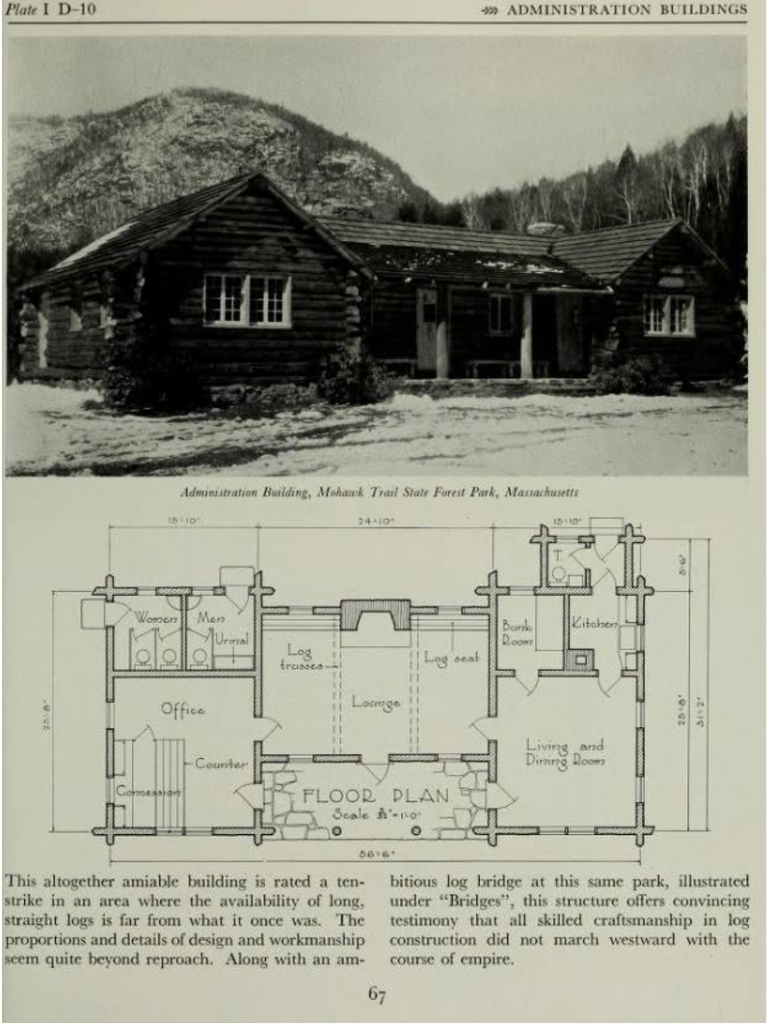
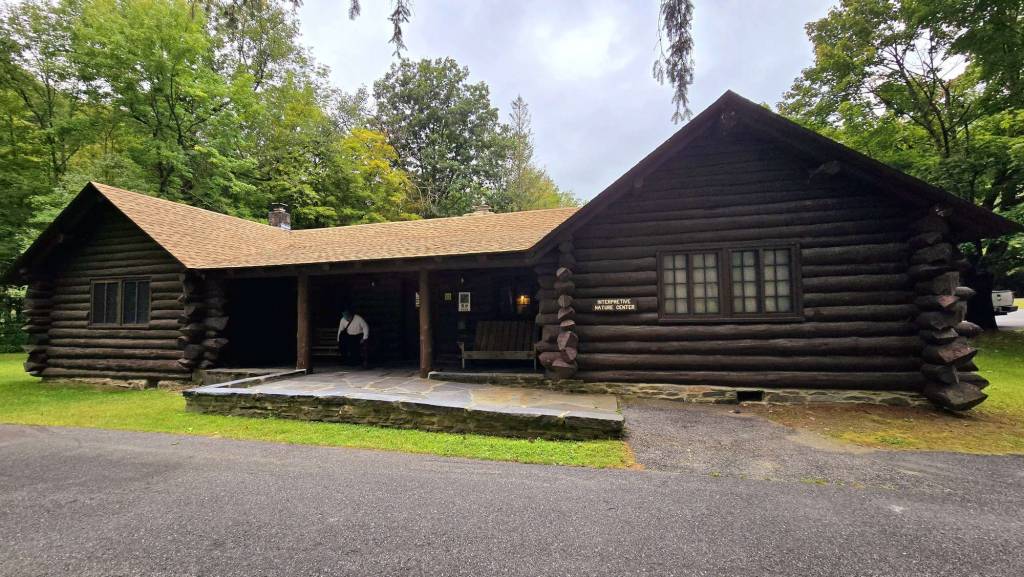
The CCC’s Camp SP-6 built the complex in 1936-37 from locally sourced logs. The corps also built roads, open-air fireplaces, and campgrounds. Inside, the administration building has a large fieldstone fireplace; outside are stylish stone steps. The idea was that the building could serve as both a visitor center and a ranger residence if needed. Look up inside the main room and you’ll see large wooden rafters defining the space, which now houses a nature museum. In 1938 the building was cited in the landmark survey Park and Recreation Structures as an excellent example of rustic park architecture for its time.
Another WPA project caught my attention for different reasons, even though it’s not a local example. This project has had very specific outcomes related to reparative justice. A shortage of white male workers in Norfolk, Virginia, during the Depression led to a new botanical garden planned for the city being created by about 220 African American women and 20 men. They cleared trees and brush, working in all kinds of weather. By March 1939, the women had created a new public garden filled with incredible azaleas, along with a much-needed dike for nearby Lake Whitehurst. The site is close to Norfolk’s airport.
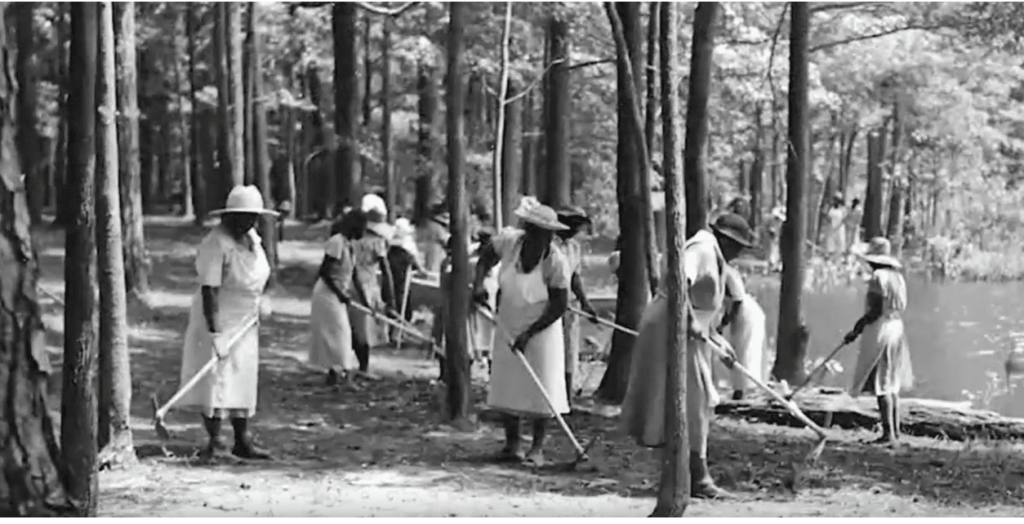
Pay for the women was minimal and the work was backbreaking, but employment by the WPA put food on the table when jobs were hard to come by, especially in the South, where racism persisted like an angry stain on the country’s soul. Because of segregation, the women who made the garden were not allowed to visit it once it was completed.
In an act of reparation, a memorial garden within what is now Norfolk Botanical Garden offers a place to remember and honor the women who created it.