
My Summer Wanderings #6: Harvest Time in North Amherst, Ashfield, Sunderland, and Northampton
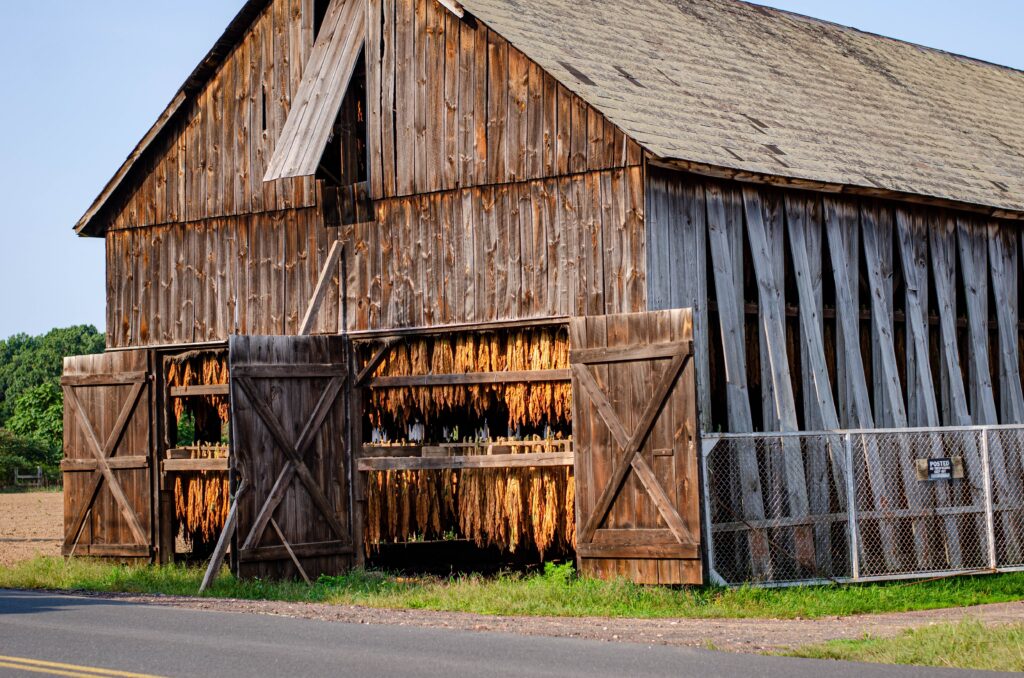
Ct. Valley tobacco barn. Photo: Sarah Greenleaf c/o Shutterstock
Find previous “Summer Wanderings” columns here.
The last of my summer wanderings series coincides with the end-of-summer season and is possibly my favorite time of the year. It goes on until the first killing frosts. We’re seeing the pivot back to school. Some great sunsets. Garden centers already have mums for sale. Broad-leaf tobacco leaves are now hanging in their distinctive barns. Having not grown up with these barns, they are endlessly fascinating to me. There are also ice cream and pie-eating contests, old home days, thundershowers, and, of course, harvests.
Harvesttime
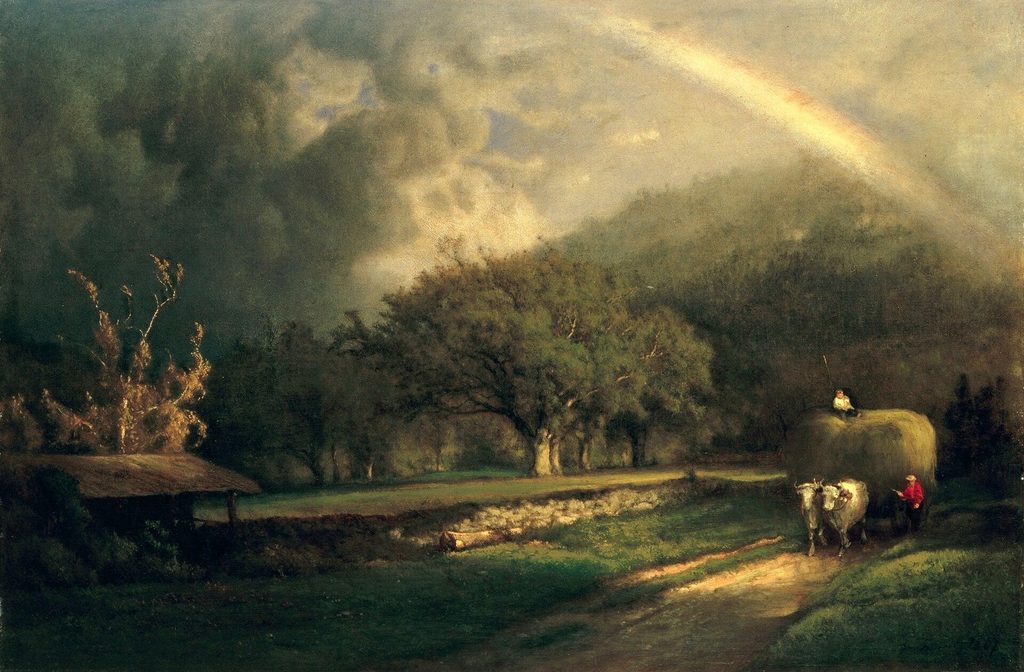
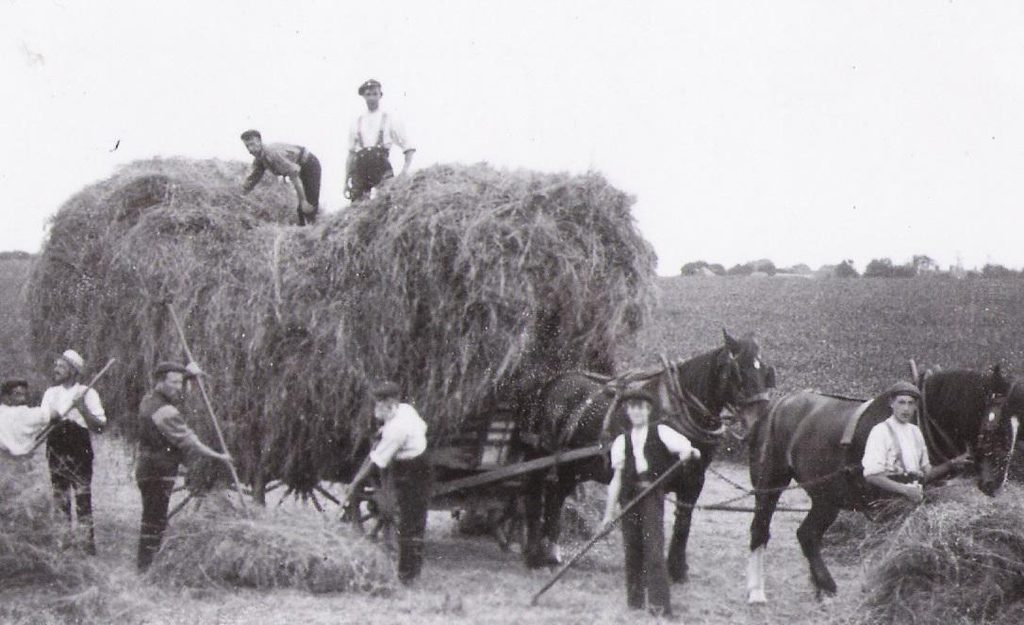
The corn is high, there are plums, more tomatoes than we could even preserve and can for the winter, bright hibiscus and gladiola flowers; these sights are common, welcome sights at markets and in people’s gardens. City kid that I am, I confess I still romanticize this season of harvesting. The nearest we came to it when I was young–apart from one summer working on a farm – was playing as children on haystacks in stubble fields as the light began to fail at suppertime. In reality, and for generations, fields and meadows in this valley are mown several times in succession. Still, what endures for me is a seam of snapshots- family gatherings and picnics outdoors, colorful and varied fruit and vegetables, all in a sunflower-golden haze of memory.
North Amherst Pollinator Gardens
At the heart of these wanderings has been a tacit plea to notice and pay attention to landscapes and the historic built environment, especially for the rich stories they hold in this part of our state. Noticing demands a life lived in three dimensions, not on screens. As Jeanette Winterson, the writer, has said recently, “Smart phones are great, but they are not life.” An immediate joy right here in town comes from two delightful pollinator gardens maturing by the North Amherst Fire and UMass Police stations.
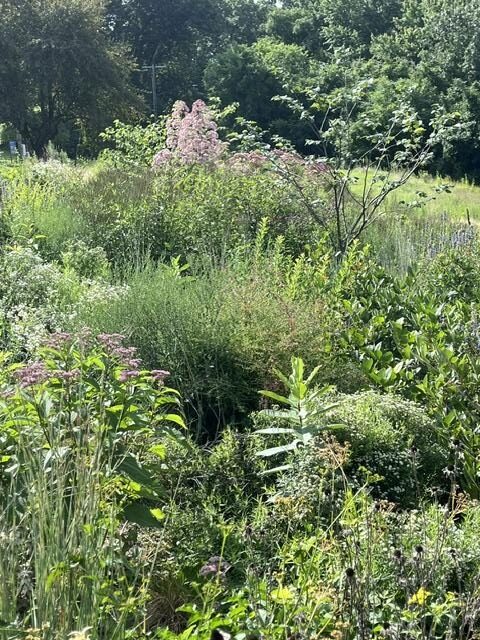
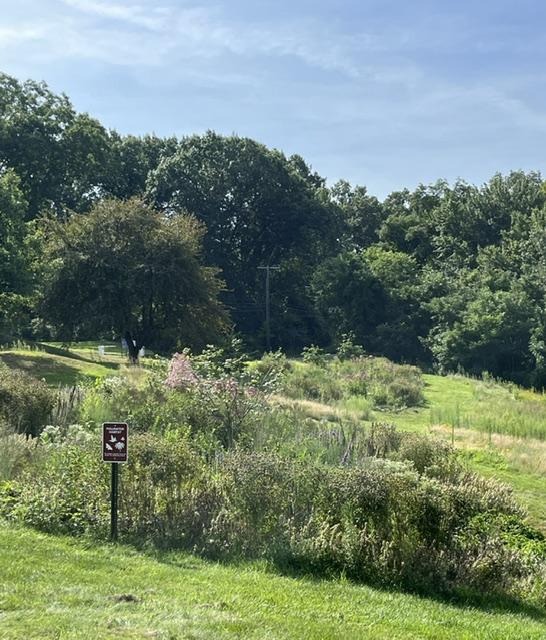
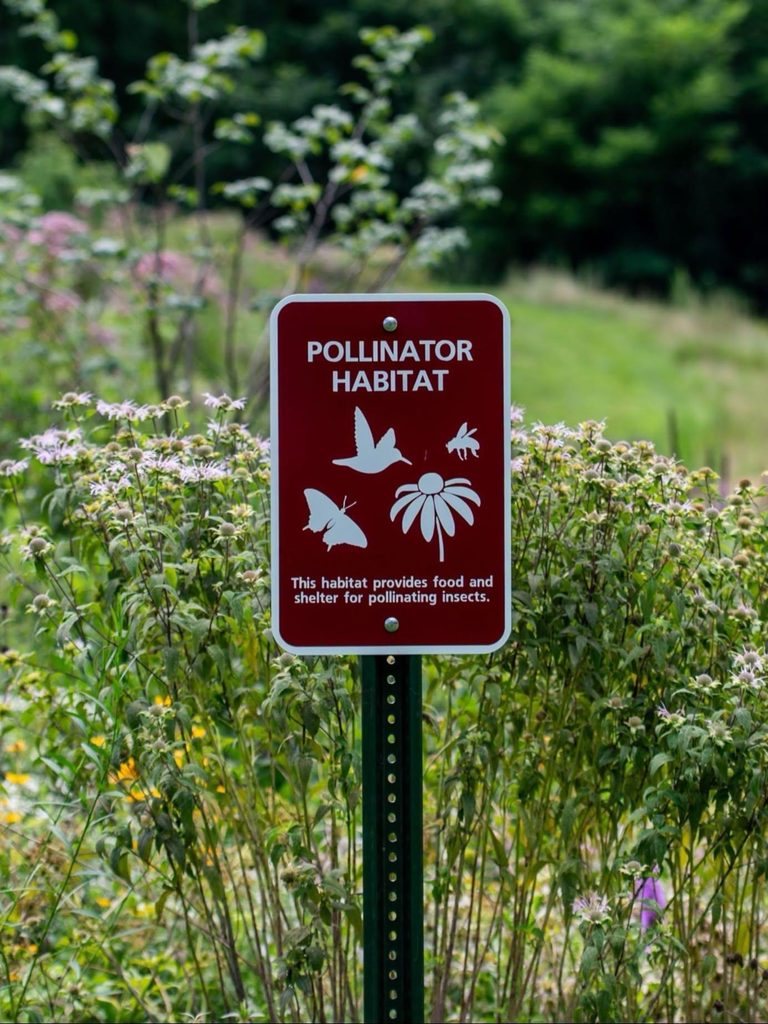
Two pollinator bioblitz weekends have been hosted by the UMass Bee Campus Committee, the Fernald Entomology Club and the staff of the UMass Grounds – Landscape Department. They have documented the presence of pollinators using nets to catch and release the insects. Volunteers also used their phones to submit images to iNaturalist, where their reports will be added to the UMass pollinator-monitoring project. These snapshots will be part of the data that scientists at UMass can use to mitigate the global biodiversity crisis.
Before it was a research powerhouse, UMass started as the Massachusetts Agricultural College (1863), and its mission was to improve how the state grew and understood food – or rather, what today we would call food systems. Pollinator gardens are one of many ways the university is working to re-imagine the campus landscape. These methods and traditions of sustainable growth will be passed forward. The goal is to support pollinators and wildlife, and demonstrate that these gardens can reduce runoff, cut lawn maintenance, and create more sustainable landscapes across the state.
Historic Architecture
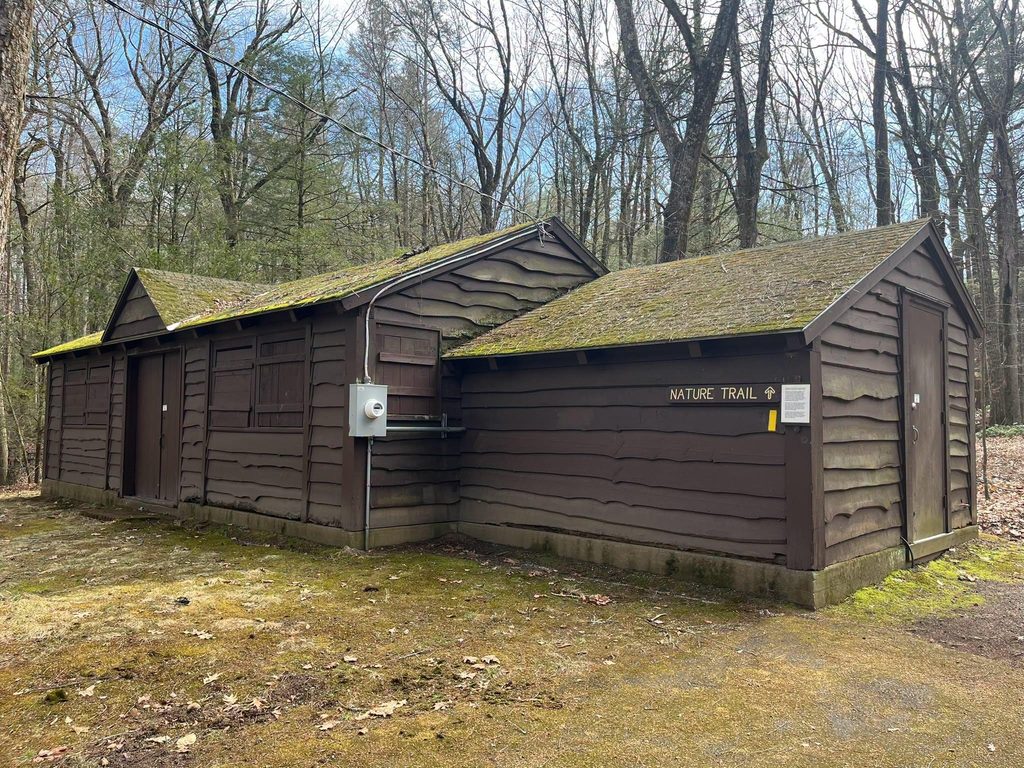
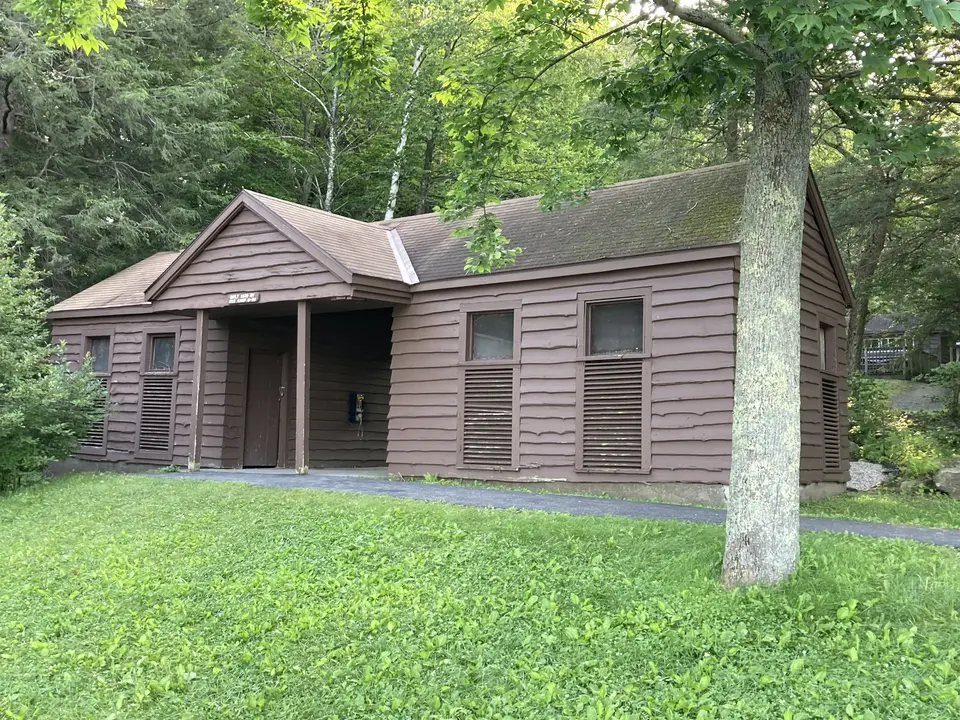
I’ve relished opportunities this summer to zoom in close to old buildings and even go inside some historic ones, exploring the architectural features, artifacts, and furnishings of historic structures. I am thinking here of specifics such as the textures and materials we see with historic houses, notably the stylistic trend at the turn of the 19th century of wavy-edge or live-edge clapboards featuring “a natural, irregular bottom edge that follows the organic curve of the tree instead of a straight cut wooden sheathing on some homes in our region. My favorite example is on a summer house (now lived in year-round) that looks a little like an alpine chalet at Ashfield Lake, seen here in winter. Both the home and its free-standing garage have wonderful wavy-edge siding on their exterior walls.
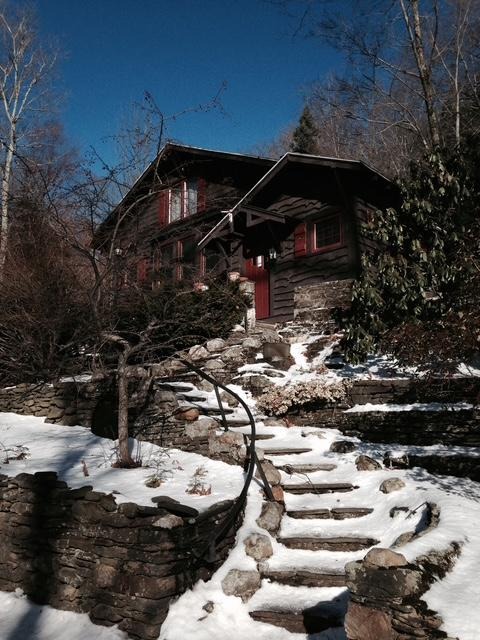
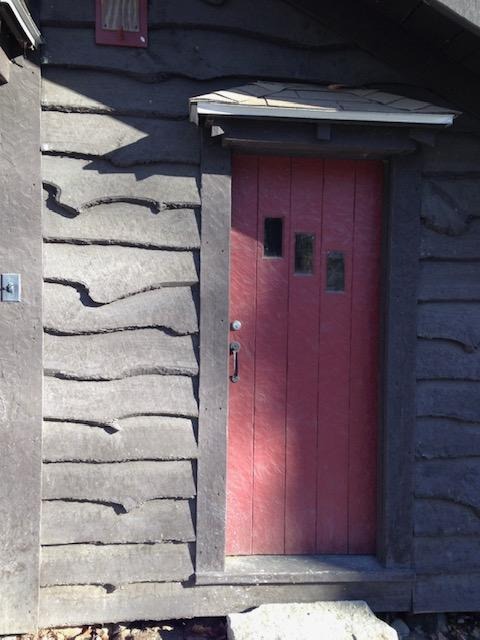
House on Buckland Road, Ashfield, MA. Photos by Hetty Startup, January 2014
The same trends can be observed a little later, in the 1930s, in Civilian Conservation Corps buildings all across New England. The CCC was a federal work program set up during the depression to conserve natural resources and employ young men in gainful employment. Below are two rustic nature trail huts at (left) Mount Tom State Reservation in Holyoke, MA, and (right) Tolland State Forest, Otis, MA both built by the CCC from designs created in Washington, D.C.
I’m the kind of person who enjoys meeting people in their lived surroundings, their gardens, kitchens, living rooms or other favorite haunts or havens, surrounded by things that they value that have stood the test of time. What we choose to preserve and protect—as individuals, as families and as communities —is usually more meaningful to me than newly acquired things or new buildings that don’t yet have evocative visual or sensory resonance. The patina of age (as well as warmth and charm) is a thing…it’s what relators talk about when selling or helping people buy older homes. Homes that are historic can have a lived-in feel (as long as they are carefully stewarded), like a favorite coat or jacket, something that is less true of new ones. This preference for the tried and true is not new; it had currency in earlier eras as well. Here is a namesake of mine, Henrietta Garnett, talking about Charleston, a house she knew well while growing up that was the home of artists Vanessa Bell and Duncan Grant in Sussex, England.
“Charleston had the most powerful identity of any place that I had known. It reeked of itself: of turpentine and toast, of apples, damp walls and garden flowers. The atmosphere was one of liberty and order, and of a strength which came from its being a house in which the inhabitants were happy…”
Vanessa Bell was Henrietta’s great-aunt and the writer Virginia Woolf’s beloved sister. Henrietta’s mother, Angelica, was Vanessa’s daughter and the niece of Virginia Woolf.
Having access to significant historic structures (and getting to go inside a selection of them) is also a privilege, even those from a more recent past that we would now categorize as modern. This realization comes home to me time and again, especially when I focus on specific themes in American material culture.
A couple of weekends ago I attended a lecture and demonstration on broom corn given by Faith Deering for the Swampfield Historical Society at the Sunderland Public Library. (Swampfield was Sunderland’s original name.) We learned about the history of growing broom corn in the Connecticut River Valley, along with innovations in broom design by people like the Shakers. Faith mentioned that broom corn seeds were likely brought to this country by enslaved Africans and then popularized by people like Benjamin Franklin. In North Hadley, Levi Dickinson was probably the first person to grow it in the Valley, making a broom from the “panticles” (that are the top of the stalks) for his wife, Bethiah or Bertha Fuller Dickinson. One delightful aspect of the talk was reviewing the many idioms involving the word ‘broom’ in American-English speech (such as to ‘sweep something under the rug’ or ‘a new broom sweeps clean.’) After the talk, the packed audience members a) practiced sweeping with a variety of brooms with different design features, b) compared organic broom to those with plastic brushes and c) handled brooms from around the world in Faith’s broom museum. And there were little packets of seed corn to take home with us. This was one of her “Whisked Away” workshops that often sell out. Swampfield Historical Society’s talk will be followed up by a broom-making workshop hosted with Warner Farm sometime in the fall. I was whisked away by how informative and fun the program was!
Faith Deering is a former museum educator at Historic Deerfield, where she worked for 15 years at their History Workshop, a program and exhibit space there. I think she is a treasure in our valley, well-known for her expertise in early New England material culture, historical crafts, and the connections between the natural world and human history. Before coming to Deerfield, she was an entomologist at the Smithsonian’s National Museum of Natural History. In her career, this professional background has influenced her unique programming about the role that insects have historically played in people’s lives: honeybees (for wax and honey), silkworms (that have a deep history in the Connecticut river valley where folks used to raise silkworms and/or make silk) and cochineal dye (made from scale insects.)insert images here of the workshop]
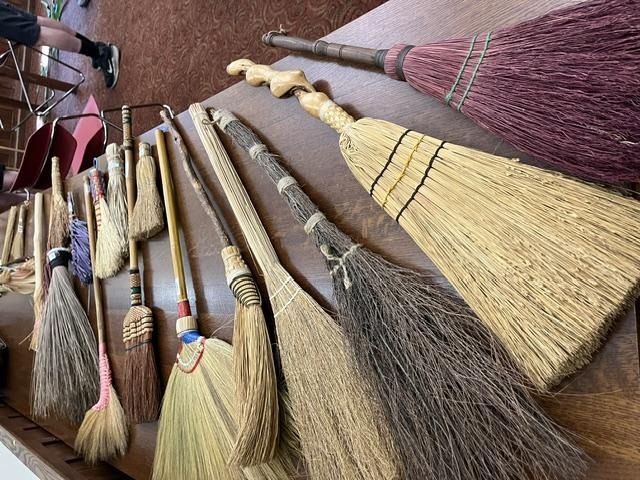
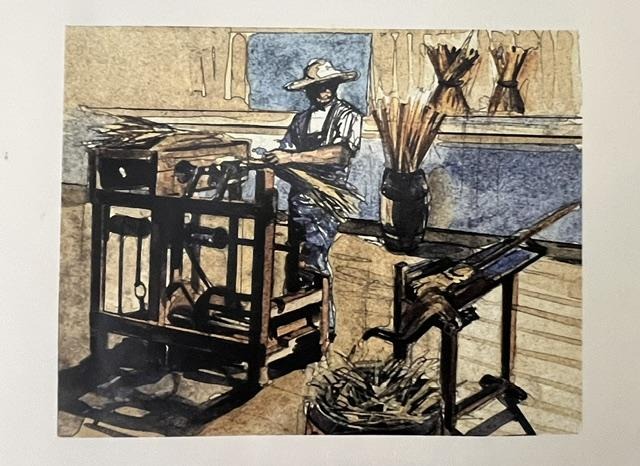
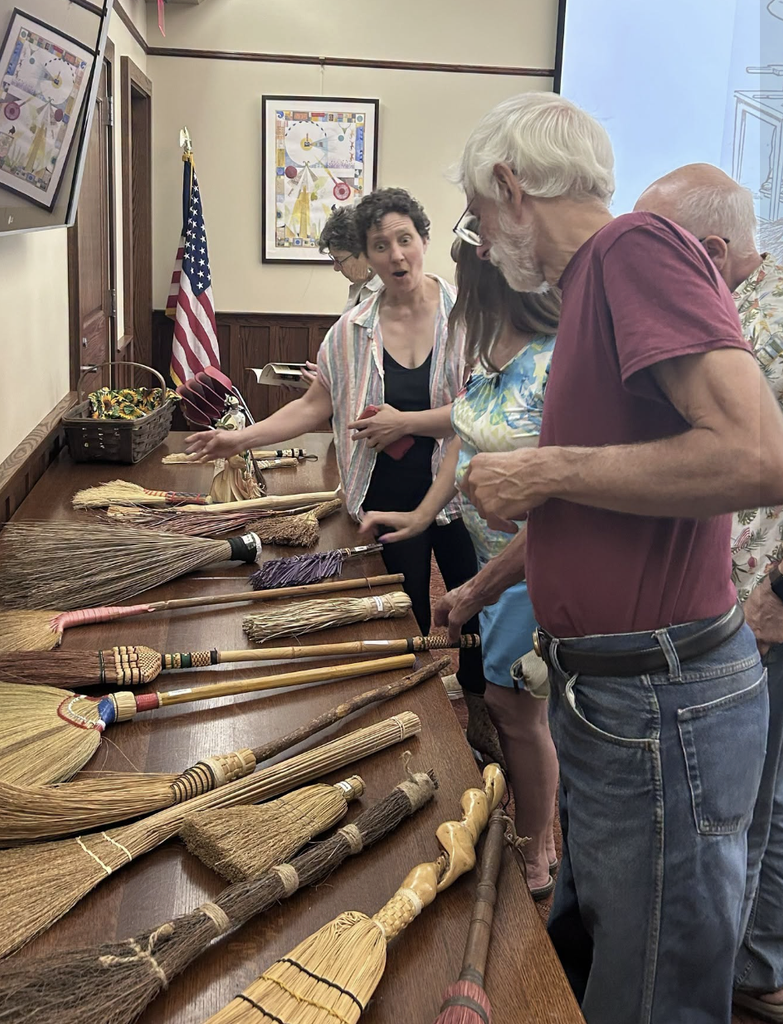
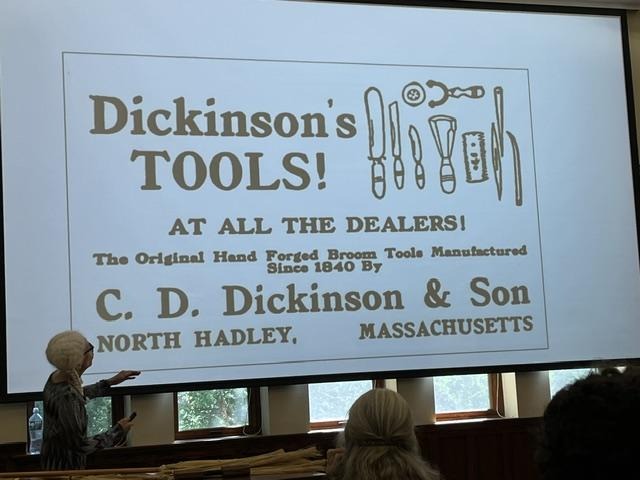
Photo Right: Courtesy of Swampfield Historical Society.
Photo Left: Faith Deering lecturing about the history of broom corn in Deerfield, Sunderland, and N. Hadley. Photo: Hetty Startup
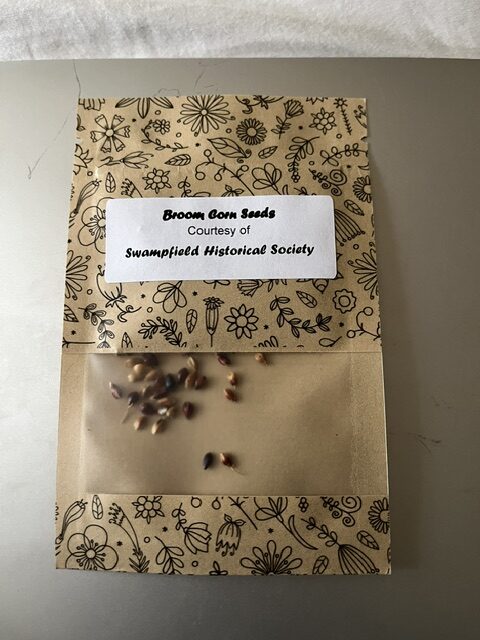
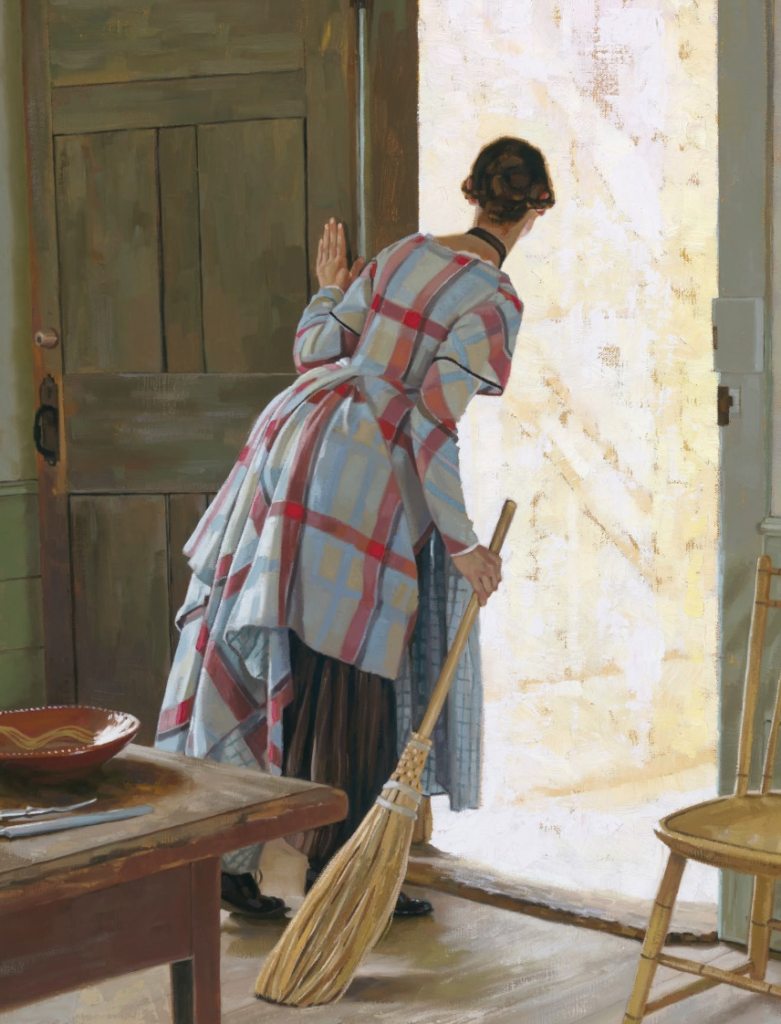
R. Michelson Galleries
I’m finishing my summer wanderings with a side trip to Northampton, to a favorite haunt of mine: R. Michelson’s galleries at 132 Main Street, housed in a grand 1913 Neo-Classical Revival bank building that was once Northampton National Bank. (There is even a small gallery space in what used to be the bank’s safe and vault.) Michelson’s venue is the largest commercial art gallery in western MA. In 2024, they commissioned designer, Meghan Zaremba, and muralists Kim Carlino and Ramiro Davaro-Comas to paint a delightful mural on the rear wall of the building by the town’s parking garage and Thornes Marketplace.
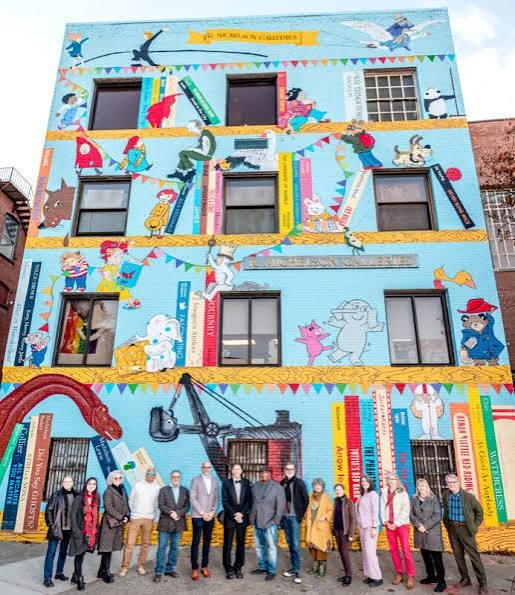
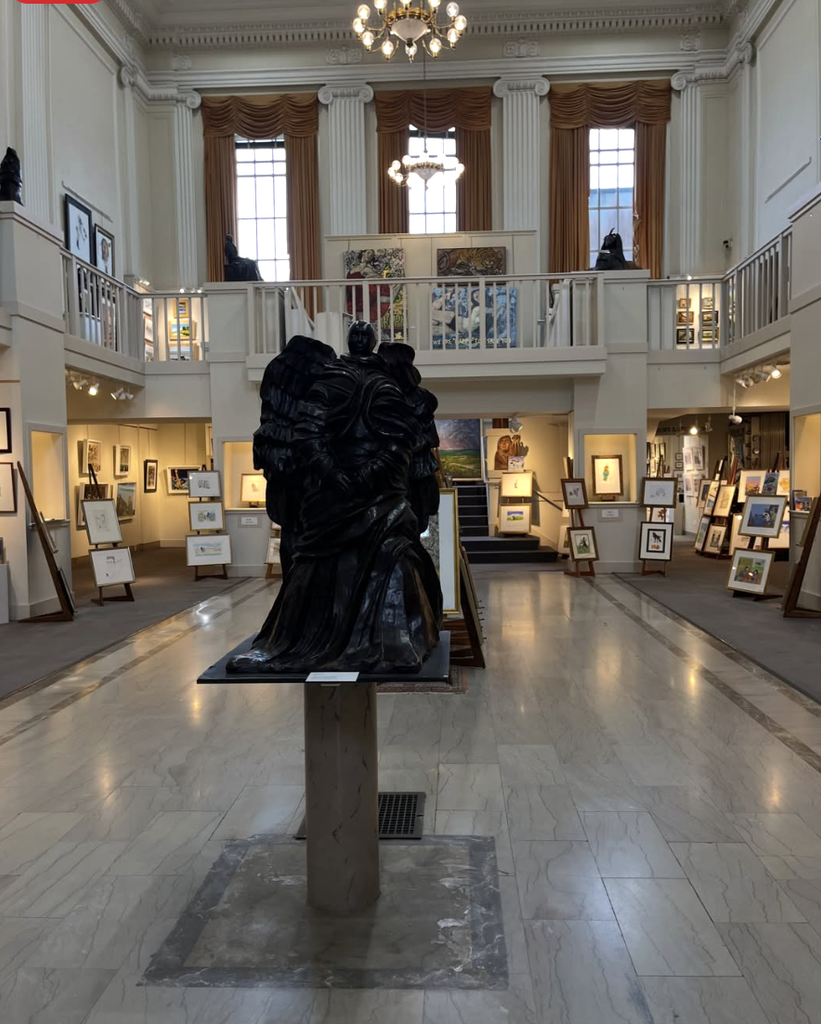
The current show is a harvest of sorts: a gathering of wonderful children’s book illustrators, with original art and the actual books beside them. The works of Bryan Collier (Maya’s Song), Jerry Pinkney (Roll of Thunder, Hear My Cry), Raúl Colón (Baseball Is), and Micha Archer (Daniel Finds a Poem) are among those currently featured.

It is a moving show that reveals the amazing talent of artists working in our area and foregrounds BIPOC illustrators. Michelson’s collection of dramatic sculpture by Northampton artist Leonard Baskin (1922-2000) is also a permanent part of the exhibition space. Like Faith Deering, Michelson is a treasure in our midst who has supported the arts for many decades. Michelson was born in 1953 in Brooklyn, NY, and is the son of a small hardware store owner. R. Michelson’Galleries began in humble circumstances in a “hippie-era mall” corridor. I first met Rich reading his own poetry in Ashfield at St. John’s Episcopal Church. The church jointly hosted a poetry series every year with Wellspring House, an artist and writers retreat center there. There is more I could say, but just go see his gallery!
Conclusion
This series may feel meandering or even random to some readers. Because I write about the past, I think some may consider me nostalgic, but while wandering, I have been gathering up stories and insights into the very many creative and contemporary qualities of our Valley, building a large and varied bouquet of images and insights. Am I inventing a past of my own? The British historian Eric Hobsbawm, who taught historians that I worked with in the UK, argued in The Invention of Tradition that people invent the past they want for their own purposes and that the real past (or pasts) were quite different. I don’t think of this series as evoking something mythical, although it is not everyone’s past for sure. My “bouquet” or harvest of wanderings has now been gathered up in my arms, reflected in a splendid arrangement of cut flowers I look at as I write this article from Sunset Farm in Amherst; its beauty will suffice as an allegory of my historical explorations—for now.
The Indy has also posted about another UMass pollinator garden here https://www.amherstindy.org/2026/08/28/new-umass-pollinator-garden-takes-root-at-400-venture-way/