
Opinion: DPW Building Committee Needs to Change How It Conducts Its Business
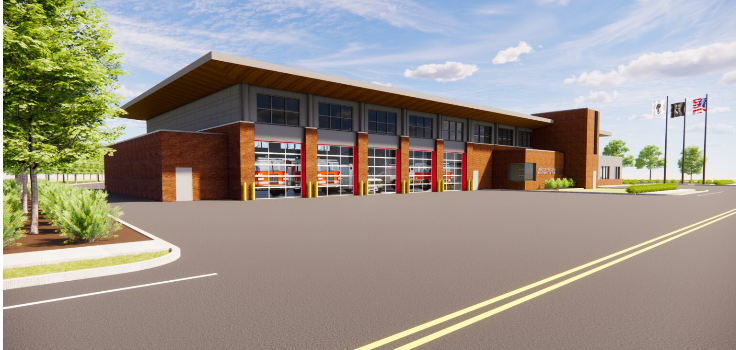
Architect's rendering of proposed combined fire/DPW complex in Abington, MA. Phased construction began in 2024 with project completion anticipated in 2027. Photo: Town of Abington

On Wednesday, May 13, 2026, I drove to downtown Amherst in the middle of the afternoon to attend a meeting of the committee overseeing the construction of the town’s new DPW facility — the DPW Building Committee (DPWBC). There was essentially one agenda item: reviewing the evaluation criteria that will be used to select a designer that the committee plans to hire this summer. The substance of the discussion was not riveting, as it involved minor tweaks to a plan created by non-voting committee member Bob Peirent, the town’s capital projects manager. Because the materials being discussed were not made available to the public, listening in as a member of the public was largely a matter of trying to extrapolate what was going on from people talking inside baseball. That is a problem far from unique to this committee, but one that remains unsolved despite persistent protest. The most interesting parts of the meeting, though, were how it was conducted and what wasn’t being discussed.
The Room Where It Happens
You may be familiar with the first-floor meeting room at Town Hall, as it is where early voting takes place. It is dominated by a large table that was occupied that afternoon by nine people who participated in the meeting: the seven voting committee members, Peirent, and Assistant Superintendent of Public Works Amy Rusiecki, who is not a committee member. Six members of the public sat in chairs along the walls, including Town Councilor Lynn Griesemer, Assistant Town Manager Dave Ziomek, and Planning Board Chair Doug Marshall. For a midweek afternoon in-person meeting, that’s quite the crowd, indicating the high level of interest in this project. This raises a question that’s been raised before: Why aren’t these meetings hybrid and recorded? Both committee and audience members raised this issue, to which Chair Christine Gray-Mullen responded that it might change, but only after a designer is selected.
The absence of a camera at DPWBC meetings stands in stark contrast to other town boards and committees of a similar nature. The building committees for both the school and the library conduct their meetings on Zoom and make recordings available shortly afterward. The DPW building project is also a multimillion-dollar undertaking that has been languishing for decades and will have townwide consequences. Surely the chair should be able to move the meetings one floor up to the Town Room, where the equipment exists to make these decision-making sessions more accessible to the public.
Who Gets to Participate?
The planned facility is critical not only to the safe and effective functioning of the public works department but also to the workers who will occupy it. Unlike the school building committee, which includes two school employees, the director of school facilities, and the superintendent of schools, the DPWBC has only the superintendent of public works. One month ago, the Town Council voted to ask the town manager — who is responsible for appointing committee members — to add a DPW worker to the committee, but he has yet to do so. Having input from someone who actually works in the building does not seem like too much to ask.
Meanwhile, at this week’s meeting, the chair gave a non-committee member, Rusiecki, a literal seat at the table and permitted her to fully participate in the discussion. To be clear, I have no issue with the assistant superintendent, but I do take issue with meeting rules not being applied equally. Everyone else present who was not an appointed committee member was limited to three minutes of public comment at the end. There is already representation of DPW’s top leadership on the committee, but no representation of the workers. Either the superintendent or the assistant superintendent should be adequate representation of administrative leadership; having both present and participating is contrary to the committee’s charge and difficult to justify, particularly when workers have no seat at the table.
What’s Not Being Discussed Publicly
The main questions about this project that Amherst residents have raised many times do not appear to be on upcoming agendas — at the DPWBC or elsewhere. Namely: What is the intended location, or locations, of the new DPW facility? And can the fire station be included in this planning? There are conflicting signals from the committee and the Town Council on this point, and from what I could gather during the meeting, the documents developed to seek a designer may or may not specify a firmly decided location.
Whatever building emerges from this process will undoubtedly be very expensive and will need to last a long time. The chances of a fire station project moving forward independently after the DPW project seem remote at best, and it is concerning that there has been no formal, public discussion of the possibility of a combined facility. The people of Amherst deserve to have this discussion conducted thoroughly and publicly — before decisions are locked in.
Town leadership should realize by now that the usual M.O. of reaching final decisions out of sight, without complete vetting and public buy-in, does not lead to better outcomes or build confidence and solid support. Both the fire station and the DPW building have waited more than long enough. Conducting difficult discussions openly and early would be a good start toward a successful outcome.
Maria Kopicki is a resident of Amherst’s District 5
Maria –
Thank you for this excellent letter.
If the Fire Station is built at a later date then this will cost Amherst taxpayers anywhere from $10M to $15M more….this translates to $1,000 to $1,500 per home without factoring in interest rates. The Fire Station will be a small building of 20,000 square feet to 25,000 square feet. By comparison, the DPW Center may end up being 60,000 to 80,000 square feet. It makes no sense to not build the Fire House now given its small size. Easton MA and Abington MA are completing construction of their co-located DPW/Fire Centers because they have stated that building separately will cost millions more .
Terry