
Opinion: Amherst Should Not Have to Trade Wetland Protections for Housing
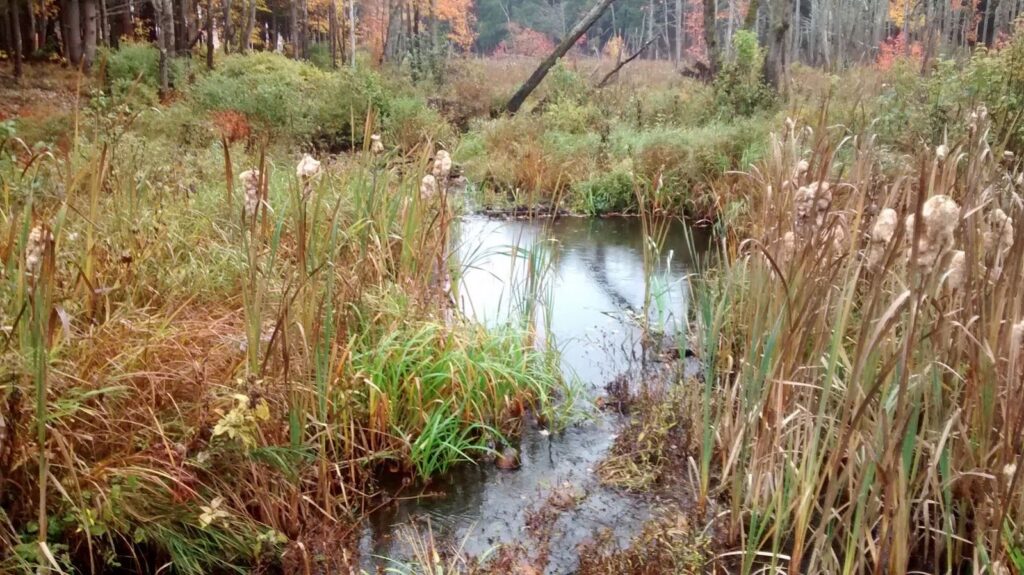
Wetlands in Amherst, MA. Photo: amherstma.gov

The Mass Ready Act is being promoted as a major environmental and climate-resilience bill, and much of it appears to merit support. The legislation authorizes billions in environmental funding and includes investments related to drinking water, flood resilience, drought preparation, parks, trails, and the removal of PFAS, commonly known as “forever chemicals.”
But two late-added amendments, Amendments 264 and 267, raise serious concerns for communities like Amherst. According to the Massachusetts Association of Conservation Commissions, these amendments would restrict or eliminate the use of local wetland and wastewater bylaws for Priority Housing projects and would penalize municipalities with local wetlands and water-protection bylaws by making them ineligible for a new funding “preference modifier.”
That should alarm Amherst residents, town officials, conservation commissioners, planners, and legislators alike.
The need for affordable housing is real, and the town has spent years grappling with how to meet that need. But housing policy cannot be treated as a reason to override local knowledge, local environmental protections, or the role of municipal boards charged with protecting wetlands, drinking water, stormwater systems, and public safety.
This issue is not theoretical for Amherst. Over the years, multiple housing development proposals have raised serious local questions about wetlands, stormwater, floodplain impacts, wastewater capacity, drinking water protection, traffic, habitat, and conservation review. In those cases, local review by Amherst’s boards, commissions, staff, and residents have helped identify environmentally sensitive areas that might otherwise have been overlooked or underestimated.
That is exactly why local review matters.
These processes are not simply procedural hurdles. They are how a community applies site-specific knowledge to real land-use decisions. Amherst’s wetlands, streams, vernal pools, flood-prone areas, soils, aquifers, and wildlife corridors vary from parcel to parcel. A statewide housing mandate cannot substitute for careful local analysis of whether a particular site can safely and responsibly support development.
Local bylaws and conservation review help ensure that critical natural resources are identified before damage is done, not after. They protect residents from avoidable flooding and infrastructure failures. They protect downstream water quality. They protect habitat and open space that cannot be recreated once lost. And they help make sure that housing, including affordable housing, is built in places where it can remain safe, healthy, and sustainable over the long term.
Local wetlands bylaws exist because the state Wetlands Protection Act establishes a floor, not necessarily a ceiling.
Municipalities adopt stronger local protections when local conditions warrant them. Penalizing towns for doing so sends exactly the wrong message at a time when climate change is increasing heavy rainfall, flooding, erosion, and infrastructure stress.
The contradiction is striking. A bill intended to help Massachusetts communities become more climate-resilient should not simultaneously weaken the local tools that help communities avoid building in places that are vulnerable, poorly drained, environmentally sensitive, or dependent on inadequate wastewater solutions.
Affordable housing and environmental protection should not be pitted against each other. In fact, they should be aligned.
Affordable housing and environmental protection should not be pitted against each other. In fact, they should be aligned. Residents of affordable housing deserve safe, durable, well-sited homes that will not face preventable flood risk, wastewater failure, mold risk, road isolation, or long-term infrastructure problems. Building in the wrong place does not become good policy simply because housing is needed.
There is also a troubling democratic issue here. Amherst residents, boards, and commissions have spent substantial time reviewing development proposals and raising legitimate questions about impacts. When local bylaws are weakened or made financially punitive, the public process itself is diminished. Local boards are not obstacles to housing. They are part of responsible land-use decision making.
Amherst’s state legislators, Town Manager, Planning Board, Conservation Commission, Affordable Housing Trust, and other municipal leaders should urge the Legislature to remove Amendments 264 and 267 from the Mass Ready Act.
The message should be clear: yes to housing, yes to climate resilience, yes to environmental funding, and yes to affordable homes. But no to forcing municipalities to surrender local wetlands and water protections as the price of participating in state housing policy.
A resilient Massachusetts cannot be built by weakening the protections that make communities resilient in the first place.
For more information see this MACC action alert.
Help us fix this! Take five minutes today to make sure we don’t lose local wetland protections:
- Make a Phone Call: Use our talking points to call your state representative and senator.
- Send a Letter: Edit our draft letter. Send it to your state representative, your senator, and the House Ways and Means Committee.
- Share this information as soon as possible: Share this information with your municipal leaders, planners, select boards, health departments, conservation commissions, department of public works, peers.
Robin Jaffin is a long-time resident of North Amherst and co-founder and managing partner of the digital media partnership Shift Works Partners, LLC.
Since much of the Boston-metro-area population already extracts its drinking water supply from western Massachusetts, while communities like those in the Amherst area rely on our own local supply, such one-size-fits all policies seem inequitable at best, and constitutionally challengeable in the event that these amendments should become law.
And please remember to put your address on the letter you write: it seems that our local representatives in the Massachusetts House and Senate have begun screening their inboxes with AI tools to ensure we are not AI tools ourselves.
Or maybe they’ve simply forgotten who we are and need to be reminded? Besides writing letters, another good way to remind them is to run for office: it’s a pity that it’s so expensive to challenge an incumbent, but perhaps there should be public funding to support that effort, once a candidate secures enough signatures to access the ballot.
Wondering what our incumbent representatives would think of that?!
As climate change intensifies and the weather gets weirder, we’re seeing more intense rainstorms that lead to local flooding and damage from runoff. Communities best understand what’s needed to protect and strengthen local water quality and flood control in the face of these emerging threats. There are plenty of ways to increase housing availability without undermining the ecological infrastructure upon which we all depend.
Update: I received a response from Senator Comerford’s office regarding concerns raised about Amendments 264 and 267 to the Senate Environmental Bond Bill on May 19th.
Their office clarified that these provisions were not part of the base Senate bill, but were added during Senate debate through a consolidated vote. They also noted that the bill is now pending in the House, and that there will be further opportunity for input if the House and Senate versions go to conference committee.
On Amendment 264, their summary is that for “priority housing projects,” state minimum requirements for subsurface sewage disposal could override local rules that exceed those state requirements. They also noted that the Executive Office of Energy and Environmental Affairs would define “priority housing projects,” and that DEP would review and update the state’s minimum requirements before the provision takes effect in 2028.
On Amendment 267, their office said the amendment does not relax or exempt existing environmental protection laws or local zoning provisions, and that municipalities would not be made ineligible for the preference modifier simply because they have wetland or water-protection bylaws.
I appreciated the clarification, but I responded that my concern remains. Even if municipalities are not formally disqualified, a grant preference structure could still disadvantage communities that have adopted stronger local wetlands, wastewater, stormwater, or water-protection bylaws for legitimate environmental, public health, drinking water, flood resilience, or infrastructure reasons.
That distinction matters. A municipality should not lose competitive standing for environmental grant funding because it has more wetlands to protect, more sensitive water resources, septic constraints, poor-draining soils, aquifer recharge areas, floodplains, or other local conditions that require stronger protections.
I also raised the concern that this could increase tensions in communities already trying to balance urgent housing needs with the reality that not all land is environmentally appropriate for development. Adding state funding pressure could put town managers, boards, commissions, and civic leaders in the difficult position of treating locally adopted environmental standards as barriers to grant funding, even when those standards were adopted because the community determined they were necessary.
My position remains that housing and environmental protection should be aligned, not placed in opposition. The Commonwealth should help communities identify appropriate housing sites and invest in needed infrastructure, while clearly preserving municipal authority to maintain stronger local protections where local conditions warrant them.
The practical ask is this: the House version, or any later conference committee version, should include clear language ensuring that municipalities are not disadvantaged in environmental grant programs because they have adopted local wetlands, wastewater, stormwater, or water-protection standards that exceed state minimums for legitimate environmental, public health, climate resilience, or infrastructure reasons.