
Amherst Arbor Spotlight: American Beech
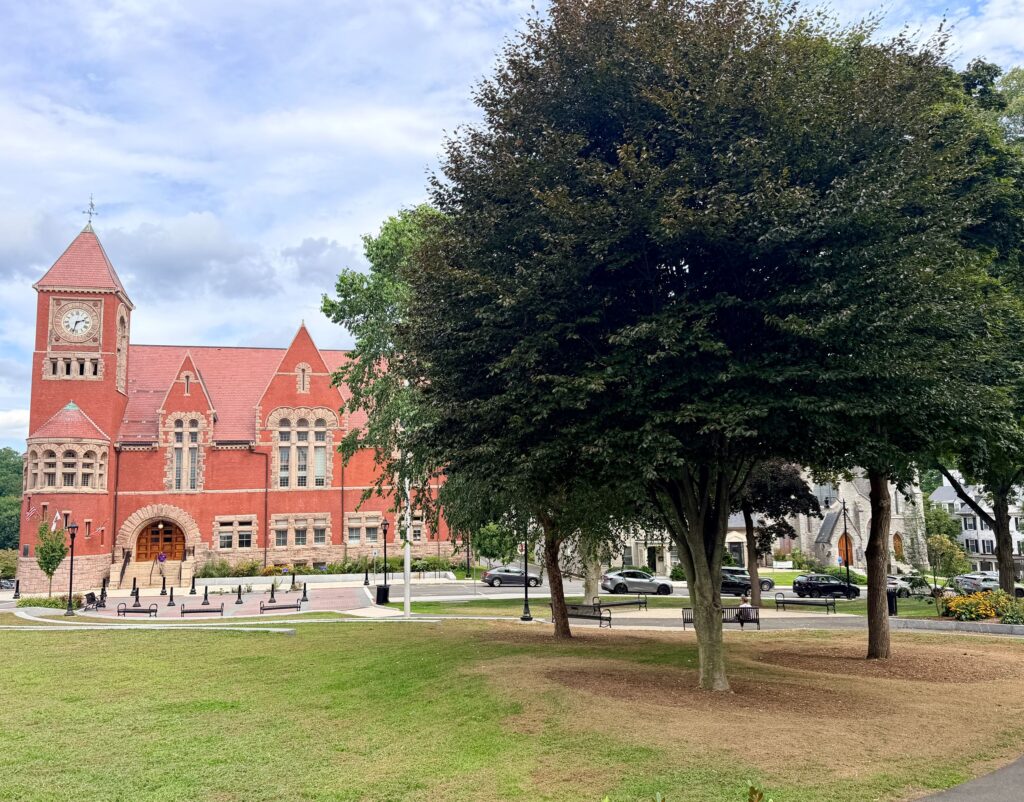
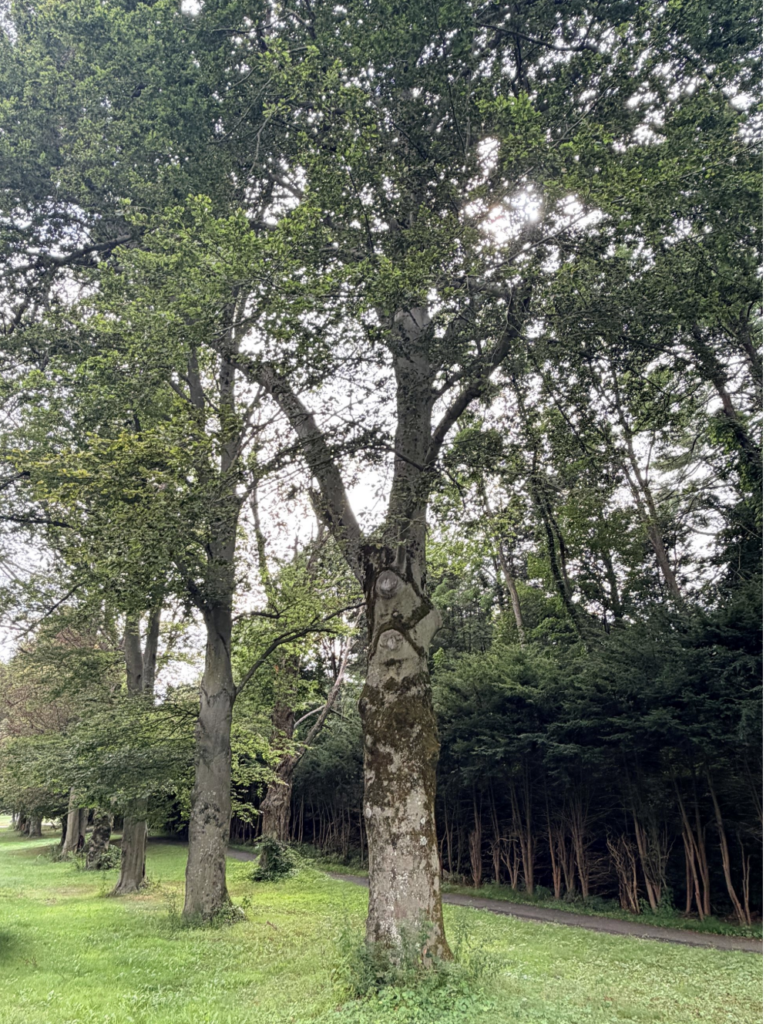
A stately American beech grows in front of Town Hall on the North Common. The Amherst tree warden actively treats this tree, and two nearby European beeches, to mitigate the impact of beech leaf disease.
by The Amherst Public Shade Tree Committee
This is the ninth in a series of 12 articles produced by the Amherst Public Shade Tree Committee (APSTC) under the title “Amherst Arbor Spotlight.” The series focuses on the town’s 12 species of shade trees and features a different tree each month. New articles will be posted on the first day of the month on the APSTC website and in the Amherst Indy, with links on Facebook and Instagram. Read the previous columns here.
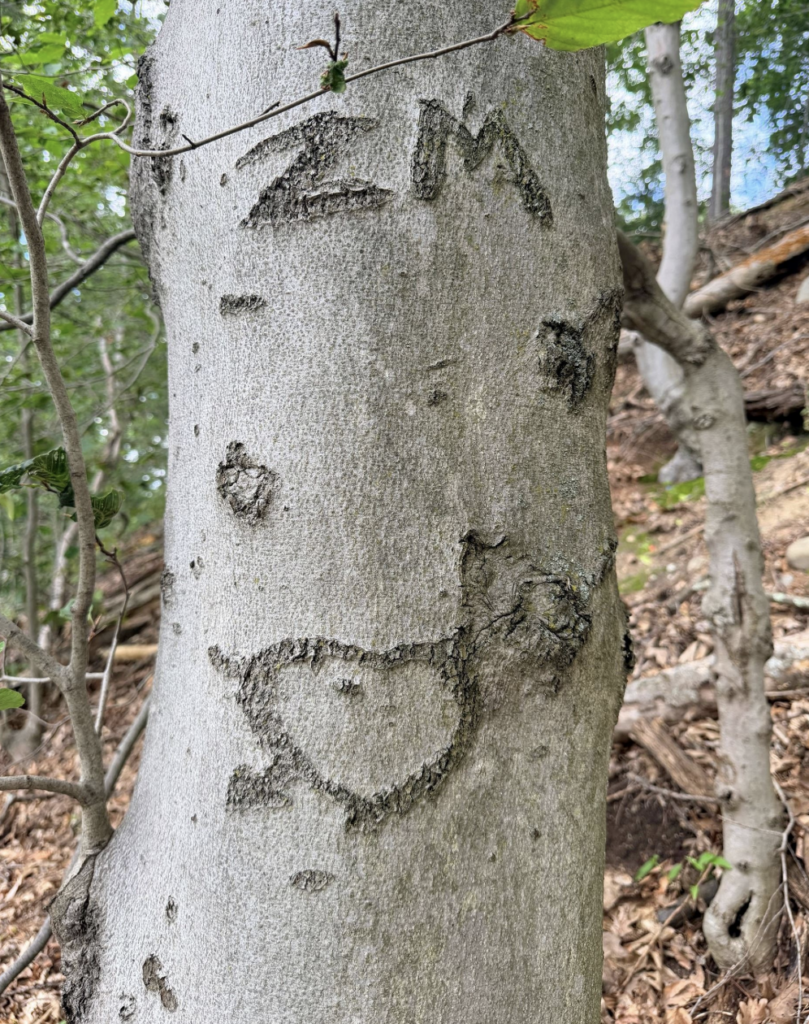
Native to North America, the graceful American beech can soar to 70 feet tall and live for 300 years. The species is distinguished by its sweeping, outstretched branches and a dense, wide canopy that casts cooling shade. It is most instantly recognized by its striking, steel-colored bark—a smooth canvas that generations of teenagers have long favored for carving. Beyond its beauty, the American beech is an ecological powerhouse, providing vital food and habitat for hundreds of insect and mammal species. In centuries past, its branches and nuts sustained legendary, sky-darkening flocks of now-extinct passenger pigeons.
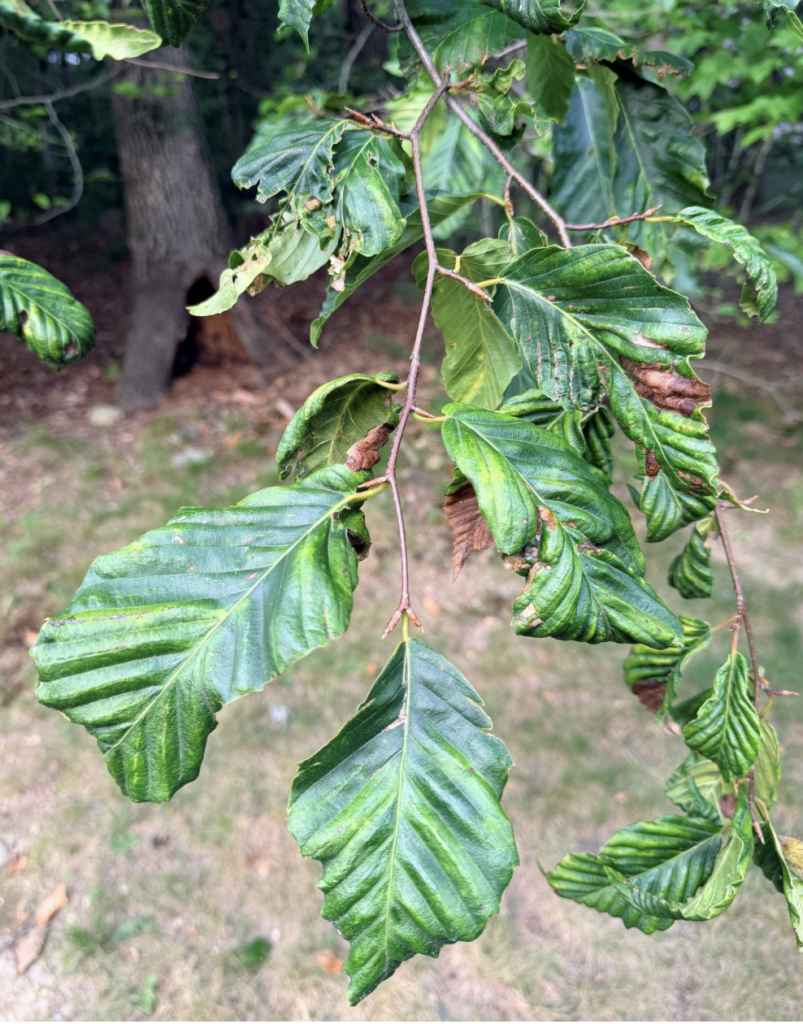
Tragically, healthy American beech trees are vanishing from Amherst. The species is facing a dual onslaught, driven primarily by beech leaf disease—a lethal affliction caused by microscopic nematodes. While scientists have yet to find a cure, experimental trunk injections and nematode-suppressing sprays show potential in reducing the severity of the disease. The crisis is compounded by beech bark disease, a fatal combination of insect and fungal infestation that has further ravaged the historic trees.
American beech trees provide year-round visual interest. Their leaves, which are shiny and dark green in summer, turn golden-bronze in the fall. The dried papery leaves often remain on the trees long into winter. In springtime, beeches sprout sharply-pointed, copper-colored leaf buds that measure over an inch long. The tree on the left is one of three American beeches on Matoon Street at the entrance to Amherst Regional High School.
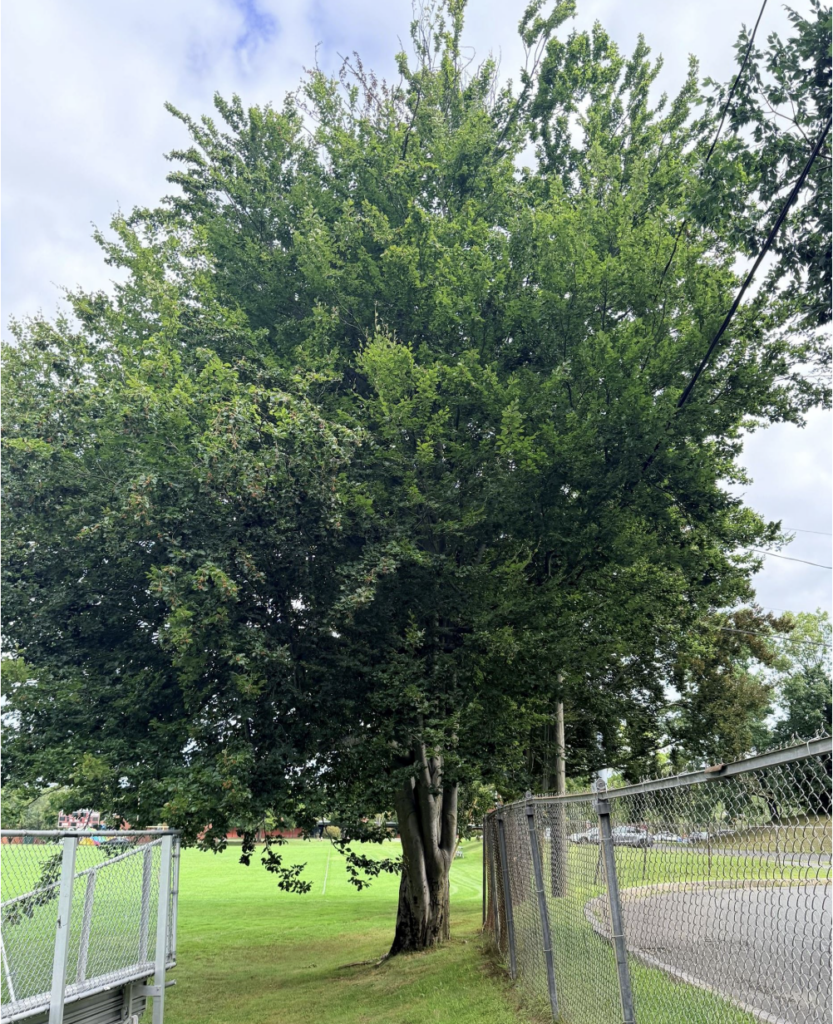
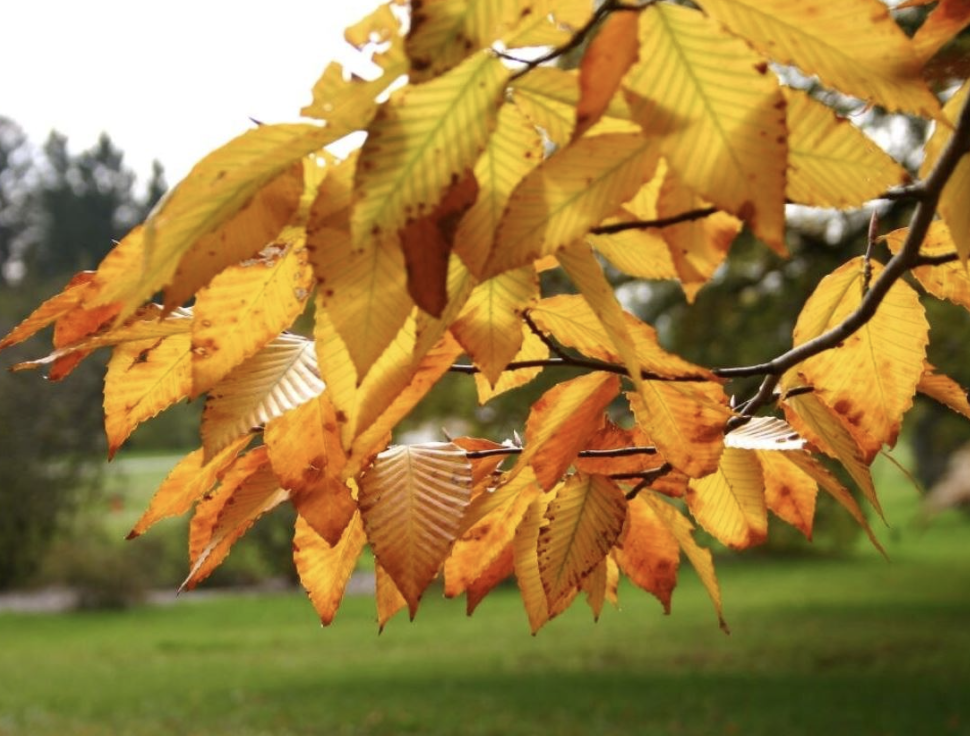
American beech trees provide year-round visual interest. Their leaves, which are shiny and dark green in summer, turn golden-bronze in the fall. The dried papery leaves often remain on the trees long into winter. In springtime, beeches sprout sharply-pointed, copper-colored leaf buds that measure over an inch long. The tree above on the left is one of three American beeches on Matoon Street at the entrance to Amherst Regional High School.
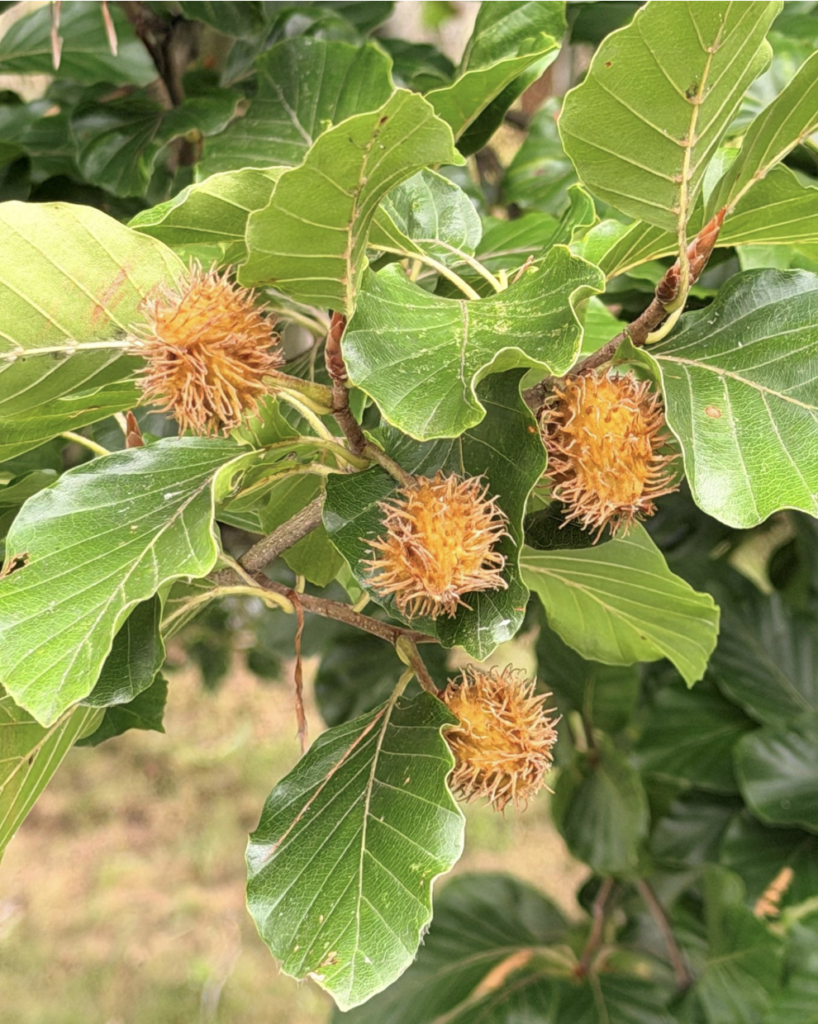
Vast forests of American beech once carpeted the continent until European settlers began clearing millions of acres for farmland. This widespread deforestation proved fatal for passenger pigeons. Enormous, migrating flocks nested in the beech trees and depended on beechnuts as their primary food source. The sudden loss of habitat and sustenance, compounded by aggressive hunting, ultimately brought the passenger pigeon to extinction by 1914.
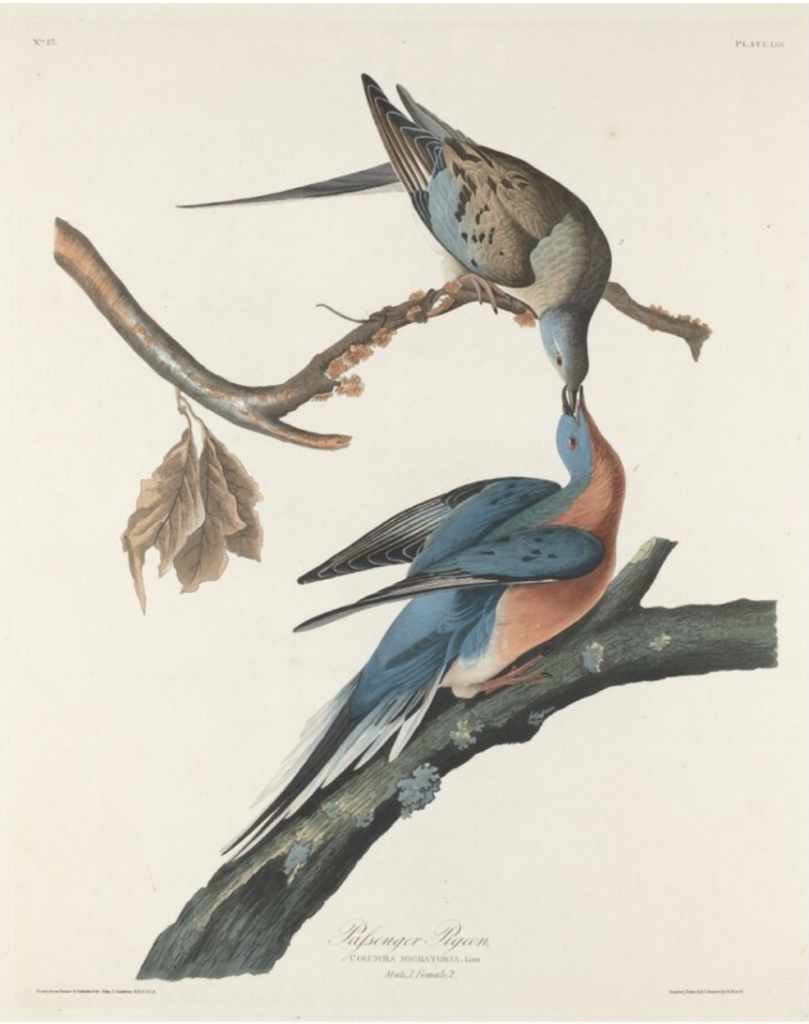
Hand-colored engraving and aquatint on Whatman wove paper.
Thank you to the Amherst Public Shade Tree Committee for these wonderful Spotlight Series articles and for all your work. The tree plantings you regularly do around town contribute to our community in so many ways. I am a big fan!
Here is the complete paragraph that got garbled: Tragically, healthy American beech trees are vanishing from Amherst. The species is facing a dual onslaught, driven primarily by beech leaf disease—a lethal affliction caused by microscopic nematodes. While scientists have yet to find a cure, experimental trunk injections and nematode-suppressing sprays show potential in reducing the severity of the disease. The crisis is compounded by beech bark disease, a fatal combination of insect and fungal infestation that has further ravaged the historic trees.
Editor’s note: Thanks Paul,for pointing out the error. We’ve repaired the garbled paragraph.