
Voices in the Brick: Amherst’s First Public Art Project
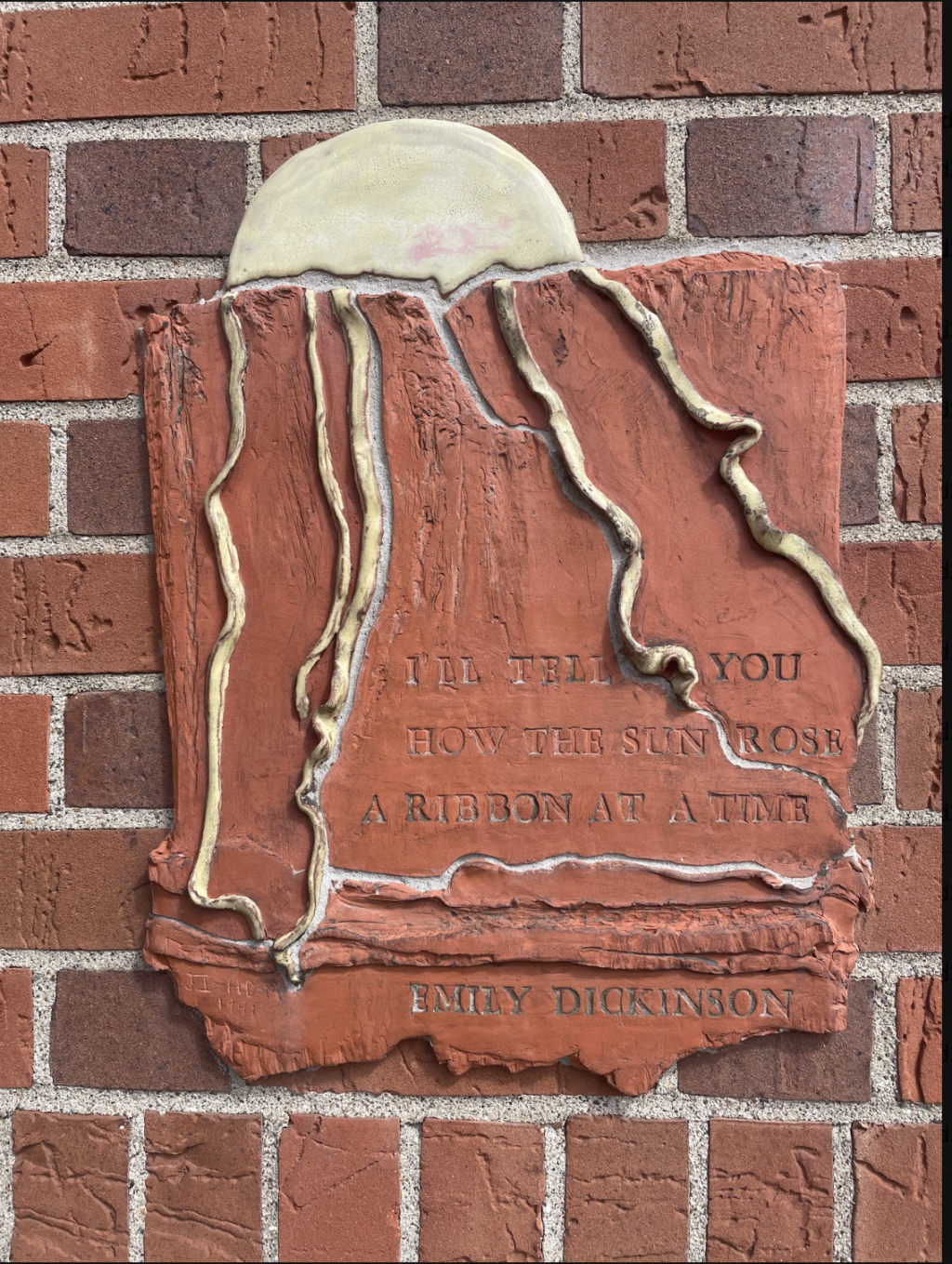
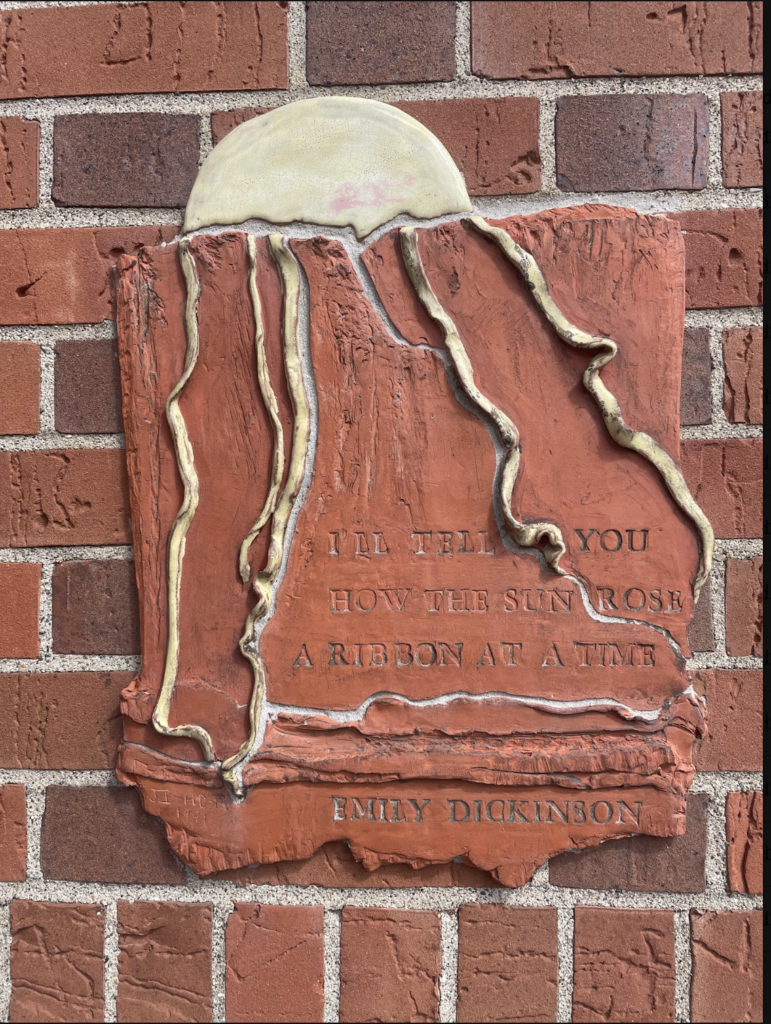
Tile G on the Brick Tile Walk is on the Bank of America building and features the image of a sunrise exuding streams of light, and contains a quote from a poem by Emily Dickinson. Photo: Jennifer Shiao
As you walk through downtown Amherst, you might notice ceramic art tiles here and there on brick facades. These are the “Brick Tiles”, a public art project that turned the buildings of downtown Amherst into a kind of open-air book written by the town’s own notable residents.
The “Brick Tiles” project holds a particular distinction in Amherst’s cultural history as the very first initiative sponsored by the Amherst Public Art Commission, created by Amherst Town Meeting in the early 1990s. Helena Dooley-Mehta and Judith Inglese developed, designed, and created the nine tiles: Dooley-Mehta proposed quotes from notable people who lived in and contributed to Amherst life, and Inglese developed the imagery and installed the tiles.
How to Find the Tiles
You can locate the 10 brick tiles using the map below.
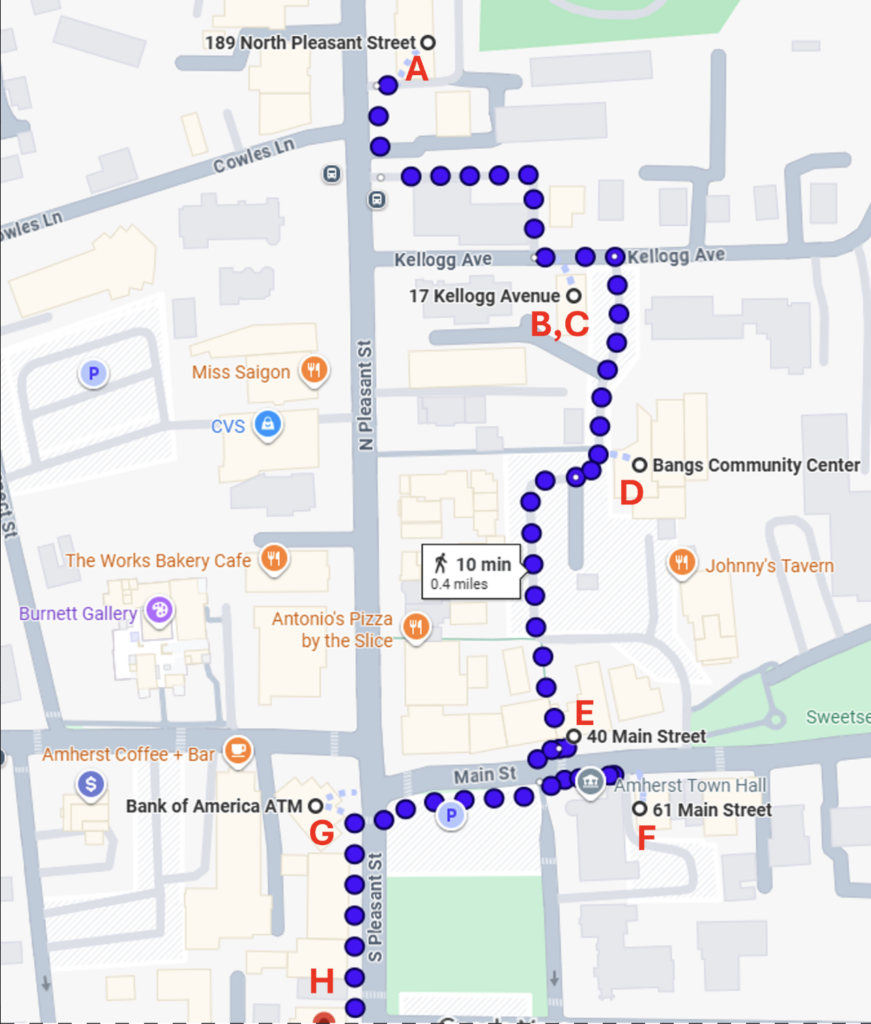
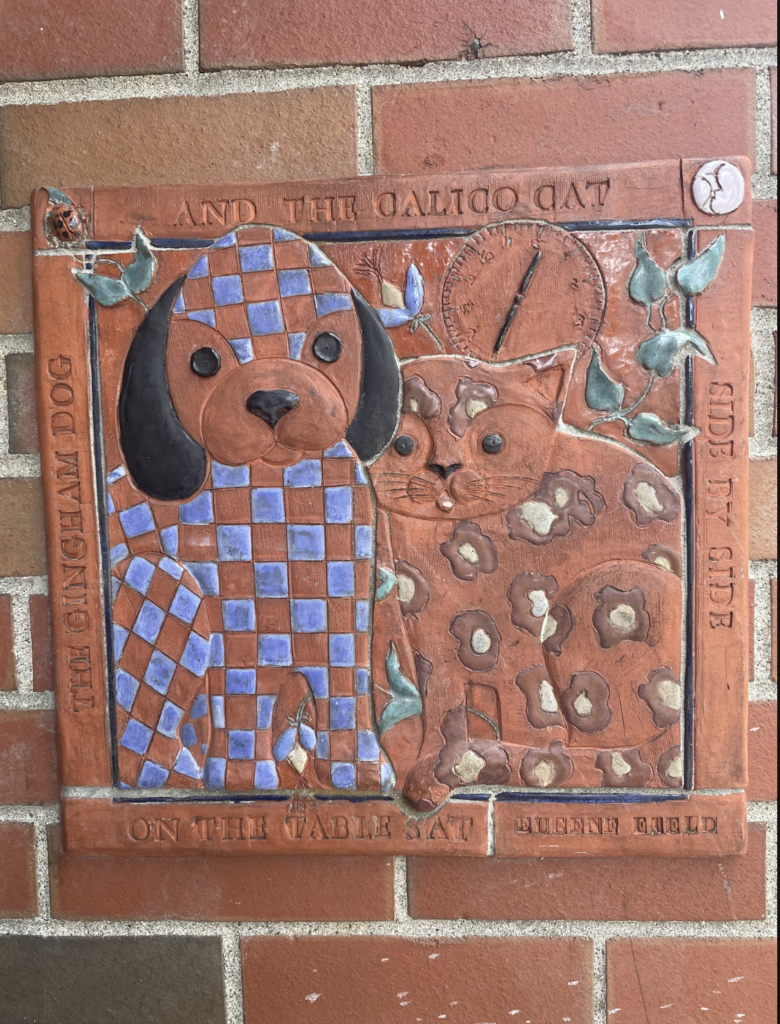
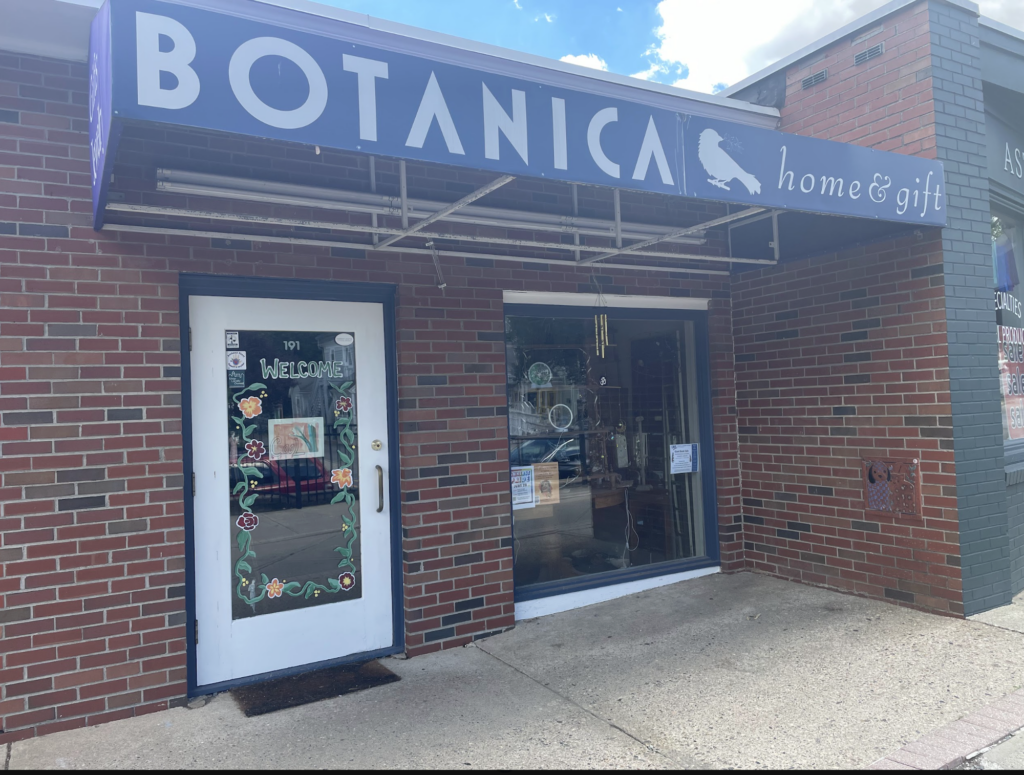
Starting from the north, the first tile is at 189-191 N. Pleasant Street, in the block of shops that includes The Toy Box and Zanna. This tile is hard to spot: it’s at child-eye level on an exterior wall, at a 90-degree angle to the sidewalk. Framed by a quote from poet Eugene Field Sr. (1850-1895), the tile depicts a dog and a cat, a clock face, flowers, and leaves. Eugene Field Sr. was known as the “poet of childhood” and was raised in Amherst by his aunt, Mary Field French, after his mother passed away when he was six years old. The quote from the poem “The Duel” reads: “The gingham dog and the calico cat/side by side on the table sat.”
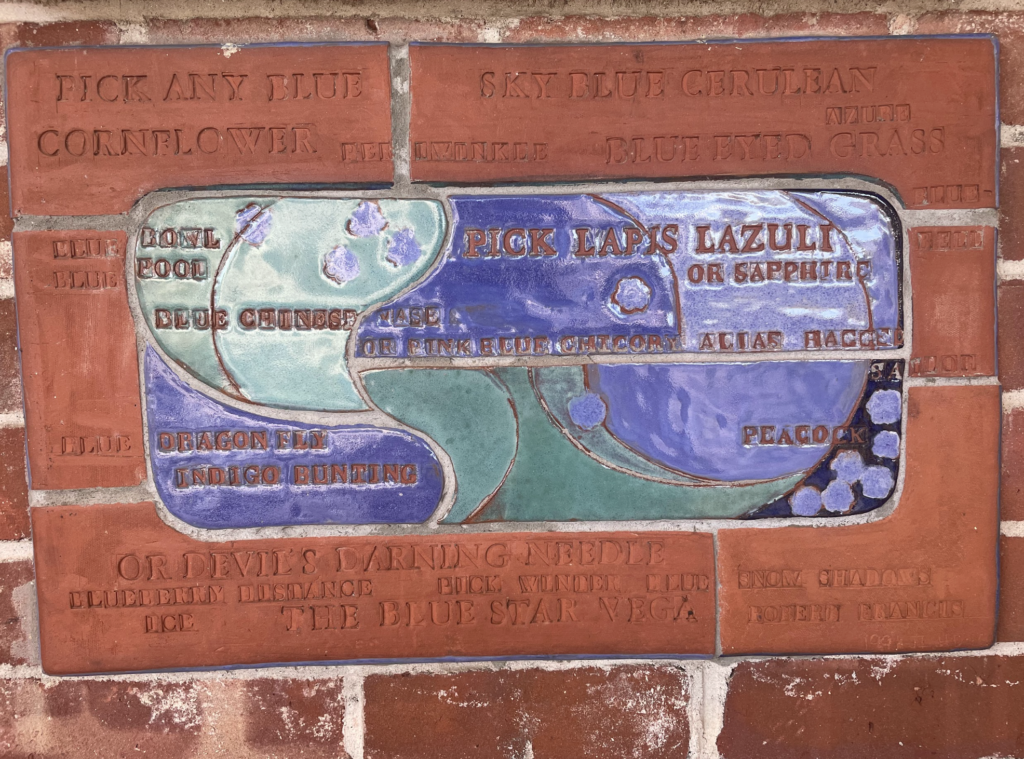
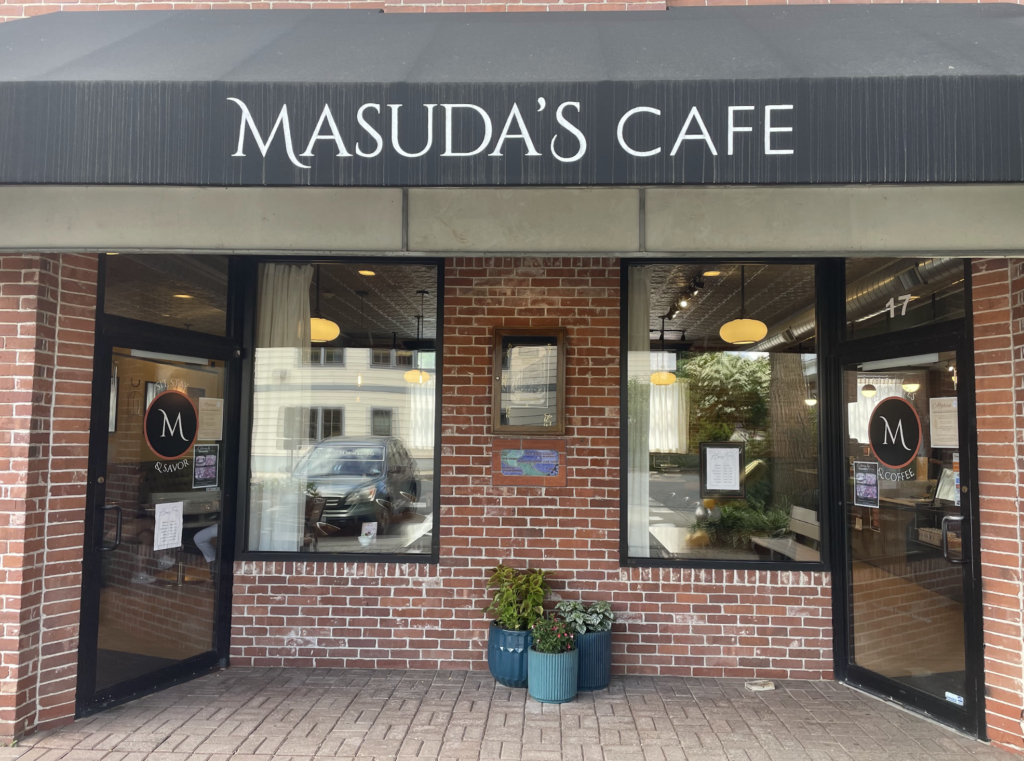
Walking south from there, the next tile can be found at 17 Kellogg Avenue, at the main entrance to the current home of Masuda’s Cafe. This tile depicts rounded shapes of various blues, and seems to be a reference to the Robert Francis poem “Blue Winter.” Robert Francis (1901-1987) was a protege of Robert Frost and lived most of his life in Amherst. The text starts with “Pick any blue” and goes on to list many names and descriptions of the color, including “indigo bunting” “lapis lazuli” and “devil’s darning needle.”
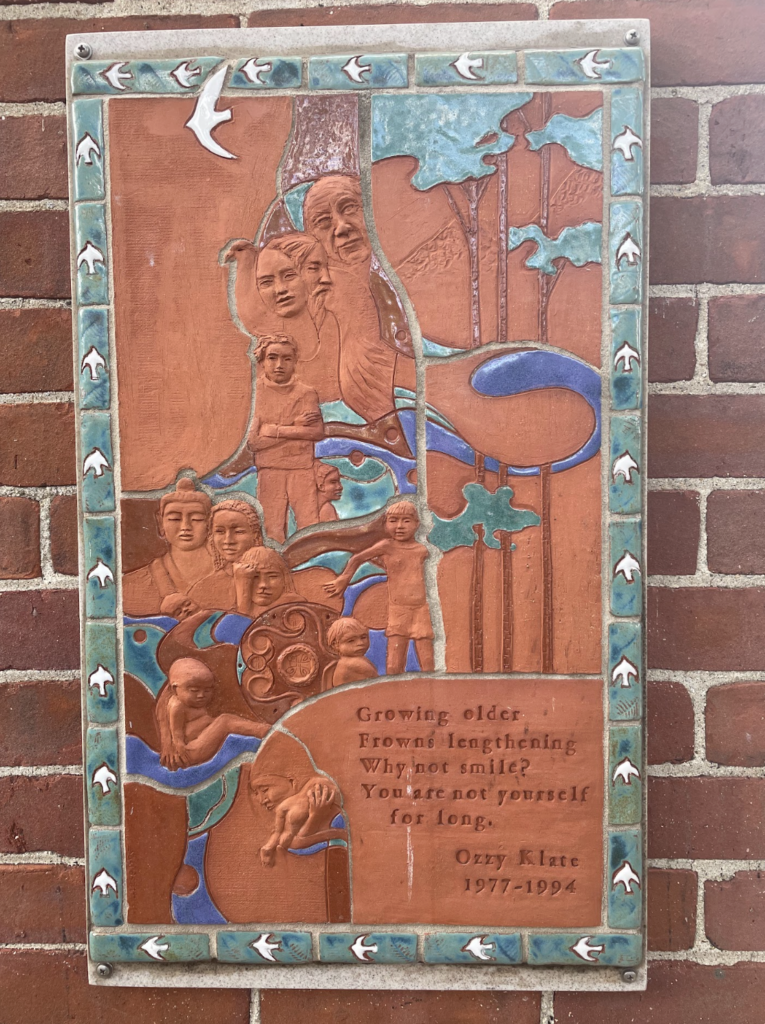
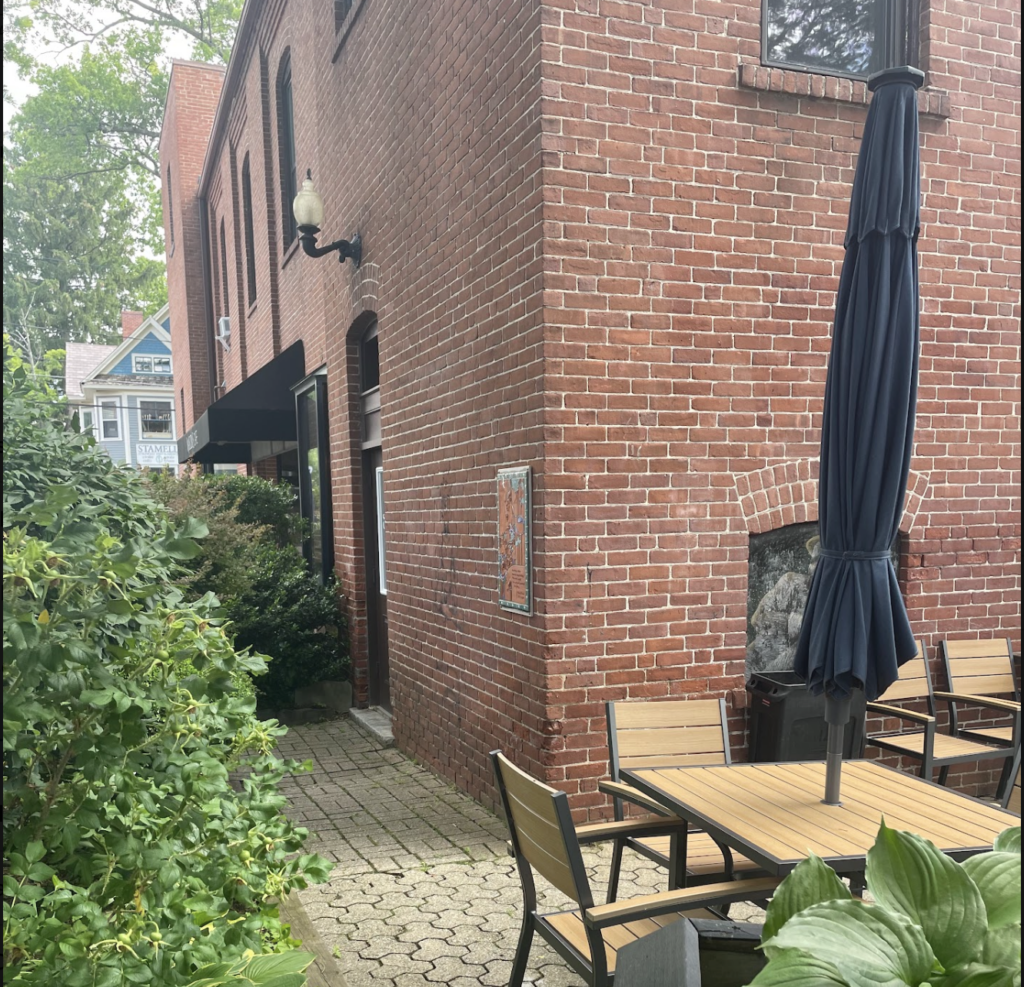
A bonus tile can be found along the same exterior wall as the Robert Francis, and was created by Judith Inglese as a special commission from the parents of Ozzy Klate, an Amherst resident who passed away in 1994 at age 17. According to North Star, which hosts a scholarship in Klate’s name, he was an “accomplished jazz musician, experienced mountaineer and wilderness trekker, alpine skier, solo international traveler, practitioner of Buddhist meditation, and activist for peace and social justice.”
The tile depicts people of various ages and ethnicities, with a quote that reads: “Growing older Frowns lengthening Why not smile? You are not yourself for long.”
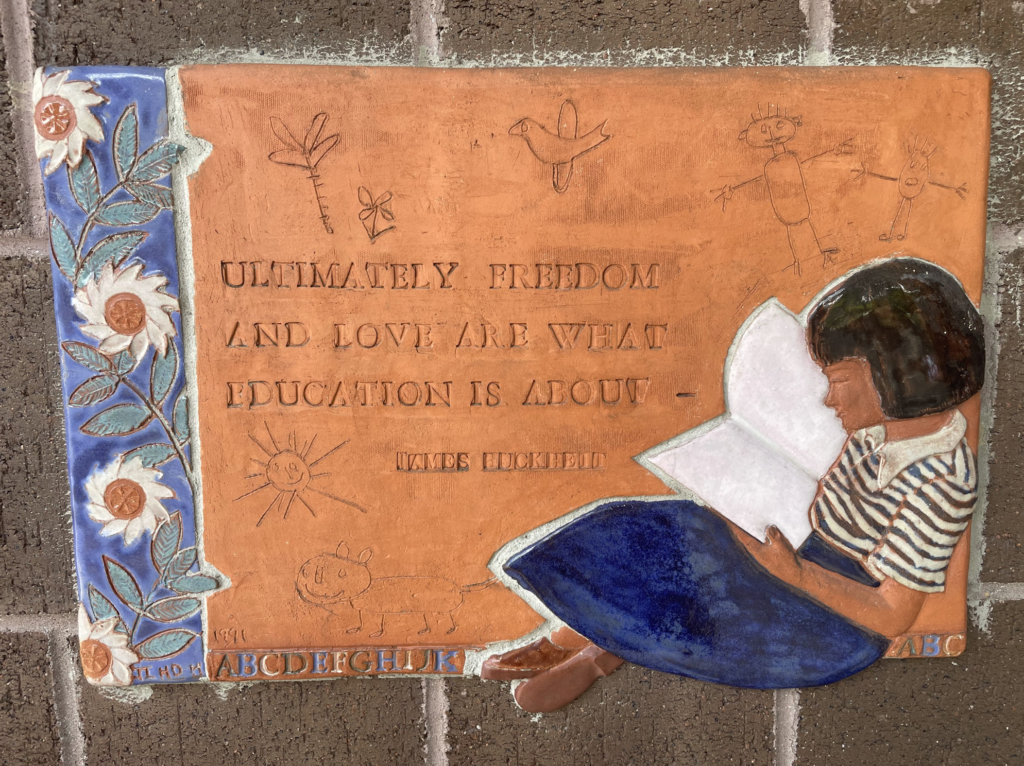
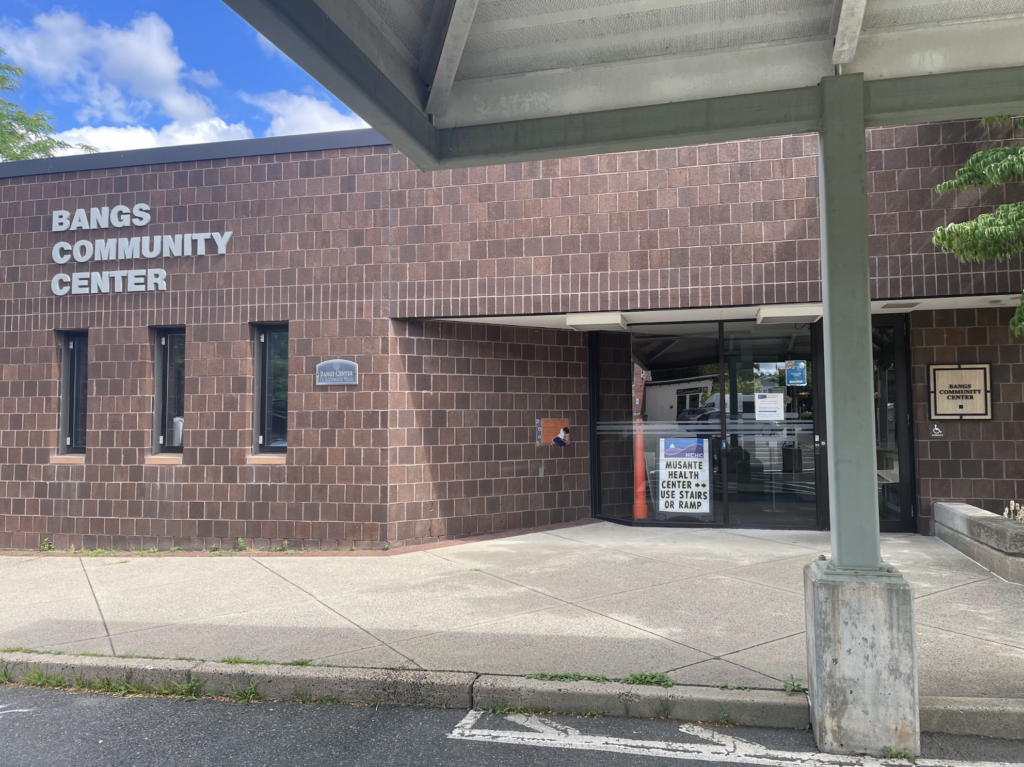
The next tile is at the upper entrance to the Bangs Community Center. This tile depicts a child reading a book, along with flowers and childlike drawings. The quote – “Ultimately freedom and love are what education is about” is attributed to James Buckheit, (1947 – ) a former head of The Common School, a private Pre-K through 6th grade school in Amherst.
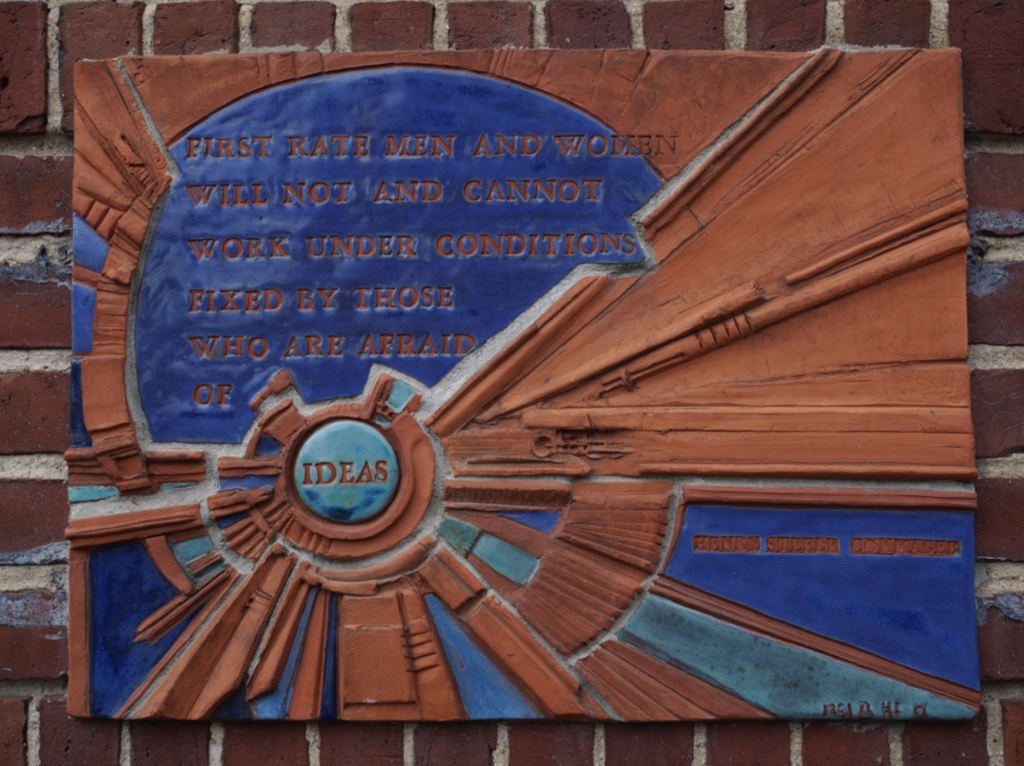
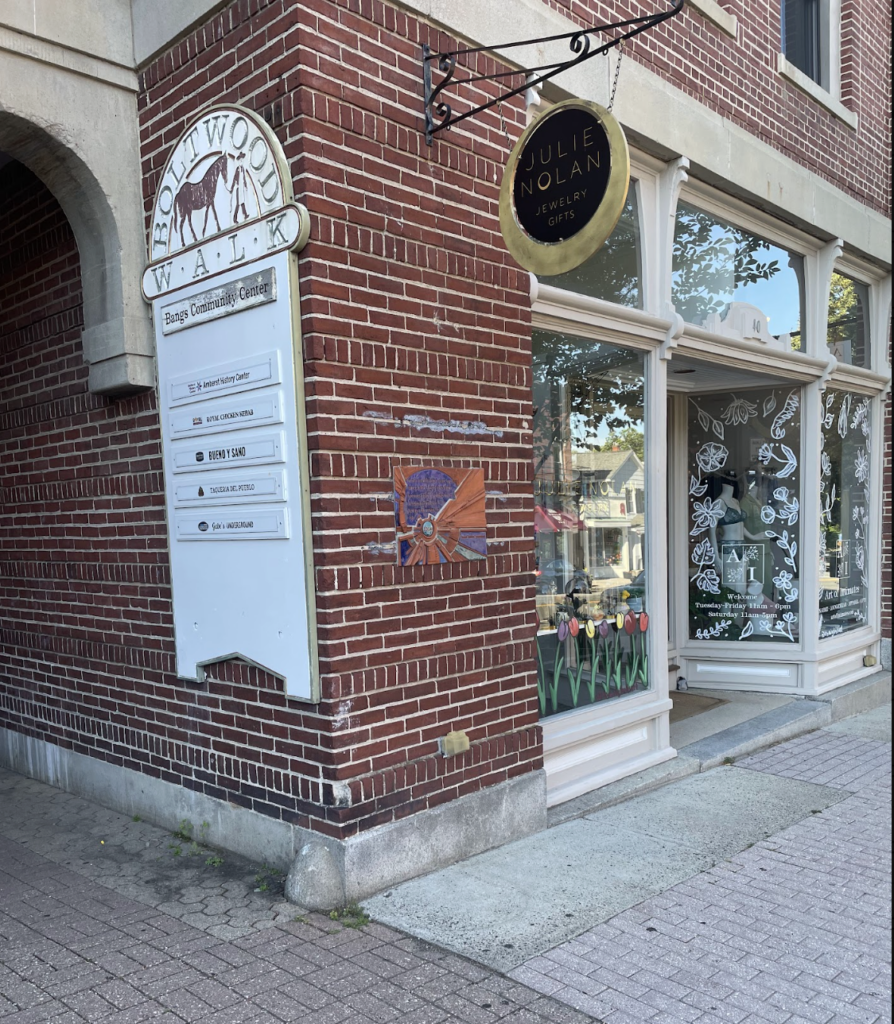
The next two tiles can be found on opposite sides of Main Street. On the north side at 40 Main St (now home to Julie Nolan Jewelry), the tile’s image resembles a sunburst, with the word “IDEAS” at the center and rays extending outward. The quote is from a collection of five essays called “Freedom, Loyalty, Dissent” by Henry Steele Commager (1902 – 1998), a historian who taught at Amherst College: “First rate men and women will not and cannot work under conditions fixed by those who are afraid of ideas.”
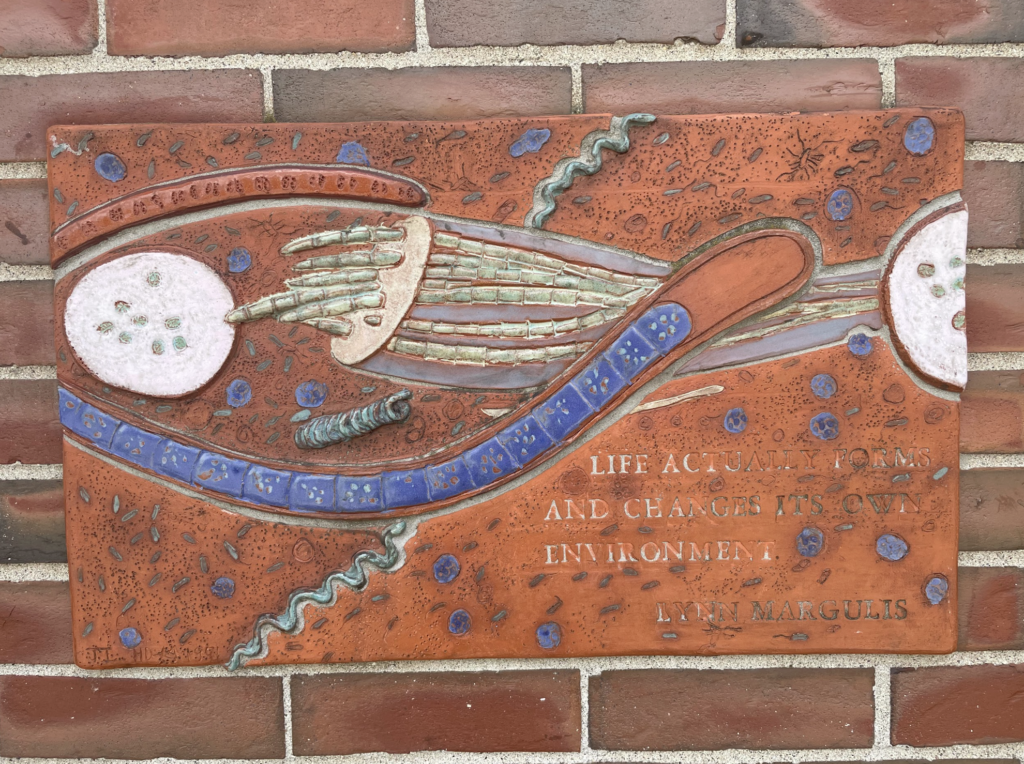
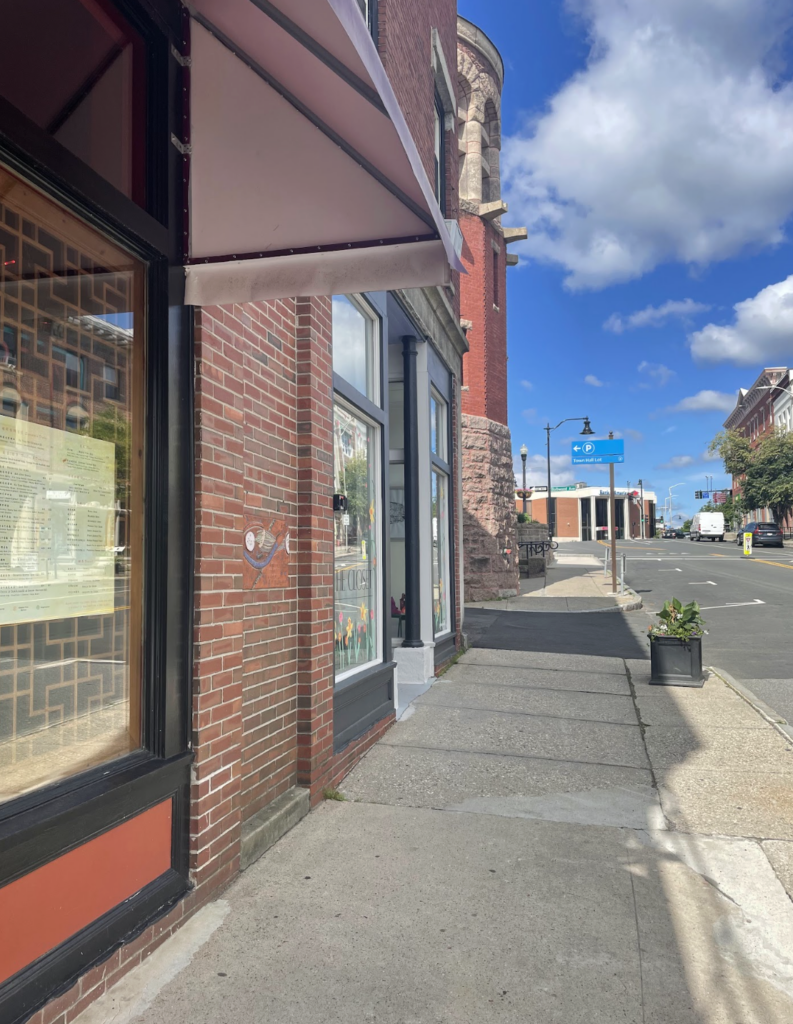
Across the street, in between the current locations of The Closet and Lao Hu Tung, is a tile with a quote from Lynn Margulis (1938–2011), an evolutionary biologist who held the title of Distinguished Professor of Geosciences at UMass Amherst. The image appears to show cells and organisms under a microscope, with the accompanying quote: “Life actually forms and changes its own environment.”
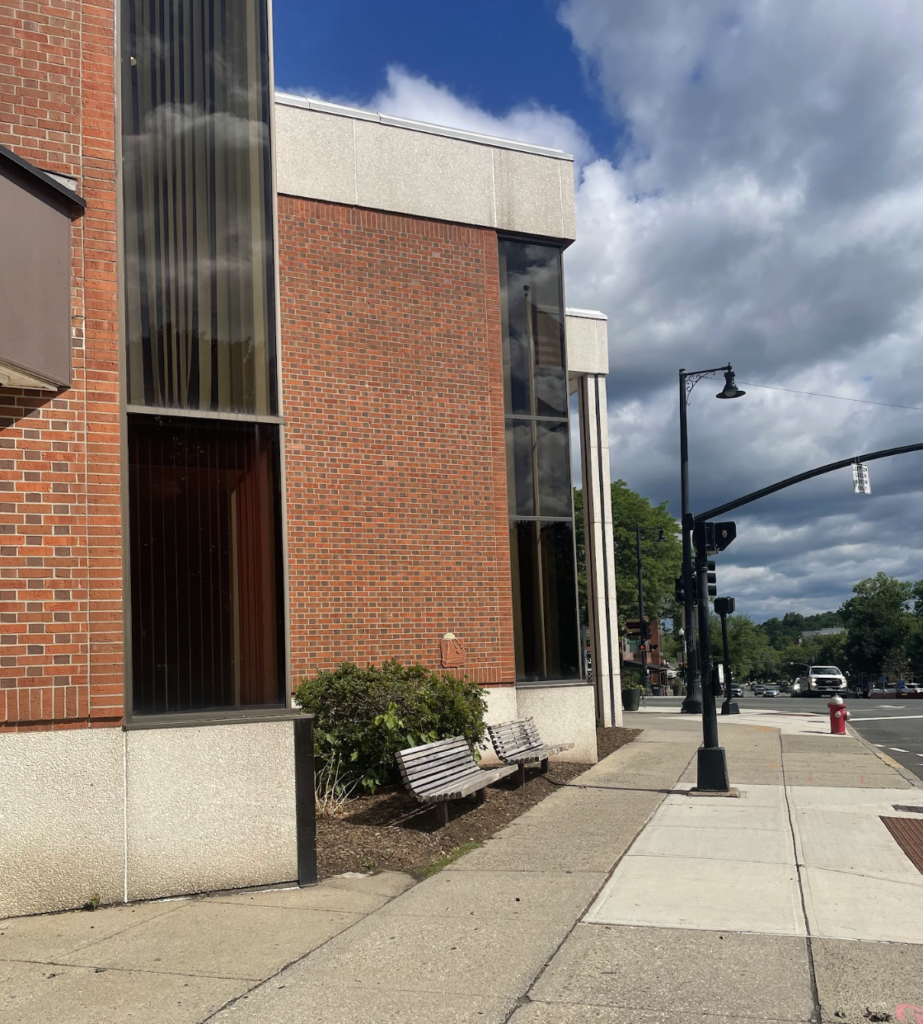
The tile that arguably gets the most foot traffic is on the side of the building now housing the Bank of America. With the image of a sunrise exuding streams of light, this tile contains a quote from a poem by Emily Dickinson (1830-1886): “I’ll tell you how the sun rose a ribbon at a time.” The poet spent most of her life in Amherst, where she penned nearly 1,800 poems.
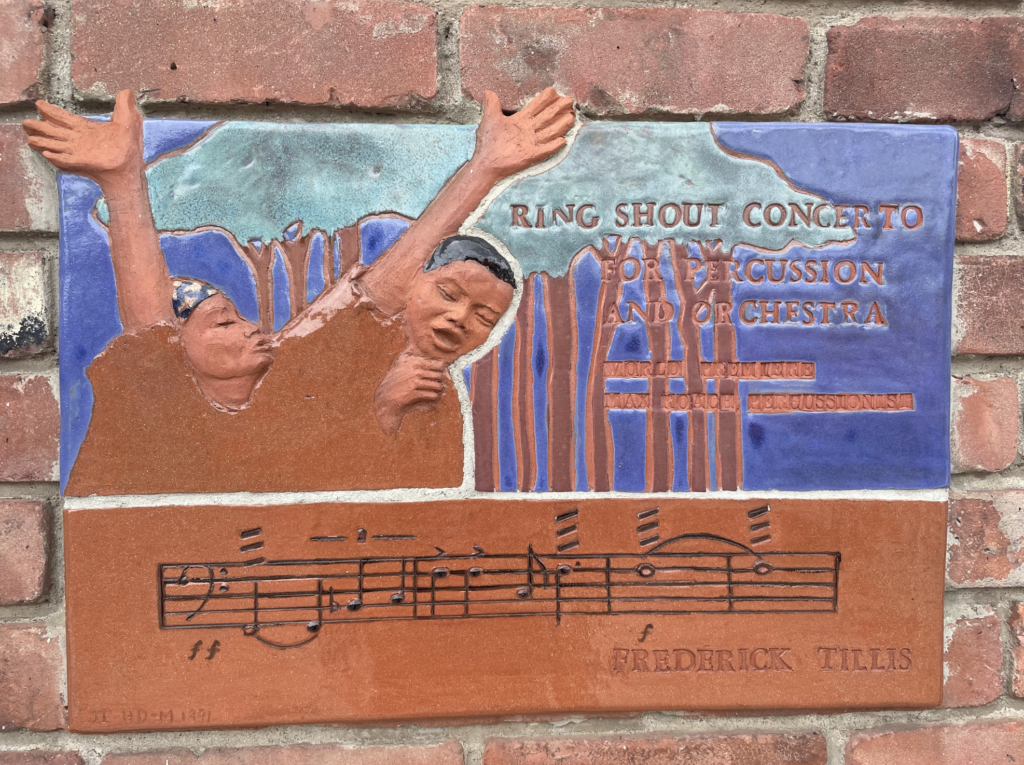
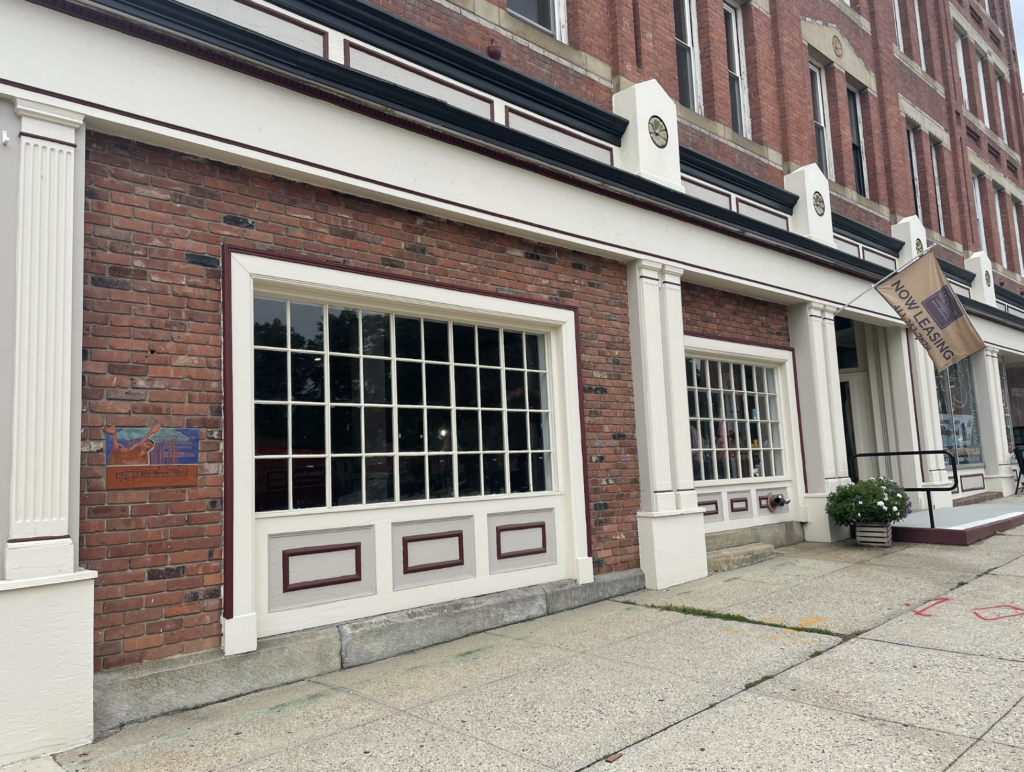
The last tile currently on view is at 71 S. Pleasant St, the building formerly occupied by Collective Copies. This tile contains an image of people singing, trees, and musical notation, as well as the title of a musical composition: “Ring Shout Concerto for Percussion and Orchestra: World Premiere Max Roach, Percussionist.” Frederick Tillis (1930-2020) was a renowned composer, jazz saxophonist, poet, and educator who spent almost 30 years in many faculty and administrative positions at UMass Amherst. Tillis’ composition made its premiere at UMass in 1974, with Max Roach as the soloist.
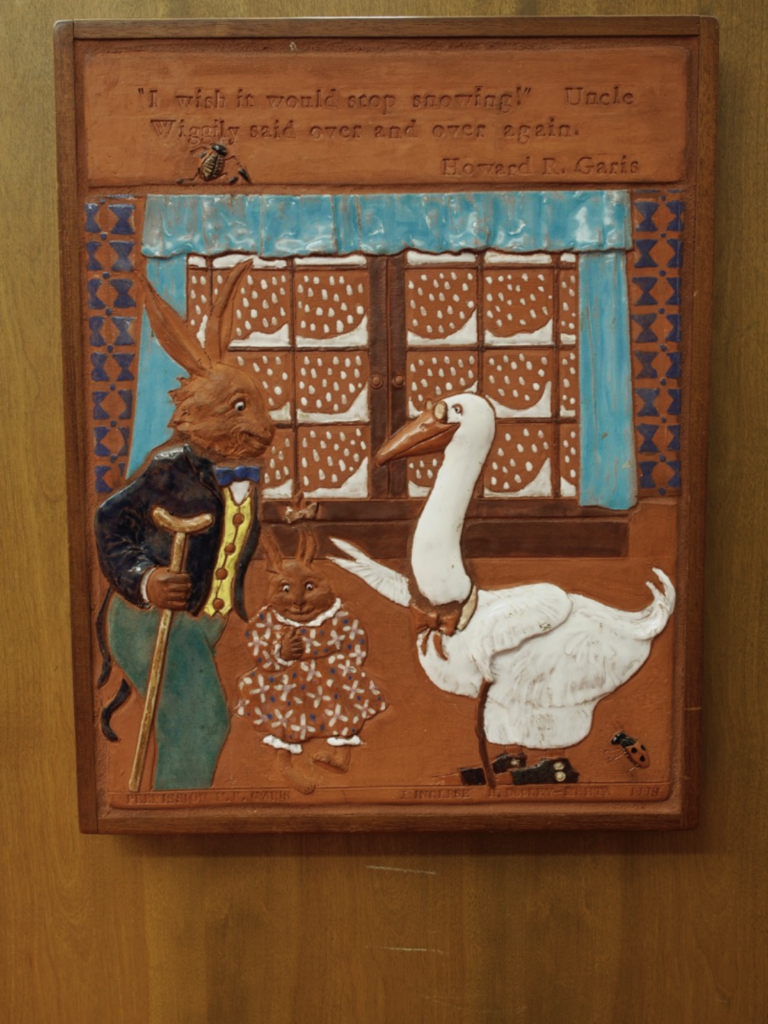
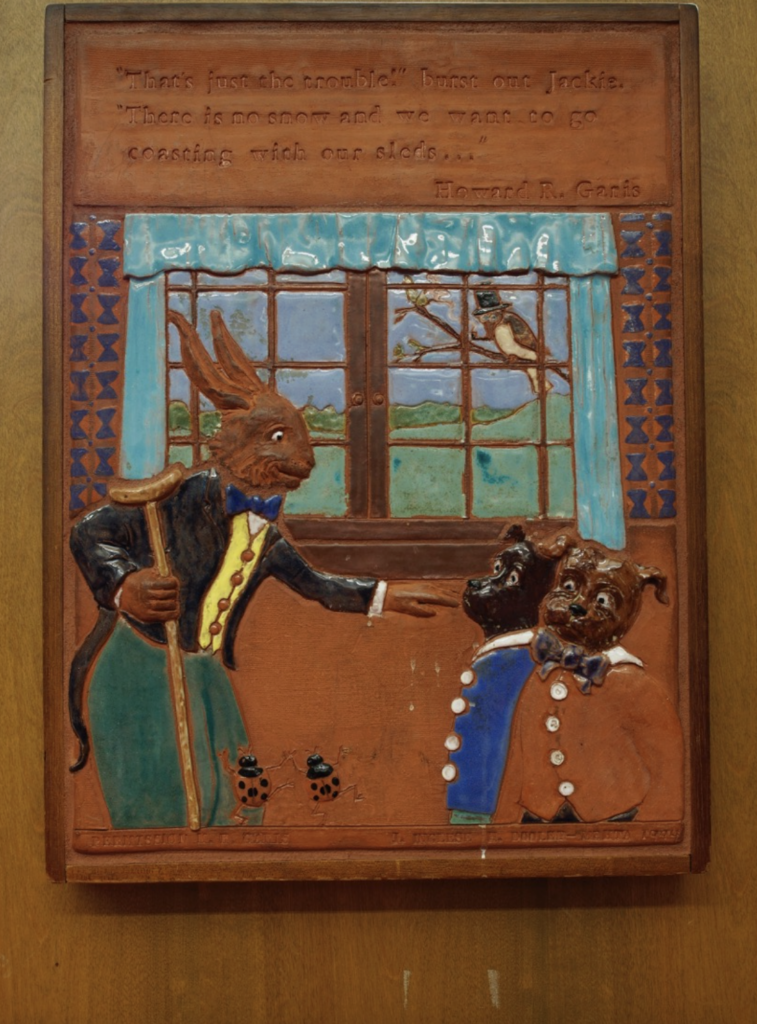
The Amherst community will have to wait a little longer to see the last two tiles again. These were located in the Children’s Room of the Jones Library and are currently in climate-controlled storage along with other library artwork until the construction/renovation of the library is completed. The Children’s Room librarian has assured the Indy that both tiles will be hung again in the new space. Both contain images and text from the Uncle Wiggily children’s stories by Howard R. Garis (1873-1962). Garis wrote more than 11,000 Uncle Wiggily stories for the Newark News in the first half of the 20th century. He lived in Amherst from 1950 until his death in 1962.
Wow. I missed this completely. Will be out there soon investigating and appreciating it. Thanks, Jennifer!
This is soooooo cool! Great piece Jennifer!
This is wonderful! Thanks so much for pulling all literary references etc. together. A nice addition to other tours like the Amherst College literary tour and the Amherst Writers Walk supported by the Amherst Historical Commission. I would love to see more recognition for the work of Judith and Helena.
A wonderful project and a wonderful story. But more than wonderful, essential to the Town’s sense of its history and its best self. To the additional resources that Hetty mentions I would add the important on-going project of historical recovery and recreation going on in North Amherst. Amherst has always been a fascinating potpourri of art, literature, industry, education, farming, and politics . And its architecture really captures and represents this history, which is the core of its value to the present and future. Thanks to Jennifer for this documentation. I hope that somehow the Indy can make it readily available for a long time.
Thanks for the memories! I have never seen many of these treasures and thrilled that you have documented them!
This is a testament to the importance of slowing down so that we can experience the work of others – historically and recently. So many smart and talented people to celebrate!
I have seen a few of these while walking about downtown, but never knew the context, nor that there were several more “hidden” in plain sight. Thank you Jennifer for calling them to our attention, and a special thanks to Helena Dooley-Mehta and Judith Inglese for their creation. And thanks for the treasure map.