UMass Creates Pedestrian-Only Zone on Campus
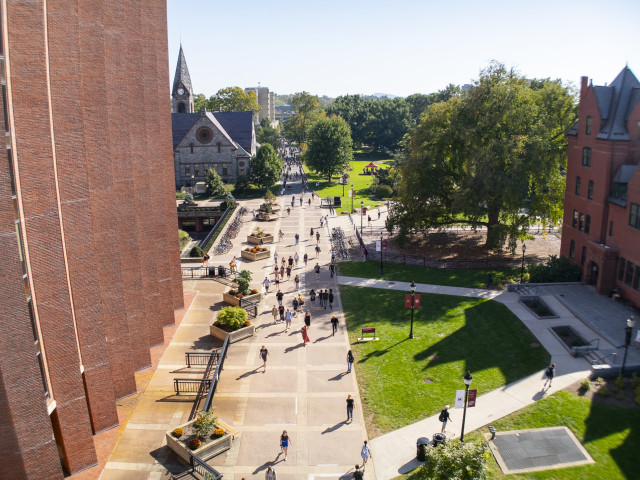
Photo: umass.edu
Source: UMass Environmental Health and Safety
Starting Fall 2026, the University of Massachusetts is implementing a Pedestrian-Only Zone within the core of campus. This pilot program aims to improve pedestrian safety, reduce conflicts between pedestrians and wheeled devices, and better understand the operational impacts of a pedestrian-only zone before considering whether a permanent program is appropriate.
This pilot program builds on conversations held in Spring 2026 with the Faculty Senate, Student Government Association (SGA), and Graduate Student Government (GSG), as well as the crosswalk reminder signage introduced towards the end of the semester. These efforts provided an opportunity to begin raising awareness around pedestrian safety and the need to better understand how pedestrians and wheeled devices interact within the core of campus.
Pedestrian Only Zone
The Pedestrian-Only Zone is located within the core of campus. In this zone, no one may ride or drive wheeled devices, except emergency vehicles and state/vendor-approved vehicles when it is necessary to perform work in that area and no other route is accessible.
This zone will not restrict or redirect the use of mobility devices by individuals with disabilities, including use of the UMass Accessible Van Service. Accessibility and ensuring that individuals can safely navigate campus remain important considerations throughout the pilot.
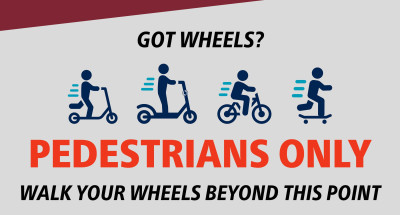
Examples of wheeled devices include:
- Bicycles – traditional or motorized
- Scooters
- Electric vehicles and golf carts
- Inline and roller skates
- Segways
- Skateboards
- All motorized and wheeled vehicles
Map of the Pedestrian Only Zone
Pedestrian Safety Ambassadors
This pilot program focuses on education, awareness, and evaluation. Pedestrian Safety Ambassadors and university personnel will be present at various times to help explain the pilot, answer questions, and encourage safe behavior. They will also provide information about alternative routes and collect observations and feedback from the community.