
One-Year Moratorium Proposed for Rezoning Hampshire College
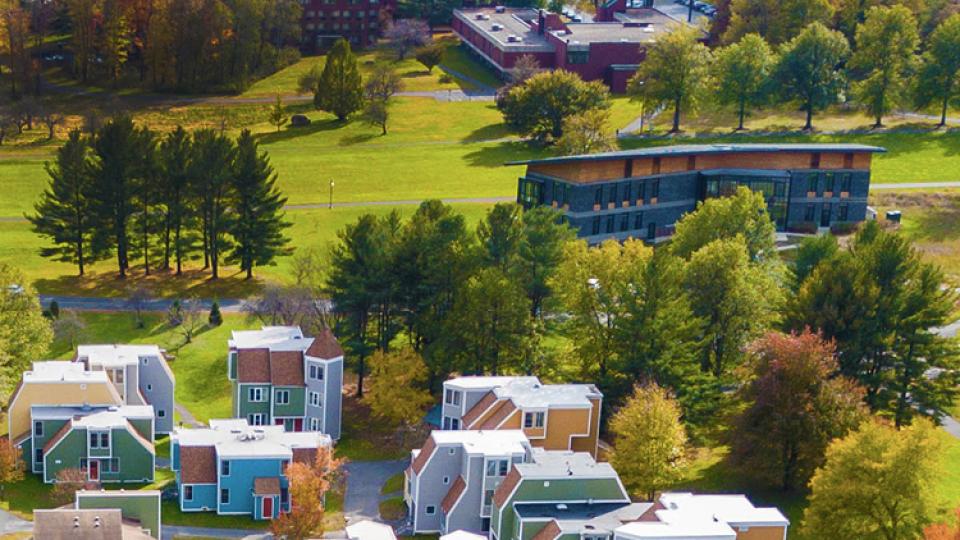
Hampshire College Campus: Photo: hampshire.edu
Using Chapter 40A, Section 5 of Massachusetts General Law, which allows 10 registered voters to petition local government for a bylaw change, 21 Amherst residents submitted a petition proposing a one-year moratorium on any zoning changes to the 600 acres of Hampshire College in Amherst. The petition was filed on October 27. On November 2, the Town Council referred it to the Planning Board to evaluate it and decide whether to hold a public hearing to advance the request. The Planning Board will discuss the petition at one of its November meetings.
The town is working with Mass Development, the Commonwealth’s official development finance agency, to rezone the Hampshire property to permit uses other than education at the site. The town hopes to have a new zoning proposal by early 2027 and is now gathering information about the property and feedback from residents. A third listening session is scheduled for December 8 on Zoom.
The proposed moratorium is the idea of current and former Hampshire College students who are members of Hampshire Commoning, a grassroots organization dedicated to preserving the Hampshire College campus as a hub for creative education and community stewardship. The organization’s goal is to “ to transition the campus into a democratic, self-governed system centered around “commoning” (collective community management), safeguarding its agricultural land, educational infrastructure, and ecological spaces.”
The petition states that, although the town wants to rezone the campus to allow residential and/or commercial development to ease a housing shortage and address a budget deficit, the petitioners believe these goals will not be achieved without addressing the root causes. It asserts that addressing the root causes of housing affordability and budget shortfalls will take more time than the few months allocated to the zoning changes. The proposal also claims that the town is not doing a good job of soliciting public input, and that Hampshire Commoning has its own ideas about the future of the campus and solutions for the town’s economic development.
The lead petitioner, Aaron Evans-Janes, a UMass graduate student, spoke to town councilors at the November 2 meeting. He said that the petitioners wanted more discussion before any decisions on rezoning of the campus were made. “We’re not necessarily opposed to rezoning,” he said, “but we want it to be done in such a way that people who have dedicated a lot of time and effort and money are the ones who are actually participating in the rezoning.” He added that the town as a whole should participate, not only a few. For that, he said we need more time.
He noted that the moratorium would not prohibit use of the Hampshire campus under the current educational zoning, so it could be used to house students or to hold classes in the buildings.
Even though it might seem like we’re tying our hands with this zoning moratorium, this is actually going to create the space for the community to think together, work together to come up with a real plan for Hampshire’s campus that’s actually going to benefit the community.” – Will Cheney, Hampshire Commoning Organizer
Public Comment Supporting the Zoning Amendment
Will Cheney and Zain Salim, former Hampshire College students who now live in Northampton and who are members of Hampshire Commoning,. spoke in favor of the moratorium on rezoning. Cheney said, “Even though it might seem like we’re tying our hands with this zoning moratorium, this is actually going to create the space for the community to think together, work together to come up with a real plan for Hampshire’s campus that’s actually going to benefit the community.” .He added that any tax revenue from developing the property would take time to materialize. He advocated for a democratically run college at the site and for it to be a model for other towns that have had colleges close.
Salim echoed those sentiments. He said, “Until fundamental contradictions in the town’s economy are resolved, nothing good is going to come out of the development of the Hampshire College campus. It’s just going to despoil the natural areas on campus, and it’s going to create gentrification.” He stated that Amherst must reduce its dependence on property taxes by generating revenue directly from businesses. However, he added that attracting developers requires tax breaks, which also reduce property tax revenue.