
Amherst Arbor Spotlight: American Sweetgum
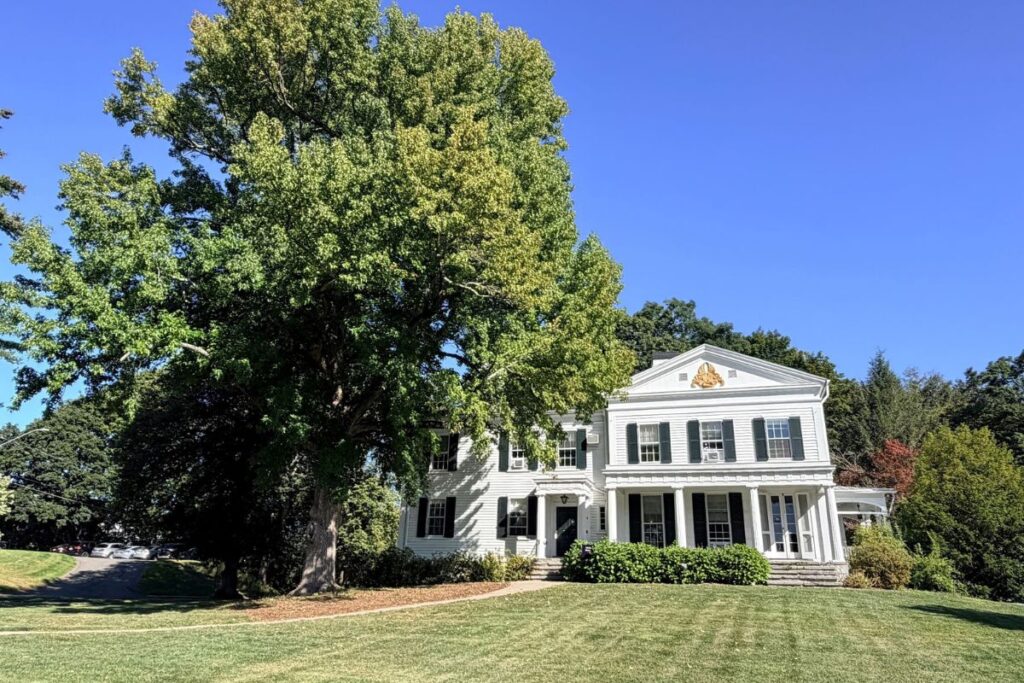
Sweet Gum Clark House - Photo credit Amherstma.gov
Liquidambar styraciflua
The American Sweetgum is moving north. Native to the southeastern United States, this resilient 75-foot-tall shade tree now thrives in Western Massachusetts due to warming temperatures. Sweetgum is a deciduous tree with nearly perfect star-shaped leaves that burst into a cornicopia of fall colors. In addition to their leaves, sweetgums are famous for another feature: their spiky autumn “gumballs” that children love to gather and throw.
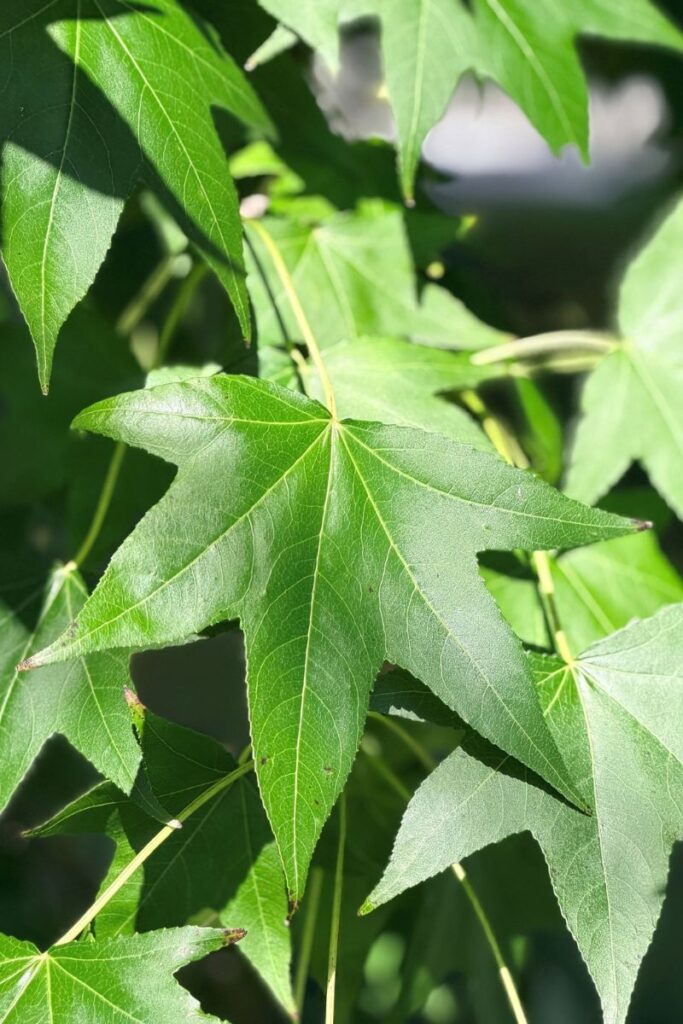
Photo credit: Amherstma.gov
Sweetgum’s star shaped leaves have five to seven pointed lobes with fine teeth along their edges. The dark green glossy leaves of summer transform into a kaleidoscope of yellows, reds, and purples in the fall. This photo was taken of a large sweetgum at 17 Arbor Way.
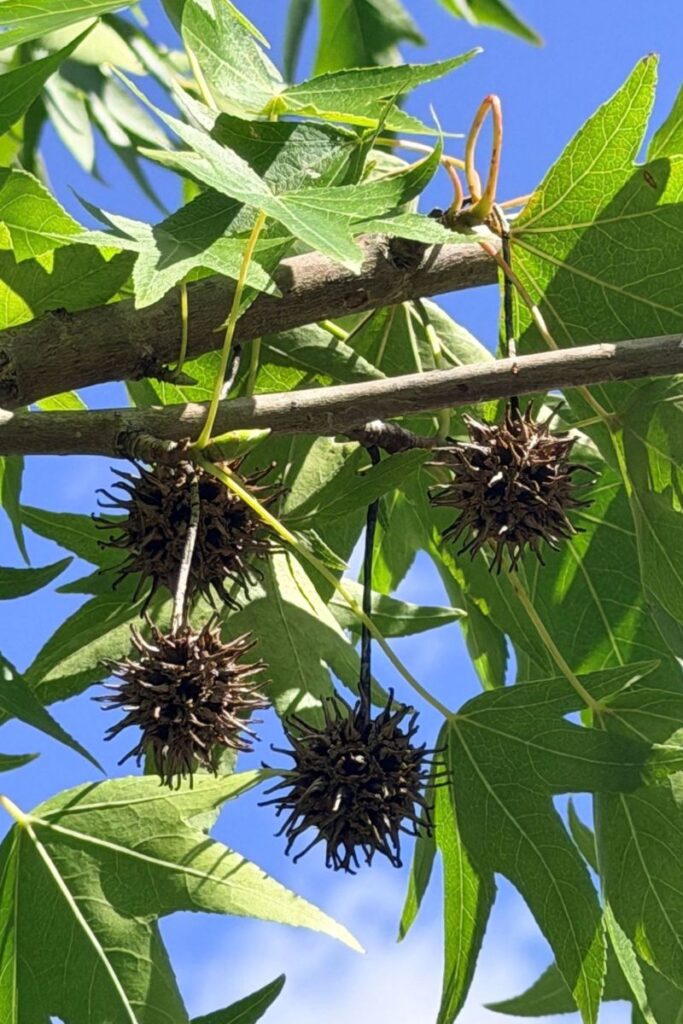
Photo credit Amherstma.gov
Sweetgum’s prickly fruits measure 1 to 1 ½ inches in diameter. These spiny spheres change from bright green to dark brown in late summer, and often cling to bare winter branches. People give them plenty of nicknames— “burr balls,” “space bugs,” and “sticker balls.” Since the husks litter the ground beneath the trees, it is advised not to plant sweetgums near sidewalks, patios, or driveways. But don’t judge them too harshly! The fruits are an important food source for wildlife and are no messier than heavy drops of acorns, pinecones, or seed pods from other species like northern catalpa and honey locust. It’s all part of nature’s design.
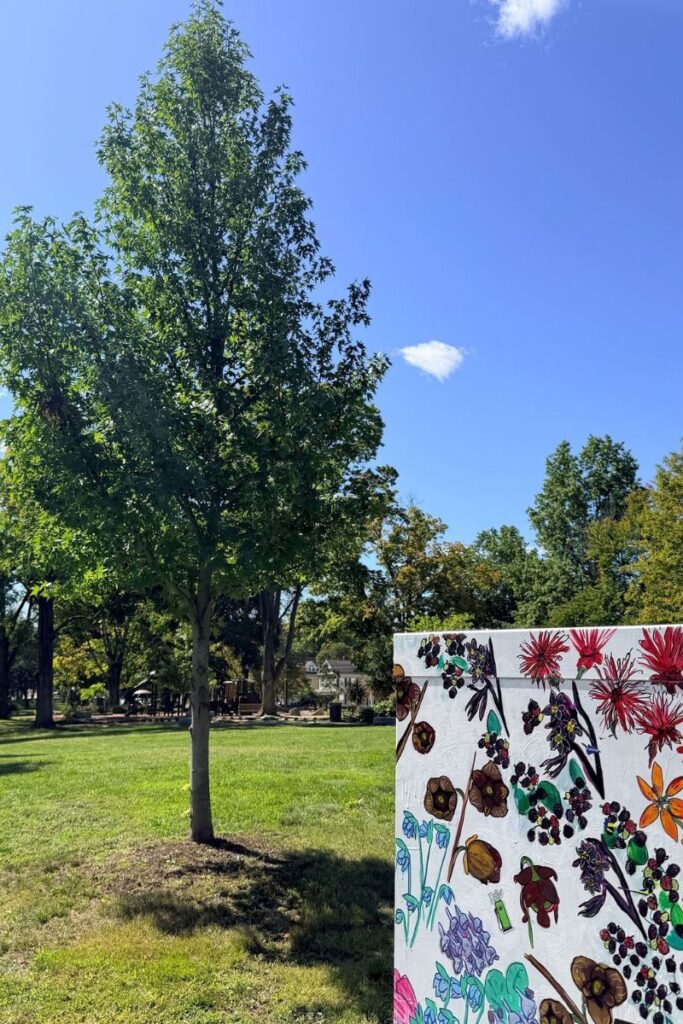
Photo credit Amherstma.gov
Sweetgum trees feed goldfinches, sparrows, chickadees, mourning doves, and wild turkeys, as well as small mammals like chipmunks and gray squirrels. Several species of moths and butterflies use the trees as a host plant for their caterpillars.
This sweetgum, planted by APSTC in Kendrick Park, displays the typical pyramidal shape of younger trees.
Photo credit Amherstma.gov
Sweetgum wood changes dramatically with age. Young trees have relatively smooth bark. As they mature, the trees develop “wings,” distinctive corky ridges that grow from smaller branches and give old trees a craggy winter appearance. These appendages also increase surface area and can lead to limb breakage with heavy snow and ice accumulation.
This large sweetgum shades Clark House on the Amherst College campus. It is an older tree with a wide canopy.
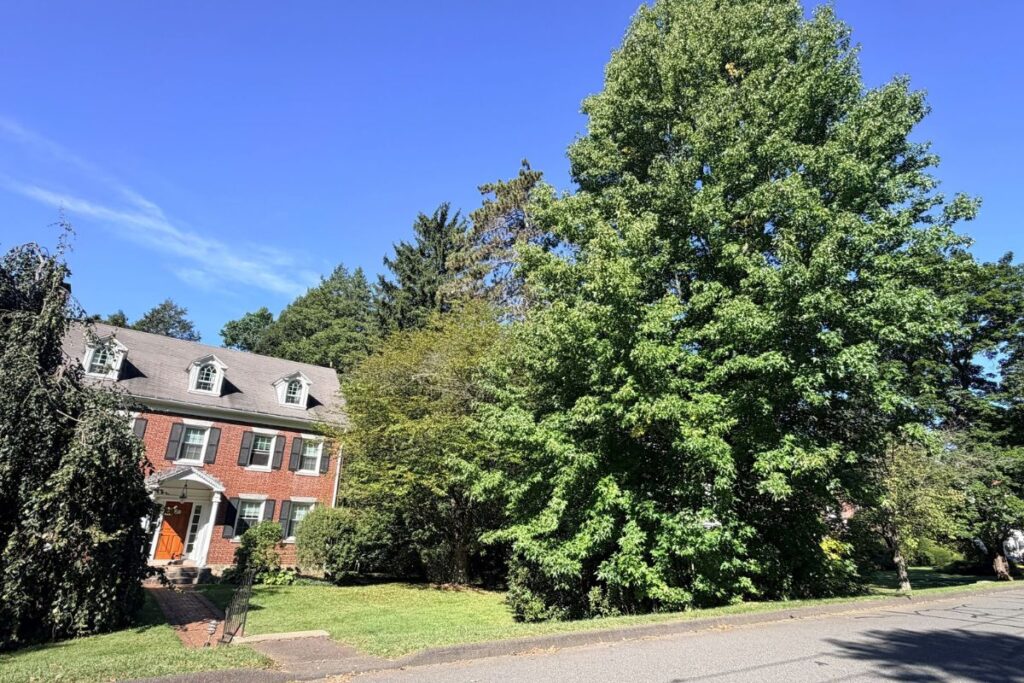
Photo credit Amherstma.gov
Sweetgum’s Latin name, Liquidambar styraciflua, translates to “liquid amber.” The tree’s resin—the sap secreted when bark is damaged—is a golden colored fluid with a long history of medicinal and cultural use. Indigenous people of the Cherokee and Choctaw nations boiled sweetgum resin with animal fat to use as a healing salve for wounds and skin irritations. They also chewed on hardened clumps of resin as a natural breath freshener and dental cleanser. European settlers used sweetgum resin for perfumes and flavorings, as well as for chewing gum. This sweetgum is 77 Dana Street.
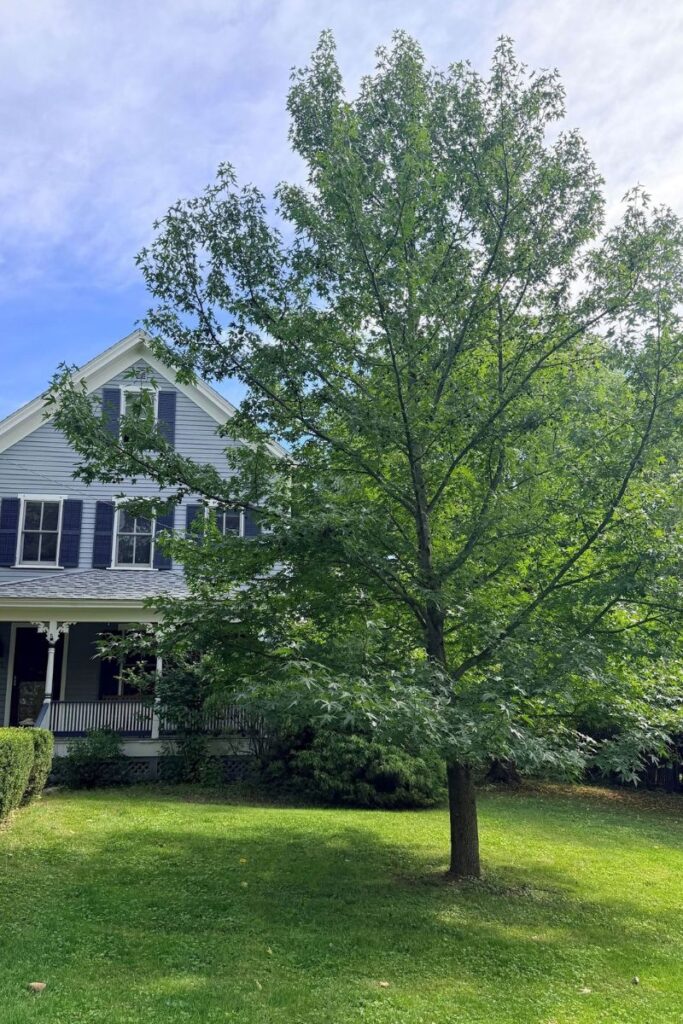
In 2012, the Amherst Public Shade Tree Committee faced a heartbreaking reality: Massachusetts’ iconic sugar maples were in declining due to climate change. To diversify the town’s canopy, Tree Warden Alan Snow turned to sweetgum trees. While sweetgums don’t provide maple syrup, they share similar autumn colors with maples, helping to keep New England’s fall foliage aglow. APSTC planted this sweetgum at the corner of High Street and Harvard Avenue.
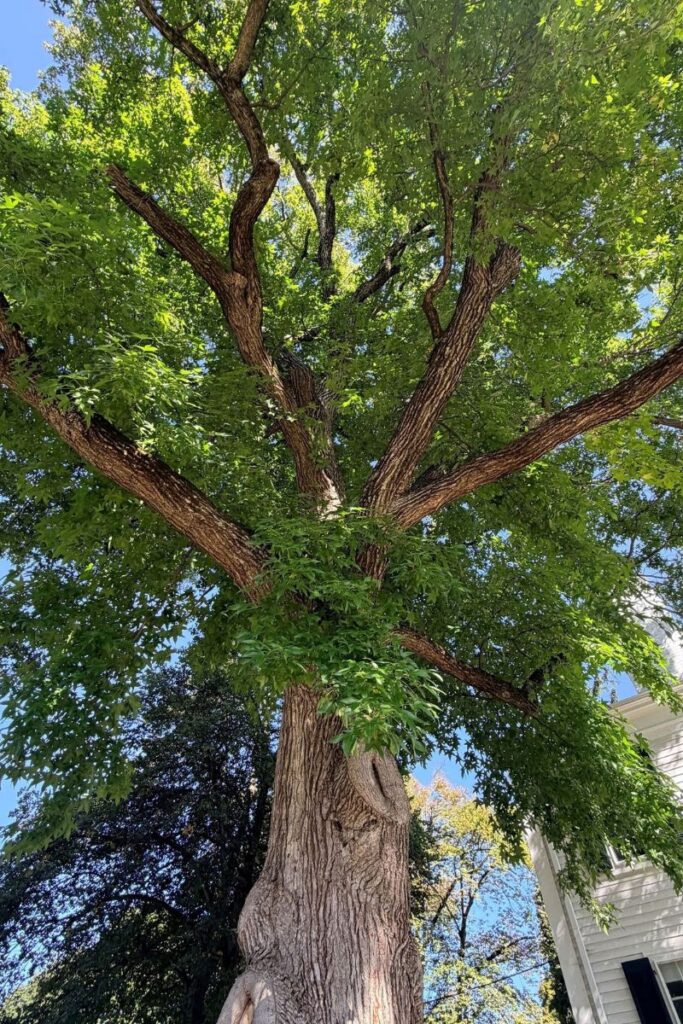
Photo credit Amherstma.gov
Since 2012, APSTC has planted numerous sweetgum trees around Amherst. Residents can see them on West Street near the Atkins rotary, on the south side of Amity Street, on the East Common, and at the corner of North Pleasant and Meadow Streets, among other locations.