
Board of Health Bans Sale of Synthetic Kratom
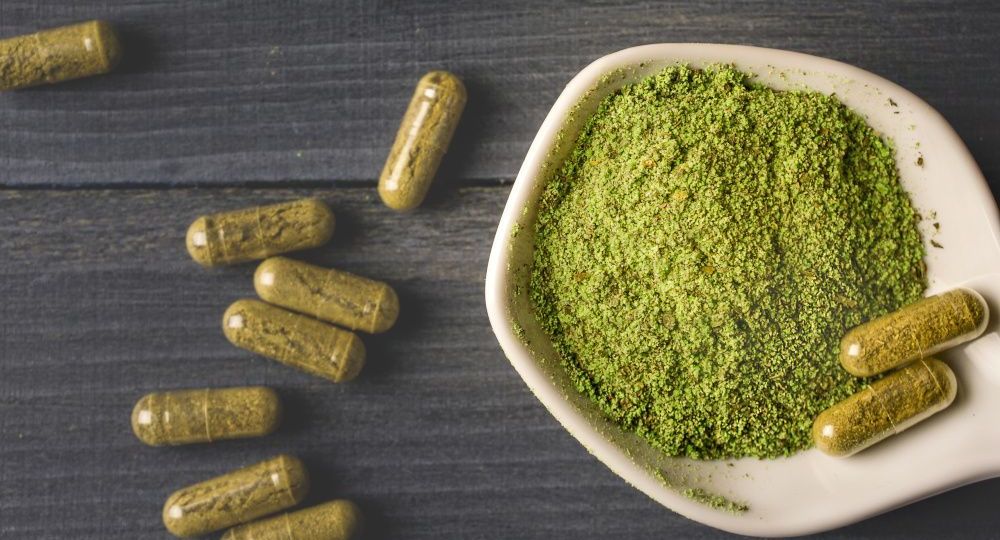
Photo: SOZO Recovery Center (CC BY-NC 4.0)
Report on the Meeting of the Amherst Board of Health, March 25. 2026
The meeting was held over Zoom and was recorded.
Present
Risha Hess (Chair), Betsy Brooks, Jack Jemsek. Absent: Premila Nair. One vacancy.
Staff: Kiko Malin (Public Health Director), Maheen Ahmed (Program Assistant)
At their meeting on March 25, 2026, the Amherst Board of Health (BOH) voted unanimously (3-0 with one absent) to adopt new regulations that ban the sale of synthetically derived kratom (7-OH), synthetically derived cannabinoids, and unregulated novel intoxicating substances.Violations will be punishable by a fine of $300/instance and possible revocation of a tobacco license from vendors that hold one. The new regulations go into effect April 15, 2026, and the board will be notifying tobacco license holders via email of the new regulations and effective dates.
Kratom is an herbal substance derived from the leaves of a tropical tree (Mitragyna speciosa) native to Southeast Asia, commonly used for its stimulant effects in low doses and sedative, pain-relieving effects in high doses. While naturally occurring, modern “synthetic” or highly concentrated kratom products differ significantly from traditional leaf forms in chemical composition, potency, and risk, posing a much higher risk of several severe health impacts, addiction, withdrawal, and overdose.
7-OH (7-Hydroxymitragynine) products are unregulated, potent psychoactive substances derived from kratom, often sold as tablets, strips, or powders in smoke shops and gas stations. Known for their intense opioid-like effects—reportedly 13 times stronger than morphine—these products are rising in popularity but carry high risks of abuse and addiction.
Northampton banned the sale of synthetic kratom in August of 2025.
The board voiced concerns about the threat kratom poses to public health, but decided that for the moment, they would create a carve-out for natural kratom, which for now, can only be sold in adult-only stores, and might take up the question of regulating natural kratom at a future date.
Health Director’s Report
- Waste Hauler Update
Since May of 2022 the board has supported the proposal for a new waste hauler bylaw, that is projected to reduce the town’s waste stream, lower disposal costs for residents, and institute town-wide curbside compost pickup. The BOH wrote to the Town Manager last August to protest the lack of progress on the proposal which was first submitted in 2021. Mimi Kaplan, who previously served as the town’s solid waste coordinator, has been hired as the town’s new consultant for the project and has been charged with developing a “road map” for an RFP to go to haulers to determine the costs of implementing the new bylaw. Malin has been in touch with Kaplan to inform her of the BOH’s support for the proposal. The road map and possibly a draft RFP will be completed by June 30, 2026 and will need to be approved by the Town Services and Outreach Committee and the Town Council before a final RFP is drafted and sent to haulers. (See here, here, here , here and here for some history on the proposal.) - Legislation SAPHE 2.0
Malin provided an update on State Action for Public Health Excellence legislation, commonly known as SAPHE 2.0, and amending G.L. c. 111, § 27D (SAPHE 1.0). In 2016, the Massachusetts legislature created the Special Commission on Local and Regional Public Health to review the Commonwealth’s local public health system. In 2019, the Special Commission issued the “Blueprint for Public Health Excellence: Recommendations for Improved Effectiveness and Efficiency of Local Public Health Protections.”
Massachusetts has more local public health jurisdictions than any other state—351 boards of health, many very small and without much fiscal support. This decentralized approach creates strong local control but is neither efficient nor equitable across communities. It was especially evident during COVID when towns had to work together, but with no framework to facilitate that work.
The overall aim of SAPHE is to grow regional capacity for boards of health. One project is to develop performance standards for boards of health and to evaluate the baseline capacity across the state to meet the most significant public health challenges. One aspect of that work is a statewide survey which Malin is completing on behalf of the Town of Amherst.
Another is the Public Health Excellence Grant Program, which helps communities build capacity and that has awarded $26.2 million to 56 grantees across the Commonwealth to date. Northampton has received one of these grants and uses it to fund regional initiatives like its regional vaccine clinic with which Amherst collaborates. Northampton offers a shared services arrangement to towns that don’t have the capacity to manage certain public health functions, such as restaurant inspections. - Tracking Diseases: High Incidence of Lyme in Amherst
The Health Department continues to track the local incidence of several diseases, including Influenza, COVID-19, vaccine-preventable illnesses like measles and pertussis, GI illnesses like norovirus, and tick-borne illnesses. Malin noted that for most tracked diseases, incidence in Amherst is low, though the numbers for COVID and flu do not reflect the actual cases out there, since individuals often test at home and are not required to report. One exception, though, is Lyme Disease, of which there were 347 recorded cases in the region, including 99 cases in Amherst in 2025, which is much higher than in neighboring communities. Malin cautioned that Amherst should be prepared for an intense tick season.
Betsy Brooks asked if the high Lyme count is just an artifact of reporting or whether Amherst is more susceptible to Lyme. Jack Jemsek thought that in Amherst, people might be more Lyme-vigilant – more likely to seek care and get identified, and that perhaps, with 81+ miles of nature trails in town, Amherst residents are more likely to be active and out in the woods and along grassy trails. - Alpha-gal Advisory
Alpha-gal syndrome (AGS) is a serious, potentially life-threatening, allergic reaction that comes from a bite from the lone star tick, which is not common in Massachusetts. But the Mass Department of Public Health has sent out a clinical advisory that cases of Alpha-gal have been recorded on the Cape and the syndrome has now been added to the state’s list of reportable tick-borne diseases. - Mosquitoes
The town still has a contract with the Pioneer Valley Mosquito Control District and will continue participating in its testing for West Nile Virus and Eastern Equine Encephalitis. The Health Department maintains a web page on mosquito-borne diseases and local surveillance reports. - Valley Vax
Valley Vax, a group of area public health professionals who provide reliable information about vaccines, will be receiving an award for their work. - NARCAN
The Department of Health plans to install a NARCAN (a drug to reverse an opiate overdose) access site in the little park across from Masuda’s Café. There is also a NARCAN access site inside the Bangs Community Center. - Open Seat on Board
The BOH is currently interviewing candidates to fill the open seat on the board, with the hope of an appointment in time for the May meeting. - Senior Center
Malin is currently serving as the interim Director of Senior Services. A search is underway to replace Lisa Borchetta who resigned effective March 6.
Next Meeting
The next meeting of the BOH will be Wednesday April 15 over Zoom.