
SJC Kills Ballot Initiative to Cut State Income Tax
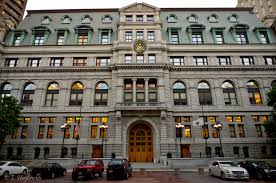
John Adams Courthouse, Boston, MA. Photo: Wikimedia Commons (CC BY 2.0)
Opponents say the tech CEO-backed measure would have gutted the state’s budget and drained money from education, research, and healthcare, eliminating hundreds of thousands of jobs.
Source: Andrew Farnitano, ACF Impact Strategies
The Massachusetts Supreme Judicial Court today issued a decision barring the proposed income tax cut ballot initiative from appearing on the November ballot.
The ballot initiative would have cut the state’s income tax rate on long-term capital gains, but the constitutionally required summary of the initiative omitted this key element, and in fact erroneously stated that long-term capital gains taxes would not be impacted, hiding a massive tax break for the state’s richest taxpayers from petition signers and voters. The court ruled that “[b]ecause this summary materially misstates the true scope of the proposal, it is unfair” and that “allowing a new summary at this stage would…call into question the validity of the more than 85,000 signatures already gathered on forms bearing the unfair summary.“ The decision reads “The summary’s contrary statement is not a minor imprecision. It is significantly misleading and likely to influence voters. The Attorney General therefore did not provide a “fair” summary as required by art. 48, and the initiative petition may not appear on the 2026 Statewide election ballot.”
Leaders of the Protect Massachusetts’ Future ballot committee, which opposed the initiative, celebrated the ruling.
“Today is a good day for anyone in Massachusetts who cares about our local schools, our healthcare system, or the public services we all rely on. The income tax cut ballot initiative would have created a $5 billion budget hole and triggered massive cuts to local schools, healthcare and other public services.” — Deb Pimental, Executive Strategist of the Coalition for Social Justice
“At the same time, the ballot initiative would have delivered the largest tax breaks to the ultra-rich, while low-income and middle-class residents would have been stuck paying the price. Slashing local aid and public services to fund tax breaks that mostly benefit millionaires is the wrong direction for our communities, and we’re all better off without this initiative on the ballot.” — Shanique Rodriguez, Executive Director of the Massachusetts Voter Table
“Today’s decision has made clear that billionaires cannot buy themselves sneaky tax breaks with their misleading and irresponsible ballot question. Working families in Massachusetts are better off with this question off the ballot, and we look forward to continuing to work with state policymakers to create a more affordable and livable Massachusetts by investing in – not gutting – funding for our schools, our roads, our housing, and the programs that our communities need.” — Chrissy Lynch, President of the Massachusetts AFL-CIO
“The dark-money proponents of this reckless ballot initiative tried to hide an enormous give-away to the richest 1% within the appearance of a broad-based tax cut. It’s good that the Court stood up for the principle that voters deserve to know what they’re voting on. However, the out-of-touch billionaires behind this initiative are continuing to push their revenue cap ballot initiative, which would cost the state billions of dollars over the coming years and force cuts to public schools, healthcare, and other critical programs. We need to eliminate the loopholes that have allowed anonymous donors to fund this reckless campaign, and reject their continued abuse of the ballot process to buy themselves a massive tax break. Labor has already committed millions of dollars and the power of our members to build a successful grassroots campaign to stop the billionaires from achieving their goal: undermining the success of the Fair Share Amendment in creating a better, more just Commonwealth.” — Max Page, President of the Massachusetts Teachers Association
“This tax cut campaign was never about delivering real relief for working class families facing an affordability crisis. Even the income tax cut they proposed was about sneaking through a tax break for ultra-rich investors. And their true goal all along was to leverage the initiative into a deal to secure more tax breaks for ultra-rich investors and wealthy heirs, along with massive giveaways to profitable corporations. We’re grateful to our state leaders for standing strong against the ultra-rich backers of this assault on our collective well-being.” — Harris Gruman, Chair of Protect Massachusetts Future and Executive Director of the SEIU Massachusetts State Council
“This reckless ballot question would have pushed many families and communities over the edge. Now, it’s time to shift the discussion to what would really support our working families and communities, including strategic investments to support our schools, increase workforce training opportunities, and lift up the things that make Massachusetts a place people want to live and work and raise their families. Our state and our communities need more resources and support right now, not less. Children need more educators in their classrooms and more students are needing greater services. Residents need more opportunities toward homeownership. Working families are having to choose between paying their health insurance bills or their energy bills.” — Jessica Tang, President of the American Federation of Teachers Massachusetts
The Pioneer Institute recently advocated to the Legislature for six so-called “competitiveness” reforms that showcase the types of policies the proponents of the revenue cap ballot initiative aim to secure: cutting taxes for C corporations that conduct business in multiple states, cutting taxes for S corporations with more than $6 million in annual receipts, eliminating the state’s minimum corporate tax, eliminating one half of the state’s corporate excise tax, exempting trucks, trailers, and other rolling stock from the state’s sales and use tax, and repealing the state’s estate tax. None have anything to do with affordability for low- and middle-income residents; all would represent a giveaway to large corporations and wealthy taxpayers, and result in cuts to public services.
Background
The Massachusetts High Tech Council, the Pioneer Institute, and the Massachusetts Competitive Partnership, working together through the Massachusetts Opportunity Alliance (MOA), a ‘dark money’ 501(c)6 organization, was backing two ballot initiatives this year. The first — now blocked from the ballot by the Supreme Judicial Court — would have cut the state’s tax rate on most personal income from 5% to 4%, reducing state revenues by about $5 billion a year and leading to drastic spending cuts to local aid and public services across the state. The other would impose an increasingly restrictive cap on state investment that would lead to escalating cuts to public programs over time, costing the state an average of $2 billion in annual revenue and locking Massachusetts into a downward spiral of tightening budgets with regular forced budget cuts.
Together, these initiatives would force towns and cities across Massachusetts to lay off thousands of hard-working teachers, police officers, and firefighters, leaving families to pay the price for corporate greed. Hospitals, nursing homes, schools and colleges could be forced to close their doors, leaving us all worse off.
Multiple studies confirm that the income tax cut initiative would have overwhelmingly and disproportionately benefited the state’s richest residents. Research from MassBudget found that while the state’s richest 1% of taxpayers would receive an average annual tax cut of $31,600, or $608/week, the bottom 80% of taxpayers would receive an average annual tax cut of $534 — just $10/week, while our healthcare is taken away, our roads and bridges are filled with potholes, and our schools and colleges are closed. And a study by the business-backed Tufts University Center for State Policy Analysis found that millionaires (those making over $1 million a year) would receive an average state tax cut of $37,421 if the initiative passes. That’s 30 times greater than the tax cut for middle-income taxpayers (those making $75,000 to $200,000 a year), who would receive an average state tax cut of $1,267. And it’s 542 times greater than the tax cut for low-income taxpayers (those making under $25,000 a year), who would receive an average state tax cut of just $69.
A recent poll of Massachusetts voters by MassINC Polling Group found that after voters learn these facts about the income tax cut ballot initiative, support for the initiative drops from 66% to 40%, with 50% planning to vote no.
The campaign behind the tax cut initiatives has refused to reveal the source of its funding. In February, a complaint was filed with the state Office of Campaign and Political Finance (OCPF) alleging that the Massachusetts Opportunity Alliance is “failing to disclose the true source of [its] contributions in violation of the state campaign finance law,” and seeking to expose the wealthy donors behind the effort.
Read More
Statement on SJC Decision from Protect Massachusetts’ Future (WBUR)
Mass. High Court Rules Proposal to Slash Income Tax Can’t Appear on November Ballot (Boston Globe)