
Amherst Arbor Spotlight: Northern Catalpa
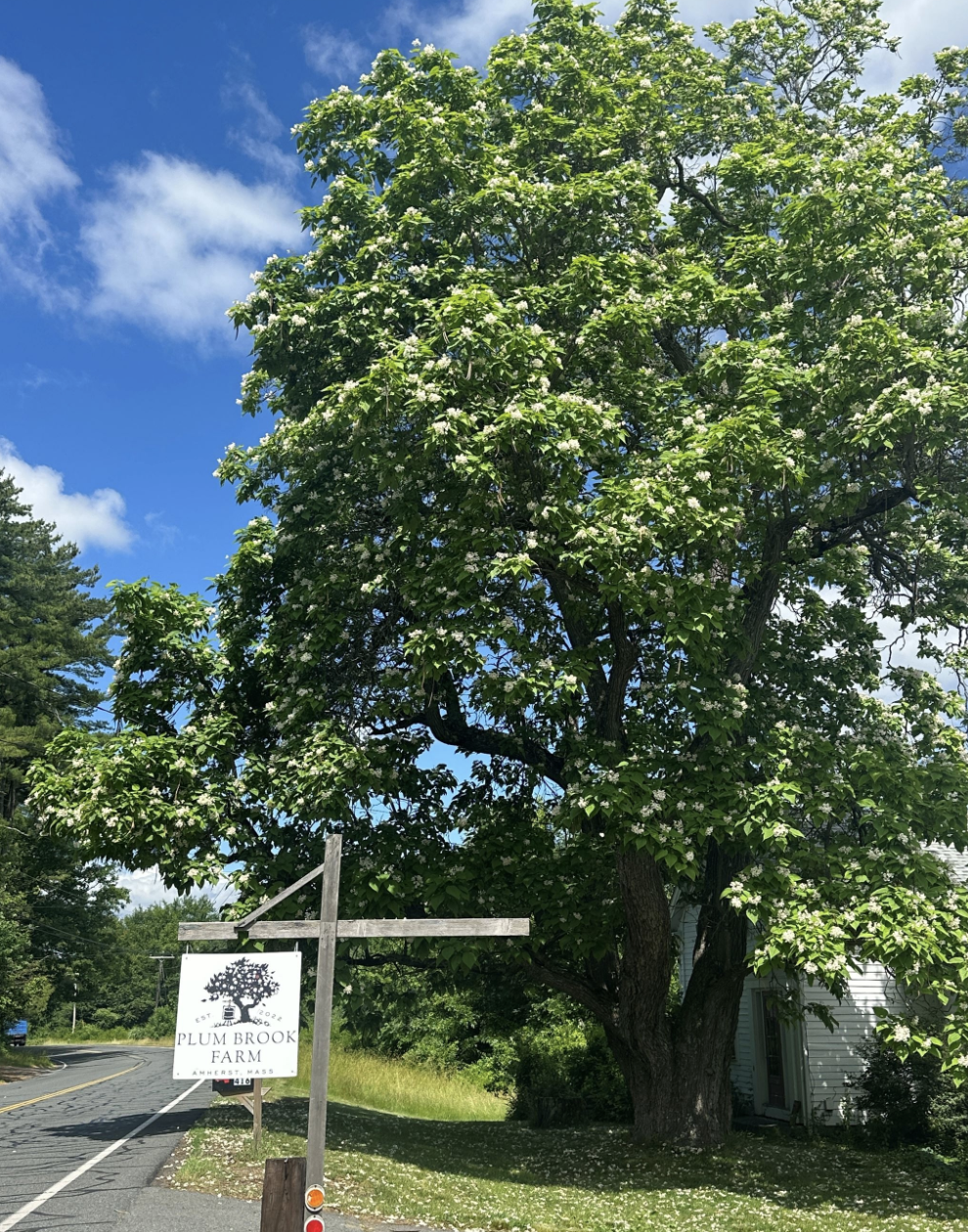
This giant northern catalpa is familiar to commuters along Bay Road in south Amherst. It grows at Plum Brook Farm, near the intersection with Middle Street. Photo: Amherst Public Shade Tree Committee
by The Amherst Public Shade Tree Committee
This is the seventh in a series of 12 articles produced by the Amherst Public Shade Tree Committee (APSTC) under the title “Amherst Arbor Spotlight.” The series focuses on the town’s 12 species of shade trees and features a different tree each month. New articles will be posted on the first day of the month on the APSTC website, and in the Amherst Indy, with links on Facebook and Instagram. Read the previous columns here.
Northern Catalpa: Catalpa speciosa
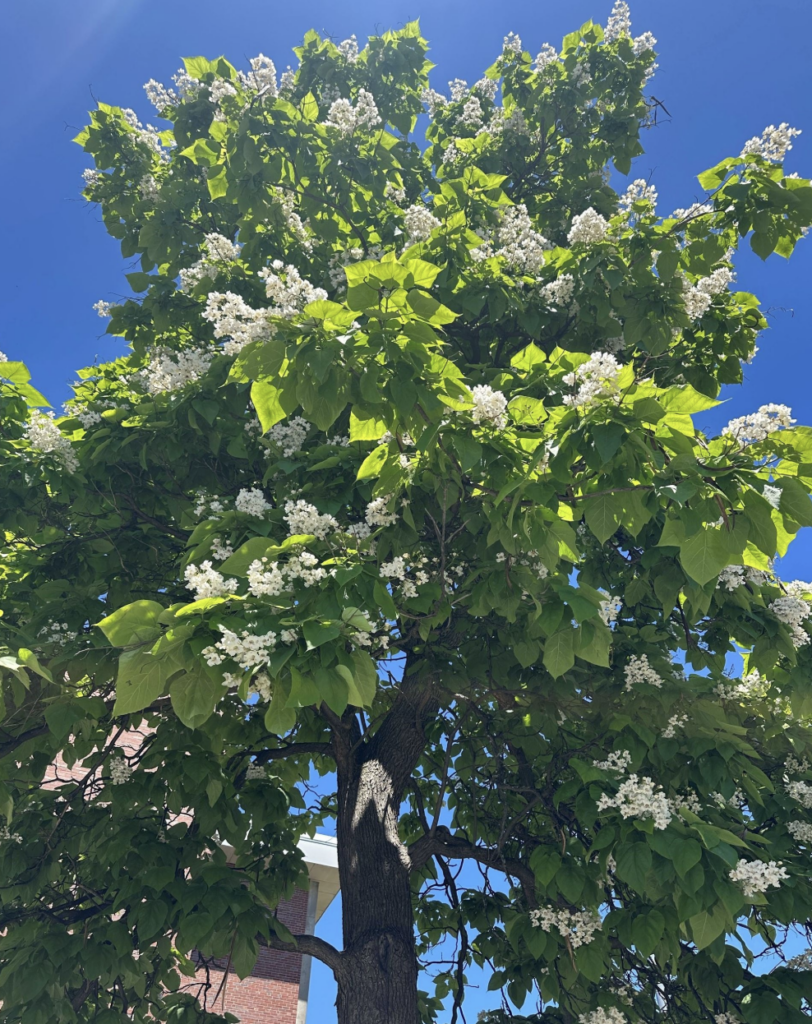
While Northern catalpas provide year-round visual interest, June is THE month to enjoy Amherst’s numerous specimens. June is when the trees burst into magnificent displays of massive white flowers, a sure sign to gardeners that tomatoes are safe from a late frost. Northern catalpas have enormous, heart-shaped leaves that grow in whorled groups of three. It’s easy to identify the species in winter, too, by its abundant dangling seed pods. Northern catalpas are native to the Midwest but have been cultivated throughout New England as large ornamental shade trees. Historically, their fast growth and natural resistance to rot made its wood ideal for fence posts and railroad ties. Northern catalpas reach heights of 60 feet and taller and are incredibly tolerant of urban growing conditions.
Northern catalpas are perennial late bloomers. While most deciduous trees in Amherst leaf out by mid May, catalpas remain stubbornly bare. However, their delayed schedule benefits bees and hummingbirds by providing nectar long after other trees have bloomed.
This is one of five northern catalpas lining the UMass parking lot at Boyden Gymnasium.
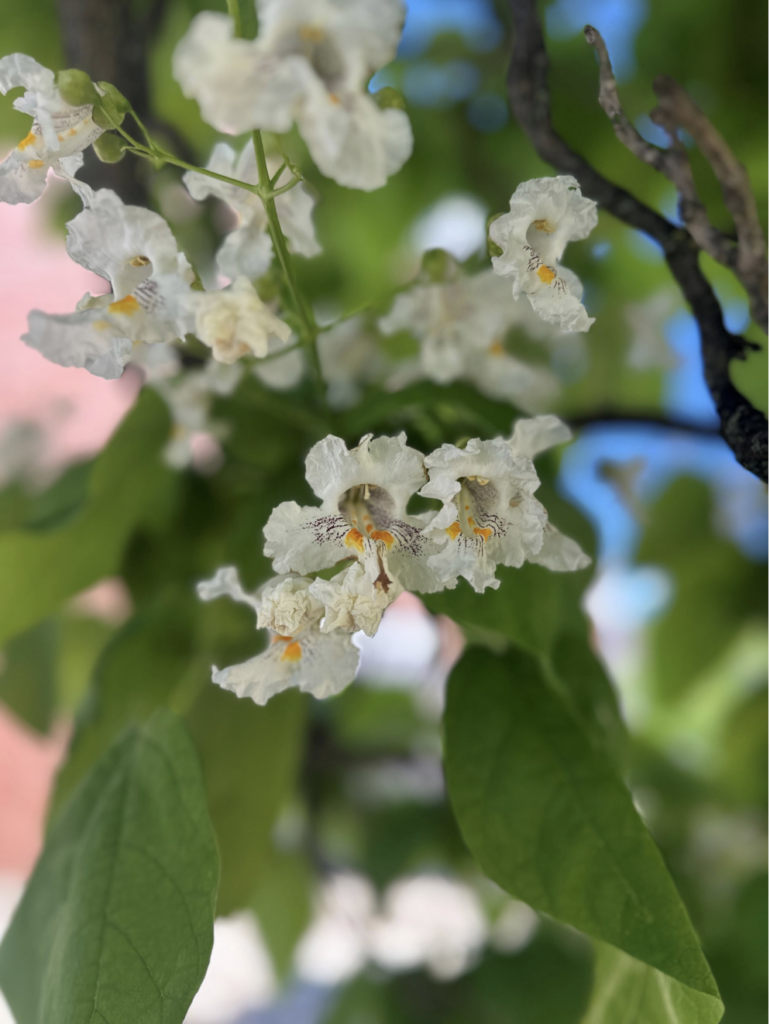
The northern catalpa’s beautiful white, bell-shaped flowers are dotted with orange and purple markings.
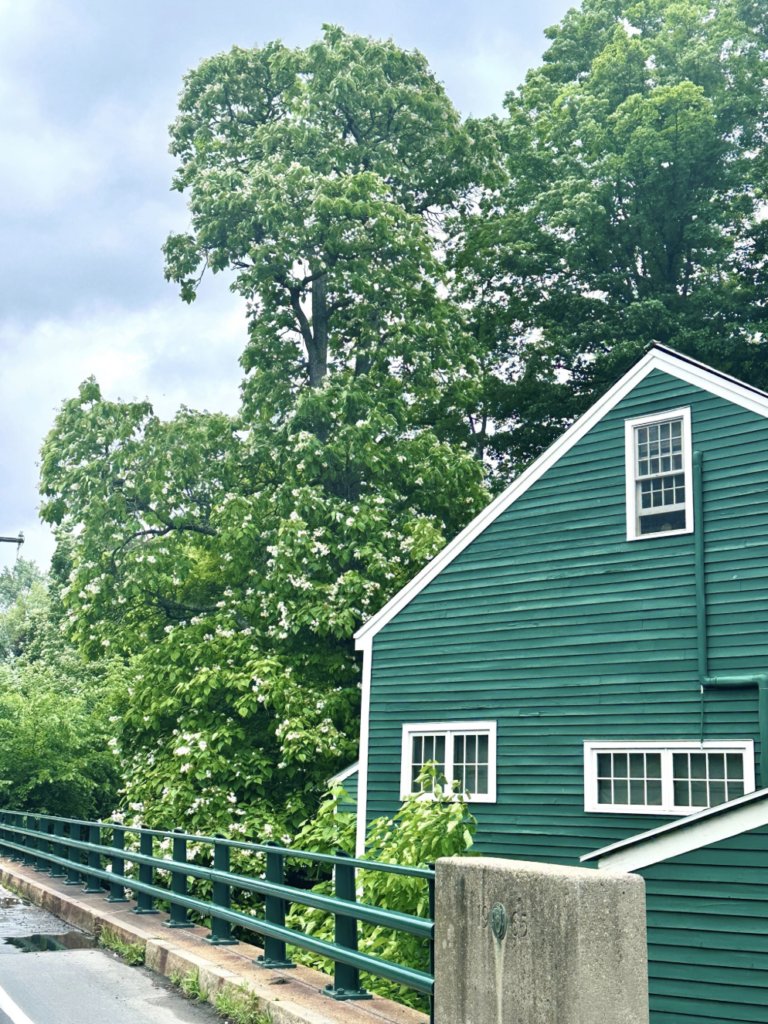
This prominent northern catalpa shades the Fort River as it flows under West Street at Mill Lane.
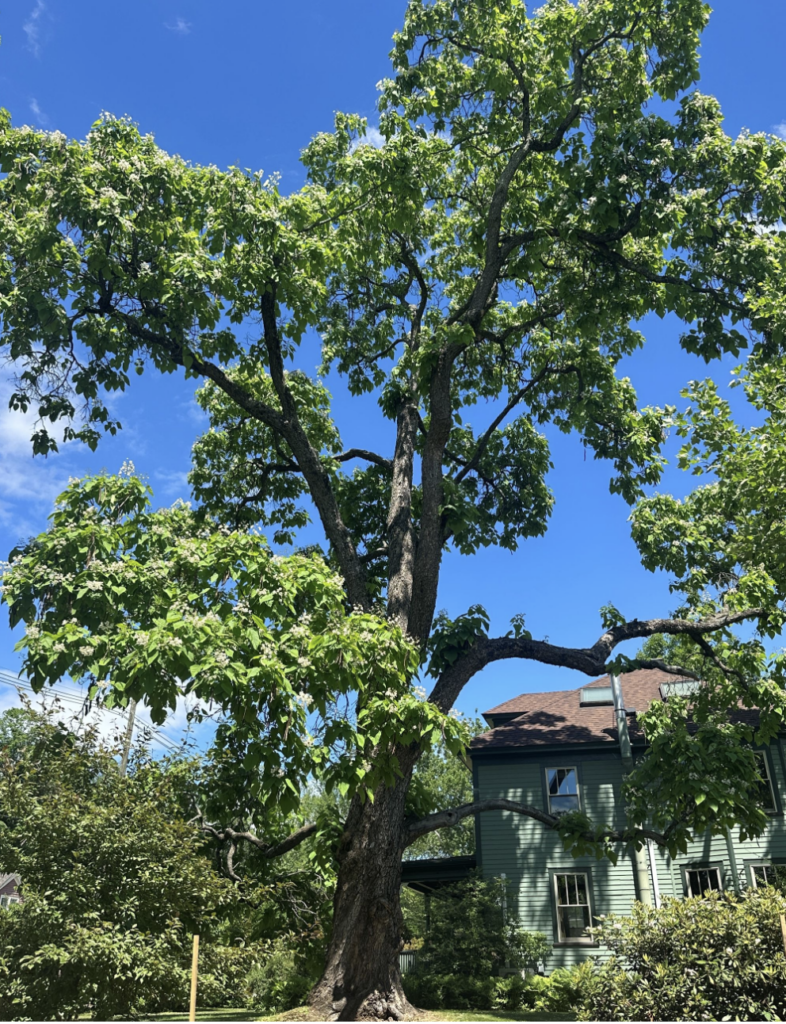
An enormous specimen, this northern catalpa is on private property at the intersection of Harris and Pine Streets. The tree has been carefully pruned over the years and now bares a unique form.
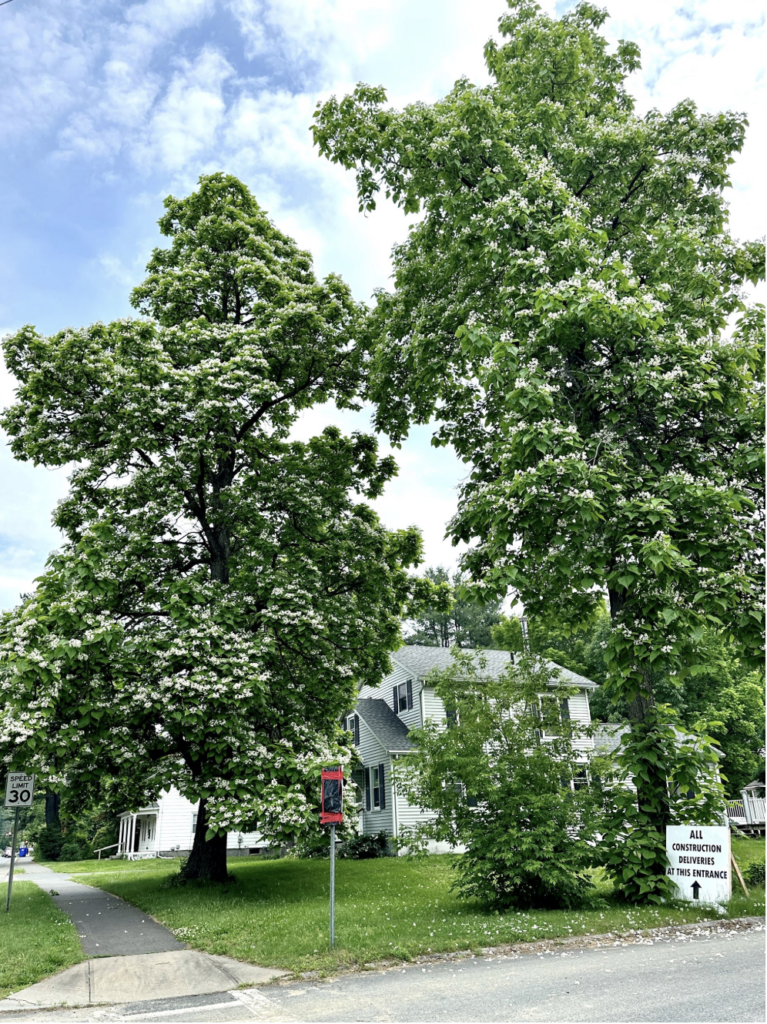
These two northern catalpas will welcome students to the new Amethyst Brook Elementary School in September, 2026. They stand at the school’s driveway entrance on North East Street.
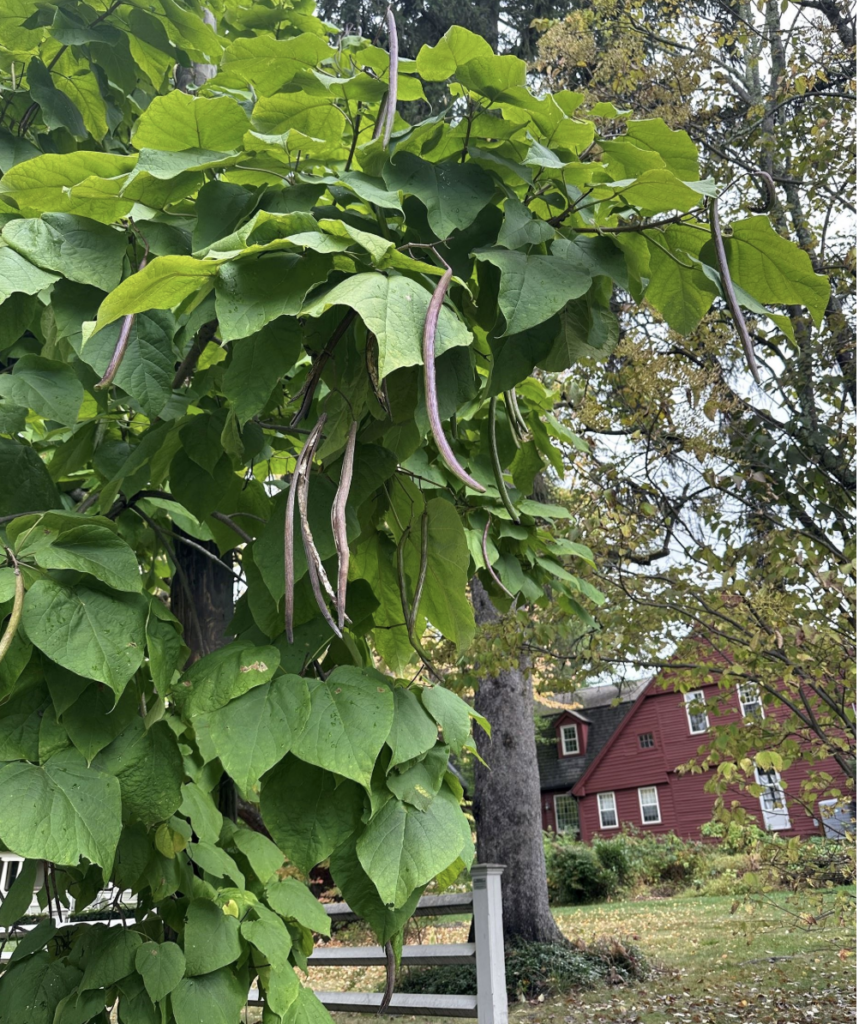
The northern catalpa’s pendant seed pods, which can reach 20 inches in length, give the species its playful nickname: cigar tree. This tree is on the corner of Amity Street and Sunset Avenue.
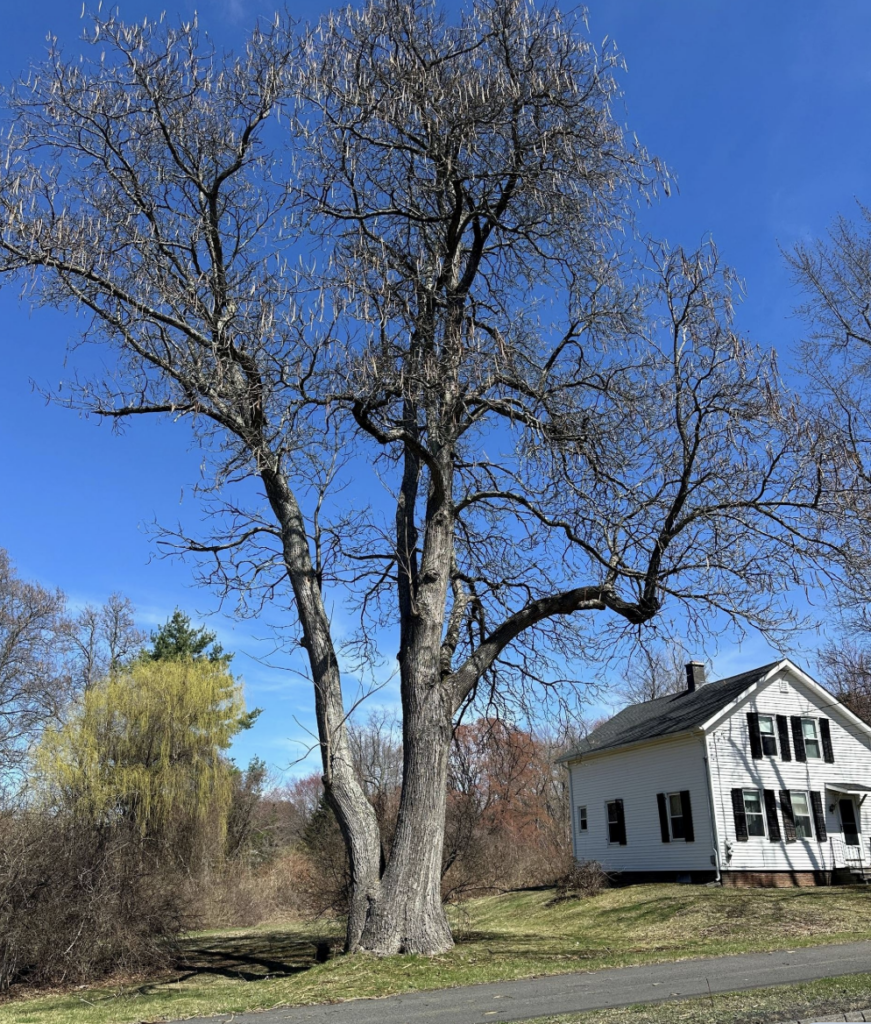
Northern catalpa seed pods persist through winter, like these ones seen on Snell Street.