
Letter: UMass Amherst Should Be Part of the State’s PILOT Reimbursement Program
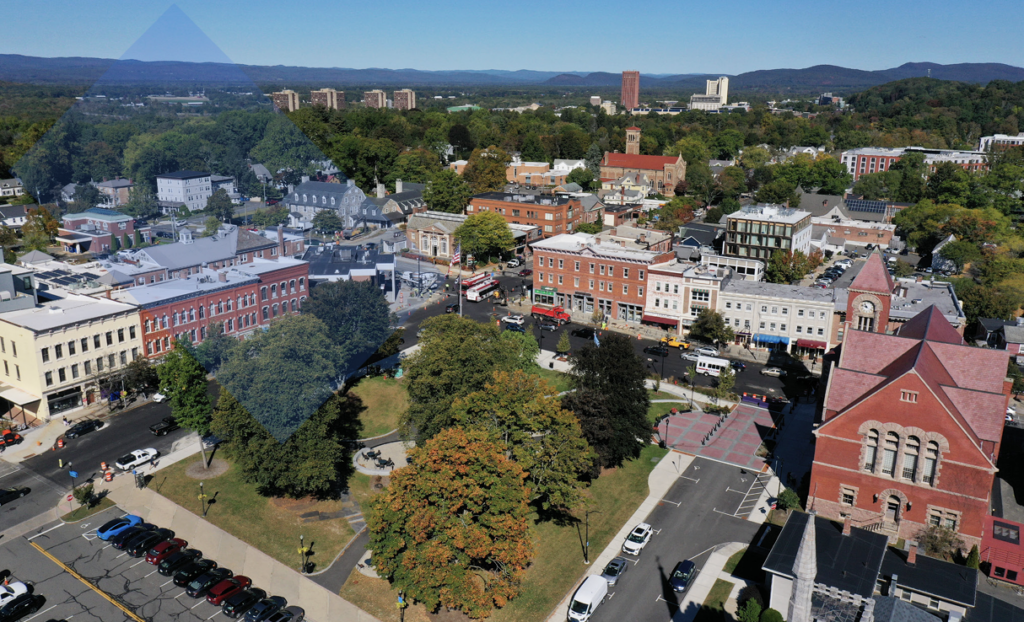
Photo: amherstma.gov
The following letter was sent to the Amherst Town Manager and Amherst Town Council on July 9, 2026.
UMass Amherst is the Commonwealth’s flagship campus, but Amherst alone absorbs most of the local costs of hosting it. Police, fire, roads, and other services must support a large, tax‑exempt institution, while the town cannot collect the property taxes a comparable private development would generate. Voluntary payments from UMass, while appreciated, are not a true, predictable PILOT and leave Amherst structurally under‑compensated.
The state already acknowledges that municipalities deserve reimbursement for state‑owned, tax‑exempt land through its existing PILOT framework. Yet the land under UMass Amherst is effectively treated as an exception, even though the fiscal impact on Amherst is greater than many other state properties. This gap is a policy choice, not an inevitability—and it can be changed only if Amherst clearly and consistently asks the Legislature to change it.
As town councilors and the town manager, you are in the best position to lead a more assertive, constructive effort. That could mean adopting a formal policy goal that UMass Amherst’s footprint be explicitly included in the state’s compensation formulas; building a coalition with other university‑host communities; and requesting specific legislation or budget language that ties state PILOT funds to large state campuses.
A more aggressive approach does not have to be hostile. It can be framed as aligning state policy with shared values of fairness and partnership: Amherst gladly hosts the flagship university, and in return the Commonwealth ensures that the town is not penalized for doing so. By moving this conversation from “voluntary contribution” to “state responsibility,” you can protect Amherst’s long‑term fiscal health and make clear that supporting UMass Amherst should be a statewide obligation, not just a local subsidy.
Here is the link to offer public comment.
Ira Bryck has lived in Amherst since 1993, ran the Family Business Center for 25 years, hosted the “Western Mass. Business Show” on WHMP for seven years, now coaches business leaders, and is a big fan of Amherst’s downtown.
See related: Establishing the Commission on PILOT for State-Owned Land (mass.gov)
I don’t have much hope for this . The town gave away the house, with the arrangement with Fieldstone . That project produced zero tax dollars to Amherst .
One thing I hope comes out of this discussion is a willingness to think beyond the traditional “UMass should pay more” versus “the university doesn’t pay property taxes” debate. We all know the legal realities. The more interesting question is whether there are creative ways for the Commonwealth, the university, and Amherst to better share the costs of hosting one of the largest public universities in New England.
For example, every year thousands of students and employees drive on Amherst’s roads, yet many of those vehicles are registered elsewhere, meaning the town bears the costs of maintaining roads, intersections, snow removal, traffic management, and emergency response without receiving the vehicle excise tax that would normally help pay for those services. Could a portion of campus parking permit revenue be shared with the town as a transportation impact fund? It would directly connect the revenue to the infrastructure those vehicles use. if UMass sold only 10,000 student permits at an average of $300 each, that would generate about $3 million annually in student parking permit revenue. It feels reasonable that the Town of Amherst could ask for 25-33% of that revenue to put towards road maintenance. UMass could calculate the estimated lost excise revenue and voluntarily reimburse the town annually.
There are many other possibilities worth exploring.
• A modest student infrastructure fee of say $40 a year could be dedicated to municipal services- that’s another $1.4 million.
• Public safety reimbursement for extraordinary police, fire, and EMS costs associated with major campus events. (maybe this already happens?)
• Housing mitigation payments tied to the number of students living off campus, creating an incentive for UMass to expand on-campus housing. For every student living off campus, the university pays a fee to the Affordable Housing Trust.
• Capital project agreements that include contributions to local infrastructure. Whenever UMass builds:
dorms
laboratories
stadium improvements
parking garages
it contributes to municipal infrastructure improvements.
Developers already do this through impact fees in many places.
Why shouldn’t a state university?
• Greater local procurement so more university spending stays in the Amherst economy.
• Joint investments in water, sewer, and transportation improvements that benefit both campus and town.
• UMass wins hundreds of millions in grants. A tiny percentage could support:
tree planting
climate resilience
affordable housing planning
transportation studies
local sustainability projects
This aligns with the university’s public mission.
Perhaps the most productive approach, as noted in Ira’s letter, would be a comprehensive Host Community Coalition Compact, a long-term partnership that recognizes Amherst’s (and Boston, Dartmouth, Lowell’s) role in supporting a flagship public university while providing predictable commitments in areas such as transportation, housing, public safety, infrastructure, and economic development. Instead of debating one payment every few years, both sides could work from a shared understanding that the university’s success and the town’s fiscal health are interconnected.
The university is one of Amherst’s greatest assets. But being a host community carries real and growing costs that require reliable, sufficient, consistent and transparent financial contributions from the university. The question isn’t whether UMass should pay property taxes, it can’t. The question is whether the Commonwealth and the university can develop modern partnerships that fairly recognize the financial responsibilities of the communities that make their success possible.
here’s how to testify at an upcoming listening session – tell them why if other towns and cities with state owned land will get compensation from the state, so should Amherst, which has the state land that UMass is on – and it EXEMPT from this PILOT program – which is dumb and crazy! those other towns have state land which is not degrading the roads, and using police, fire, ambulance, not to mention housing chaos!
Register: Listening Sessions with State-Owned Land PILOT Commission
Thoughts about the PILOT program? We want to hear from you! See below for more information on how you can participate.
The Commonwealth owns more than half a million acres of land, including state parks and forests, wildlife management areas, beaches, and military training facilities. Because this property is exempt from local taxation, the state administers a payment in lieu of taxes (PILOT) program that provides payments to municipalities hosting eligible state-owned land.
The Commission on PILOT for State-Owned Land (SOL), established by Governor Healey through Executive Order 645, is hosting a series of listening sessions across the state in July to solicit feedback on how the state compensates municipalities for state-owned land. The Commission is eager to hear directly from municipal leaders, residents, and other interested stakeholders, and findings from the listening sessions will inform the Commission’s recommendations.
See below for the session schedule for July so far (note: we will share an update on the Orange Town Hall session once confirmed). Additional sessions may be offered in the future depending on demand.
Marion Music Hall: Tuesday, July 14, 10am–11:30am.
Franklin Regional Council of Governments: Thursday, July 16, 5:30pm–7pm.
Holyoke Community College: Monday, July 20, 10am–11:30am.
Berkshire Innovation Center: Friday, July 24, 10am–11:30am.
Orange Town Hall: TBD (tentatively week of July 20).
To register for a listening session, please fill out this form: Registration for PILOT Listening Sessions (online registration page).
You can also use this form (online feedback form) if you are unable to attend a listening session but would still like to share your thoughts on the PILOT program with the Commission.
to register to speak: https://berkshireplanning.org/event/listening-session-with-state-owned-land-pilot-commission/
Bryck is spot on with his analysis and suggestions. Please support them.
I cannot attend the meetings but would like to leave some feedback. I am not seeing a link for that. Could you please provide that. Thanks, for doing this work, it’s so important.
Amherst should be included in the state’s rural PILOT program because it clearly meets both the spirit and the practical criteria of the policy, and its current exclusion is neither logical nor equitable. UMass Amherst sits on state-owned, tax-exempt land, and the PILOT program is specifically designed to reimburse municipalities for exactly this kind of lost tax base. Importantly, including Amherst would not cost UMass anything, nor reduce its state funding, since PILOT payments come from a separate state appropriation. This removes a common objection and makes inclusion a straightforward legislative fix, not a financial burden on the university.
At the same time, Amherst bears the full municipal costs of hosting the state’s flagship university—roads, fire, police, and emergency services—without proportional compensation. The current reliance on voluntary contributions is inadequate and structurally unreliable, especially compared to other states like Connecticut, where UConn is fully included in similar reimbursement programs. Amherst would be a rural town by any standard if not for UMass, yet it is excluded from a rural aid framework precisely because of the presence of the “economic engine” of UMass on that state owned parcel (it is maybe an economic engine for the state, but an enormous expense for the town of Amherst. That inversion makes no policy sense: the existence of a large, tax-exempt state institution should strengthen the case for reimbursement, not disqualify it.
In effect, Amherst is subsidizing a statewide asset while other beneficiaries—students, families, and the Commonwealth—do not share that local fiscal burden. Including Amherst in the PILOT program would correct this imbalance, replace uncertain voluntary agreements with a consistent state responsibility, and align Massachusetts with best practices already in use elsewhere.
I don’t know how many people realize this, but 50% of all of the traffic tickets that the UMass police write goes to the Town of Amherst.
Or that UMass, like the town itself, is required by law to put contracts out to bid and to purchase from the lowest responsible bidder — that locally sourcing, as nice as it might be, and as much as they might like to do it, is illegal.
Or that UMass is charging students every penny it already can to maximize income without losing customers (students) — the law of diminishing returns. So any increased expense has to be offset against existing expenses.
And that the easiest thing to offset is pay raises. To simply tell the unions “no.”
Earlier this year Senator Jo Comerford gave a presentation on her legislative initiatives for the newly seated Amherst Town Council. One item she discussed was the pending State Owned Land legislation and her seat on the Commission on PILOT for State Owned Land. A follow-up by Jo was promised. Jo.comerford@masenate.gov. 413-367-4656.
Dedicated energy by the Amherst Town Council towncouncil@amherstma.gov to this effort is also necessary at this point.
Amherst residents need to request advocacy from the Town Council and legislators “that UMASS Amherst be part of the state’s PILOT Reimbursement program”
Amherst received about $300,000 in 2024 from the state owned land PILOT reimbursement program for OTHER state owned properties/land located in Amherst but NO money reimbursement for the UMass properties/land. The possible inclusion of the UMass footprint in the reimbursement program would be financially significant for Amherst especially if/when the Commission updates the formulas which is also their charge.
Here is the link to offer public comment.
https://forms.cloud.microsoft/pages/responsepage.aspx?id=Fh2GPrdIDkqYBowE2Bt7Km7SNrpTTVdNr1hbSiw4rf1URVNCOEFYTDgyNFNKOEkzV1E2U0tQOUJBMC4u&route=shorturl
Boston University’s new five-year PILOT agreement with Boston, totaling about $105 million in cash and community benefits, should matter a lot here in the Valley, too. It’s a clear example of how a city can push wealthy, tax‑exempt institutions to contribute something closer to their fair share.
https://www.bostonglobe.com/2026/07/21/metro/boston-university-michelle-wu-105-million-pilot-agreement/?utm_medium=email&utm_campaign=DL%2007-21-2026&utm_source=2&utm_source=ActiveCampaign&utm_medium=email&utm_content=Wu%2C%20feds%20unveil%20plan%20to%20tackle%20sea%20level%20rise%20in%20Boston&utm_campaign=DL%2007-21-2026
BU will ramp its annual cash payments from $6.7 million to $8.3 million by 2030, and community benefits from $12.7 million to roughly $14 million a year, reaching about $22.3 million total in the final year. This is not full taxation, but it is a substantial, written commitment — the largest such deal Boston has ever signed with a nonprofit — and the first formal agreement with BU in more than 25 years.
For communities like Amherst, with high concentrations of large, tax‑exempt institutions, this raises hard but necessary questions. What would it look like if UMass Amherst and Amherst College,entered into clear, multi‑year PILOT agreements that the public could see, debate, and hold them to? Right now, residents shoulder the costs of public safety, infrastructure, and services that make these campuses attractive, while much of the associated wealth sits behind a wall of tax‑exemption.
Boston’s approach under Mayor Michelle Wu is not a cure‑all for municipal budget stress, and even Boston officials call PILOT a “band‑aid.” But it is at least a structured, transparent band‑aid, negotiated in public, with numbers attached and expectations set. That’s a big step up from vague pledges of being “good neighbors.”
If Boston can secure $105 million over five years from one university, Amherst and similar towns should be asking, openly and persistently: What is the right level of contribution from the institutions that depend on our streets, utilities, and public services every day? And when will we insist on putting those commitments in writing?
Boston University’s endowment size ($4.045 billion) is very close to that of Amherst College ($3.90 billion). Considering that BU supports 37,000 students while Amherst supports 1,900, Amherst College is much wealthier.
Yet even before the increase, BU contributes an annual total of $19.4 million in cash and benefits to Boston while Amherst College trumpets its $750,000 per year payment to the Town of Amherst.
And several high profile members of the Amherst College community were instrumental in shackling the Town with the $50 million oversized Jones Library expansion paid for mostly by state and local taxes.
The standing Partnership Agreement between the Town of Amherst and UMass Amherst signed by Chancellor Subbaswamy and Paul Bockelman expires in July 2027. The Partnership Agreement between the Town of Amherst and Amherst College expires in 2028. Now (right away) is the time the Town of Amherst should organize a negotiation team to prepare for the expiration of these two agreements. A team comprised of designated Town Councilors, the Town Manager and Amherst residents can be charged to study the development of successful PILOT programs, such as the contract Mayor Wu’s team just accomplished with Boston University, and make recommendations to the Town for future agreements with Amherst College and UMass Amherst.
This proposed negotiating effort above can occur seamlessly in parallel to the very important legislative activity being led by Jo Comerford on changing the state formula for reimbursing municipalities for state owned land.
Agree, Jeff and Kathleen! And in addition to negotiating a good deal on the PILOT payments, we can use our leverage to ensure that any public private partnerships built on UMass land are taxable, benefiting the town.