
Summer Wanderings and The Lost Domain
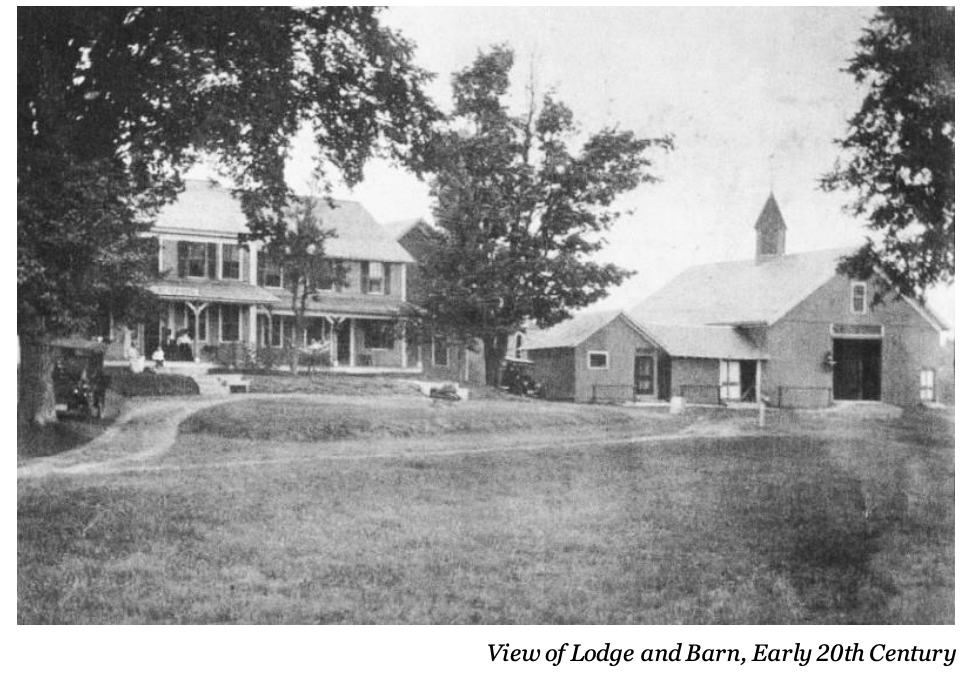
Federal style house (ca. 1785) at Lake Wyola, Shutesbury, MA. Photo: mass.gov
This summer has offered me a change of pace and a chance to widen my lens on issues of historic preservation and related local history themes. This is the second article in a new series called Summer Wanderings. Read the first installment here.
The Lake Wyola Farmhouse
There is a charming ca. 1785 farmhouse and barn on Lake Wyola (an Algonquian word meaning ‘quiet waters’) in nearby Shutesbury that in the past has been looking for a new leaseholder. I was curious to learn more about the site.
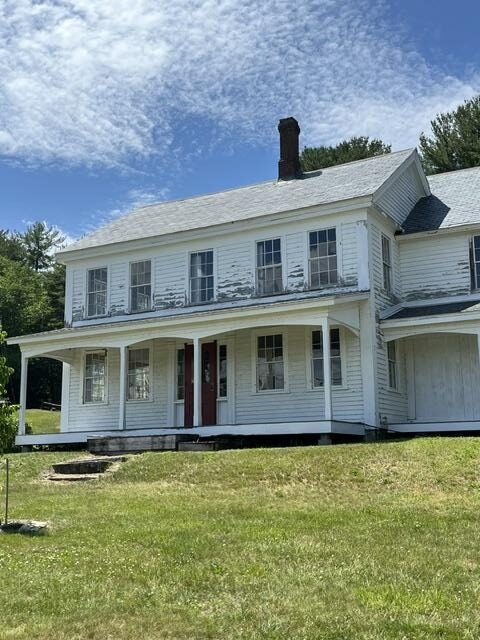
The property, also known as the Carroll A. Holmes Recreation Area (named for a former town selectman) is now owned by the Mass Department of Conservation and Recreation (DCR). The DCR manages nearly half a million acres of land in Massachusetts and is “one of the largest and most diverse state park systems in the country.”
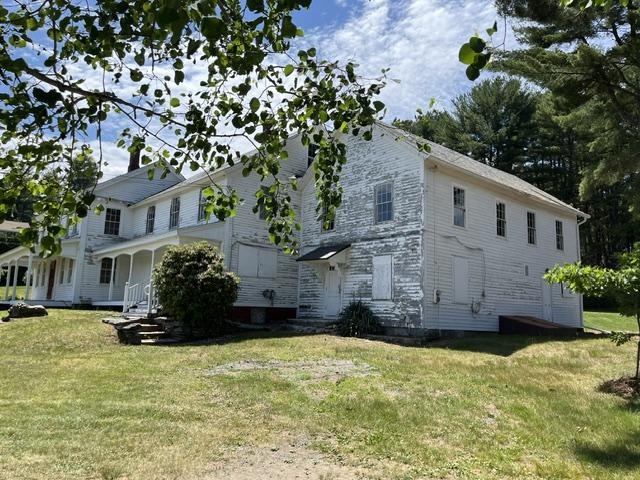
I noticed that an RFEI (“Request for Expressions of Interest”) was issued through the DCR’s Historic Curatorship Program a few years ago when I first wrote about Shutesbury for the Indy, seeking the public’s ideas for future uses for and restoration of the 40-acre site. Here is a little history.
In the second half of the 1800s, the farmhouse turned into a tavern. At this stage, local investors added a dam by Fiske Brook on the Wendell side of Lake Wyola with the idea of potentially developing hydropower on the site. It seems people had big plans for the place. Later still, in the early twentieth century, the site became popular as a local vacation resort. The building was added to and contained nine guestrooms and an upstairs dance hall.
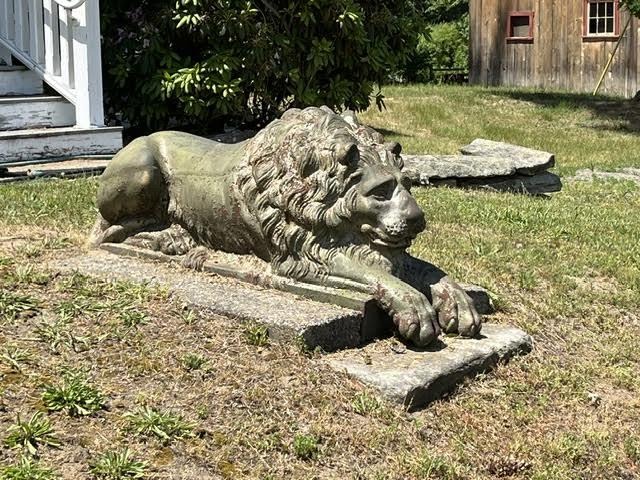
I wonder when the lion sculpture showed up to welcome you as a guest to this historic spot?
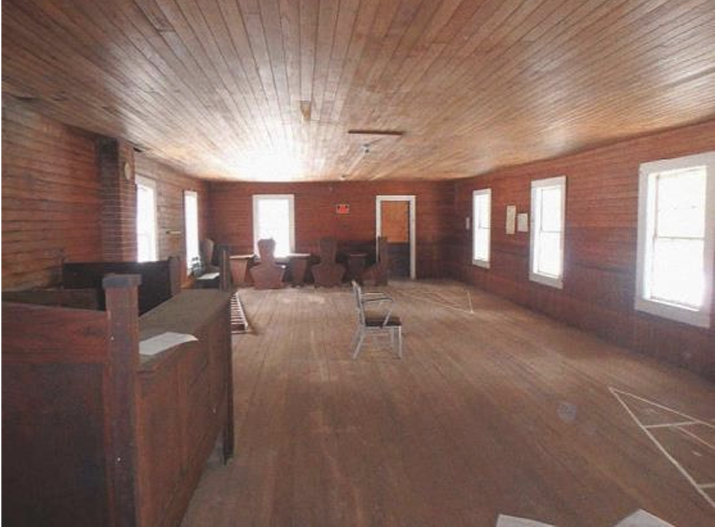
Reading about the local interest in developing hydropower and the addition of a community dance hall reminds me of the similar history of North Amherst, recently uncovered by the District One Neighborhood Association’s (DONA) Mill River Project (see also here).
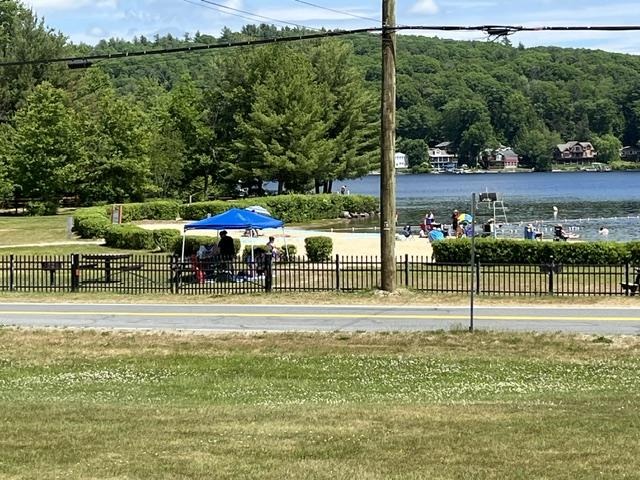
If you visit Lake Wyola, you will notice that the farmhouse is not in great shape (also evident in my photographs) but you will see groups of summer cottages as well as year-round homes surrounding other parts of the lake. The historic farmhouse and barn is a parcel that was gifted to the DCR by Emelia Bennett back in 1997. The disrepair of the farmhouse is in marked contrast to the rest of the neighborhood.
The DCR REFI wonders if the Lake Wyola site could be a place for overnight accommodations (close to the pristine lake across the road) or a community hub or even a wellness/retreat center, perhaps with a club shop. But if you are interested in becoming the new leaseholder you should be forewarned of the challenges: the farmhouse will need to be completely re-wired; interior historic finishes are mostly gone; clapboard repair and repainting are badly needed. The DCR staff told me that there are some deposits of bat guano inside. They were happy to tour me around the barn but, for safety reasons, not inside the house. However, if you are interested in an ambitious preservation project, there is a decent cabin (16 by 25 feet so at least twice as large as Henry David Thoreau’s 10 x 15 ft. cabin at Walden Pond) that could potentially be used by an on-site curator.
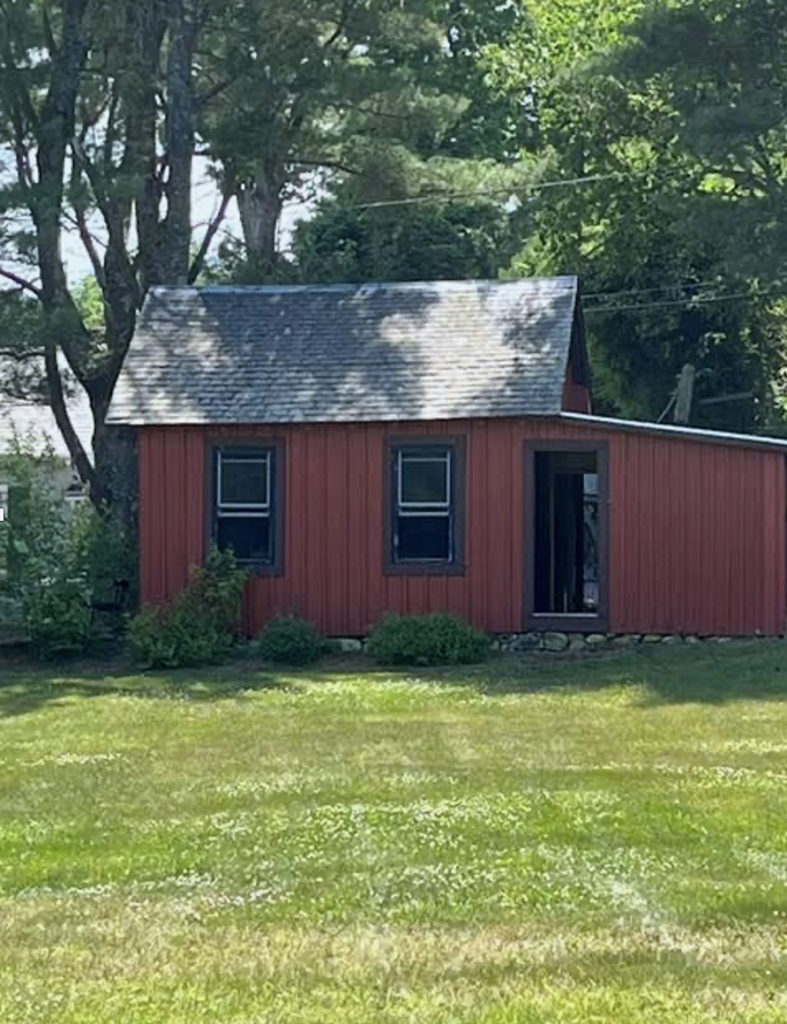
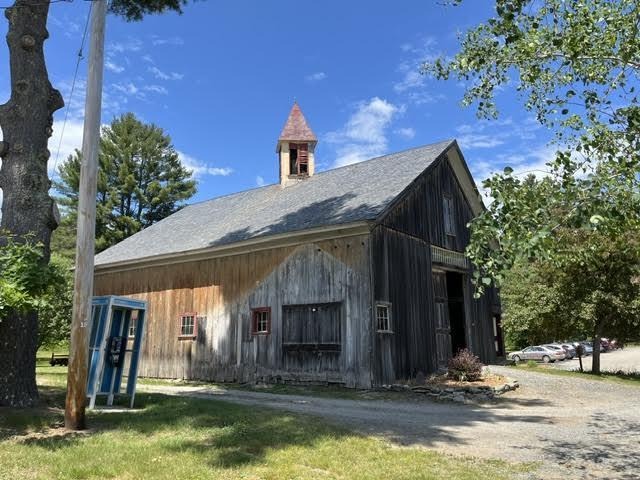
The nearby Shutesbury Athletic Club currently serves some of the community functions for the neighborhood and the town today that are suggested in the RFEI. Other possible uses include an events center or dining venue. The barn, currently used for storage by DCR staff, is spacious and has a small cupola.
As readers may already know, Lake Wyola is a popular swimming and picnic spot in the summertime and its trails are used year-round for hiking and for cross-country ski-ing and snowmobiling in winter. Apparently, the dam site might qualify for open-space CPA funding in the future, although there are contending places of need in other CPA categories. I would suggest that anyone interested needs to read Shutesbury’s excellent Open Space and Recreation Plan Update for the period between 2015 and 2022 to learn more about the aspirations of this town and what might be an appropriate use for the property. It would be great to see this historic resource better preserved. Other initiatives in the town demonstrate how much it cares about conservation, recreation and preservation. One of the more recent cultural and environmental assets for Shutesbury is Bright Water Bog on Ames Pond near Mount Mineral, gifted to the Kestrel Land Trust by Dr. Julian Janowitz in 2021.
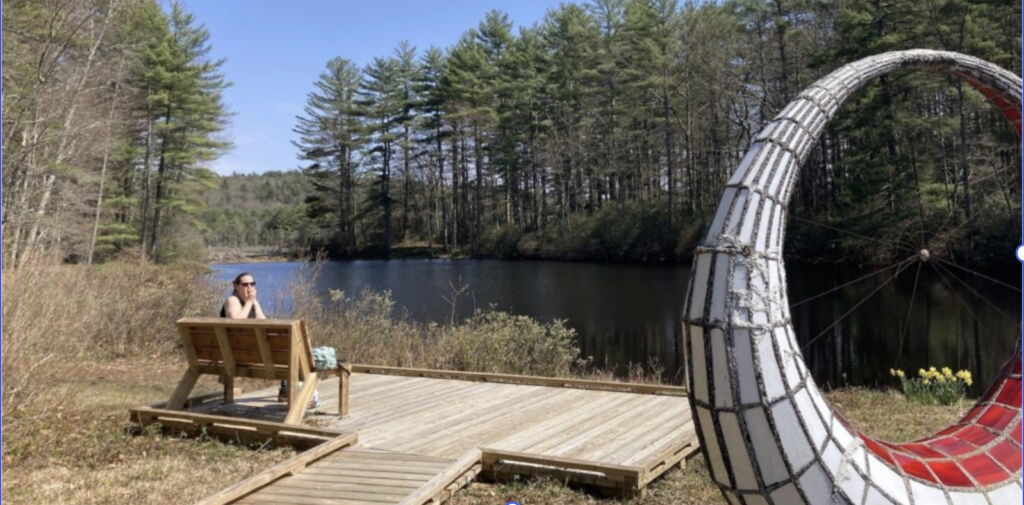
The Mary Lyon Birthplace
This summer I’ve had the good fortune to reconnect with a place I immediately wanted to visit when I first moved to Western Massachusetts in 2013. This is the birthplace of the early nineteenth-century educator, Mary Lyon (1797-1849), who has been one of my sheroes since graduate school.
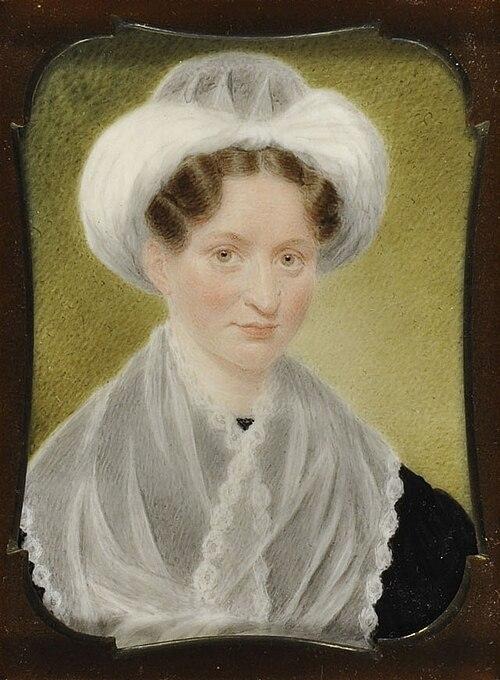
Mary Lyon was the founder, in 1837, of Mount Holyoke College in South Hadley, the earliest of the “seven sisters” women’s colleges. I first learned about her when I was completing post-graduate research at the libraries of both Radcliffe and Smith Colleges on the settlement house movement, as several of the earliest colleges for women in the United States had ties to this worldwide cultural and philanthropic movement.
You might well ask why “Seven Sisters”? They are named for seven stars in the firmament in ancient Greek mythology representing seven goddesses. These colleges were all established in the mid-to-late 19th century to provide women with a high-quality liberal arts education comparable with that offered to men at existing Ivy League colleges like Harvard.
Chancing upon a photograph I had taken in 2013 of the remains of Mary Lyon’s birthplace (an old farmhouse like the Lake Wyola farmhouse but with only the foundations, cellar hole and fireplace remaining today) I went back to remind myself where she grew up with her family before becoming a teacher. She seems to have been the mother to younger siblings for some time, as her father died young, helping to raise and educate them. When she began working and teaching outside the home, she lived with the families of her pupils, her only option as an unmarried woman in that era. She did this in nearby Ashfield, staying with a family on Main Street within walking distance of where she taught her classes at Sanderson Academy.
I realized that my recent visit was quite different from the one I had made nearly 15 years ago. Time passes and recall is never completely reliable.
In between my 2013 visit and last week’s pilgrimage, there was another occasion when I tried to see the site in the company of an expert on Mary Lyon, Sue Simarowski, who used to live in a house where Mary Lyon first taught school in the early 1800s. The visit occurred in a sustained summer thunderstorm and we drove by without exploring further. Simarowski used to live in Lyon’s so-called “winter school” that began as the home of Major Joseph Griswold. A veteran of the Revolutionary War, Griswold, according to historian Bill Hosley, had commissioned Asher Benjamin to design him a Federal-style brick home in Upper Buckland in 1818. It became the center of social gatherings in town for some time as it included a third-floor ballroom (a fashionable amenity in many Federal-style homes in New England in the early Republic and it was this space that became Lyon’s schoolroom from 1824 until 1829.
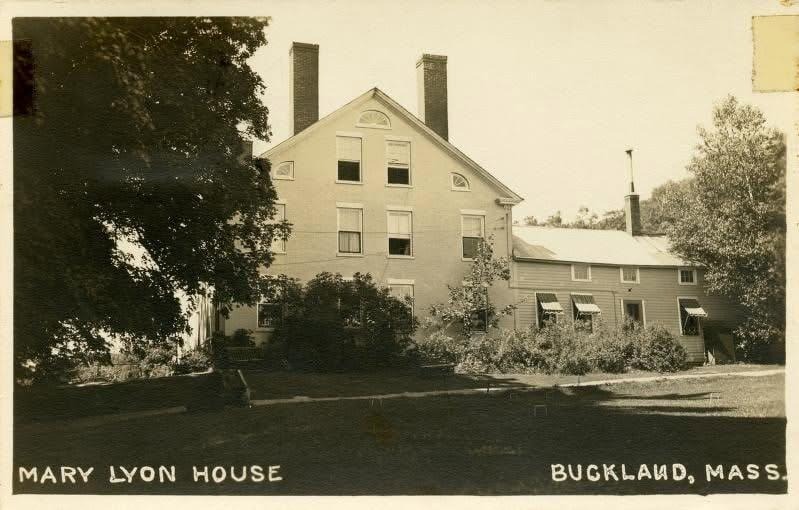
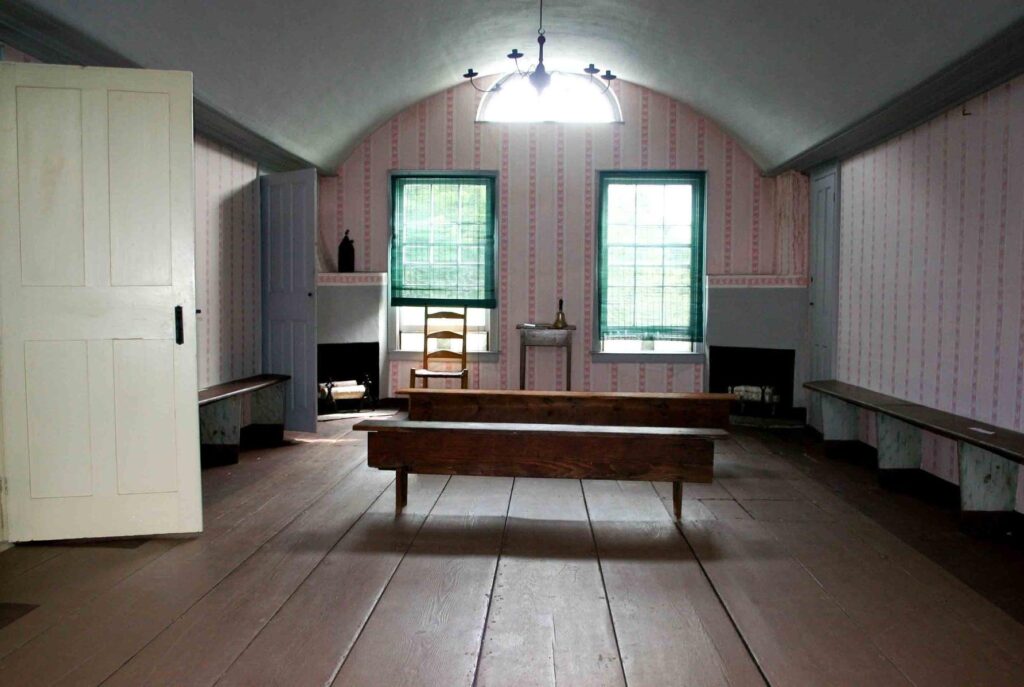
Lyon’s interest in becoming a teacher in part addressed the shortcomings – in her own estimation – of her own minimal formal education. She was determined to offer her pupils classes in science, Latin, and history which was very unusual for young women at the time. When she ran out of spaces for her classes, she began traveling around the state looking for better accommodations for her radical teaching methods. And it was this search that led her to found Mount Holyoke Seminary in 1836-7. The word ‘seminary’ was chosen as being less controversial than the word ‘college,’ although Mount Holyoke got its collegiate charter in 1888. Lyon also founded Wheaton College in Norton, MA where yours truly was once briefly an adjunct professor. When Mount Holyoke seminary was founded, Mary Lyon served as its principal for twelve years and endeavored to make the institution accessible to people of modest means.
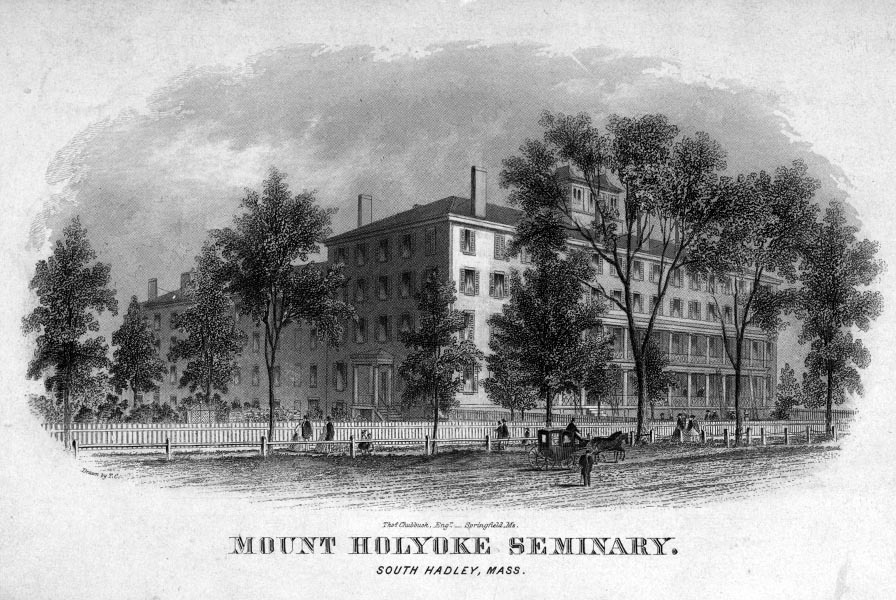
Emily Dickinson briefly attended the seminary in 1847.
The Mary Lyon birthplace site is hidden away on a dead-end dirt road just over Mary Lyon Hill, deep in the woods. It is the property of Mount Holyoke College and open from dawn to dusk. The only sounds you hear there are of a small brook running alongside the property and the cries of red-tailed hawks calling out to the skies above. Someone is keeping the grass cut in order to delineate the boundaries of the property and there is an historic stone marker by the foundation of the house site with a diagram of what function each of the rooms had when the Lyon family lived there.
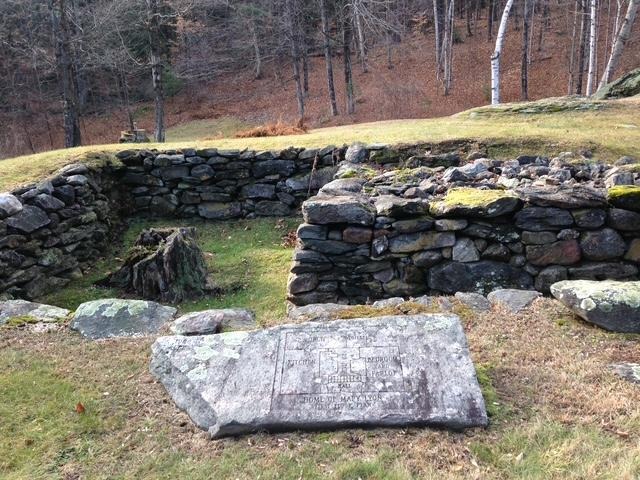
When I visited in 2013, I couldn’t believe how far the farmhouse was from Route 112 and when I learned that Lyon first ran her school out of the home of Maj. Griswold in Upper Buckland, I was relieved to learn that, instead of walking, she rode a pony over the hills to teach there. There is evidence to suggest that her own upbringing was hardscrabble. Being at this remote location, now bordering Khandroling, a Buddhist retreat center, it’s likely that the distance she rode to work was around three to four miles.
Potential for Historic Preservation
These two historic sites are full of promise in my mind in completely different ways. The Lake Wyola property has a lot of potential but requires masses of investment in terms of time and money, and one could only ever be a leaseholder of the property rather than a freeholder. Mary Lyons’ birthplace is a different kind of place; mysterious, more remote, a ‘place that stands apart’ removed from the everyday world. Walking back from the site last week to where I was staying, I sensed that it might be a sort of lost domain (known only to devotees or Mount Holyoke alums). Re-visiting it made me free-associate with an experience I had had reading a book in high school called Le Grand Meaulnes, a French classic usually translated from French into English as “The Wanderer” or “The Lost Domain.” The book was one of the works cherished by Sal Paradise in Jack Kerouac’s On the Road and the word “Grand” in the title (meaning great rather than fat) apparently inspired F. Scott Fitzgerald to name his own novel The Great Gatsby. Le Grand Meaulnes is a coming-of-age story set around the time of World War I and relates a hero’s visit to an historic chateau that then proves elusive to get back to; the hero hopes to return to both it and a long-lost love that he met there. This yearning is a kind of literary theme for the book as a whole.
While writing this homage to two rural historic sites, I chanced upon some reflections of another writer, Richard Todd, of Ashfield. I knew him as Dick and know his wife Susan better. Dick Todd died in 2019 and had this to say in his collection of essays, The Thing Itself: On the Search for Authenticity (Riverhead, 2008) about rural life and authenticity:
Rural life….preserves something as valuable as open space, or clean air, or unpolluted streams. It provides a sense of wholeness, an organic environment that accords with our deepest sense of the order of the world. There is something else: its patterns stand apart from conventional social hierarchies … you have a harder time judging people’s net worth by the size of their house. And this is … agreeable because the houses look more like dwellings and less like symbols … Here a house, big or small, may distinguish itself by its age or its relationship to the land, or its intrinsic beauty. Only in the country can one cling to the dream of a classless landscape. It is something worth saving.
I am relieved that the properties I’ve mentioned here are protected by a state agency and an institution of higher education; they also offer food for thought and for reverie as well as being destinations for summer afternoon wanderings.~
Thank you Hetty for finding the ivory miniature that I did not know existed. Mary Lyon here is a much prettier woman than the more famous portrait by South Hadley artist, Joseph Goodhue Chandler.
There is an oil painting of the Lyon homestead that (in the 1980s) hung in the office of the then archivist, Elaine Trehub. She also had a a very beautiful and unique Kirman rug that I coveted as I knew it when it was in the alumnae room in Mary Woolley Hall longer ago than I want to admit.
Long enough ago that, though tempted, I can’t take on the Wyola project though I remember the Bennetts quite well,
Here is a link to that other portrait of Mary Lyon from 1844 in the collections of the National Portrait Gallery. https://npg.si.edu/object/npg_1885.22.I_b_.PI
I’d love to see the painting of the Lyon homestead. Here is the link to that object that is listed as a print. I can’t seem to find an image of it.
https://aspace.fivecolleges.edu/repositories/2/digital_objects/401
Mary Lyon’s gravesite is at Mount Holyoke – but I am sure, Hilda, that you know that being an alum. In this link you can read more about her and see a daguerreotype portrait of her from 1845.
https://www.emilydickinsonmuseum.org/mary-lyon-1797-1849-teacher/