
Summer Wanderings #5: Federal Street — Driving All Over Creation Near Amherst
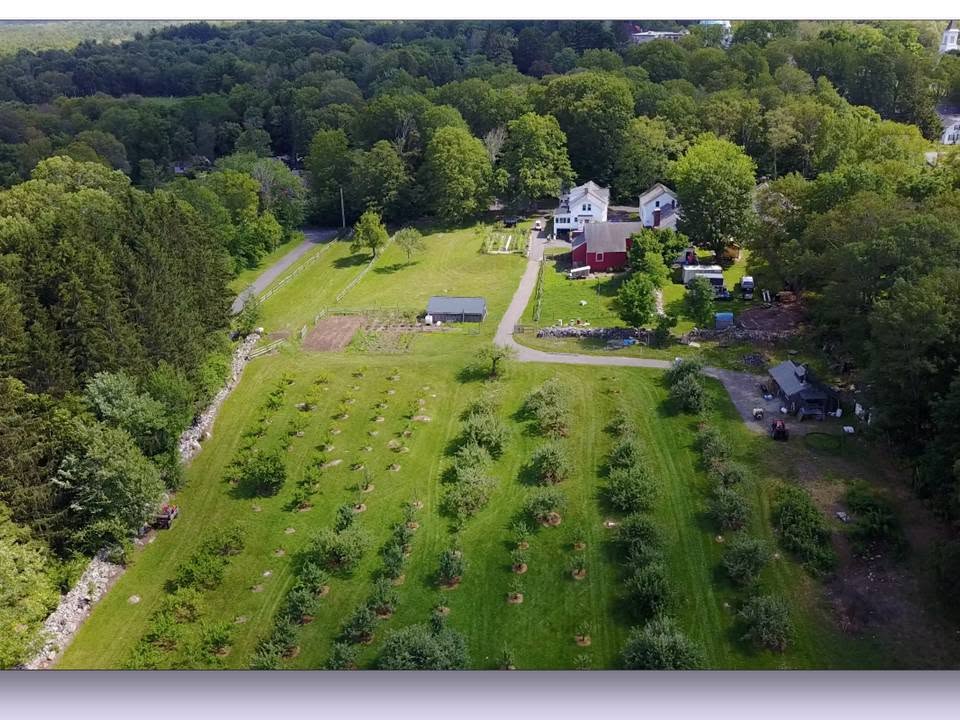
Aerial view of Sentinel Farm, Belchertown. Photo: Sentinel Farm
I drove on Federal Street twice today: once in Montague, to a place just off Route 63, to visit friends, and once in Belchertown. These days, the two Federal Streets — one in Montague, the other in Belchertown — aren’t contiguous, and, interestingly, Amherst doesn’t have a Federal Street at all. Whilst driving around creation, I mused about the origin of the name Federal Street and invite you to “visit” a few other interesting places along the route.
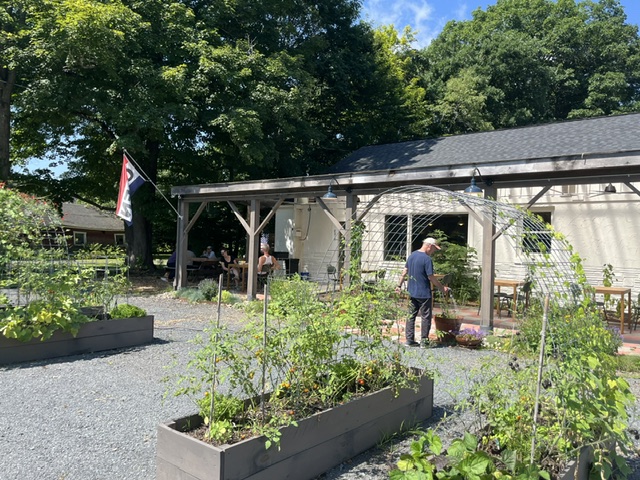
My first stop was Common Variety, on Federal Street in Montague. The building was once the Montague Inn and, later, Red Fire North, a bakery and market affiliated with Red Fire Farm. Common Variety opened last year with its own bread, baked on-site with flour sourced from Ground Up Grains in Holyoke. The new owners — Molly Botnick and Tawni Benick — also converted a dark, wood-paneled space into an airy, warm, blond-wood-accented gathering spot. This year, they’re reworking the gardens and transforming a terrace originally created by Red Fire Farm. When I visited, Molly’s father was busy watering the new trellises and vegetable beds, now full of cucamelons, cucumbers (destined for the kitchen staff’s homemade pickles), and cherry tomatoes. He told me how proud he is of his daughter’s venture. Her family lives in nearby Haydenville.
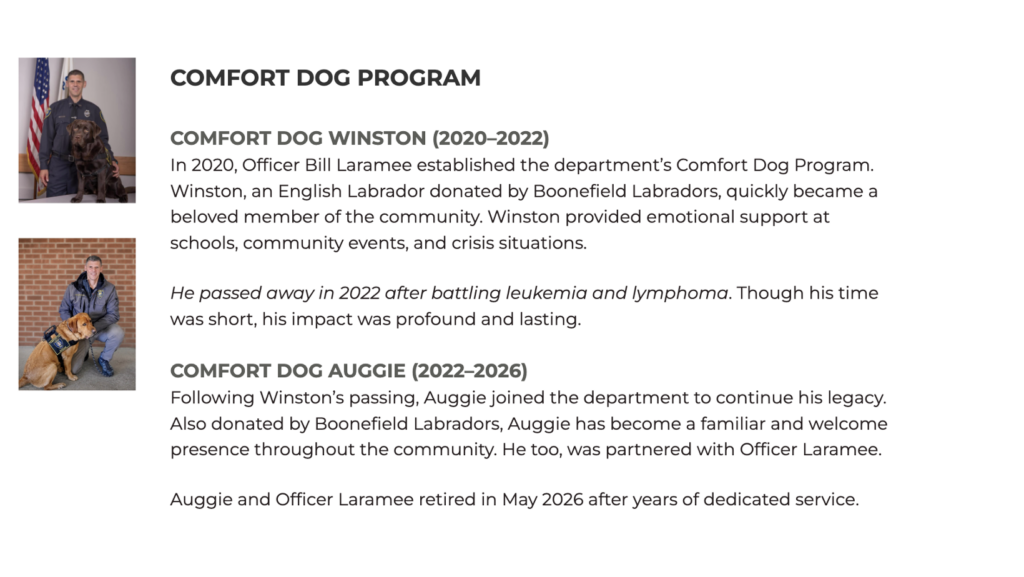
I was on my way to Belchertown to volunteer at the town’s National Night Out, hosted by Fire Chief John Ingram and Police Chief Kevin Pacunas. Many towns’ organizations were represented, including the Amherst Police Department, although Officer William Laramee and Auggie, the therapy dog, have just retired. [Thanks for your amazing 31 years of service, Bill!]
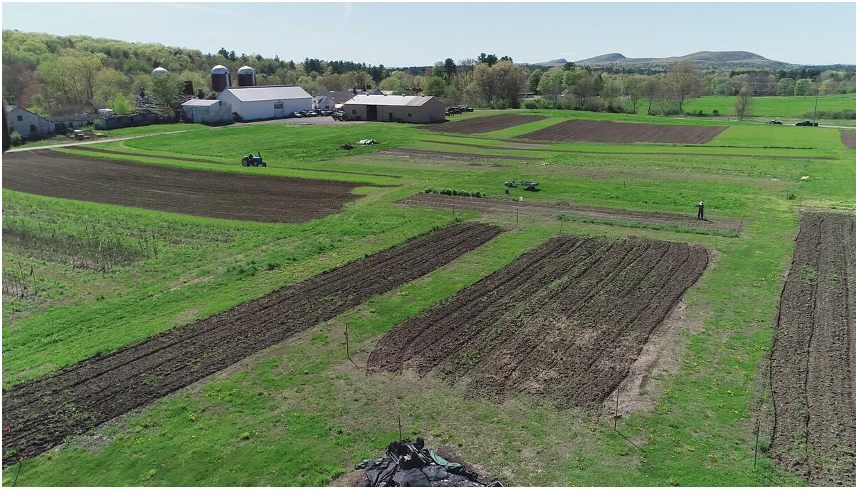
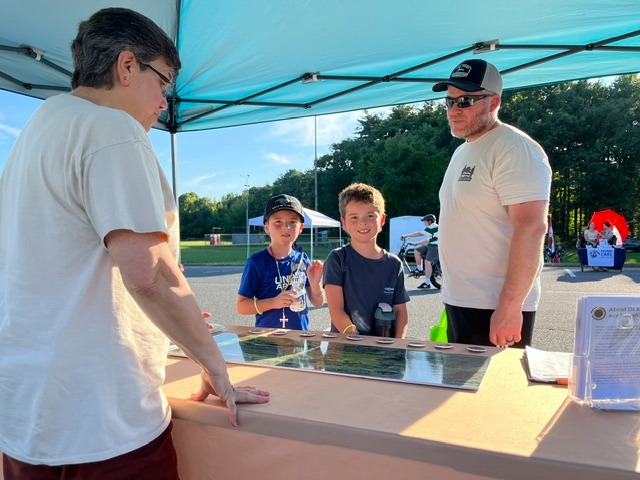
The National Night Out event included a booth for the Belchertown-Nipmuc Farm Conservation Alliance, which is working to return Lampson Brook Farm — state-owned land — to the Hassanamisco Nipmuc Band. The farm sits on land that once served the Belchertown State School, which closed in 1992. Groups including the Karuna Center for Peacebuilding and Kestrel Land Trust (both based in Amherst), and the Race and Class Working Group of Mt. Toby Friends Meeting in Leverett, support this initiative. I was there helping with outreach for the event.
Cheryl talking with a family group at the event, photo by Hetty Startup]
As I drove back to Amherst on Federal Street for a bit, I was sure the name had a historical origin. And indeed, it does: “Federal Street” typically originates from late 18th-century U.S. history, specifically commemorating the ratification of the federal government and the U.S. Constitution. Boston’s prominent Federal Street, for example, was renamed from Long Lane in 1788, after state leaders gathered there at a local meetinghouse to ratify the new federal Constitution. The name denoted civic pride in the creation of new laws, institutions, and values of the young republic. This era also gave rise to a style of architecture later known as the Federal style.
Old Deerfield’s The Street and the Stebbins House
The 1780s and 1790s must have been a heady, exciting time to be alive in this part of the world. It was a time of revolution in France (1789), Haiti (1791), and British North America (1775). Closer to home, in Western Massachusetts, there was Shays’ Rebellion, an armed insurrection by debt-ridden farmers that arose in response to tax increases imposed to help pay off Revolutionary War debt. Their grievances exposed weaknesses in the Articles of Confederation, prompting leaders to call for the Constitutional Convention of 1787 to draft the new U.S. Constitution.
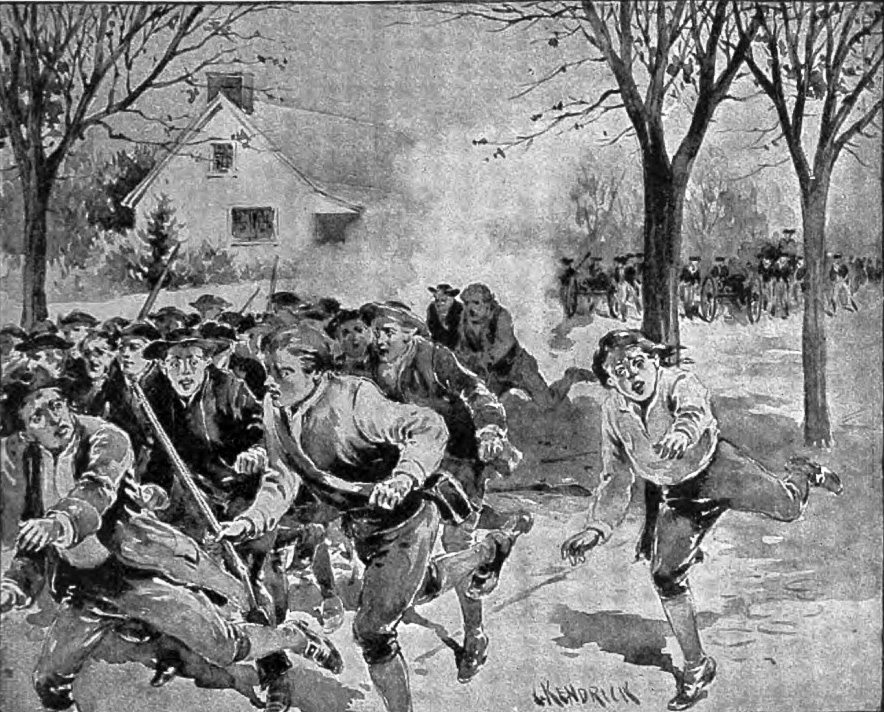
With the nation’s 250th anniversary approaching, many towns nearby are sharing exhibits and stories from the Revolutionary War era. In Deerfield — another stop on my journey that day — the main thoroughfare was once called The Street. On each side of this wide road, in the 1770s and 1780s, neighbors, family members, and friends found themselves divided between the Loyalist and Patriot sides during the Revolution. Local allegiances divided the rural Massachusetts town into two distinct camps: wealthy elite Loyalists (the so-called “River Gods”) and fervent Patriot militia members who pressured neighbors to swear oaths to the Continental Congress.
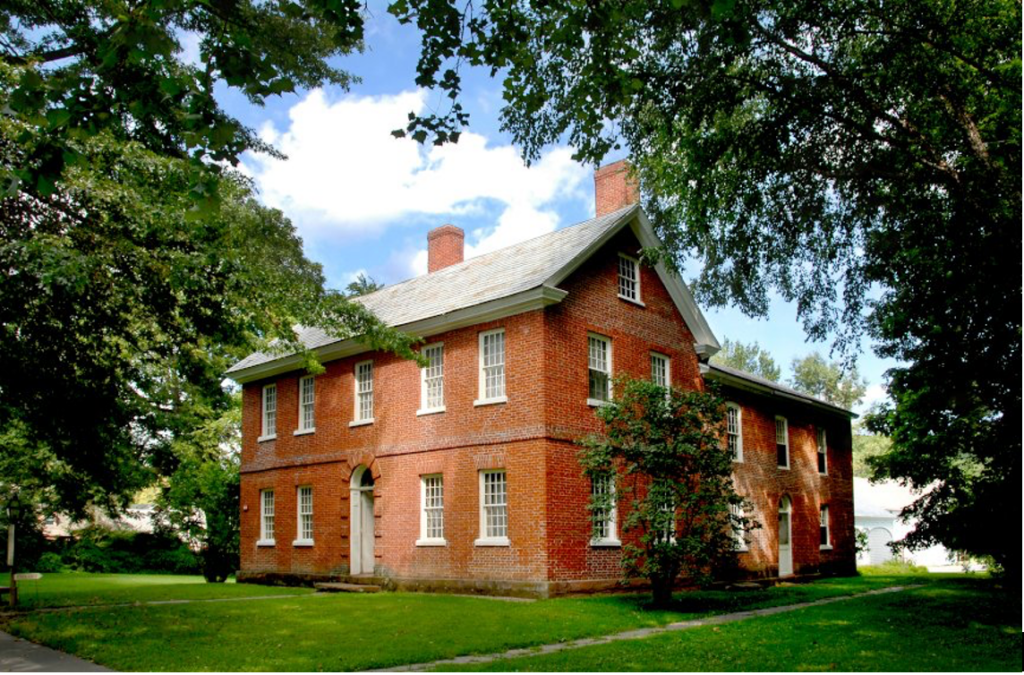
I wanted to see the new exhibit “Building Archaeology at the Stebbins House,” which focuses on an investigation as rich as any detective story. The brick home — similar to some in Amherst that form the proposed East Amherst Local Historic District — was built in 1799 for Asa Stebbins, a wealthy merchant and farmer. He had his own sawmill to supply some of the construction materials. The home, designed in the Federal style, is currently being “unpeeled” down to its bones by preservation professionals and Historic Deerfield museum staff.
The rare French wallpaper inside — which depicts scenes from Captain Cook’s voyages — was found to contain arsenic and has been removed for safety to museum storage. From the early 1800s, the wallpaper lined the house’s dramatic “flying” staircase, though it wasn’t part of the home when it was first built. Removing the wallpaper has offered a very clean, purist view of the incredible space that this was when first created.
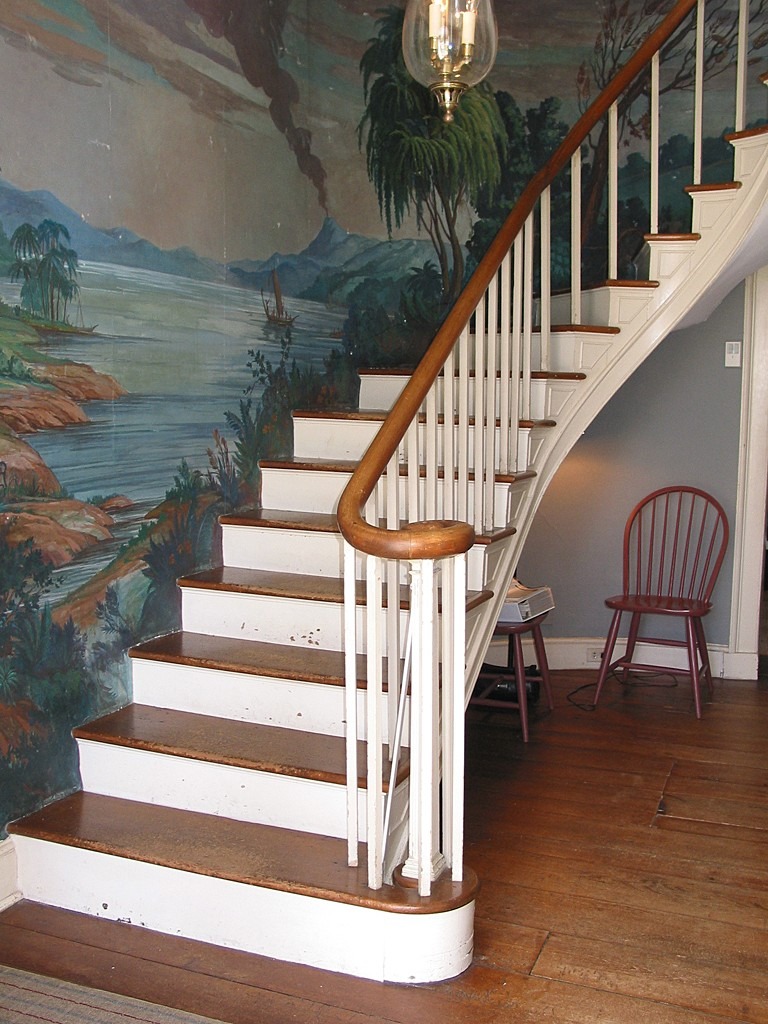
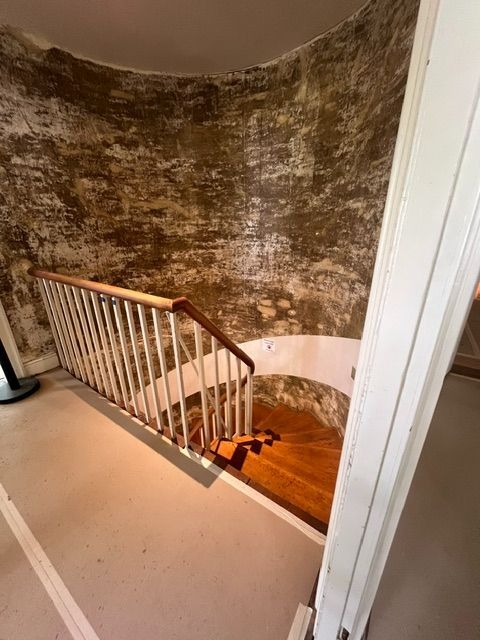
Because a new interpretive “window” is planned for the Stebbins House, visitors on the self-guided tour can see newly uncovered beams, paint, plaster lines, and brick mortar. These details evoke new ideas about how to tell the stories of the home’s inhabitants and the choices they made in terms of construction and interior finishes. I arrived early to avoid the heat and was intrigued by all the behind-the-scenes work. You can almost watch the research happen in real time — it feels fresh, not like a finished, “done and dusted” presentation.
I love it when my civic obligations turn into these little pilgrimages to architectural sites of interest, revealing so much more: local history; the people, past and present, and the stories and circumstances that brought the architecture into being; and then the wider cultural, environmental, or political themes as a whole.
Belchertown’s Cottage Street
I had the same thought about my wanderings around Belchertown. I had a little time before National Night Out to explore the history of Cottage Street, a horseshoe-shaped road. Unusually, the street once had two entrances; the one from North Main Street was closed in 1995, when the new fire station was built. The remaining entry point is from East Walnut Street by the town common. What remains is a remarkable survival: a series of six mid-1800s workers’ cottages and a small farm, the 10-acre Sentinel Farm.
Sadly, I couldn’t linger, but I believe the farm’s current owner, Steve Lanphear, was relaxing in the shade as I drove past. He and his wife, Meg, have owned the Sentinel Farm property since 1972. I’m assuming the farm takes its name from Belchertown’s only newspaper, the Belchertown Sentinel. A nearby farmhouse on Cottage Street, built around 1870, was once home to Lewis Blackmer, who ran a printing business in town and published that newspaper.
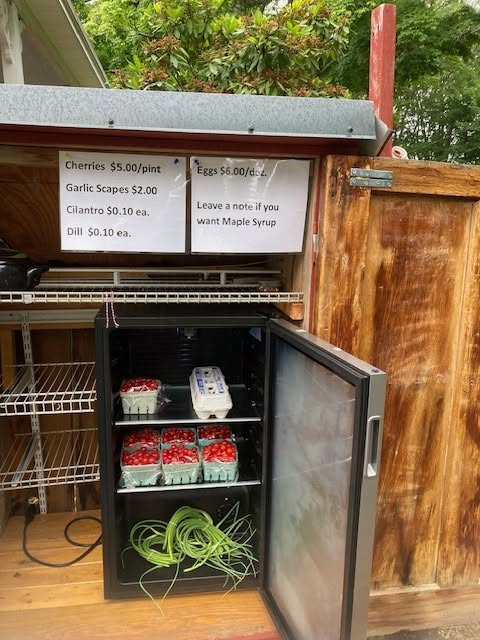
The Lanphears maintain the historic apple orchard defined by beautiful old stone walls where Golden Pippin, Gravenstein, and Northern Spy varieties predominate. They raise goats and chickens, run a pick-your-own season, and sell eggs and apple cider. Until recently, they offered programs with old-time children’s games such as hay slides and mock “rotten apple slingshot” battles. I imagine this was great fun — it sounds like a New England answer to the conker fights of my English childhood. (A conker is a horse chestnut.) In past decades, the farm has produced 25 varieties of apples, as well as peaches, nectarines, pears, blueberries, honey, and maple syrup. The day I visited, eggs and peaches were for sale at a small farmstand by the driveway. The owners are hoping to find a new buyer for the property.
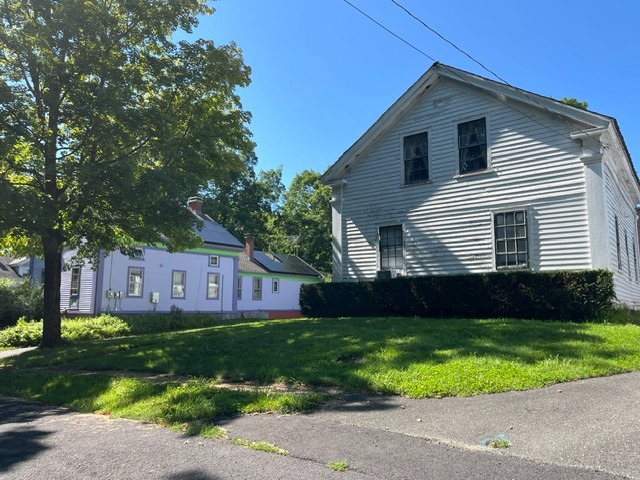
The nearby Greek Revival cottages are charming and in varying states of renovation and repair; one was being actively worked on as I walked by. They were built around 1842 on lots laid out and sold by Jonathan Leach between 1841 and 1845. It is considered the town’s first planned community.
One cottage, No. 11, was owned by a local shopkeeper. Another, No. 13, was the home of a wheelwright — an important early trade in Belchertown. For a time, a later owner deeded the property to serve as the town’s Baptist parsonage. No. 31 was home to the Rev. Moses Curtis, the Baptist minister, before the cottage up the street became a “tied” parsonage. No. 33, the Mary Ward House, has ornate Empire-style — or possibly neo-Egyptian — woodwork in the front parlors, according to documentation filed with the Massachusetts Historical Commission. Mary Ward was an unmarried woman and a member of the local Congregational Church near the town common. The largest of the six cottages is No. 37, the Harold Peck House, part of Sentinel Farm. The home now has a Queen Anne-style porch and gazebo, added later than the original 1841 structure. The first owner of No. 37 was likely Everett Chapman (1813-1848), a silversmith with his own shop on Main Street. At some point, a side-gable barn was built in back for apple storage.
Concluding Thoughts
Peaches are now in season in our valley. Zinnias continue to delight, and tomatoes are ripening on the vine. I am borrowing my subtitle of Concluding Thoughts from the commentator Robert Hubbell, where he offers perspective, hope, and resolve for his daily Substack. [https://substack.com/@roberthubbell] This is the time of year when nature’s abundance begins to settle over us — hopefully all of us — like a warm hug. I was at the Amherst Survival Center for lunch recently, and a family was sitting at a nearby table. The dad held a big bunch of basil he’d picked up at the free produce line and brought it to his nose, smiling broadly at its fragrance. I love this time of year for its abundance, and my summer wanderings have been enriched by what I call “getting accidentally lost-on-purpose,” seeing something new each day — also plentiful in its own way.
I remember the Montague Inn. We used to go there back when I was a hippie in Montague Center. Those were the days. I also had an ancestor who was part of Shay’s Rebellion, but can’t remember who.
I am related to one of the participants in Shay’s Rebellion, Luke Day.