
Letter: Both Sides Are Right on Starter Home Ballot Question
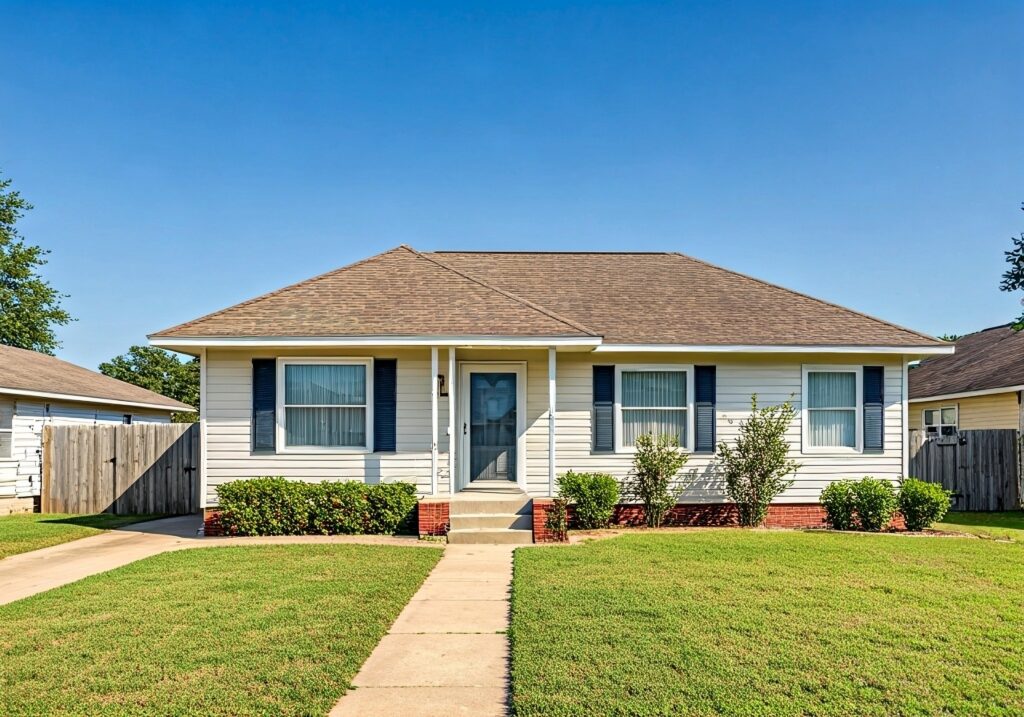
Photo: Shutterstock
November 3rd’s Ballot Question 7 is not a housing slogan. It is a statewide rewrite of who controls a suburban lot.
A yes vote would require cities and towns to allow a single-family house on a residentially zoned parcel of at least 5,000 square feet, with 50 feet of street frontage and public water and sewer. Height, setbacks, parking, and short-term rentals could still be regulated. A no vote leaves today’s local lot-size rules in place.
Supporters are right that oversized lots make land expensive and push McMansions. Independent Tufts analysis projects a real but modest gain—about 350 to 1,200 extra homes a year, concentrated in sewered suburbs. That would not end the shortage.
Opponents at the Massachusetts Municipal Association are also right. Lot size is how many towns manage schools, pipes, and neighborhood form. The measure does not cap house size or price, so “starter home” is a hope, not a requirement.
The choice is modest new supply versus less local control.
Decide based on what would happen on your own street, not on the campaign brochure.
Ronald Beaty
Ronald Beaty is a resident of West Barnstable and a Barnstable County Commissioner
Beginning with your ending suggestion, I consider what would happen on the street where I live. On the 1 mile length of Strong Street, the majority of houses are at least 100 foot frontage. If you demolish the house on a lot and build 2, each on its own subdivided lot, you’ll have a bunch of small homes on narrow but deep lots, in many cases the main house being too small to earn much of an ADU. Each of those houses will sell for too much to be a good student house, and because there’s so much land, depthwise, it will still be too expensive for an “attainable” “starter” home.
(“attainable” meaning humans can afford it, while “affordable” is a formula (x% of the average income in a town) (which the town can play with, to make a home more actually affordable to a starter home buyer)
Based on my experience as a new homeowner on Long Island many years ago, where that happened, many trees were also lost, some of the nicest houses were demolished, new families overpaid for overpriced high ranches (no aging in place in those).
Also, I have happy memories of my youth at the homes of Queens aunts and uncles who lived on 50×100 lots. They could watch their neighbor’s TV across the narrow driveway, and certainly knew their business, but that’s the way they liked it!
I would personally support such a zoning, wisely done as part of the Hampshire College re-purposing – but not letting student landlords go wild on my street.
As Adam Smith would have said, the “invisible hand” that wisely guides the marketplace doesn’t account for the profit motive of building for too many students paying too much for too little.
So I can see the wisdom of this tool, in the hands of our town planning department and board, now carefully thinking out their side of the Hampshire opportunity.
But vote to have the state over-write how Amherst faces its own unique situation?
Not after seeing how their ADU overwrite was inept and problematic for Amherst.
So NO on 7
The obsession with making sure no one under the age of 50 ever owns anything is the most shameful trait of our town. If every house on my street built a “student stuffer”, right next to me on all sides, I’d celebrate in the streets. Because if so many of us do it, then they CAN’T continue to charge $3000 a month for a 2 bedroom, and maybe there will finally be enough foot traffic downtown for it to be worth going to.
The only right vote is “Yes.”
Just to clarify, the owners of the “student stuffers” would probably not be the students, or new homeowners under 50. They are more likely to be companies in the business of renting houses to students.
Personally, I support many ways to get young families into new houses, including
• more options for seniors to downsize, and selling their houses to families
• land trusts that lower the cost of a house
• new neighborhoods at Hampshire College (in a mix of public facing businesses, stuff like food business incubator to tie into new UMass food science initiative, also protecting trails, wetlands, adaptive re-use
• alternate uses of residential land, ie: a mews where small homes face inward to a common yard
• creative ADU usage, ie: homeowner/occupant builds ADU and moves into it, and arranges a “rent to own” situation with the to-be-owners of the main house, ie: a family
• redevelopment of Wildwood School into some kind of hybrid of truly attainable housing and other public facing uses (that the Jones Library will not be providing) ie: black box theater, expanded senior center
• listening sessions with people attending the Hampshire College sessions, on what they think on other topics (as there were many new faces of people with intelligent perspectives)
• a reduction in the opining of people who say stuff like “property is theft” or “nimbys are selfish” so that better conversations might emerge
• listening more to people with more reformist opinions (“non-capitalist” ideas), so possible innovative ideas might emerge
• that we might talk more together and be seen as less of a divisive community, that might attract people who’d like to live in a less divisive community