Riquezas Del Campo: Making Organically Grown Produce Accessible for All
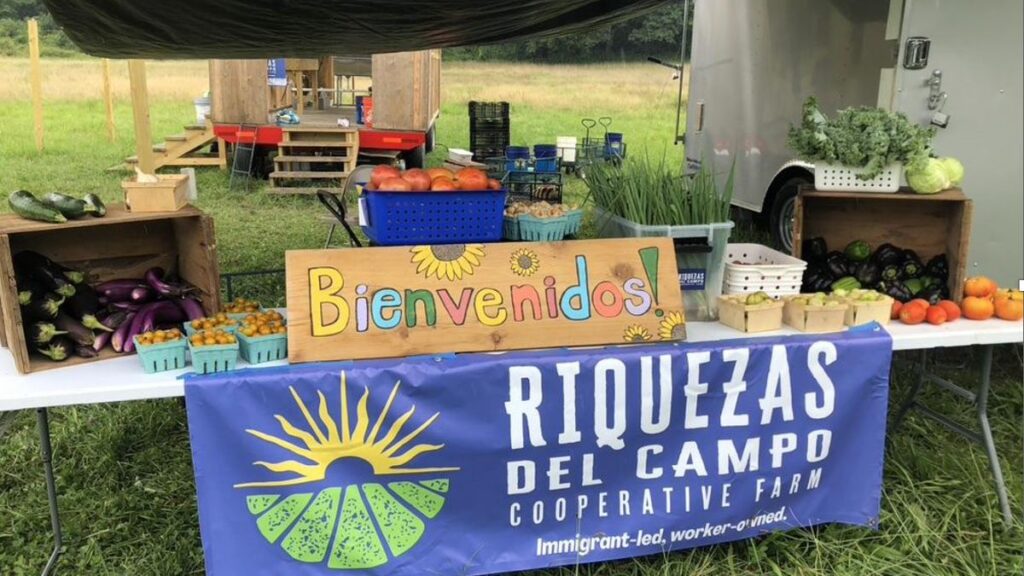
Riquezas del Campo cooperative farm, Hatfield, MA. Photo: Chloe Spurr & Rowan Faris
By Chloe Spurr and Rowan Faris
Becoming Human and A Better World Is Possible
We resume our series “Becoming Human”, in partnership with our series “A Better World is Possible”at a time when global fascism is ascendant, and as we feel the impacts of burgeoning authoritarianism and pervasive inequality in our daily lives. As we struggle to fend off these malevolent trends, it helps to remember they aren’t inevitable, resistance isn’t futile, that we can build something better, and that inspiring alternatives surround us. The profiles presented in this series illustrate these alternatives, showing that a better world is indeed possible. Over ten weeks, we’ll run a weekly profile of a hopeful endeavor that offers a counter-example to current trends. These profiles are authored by members of the Building Solidarity Economies Assemblage (BSE) at UMass Amherst. Read previous articles in the series here.
The following profile is based on an interview with Meredith Degyansky, socio at Riquezas del Campo.
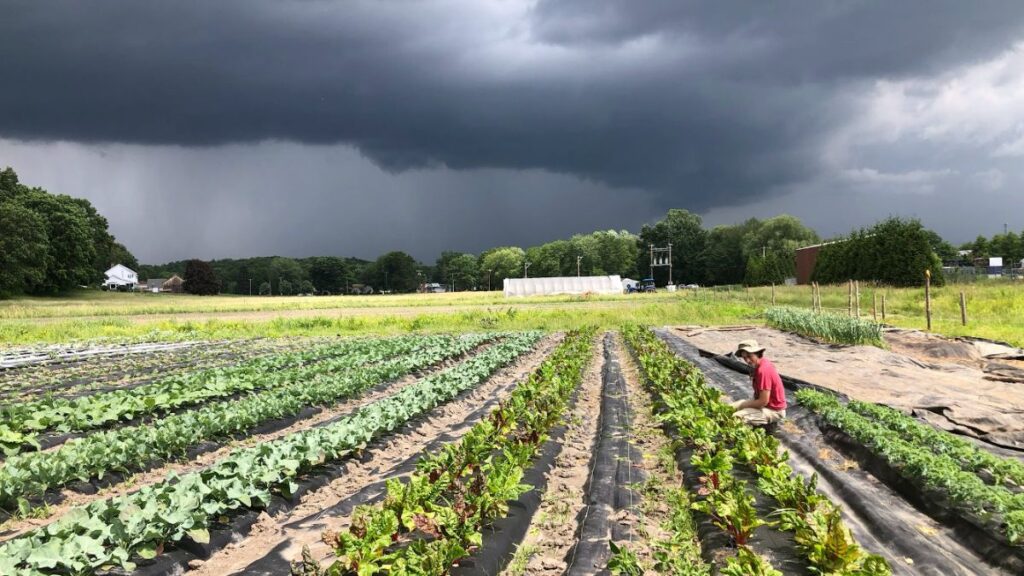
Nestled on the border of Hatfield and Northampton lies a 12-acre plot of land cultivating community and cooperation. In 2019, members of the Pioneer Valley Workers Center (PVWC) sprouted the idea of a farm where the workers themselves owned the land and made the decisions. In collaboration with the city of Hatfield, the city of Northampton, Kestrel Land Trust, and All Farmers, a non-profit that helps immigrants find land, PVWC acquired a parcel of land that grew into Riquezas del Campo, an immigrant-led, worker-owned farm.
At the start, Riquezas was made up of five socios (worker-owners), previous farmworkers in the area who were born in Mexico and Central America, all of whom brought a wealth of knowledge about land stewardship and food production. For the first four years, the farm acted as a small cooperative farm business, selling its produce to cooperative grocery stores and mutual aid food distributors. Over time, the labor-intensive farm work and the slow, relational nature of cooperative decision-making led Riquezas to rethink and rework their practices. Today, Riquezas shares their land and tools with local families, providing them with the capacity to grow their own food. They also grow and tend communal fields of various types of corn sacred to local communities, including Nipmuc white flint corn. Using traditional nixtamal methods, they grind their corn into masa for tortillas, atole, and tamales.
As part of a growing solidarity economy in Massachusetts, Riquezas acts as “a commons project and a cultural project,” changing how we relate to land, food, and one another. Riquezas has developed partnerships with numerous farmers and organizations in the area and created a network to meet many of their needs without having to participate in the dominant market. Prospect Meadow Farm, Stone Soup Cafe, Grow Food Northampton, and the Cooperative Development Institute, among many other partners, regularly lend labor, kitchen space, and knowledge in exchange for produce, tools, community, and care.
Riquezas is dreaming of, experimenting with, and working towards a food system that requires less alienated labor and improves conditions for the land, bettering the lives of people and the planet. Currently, Riquezas is cultivating a food forest, where “anybody that’s involved on the farm or in the land at all can go and harvest whatever they want, whenever they want.” To get involved with Riquezas, follow them on Instagram (@riquezasdelcampocoop) to learn about upcoming volunteer days or reach out to learn more!
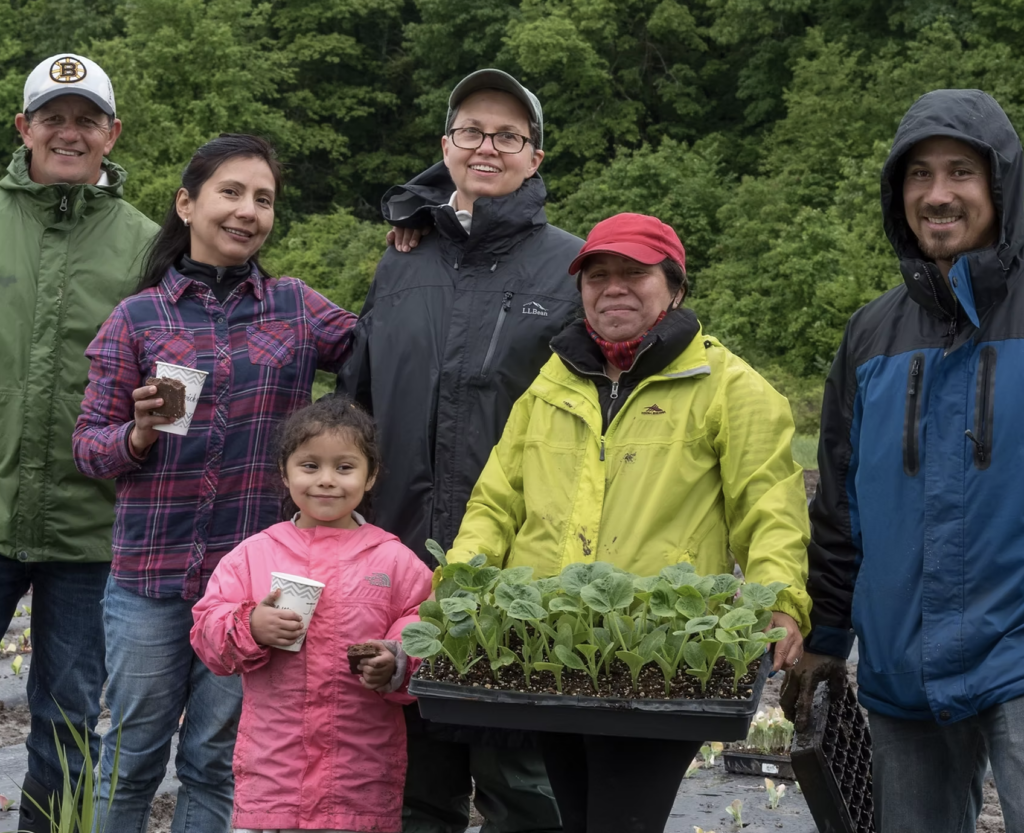
Chloe Spurr & Rowan Faris are members of the Building Solidary Assemblage (BSE) at UMass Amherst
Each edition of Becoming Human features an article, reflection, interview, poetry, or other types of expression that engage with a creative community or municipal effort. These will include original features that discuss a local initiative and also stories about efforts in other parts of the world that we might learn from. The growing narratives, relations, and power from which other worlds are being assembled, maybe, can help reorient our hope and desire—and resignation—away from the death drive of white supremacist, heteronormative, capitalist modernity, and towards an open, uncharted horizon of radical egalitarianism and towards the reality that other worlds are in the making or already here. For the full introduction to Becoming Human that appeared in its inaugural column, look here. For a listing a previous columns, look here.
Acknowledgments: This column is in dialogue and solidarity with numerous collaborators and comrades including Vin Lyon-Callo, Meredith Degyansky, Penn Loh, Stephen Healy, students in Anthropology 340 – Other Economies are Possible, Anthropology 341 Building Solidarity Economies, Anthropology 597CC Community, Commons, Communism, and the pluriverse of world-making and world-defending efforts, movements, and projects in Massachusetts and around the world.
A Better World Is Possible” is an occasional Indy feature that offers snapshots of creative undertakings, community experiments, innovative municipal projects, and excursions of the imagination that suggest possible interventions for the sundry challenges we face in our communities and as a species. Have you seen creative approaches to community problems, or examples of what other communities do to make life better for their residents, that you think we should be talking about? Send your observations/suggestions to amherstindy@gmail.com. See previous posts here.