
East Amherst Local Historic District Proposal Ready for Town Council Approval
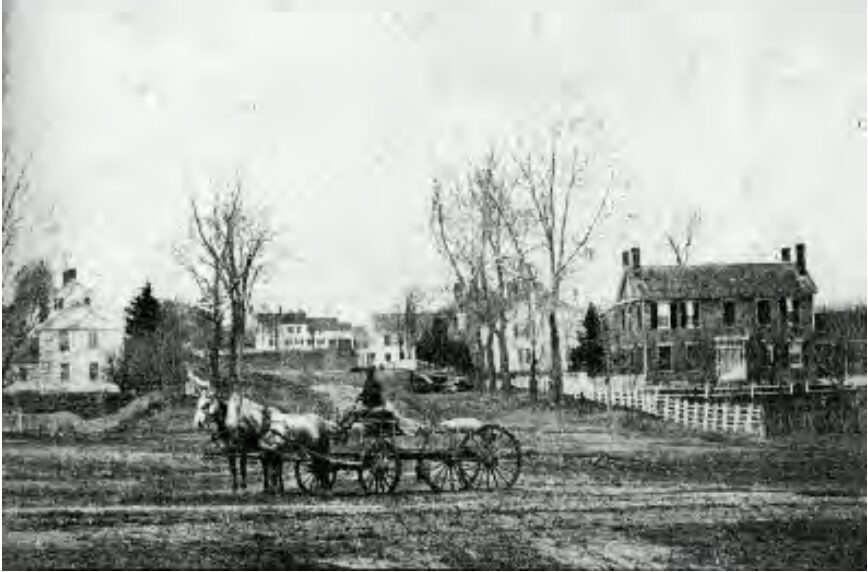
Historic East Amherst Village. Photo: amherstma.gov
Report on the Meeting of the Local Historic District Commission, February 23, 2026
By Hilda Greenbaum
This meeting was held over Zoom and was recorded.
Present
Steve Bloom (acting chair), Elizabeth Sharpe, Nicole Miller, Greta Wilcox, and Bruce Coldham. Absent: Nancy Ratner (chair)
Staff: Walker Powell (Planner)
Walker Powell, Planning Staff
East Amherst Local Historic District Plan Ready for Town Council Approval
The East Amherst Local Historical District proposal is ready for Town Council approval this Spring. It has already been reviewed by the Massachusetts Historical Commission, the Planning Board and the required public hearing was held on January 12. This project was initiated by Town Manager Paul Bockelman because he believed that this neighborhood, the oldest part of Amherst, is under stress from possible future development
Historic Preservation consultant Chris Skelly noted that East Amherst “…contains many very early intact buildings that do an amazing job of telling the early history of Amherst and its growth and development over time.” He also prepared a report of about 50 structures of historic importance in East Amherst and a set of Design Guidelines for boards, citizens, owners, and developers, et al. to understand what is appropriate when contemplating renovations or restorations of structures in a historic district. LHDC member Steve Bloom is editing the 120-page Design Guidelines which require a public hearing and then approval by the Local Historical Commission, the only local approval needed.
LHDC Denies Request for Vinyl Siding on Former Bruno’s Building
A public hearing ensued on the application by Roula Kofides to remove the yellow wooden clapboards from the former Bruno’s pizza at 363 Main Street and replace it with vinyl siding. The owner received approval in April, 2025 to add two additional apartments on the first floor. Because minimal changes were planned to the exterior, the Commission had no objections.
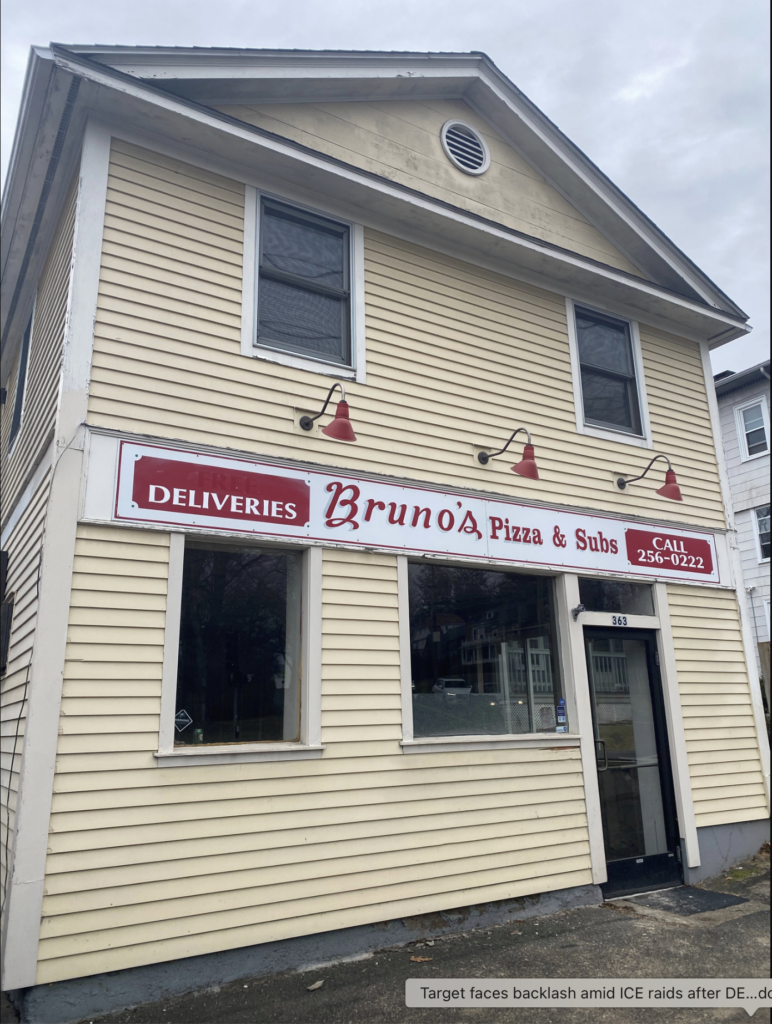
No historical information could be found in the Massachusetts Cultural Resources Information System (MACRIS) database, other than that the house was built in 1940, which may or may not be accurate information, as 1920 is reported in another citation. The structure is the penultimate structure on the west end of the Emily Dickinson Local Historic District. Kofides” reason for replacing the wooden clapboards is easier maintenance. But, in questioning, she noted that the existing clapboards are in excellent condition, but the paint is cracking and peeling.
Bloom spoke first about not wanting to set a precedent as the commission has ruled in other cases that vinyl siding visible from the street is not acceptable in a historic district. The LHDC policy heretofore has been to deny vinyl siding as inappropriate in historic districts, that materials must be replaced with the same or similar materials where possible. This rule is carried over into the new set of guidelines.
The commission has the authority to grant “hardship” variances but these are difficult to obtain since they are usually based on a problem with the site that makes compliance impossible rather than the financial circumstances of the applicant.
Thinking out loud, LHDC member Bruce Coldham noted that he has a strenuous aversion to vinyl siding and this IS the edge of the historic district. It was noted later that the Historical Commission recently approved a demolition delay on the East Street Common for the house furthest south in the potential local historic district. Location matters!
Coldham added that when vinyl siding is installed, It is usually at the expense of cutting off parts or all of the window sills and casings, trim, corner boards, and cornices etc. that give a building its character. Seeing the other elevations, he determined that prohibiting vinyl on only the Main Street facade would not comply with LHDC standards, because three of the four sides of the long and narrow building are visible from the street.
Other members noted that vinyl doesn’t wear well and in five years is cracked and badly weathered. They agreed that vinyl siding was not appropriate for this building and unanimously denied a certificate of appropriateness to avoid setting a precedent that they may regret.